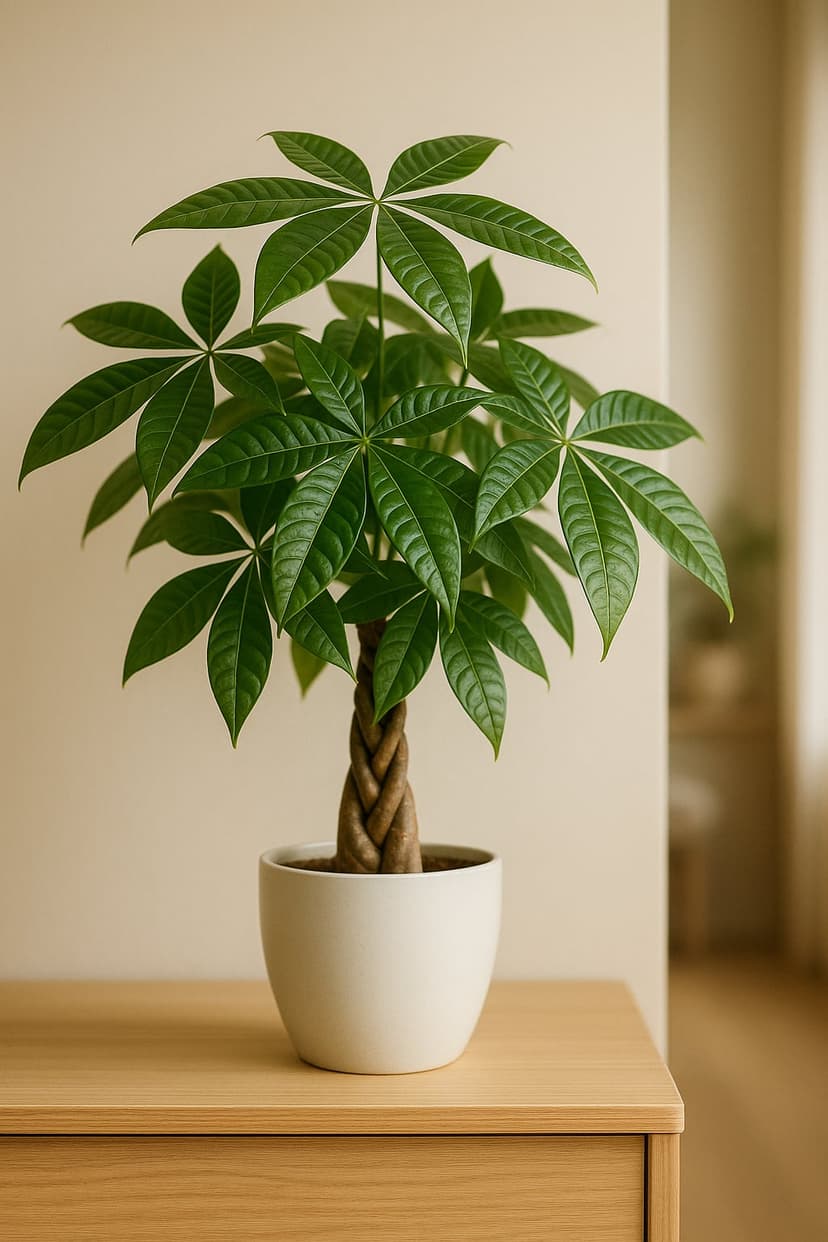
Money Tree
Pachira aquatica
Also: Guiana Chestnut, Malabar Chestnut, Braided Money Tree
The money tree is a small wetland tree from Central and South America, sold almost everywhere with its signature braided trunk — actually three to five young trees woven together by growers. A traditional gift said to bring good fortune, it earns its popularity honestly: it's pet-safe, tolerant of average indoor conditions, and stores water in its trunk, making it one of the more forgiving small indoor trees. Its two quirks are dramatic leaf drop when moved or chilled, and a strong intolerance for soggy soil.
By PlantFix Editorial Team · Sources: University Extension Programs, USDA
Care Summary
Tips
- – Squeeze the braided trunk gently once a month when you water — catching a soft spot early turns rot from a crisis into a quick fix.
- – When in doubt, don't water. The trunk stores water, and money trees recover from too dry far more easily than from too wet.
- – Don't panic over leaf drop after moving it — that's the money tree's signature stress response, and it regrows once it settles.
Common Problems
Yellowing leaves
Causes
- – Overwatering — by far the most common cause, and the first thing to rule out
- – Natural aging of older, lower leaves — one every few weeks is normal
- – Too little light causing pale, washed-out yellowing and leggy growth
Solutions
- – Check the soil and gently squeeze the braided trunk — wet soil plus any soft spot means stop watering and inspect the roots
- – Let the top 2 inches of soil dry out completely before every watering
- – Move to bright indirect light near a window, out of the direct beam
Soft, mushy trunk near the soil line
Causes
- – Root rot from overwatering or a pot without drainage — rot climbing into the trunk
- – Often only one strand of the braid is affected while the others stay firm
Solutions
- – Repot the same day: strip the wet soil, cut brown mushy roots back to clean tissue, and repot in fresh fast-draining mix
- – Unweave and remove any fully soft braid strand — each strand is a separate tree, and removing a dead one saves the rest
- – Afterward, water only when the top 2 inches are dry, and squeeze-test the trunk monthly
Dropping leaves (often green ones)
Causes
- – Relocation shock — money trees routinely shed a flush of leaves after a move, repot, or trip home from the store
- – Cold drafts or sudden temperature swings from vents, doors, or winter windows
Solutions
- – If it followed a move and the trunk is firm, wait it out — bright indirect light, normal watering, no fertilizer, and it regrows within a month or two
- – Relocate away from vents, exterior doors, and cold glass
- – Resist the urge to compensate with extra water — that converts shock into rot
Drooping or wilting leaves
Causes
- – Underwatering — a light pot, dry soil pulled from the wall, the plant simply out of water
- – Overwatering and early root rot — drooping despite wet soil, because rotted roots can't move water
Solutions
- – Check the soil first and never water a drooping plant without doing so
- – If bone-dry, bottom-soak the pot for 20-30 minutes; recovery is usually visible within a day
- – If wet, stop watering and treat it as root rot — inspect the roots and squeeze the trunk
Leaves curling inward or at the edges
Causes
- – Underwatering — leaflets cup inward to conserve moisture, the most common cause
- – Low humidity or a nearby heat vent drying the air around the leaves
- – Spider mites feeding in dry, warm conditions
Solutions
- – Check the soil: if dry and the pot is light, give it a deep soak
- – If the soil is fine, raise humidity and move the plant off any heat source
- – Inspect the leaf undersides for fine webbing and stippling and treat mites if found
Fine webbing and stippled, dusty-looking leaves
Causes
- – Spider mites — the money tree's most common pest, especially in dry winter air
Solutions
- – Shower the plant to knock mites off, covering every leaf underside
- – Follow with insecticidal soap or neem oil weekly for 3-4 weeks
- – Raise humidity around the plant — dry air is what invited them
Treatment Guides
Spot something wrong with your Money Tree? These guides cover the most common houseplant issues with step-by-step treatment plans.
Or use the diagnosis tool →More Plants
Get seasonal plant care reminders and pest alerts.