Potato Bug Pictures: 3 Insects, 1 Confusing Name (ID Guide)
"Potato bug" is 3 different insects: Jerusalem cricket, pill bug (roly-poly), or Colorado potato beetle. See what each looks like and which is the real pest.
14 min read · Updated 2026-08-11
By PlantFix Editorial Team · Sources: University Extension Programs, USDA, EPA
Which Potato Bug Do You Have? (10-Second ID)
"Potato bug" refers to three completely different creatures depending on where you live and who you ask. Only one is actually a pest. Here's the fast ID:
Large (1-3 inches), amber-brown, bald head, looks like an alien? That's a Jerusalem cricket. Found mainly in the western US. Not a pest. Leave it alone — it eats decaying matter and aerates soil.
Small (1/4 inch), gray, rolls into a ball when touched? That's a pill bug, also called a roly-poly. Found everywhere. It's actually a crustacean, not an insect. Almost never damages plants unless you have huge numbers eating seedlings.
Small (1/2 inch), yellow with black stripes, found on potato or tomato plants? That's a Colorado potato beetle. This is the one that's actually destroying your garden. Both adults and larvae strip leaves from potato, tomato, eggplant, and pepper plants, and they can defoliate an entire plant in days.
If you're not sure which one you're looking at, work through our diagnosis tool for a guided identification. The treatment is completely different for each one — getting the ID right is the first step.
Side-by-Side Comparison: All 3 "Potato Bugs"
Jerusalem cricket: 1 to 3 inches long, amber to reddish-brown, large round head, striped abdomen, no wings. Found in the western United States and Mexico, primarily in sandy soils, under rocks and logs. Active at night. They eat decaying plant matter, roots, other insects, and tubers (which is probably why they got the "potato" name). Not dangerous — they can bite if handled roughly, but they're not venomous. According to WebMD, the bite is painful but harmless with no venom involved.
Pill bug (roly-poly): about 1/4 inch long, gray to dark gray, segmented armored shell, 7 pairs of legs, rolls into a tight ball when disturbed. Found everywhere in North America in moist habitats — under mulch, logs, rocks, leaf litter, and garden debris. These are actually terrestrial crustaceans (related to shrimp and crabs), not insects at all. They primarily eat decaying organic matter. They can damage seedlings and ripening fruit touching the soil in wet conditions, but this is rare and usually only happens when populations are very large.
Colorado potato beetle: about 1/2 inch long, oval-shaped, cream to yellow body with 10 distinctive black stripes running lengthwise down the wing covers. Bright orange-red larvae with black spots, found in clusters on leaf undersides. Eggs are bright yellow-orange, laid in neat rows of 10-30 on leaf undersides. Eats solanaceous crops — potatoes, tomatoes, eggplants, peppers. Both adults and larvae feed voraciously on leaves, and a heavy infestation can completely defoliate a plant within a week. This is a serious agricultural pest that costs farmers hundreds of millions of dollars annually, according to the University of Minnesota Extension.
Jerusalem Crickets: The "Potato Bug" That Isn't a Bug
If you live anywhere from California to Oklahoma and found a large, creepy-looking, bald-headed insect — congratulations, you've met a Jerusalem cricket (Stenopelmatus and Ammopelmatus genera). They're genuinely one of the most startling insects in North America. That massive, humanoid-looking head, the amber translucent body, and the sheer size of them (up to 3 inches) has been alarming homeowners for centuries.
Despite the scary appearance, Jerusalem crickets are harmless and actually beneficial. They eat decaying plant material, help decompose organic matter, aerate soil as they burrow, and occasionally eat other insects. They are not pests, don't infest homes, and don't damage plants. They're nocturnal and usually only come inside by accident, especially after rain drives them to the surface.
The bite question: Yes, they can bite, and it hurts — their large mandibles are designed for chewing through tough roots and soil. But they are not venomous, not poisonous, and will only bite if you pick them up or step on them barefoot. UC Davis's IPM program notes that they're completely harmless and should be relocated outside if found indoors. Just use a cup and a piece of cardboard — scoop and release.
Why are they called potato bugs? The most likely explanation is that they're often found in gardens near potato patches, where they feed on rotting potato tubers and roots in the soil. Spanish-speaking communities in the western US have called them "niño de la tierra" (child of the earth) for centuries.
If you find one: leave it alone. If it's inside your house, gently relocate it outside. There's nothing to treat and nothing to worry about.
Pill Bugs (Roly-Polies): Not Insects, Rarely Pests
Pill bugs — also called roly-polies, doodlebugs, woodlice, or armadillo bugs — are one of the most familiar backyard creatures in America. Kids love them because they curl into a perfect sphere when touched. Adults mostly ignore them. And that's appropriate, because pill bugs are almost never a problem.
The surprising fact most people don't know: pill bugs are crustaceans (order Isopoda), not insects. They're more closely related to shrimp, crabs, and lobsters than to any bug. They still breathe through gill-like structures and need moisture to survive, which is why you find them in damp places — under mulch, rocks, logs, and in garden beds.
Their diet is primarily decaying organic matter. Dead leaves, rotting wood, decomposing plant material — they're nature's recyclers, converting dead plant matter into soil nutrients. In most gardens, they're genuinely beneficial.
When pill bugs become a problem: The exception is when populations get very large and conditions are very wet. According to Epic Gardening and Growing In The Garden, pill bugs will eat tender seedling stems, young transplants, and ripening fruit touching damp soil (especially strawberries) when they run out of dead material to eat. This is mainly an early-spring issue — populations peak when spring moisture is high, and the damage tends to resolve naturally as conditions dry out by midsummer.
If you're seeing pill bug damage to seedlings: raise seedlings off the ground in trays or containers, reduce mulch near transplants, allow soil surfaces to dry between waterings, and remove debris near plant bases. Diatomaceous earth sprinkled around seedling bases creates a physical barrier, though it must be reapplied after rain. Most gardeners will never need to do any of this — the vast majority of pill bug populations coexist with gardens perfectly fine.
Colorado Potato Beetles: The Actual Plant Pest
If you found striped yellow-and-black beetles eating your potato, tomato, or eggplant leaves — this is the only "potato bug" that's actually destroying something, and you need to act fast.
Colorado potato beetles (Leptinotarsa decemlineata) are one of the most damaging vegetable garden pests in North America. Both the adults (yellow with 10 black stripes) and the larvae (plump, reddish-orange grubs with black spots) feed on leaves. A heavy infestation can completely defoliate a potato plant in 5-7 days, according to the University of Minnesota Extension. Defoliated potato plants produce 50-100% smaller tubers, and repeated defoliation can kill the plant.
The lifecycle matters for control: Adults overwinter in the soil 4-12 inches deep and emerge in spring when soil temperatures reach about 55°F. They walk or fly to host plants, mate, and females lay clusters of 10-30 bright yellow-orange eggs on leaf undersides. Eggs hatch in 4-10 days. The larvae go through four growth stages (instars) over 2-3 weeks, feeding constantly. Then they drop to the soil to pupate, and new adults emerge 1-2 weeks later. You can get 1-2 generations per summer depending on your climate.
The critical control window: According to University of Minnesota Extension research, Colorado potato beetles are most vulnerable to treatment in the first instar (first larval stage), when they're roughly 1/8 inch long and reddish with black heads. Waiting until larvae are full-grown results in very poor control — they're larger, tougher, and have already done most of their damage. Check leaf undersides twice a week starting when potato plants emerge, and act when you see the first egg clusters or tiny larvae.
How to Get Rid of Colorado Potato Beetles
Treatment options ranked from least to most aggressive. Start with the simplest approach that matches your infestation size.
Hand-picking (small gardens, light infestations): Walk the rows daily and physically remove adults, larvae, and egg clusters. Drop them into a bucket of soapy water. This is tedious but remarkably effective for gardens under 100 square feet. Check leaf undersides — that's where eggs and young larvae cluster. A single dedicated pass removes hundreds of eggs before they can hatch. According to organic gardening expert Whole Fed Homestead, dedicated hand-picking every 2-3 days can control most home garden infestations without any sprays.
BTI / Spinosad (organic, moderate infestations): Bacillus thuringiensis var. tenebrionis (Bt tenebrionis — different from the BTI used for fungus gnats) targets Colorado potato beetle larvae specifically. Spray when larvae are small (first and second instar). Spinosad is another organic option that's effective against both adults and larvae. Both are most effective when applied early in the larval stage. The University of Minnesota Extension confirms Bt and spinosad are the most effective organic options when timed correctly.
Neem oil (supplemental organic control): Neem oil acts as a feeding deterrent and growth disruptor. It's less effective than Bt and spinosad against potato beetles specifically, but provides supplemental control. Spray in the evening to avoid burning leaves and to reduce impact on beneficial insects. Reapply every 4-7 days. Best used as part of a rotation with other treatments, not as a standalone.
Diatomaceous earth (barrier method): Food-grade DE sprinkled on and around plants damages the exoskeleton of beetles and larvae through physical abrasion, causing them to dehydrate. The USDA National Organic Program lists it as approved for organic food production. Apply when plants are dry and reapply after rain. More effective as a barrier and deterrent than a standalone control for heavy infestations.
Crop rotation (prevention): Never plant potatoes, tomatoes, eggplants, or peppers in the same spot two years in a row. Adults overwinter in the soil near last year's crop. Rotating to a different bed forces them to walk or fly further to find host plants, reducing infestation pressure significantly. This is the single most effective long-term prevention strategy.
Row covers (exclusion): Lightweight fabric row covers placed over potato plants immediately after planting prevent adult beetles from reaching the plants to lay eggs. Remove covers when plants flower to allow pollination (or if growing potatoes, which don't need insect pollination, leave them on all season).
The "Potato Bug" Name By Region
The confusion about "potato bug" is entirely regional, and it's been going on for over a century.
Western US (California, Arizona, Nevada, New Mexico, Oregon, Utah, Colorado, Oklahoma): "Potato bug" almost always means Jerusalem cricket. Ask anyone from Southern California what a potato bug looks like and they'll describe a large, bald, alien-looking creature — not a beetle. The term has been used for Jerusalem crickets in the American Southwest since at least the mid-1800s.
East Coast and Midwest: "Potato bug" more commonly means either pill bugs (roly-polies) or Colorado potato beetles, depending on context. Gardeners and farmers specifically mean the beetle. General conversation usually means pill bugs.
Southern states: "Roly-poly" or "doodlebug" dominates for pill bugs. "Potato beetle" or "Colorado beetle" for the pest. "Potato bug" is less commonly used.
Scientific and agricultural contexts: If you see "potato bug" in a farming, extension service, or gardening resource, it almost certainly refers to the Colorado potato beetle — the actual crop pest. Agricultural extension programs at universities have largely standardized on this meaning.
Canada and Northern US: "Potato bug" typically means Colorado potato beetle, because potato farming is a major industry in these regions.
The takeaway: the term is genuinely ambiguous. When someone says "I have potato bugs," you have to ask where they live and where they found them before you can give useful advice. That ambiguity is exactly why this guide exists. If you're dealing with actual garden crop damage, check our guides on tomato hornworms (defoliate tomato plants overnight), cucumber beetles (vector bacterial wilt), and flea beetles (riddle seedling leaves with tiny holes), earwigs (nocturnal feeders that chew ragged holes in leaves), Japanese beetles (metallic green beetles that skeletonize garden foliage from June through August), and cicada killer wasps (giant solitary wasps that dig burrows in lawns but are harmless to people). If your trees are dripping sticky sap and developing black sooty mold, check for spotted lanternflies — an invasive species now in 21+ states that produces copious honeydew. If your lawn has brown patches that peel up like carpet, you likely have lawn grubs — the underground larvae of Japanese beetles and other beetles. If the brown patches appear in sunny spots during summer heat and the grass doesn't peel up, it could be chinch bugs — tiny lawn pests whose damage mimics drought stress. For a complete seasonal guide covering all outdoor garden and lawn pests, see our garden pests identification guide.
Recommended Products
We earn a commission if you buy through these links, at no extra cost to you. We recommend based on what works, not what pays. How this works.
Organic bacterial insecticide that specifically targets Colorado potato beetle larvae. Spray when larvae are small (first or second instar) for best results. Safe for beneficial insects, bees, and humans. OMRI-listed for organic gardens.
$12-$18 · Best for Colorado potato beetle larvae — the most effective organic spray option
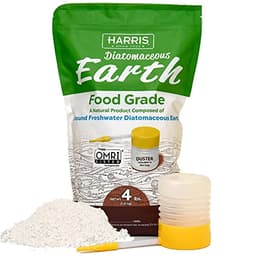
Microscopic fossilized diatoms that damage insect exoskeletons through physical abrasion, causing dehydration. Sprinkle on and around potato and tomato plants. USDA-approved for organic food production. Must be reapplied after rain or watering.
$8-$15 · Best for Barrier treatment around vegetable plants — kills beetles and larvae on contact
Check price on Amazon →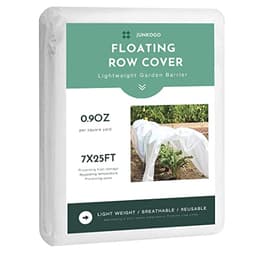
Spun-bond polypropylene fabric that drapes over crops and prevents adult beetles from reaching plants to lay eggs. Transmits 85%+ of light and allows rain through. Remove when plants flower if pollination is needed. The best preventive measure for potato beetle-prone gardens.
$15-$30 · Best for Preventing Colorado potato beetle infestation before it starts
Check price on Amazon →Treatment information on PlantFix is educational. When using any pesticide — including organic options like neem oil or insecticidal soap — read and follow the entire product label; the label is the law. For persistent or high-stakes problems, your local university extension service offers free, region-specific advice. Read about how we source and verify treatment guidance in our Editorial Standards.
FAQ
What is a potato bug?▼
"Potato bug" refers to three different creatures depending on your region: (1) Jerusalem crickets — large, bald, amber-colored insects up to 3 inches long, found in the western US, harmless; (2) Pill bugs/roly-polies — small gray crustaceans that roll into a ball, found everywhere, rarely harmful; (3) Colorado potato beetles — small striped yellow-and-black beetles that destroy potato, tomato, and eggplant crops. Only the Colorado potato beetle is an actual plant pest.
Do potato bugs bite?▼
Jerusalem crickets can bite if handled, and it's painful due to their large mandibles — but they are not venomous and the bite is harmless. They won't bite unless provoked. Pill bugs (roly-polies) cannot bite humans at all. Colorado potato beetles don't bite humans either; they only feed on plant leaves.
Are potato bugs dangerous?▼
None of the three "potato bugs" are dangerous to humans. Jerusalem crickets can deliver a painful but non-venomous bite if mishandled. Pill bugs are completely harmless. Colorado potato beetles don't interact with humans at all — they're dangerous only to plants in the Solanaceae family (potatoes, tomatoes, eggplants, peppers). No potato bug species is venomous or carries diseases.
How do I get rid of potato bugs in my garden?▼
It depends on which one you have. Jerusalem crickets and pill bugs usually don't need treatment — they're beneficial or neutral. For Colorado potato beetles: hand-pick adults, larvae, and egg clusters into soapy water; spray Bt tenebrionis or spinosad when larvae are small; use crop rotation every year; and cover plants with row covers to prevent adults from reaching your crops. Act early when larvae are small for best results.
Are potato bugs poisonous to dogs or cats?▼
No. Jerusalem crickets, pill bugs, and Colorado potato beetles are all non-toxic to pets. If a dog or cat eats one, it may cause mild stomach irritation (especially with pill bugs, which can have a mildly bitter taste), but there's no venom, toxin, or poison involved. If your pet seems unwell after eating any insect, a call to your vet is reasonable but serious reactions are extremely unlikely.
Related
- Chinch Bugs vs. Drought: How to Tell What's Actually Killing Your Lawn →
- Cicada Killer Wasp: Not a Murder Hornet (ID Guide + Yard Management) →
- Earwigs (Pincher Bugs): What They Look Like & How to Kill Them →
- Garden Pest Identification: 25+ Bugs by the Damage They Do →
- Lawn Grubs: The Underground Reason Your Grass Is Dying (ID + Treatment) →
- Leaf Footed Bug vs Assassin Bug: How to Tell Them Apart (And Not Kill the Wrong One) →
- Neem Oil for Plants: Complete Guide to Using It Effectively →
- Plant Bugs: Identify Any Bug on Your Plant in 30 Seconds →
- Spotted Lanternfly: How to ID, Kill & Report Them (2026 State Guide) →
- Squash Bugs: The Week-by-Week Battle Plan to Save Your Garden →
- Tiny Black Bugs on Plants: Identify & Get Rid of Gnats, Thrips & More →
- Tiny Red Bugs: Clover Mites, Spider Mites & How to ID Them →
Not sure what's wrong?
Use the diagnosis tool →Get seasonal plant care reminders and pest alerts.