Spider Mites: Identification, Treatment & Prevention Guide
9 min read · Updated 2026-09-28
fine webs and speckled leaves
Spider mites.
Fixable, but move quickly.
- Treat for
- 3–4 wks
- Spreads?
- Very fast
- Kills plant?
- Can, if ignored
Do this in the next 5 minutes
Isolate it, then take it to the shower
A strong stream of water over every leaf underside physically strips off mites, eggs and webbing. Do this before you spray anything — it removes most of the population for free.
What kills them
- Likely at home
A strong water spray
Sink, shower or hose, aimed at leaf undersides. Repeat every few days for the first fortnight.
- Likely at home
Dish soap and water
One teaspoon per litre. Mites die on contact but only on contact, so the undersides are the only place that matters.
- $8–14
Every 5–7 days for three to four rounds. Each application catches the hatch that emerged since the last one.
- $12–18
Alternate with the soap to prevent resistance. Never mix the two in one application, and never spray in direct sun.
Confirm before you treat
- Fine webbing where the leaf meets the stem
- Leaves look dusty, or stippled with pale dots
- Tap a leaf over white paper — specks that move
Failure point · Day 7
One spray and done
Sprays do not reliably kill eggs. You need an application every five to seven days for three or four rounds, otherwise the next hatch rebuilds the colony while you think you've won.
By PlantFix Editorial Team · Sources: University Extension Programs, USDA, EPA
Do You Have Spider Mites? The Quick Test
Spider mites are tiny arachnids (under 1mm) that live on leaf undersides and drain plant cells, causing yellow stippling dots and fine webbing between leaves. To confirm: hold white paper under a leaf, tap it firmly — if tiny dots fall onto the paper and slowly crawl, you have spider mites.
Act fast. Spider mites reproduce explosively in warm, dry indoor air — a few mites become thousands in 2-3 weeks. Start treatment today: spray all leaf surfaces (especially undersides) with a strong water stream to dislodge mites, then apply insecticidal soap every 5-7 days for 3 weeks. Increase humidity around the plant, as spider mites thrive in dry air. For severe infestations with heavy webbing, add neem oil as a follow-up treatment between soap applications.
Not sure if it's spider mites? Run it through our diagnosis tool — a few questions about what you’re seeing will narrow it down.
What Are Spider Mites?
Spider mites are tiny arachnids, not insects, belonging to the family Tetranychidae. The most common species found on houseplants is the two-spotted spider mite (Tetranychus urticae). They are incredibly small, typically less than 1/50 inch in length, which makes them nearly invisible to the naked eye. Under magnification, they appear as oval-shaped, eight-legged creatures in colors ranging from green and yellow to red and brown. Don't confuse them with clover mites, which are larger reddish-brown mites that invade windowsills in spring but don't damage plants — our tiny red spiders guide covers the key differences.
Spider mites feed by piercing individual plant cells with their needle-like mouthparts and sucking out the cell contents, including chlorophyll. A single mite causes negligible damage, but spider mites reproduce at an alarming rate. A female can lay up to 200 eggs in her lifetime, and in warm, dry conditions, a generation can complete its lifecycle in as little as one week. This exponential growth means a few mites can become thousands within a month.
The name 'spider mite' comes from the fine silk webbing that many species produce. This webbing protects the mites from predators, helps maintain the low-humidity microclimate they prefer near the leaf surface, and serves as a highway for mites to move between leaves and plants. The presence of webbing is often the first sign of a spider mite infestation that most people notice, but by the time webbing is visible, the population is usually quite large. If leaves are stippled and bleached but there's no webbing — just shiny, dark frass spots on the undersides — you're likely dealing with lace bugs instead, which get misdiagnosed as mites constantly.
How to Identify Spider Mites
Early detection is crucial because spider mites are far easier to control when populations are small. The first visible symptom is usually stippling: tiny, pale dots on the upper surface of leaves where individual cells have been drained. This stippling gives the leaf a speckled, faded, or dusty appearance. If you look closely, the dots are barely visible pinpricks, each representing one feeding site.
As the infestation progresses, stippling merges into larger areas of discoloration. Leaves may turn yellow, bronze, or silvery, and eventually become dry and crispy. Heavily infested leaves curl, wilt, and drop from the plant. Some plants shed leaves dramatically in response to spider mite damage.
The fine silk webbing is a telltale sign, though not all species or early-stage infestations produce visible webbing. Look for webbing where leaves meet stems, on the undersides of leaves, and at branch junctions. The webbing is finer and more delicate than a spider's web and often collects dust.
To confirm the presence of mites, hold a piece of white paper under a suspect leaf and gently tap or shake the leaf. If spider mites are present, tiny specks will fall onto the paper and begin to move slowly. Use a magnifying glass or your phone's camera zoomed in to see them more clearly. Another method is to wipe the underside of a leaf with a damp white tissue: if reddish or greenish streaks appear on the tissue, mites are present.
How to Treat Spider Mites
Begin treatment by isolating the affected plant immediately to prevent mites from spreading to nearby plants. Spider mites can travel via air currents, clothing, and the fine webbing they produce, so physical separation is important.
The first line of defense is a thorough shower. Take the plant to a sink, shower, or outdoor hose and spray every surface with a strong stream of water, paying special attention to the undersides of leaves. This physically dislodges mites, eggs, and webbing. For large plants, use a handheld showerhead. For small plants, you can even invert them and swish the foliage through a basin of soapy water. Repeat every few days for two weeks.
For chemical treatment, insecticidal soap and horticultural oil are the most effective options that are safe for indoor use. Insecticidal soap (potassium salts of fatty acids) kills mites on contact by dissolving their protective outer coating. It must be sprayed directly on the mites to work, so thorough coverage of leaf undersides is essential. Reapply every 5 to 7 days for three to four applications.
Neem oil is effective as both a contact killer and a growth disruptor. Mix and apply as described in our neem oil guide, making sure to cover the undersides of all leaves. Neem oil also has a residual repellent effect that helps prevent reinfestation.
For severe infestations, miticides specifically designed for spider mites may be necessary. Products containing abamectin or spiromesifen are effective but should be used as a last resort, as they are stronger chemicals. Rotate between different treatment types to prevent mites from developing resistance.
Preventing Spider Mites
Spider mites thrive in hot, dry conditions, so maintaining adequate humidity is the single most effective prevention strategy. Keep indoor humidity above 40 to 50 percent, especially during winter when heating systems dry the air. Use a humidifier, group plants together to create a more humid microclimate, or place plants on pebble trays filled with water.
Regularly misting plant leaves can help, but it is less effective than maintaining overall room humidity. Mist dries quickly and only provides temporary relief. If you do mist, focus on the undersides of leaves where mites tend to congregate.
Routinely inspect your plants, especially during warm, dry periods. Make it a habit to check the undersides of leaves weekly using the white paper tap test or a magnifying glass. Catching an infestation in its first week when only a few mites are present is dramatically easier to treat than discovering it after webbing has formed.
Keep plants clean by wiping leaves with a damp cloth every few weeks. This removes dust, which mites hide in, and also physically removes any mites or eggs before they can establish a population. Cleaning also helps the plant photosynthesize more efficiently.
Quarantine all new plants for at least two weeks and inspect them thoroughly before placing them with your existing collection. Spider mites are one of the most common pests carried home from nurseries and garden centers. Also wash and sterilize pots and tools between uses to avoid transferring mites. Note: if you're seeing tiny specks crawling in the soil rather than on leaves, you may have soil mites instead — these are different creatures that are usually harmless.
Which Plants Are Most Susceptible?
While spider mites can feed on virtually any plant, some species are particularly attractive to them. Plants with thin, soft leaves tend to be targeted first because they are easier for the mites' tiny mouthparts to penetrate.
Among common houseplants, the most frequently attacked include: Alocasias and calatheas, which combine thin leaves with a preference for humid conditions that is often not met indoors. English ivy is notoriously prone to spider mites, especially in dry indoor air. Roses (including miniature indoor roses) are a favorite host. Palms, especially areca palms and majesty palms, are frequently infested. Herbs like mint, basil, and oregano are also common targets. Money trees (Pachira aquatica) aren't a top host, but the dry, heated air of winter makes them a frequent seasonal victim — and the fine yellow speckling mites leave on the leaflets is easy to mistake for a watering problem, which our money tree yellow leaves guide sorts out.
Succulents and cacti are generally less susceptible because their thick, waxy cuticles are harder for mites to penetrate, though severe infestations can still occur. Plants with naturally hairy or fuzzy leaves, like African violets, are somewhat protected because the leaf hairs make it harder for mites to move and feed.
Stressed plants are much more vulnerable than healthy ones. Plants suffering from drought stress, nutrient deficiency, or poor light are less able to produce the defensive chemicals that deter mites. Keeping your plants healthy and properly cared for is itself a form of pest prevention. Well-watered, well-fed plants in appropriate light conditions can actually repel low-level mite attacks through their own chemical defenses.
Biological Control Options
For those who prefer to avoid any chemical treatments, including organic ones, predatory mites offer an excellent biological control option. The most commonly used predator is Phytoseiulus persimilis, a specialized spider mite predator that feeds exclusively on spider mites and their eggs. Each predatory mite can consume 5 to 20 spider mites per day.
Predatory mites are sold by specialty suppliers and are shipped live, usually in a vermiculite or bran carrier. Upon arrival, sprinkle the carrier material directly onto the infested plants, focusing on areas with high mite concentrations. The predators will immediately begin searching for prey. Under good conditions (temperatures between 60 and 85 degrees Fahrenheit with humidity above 60 percent), predatory mites will reproduce and continue controlling spider mites for weeks.
Another effective predator is Amblyseius californicus, which is more tolerant of lower humidity and can survive on pollen and other food sources when spider mite populations are low. This makes it a better choice for preventative use or in drier indoor environments.
Ladybugs and lacewing larvae also eat spider mites but are impractical for indoor use because they tend to fly toward windows and lights rather than staying on your plants. Green lacewing larvae, sometimes sold as 'aphid lions,' can be more effective indoors because they are wingless during their predatory larval stage.
Biological control works best in enclosed or semi-enclosed environments and when combined with cultural practices like maintaining humidity. It is most practical for plant collectors with large collections where ongoing chemical treatment would be tedious.
Recommended Products
We earn a commission if you buy through these links, at no extra cost to you. We recommend based on what works, not what pays. How this works.
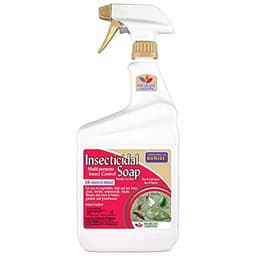
Potassium salts of fatty acids in a ready-to-use spray bottle. Kills spider mites, aphids, mealybugs, and whiteflies on contact by disrupting their cell membranes. Safe for indoor use and leaves no toxic residue. Must contact the pest directly to work.
$8-$14 · Best for Safe, effective contact treatment for active infestations
Check price on Amazon →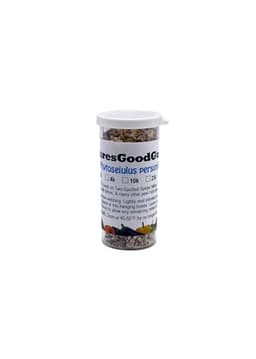
Live predatory mites shipped in a vermiculite carrier. Each predator consumes up to 20 spider mites per day. Sprinkle directly onto infested plants. Best results in humid conditions above 60%. Chemical-free biological control.
$20-$35 · Best for Chemical-free biological control for large collections
Check price on Amazon →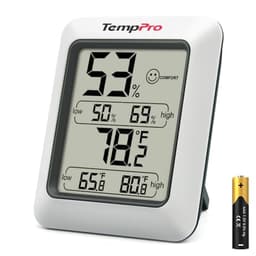
Accurate humidity and temperature monitor with min/max memory. Place near your plants to ensure humidity stays above 40-50%. Helps prevent spider mite outbreaks by alerting you to dry conditions before they become a problem.
$8-$15 · Best for Monitoring conditions to prevent future outbreaks
Check price on Amazon →Treatment information on PlantFix is educational. When using any pesticide — including organic options like neem oil or insecticidal soap — read and follow the entire product label; the label is the law. For persistent or high-stakes problems, your local university extension service offers free, region-specific advice. Read about how we source and verify treatment guidance in our Editorial Standards.
FAQ
Can spider mites live on humans?▼
No. Spider mites cannot live on humans or pets. They are exclusively plant parasites and will die quickly without a plant host. They can temporarily land on clothing and skin, which is one way they travel between plants, but they will not bite you, burrow into skin, or establish a population on a person. If you are experiencing bites, you are dealing with a different pest entirely.
How did my indoor plant get spider mites?▼
Spider mites can enter your home in several ways. The most common is on new plants purchased from nurseries or garden centers. They can also blow in through open windows on air currents, hitch a ride on clothing (especially if you have been gardening outdoors), or arrive on cut flowers and produce from the garden. Even potting soil and gardening tools can harbor mites or their eggs.
Will spider mites go away on their own?▼
No. Without intervention, spider mite populations will grow exponentially until they have severely damaged or killed the host plant, at which point they will migrate to the next available plant. Their rapid reproduction rate means a wait-and-see approach almost always results in a worse problem. Early, aggressive treatment is the best strategy.
Can I use rubbing alcohol on spider mites?▼
Isopropyl alcohol (70%) can be used as a spot treatment for spider mites. Dip a cotton swab or cotton ball in rubbing alcohol and wipe the undersides of affected leaves. The alcohol kills mites on contact by desiccating them. The same technique works well on mealybugs — see our <a href="/guides/rubbing-alcohol-mealybugs">rubbing alcohol for mealybugs guide</a> for the full protocol. However, alcohol can also damage plant cells, so it is best reserved for small infestations or as a supplement to gentler methods like insecticidal soap. Do not spray alcohol on the entire plant, as it can cause significant leaf burn.
Related
- Aphids on Plants: How to Kill Them Fast (and Stop the Ants) →
- Clover Mites: The Harmless Red Bugs That Stain When Crushed →
- Houseplant Pests: Visual ID Guide to Every Bug on Your Indoor Plants →
- Mealy Bugs on Plants: How to Identify & Kill Them Fast →
- How to Get Rid of Thrips on Houseplants (4-Week Plan) →
- Scale Insects on Houseplants: How to Identify and Get Rid of Them →
- Neem Oil for Plants: Complete Guide to Using It Effectively →
- Plant Bugs: Identify Any Bug on Your Plant in 30 Seconds →
- Kill Mealybugs With Rubbing Alcohol (on Contact, No Burn) →
- Tiny Red Bugs: Clover Mites, Spider Mites & How to ID Them →
- Tiny Red Spiders: Clover Mites vs Spider Mites vs Red Velvet Mites (ID Guide) →
- Tiny White Bugs on Plants: Identify & Kill All 5 Types →
- Whiteflies: The Shake Test, Damage Chain & 3-Week Treatment Protocol →
- Yellow Leaves on Plants: Every Cause & How to Fix It →
Plants Commonly Affected
Not sure what's wrong?
Use the diagnosis tool →Get seasonal plant care reminders and pest alerts.