Tiny Black Bugs on Plants: Gnats, Thrips & How to Kill Them
Identify your tiny black bugs — fungus gnats, thrips, black aphids, or shore flies — and get the exact fix for each. Plus the 10-second gnat test.
12 min read · Updated 2026-10-19
By PlantFix Editorial Team · Sources: University Extension Programs, USDA, EPA
What Are Those Tiny Black Bugs?
Those tiny black bugs on your houseplant are almost certainly fungus gnats — small, dark flies about 1/8 inch long that hover around the soil surface like miniature mosquitoes. They're by far the most common black bug found on indoor plants. If you water your plant and tiny dark specks fly up from the soil, that's them. About 80% of "what are these tiny black bugs?" questions on plant forums turn out to be fungus gnats.
The other 20%? Thrips (slender dark insects on the leaves, not the soil), black aphids (clustered on stems and new growth), shore flies (stockier cousins of fungus gnats), or drain flies (fuzzy, moth-like — not a plant pest at all). The treatments differ for each, so correct identification matters.
The fastest way to tell: fungus gnats fly weakly and hover near the soil. Thrips are on the leaves and don't really fly — they jump or flutter between leaf surfaces. Black aphids cluster on stems and don't fly. If the bugs jump out of the soil but don't fly, those might be dark-colored springtails, which are harmless. If the bugs are red rather than black, see our tiny red bugs identification guide instead.
Identification: 5 Types of Tiny Black Bugs on Plants
Start with two questions: Do they fly? And where on the plant are they?
Flying near the soil — Fungus gnats. Small, dark flies with long legs and antennae. Weak, erratic fliers that hover in short patterns close to the soil surface. Up close, they look like tiny dark mosquitoes. Adults are annoying but don't damage plants directly — it's the soil-dwelling larvae (translucent worms with shiny black heads) that eat roots.
On the leaves, fast-moving, slender — Thrips. Tiny (1-2mm), elongated, dark brown to black insects. They're hard to see and harder to catch. Thrips don't fly in the traditional sense — they have fringed wings and sort of flutter-jump between leaves. Their damage is distinctive: silvery or bronze streaks on leaf surfaces, plus tiny dark dots of excrement. Penn State Extension identifies thrips as among the most difficult houseplant pests to control.
Clustered on stems and new growth, not flying — Black aphids. Soft-bodied, pear-shaped insects about 2mm long, clustered in groups on tender new growth and leaf undersides. They produce sticky honeydew and cause new leaves to curl and distort. Unlike fungus gnats, they stay on the plant.
Stockier flies, stronger fliers, near very wet soil — Shore flies. These look like fungus gnats but have a noticeably heavier build, shorter antennae, and stronger flight. They breed in standing water and algae-covered soil. According to UC Davis IPM, shore flies are "mainly a nuisance pest" — they don't damage roots.
Fuzzy-winged, heart-shaped at rest, near drains — Drain flies. These aren't plant pests. They breed in drain sludge, not potting soil, but people find them in kitchens and bathrooms near plants and blame the plant. They have a distinctive moth-like appearance with fuzzy wings. Clean your drains, not your plants.
Fungus Gnats: The Ones Hovering Over Your Soil
Fungus gnats (families Sciaridae and Mycetophilidae) are the indoor plant bug I hear about more than any other. The good news is they're annoying but very treatable once you understand what's going on.
The adult flies are the visible nuisance — those dark specks hovering around your pots — but they're not the real problem. Each adult lives only about a week, doesn't bite, doesn't eat leaves, and doesn't directly damage your plant. The problem is what they do while alive: laying eggs. A single female deposits 100-200 eggs on the soil surface, and those eggs hatch into translucent larvae with shiny black heads that live in the top 2-3 inches of moist soil.
The larvae feed primarily on fungi, algae, and decaying organic matter in the potting mix. For established plants, this usually causes no harm. But when populations explode or organic matter runs low, larvae turn to fine root hairs and root tips. For seedlings, cuttings, and small plants, this root damage can be serious — stunted growth, wilting, and sometimes death.
The lifecycle runs about 3-4 weeks from egg to adult in typical indoor temperatures. This matters for treatment: you can't fix this with one application of anything, because eggs and pupae survive most treatments. You need sustained treatment for at least one full lifecycle.
Why you have them: overwatering. That's it. Fungus gnats cannot survive or reproduce in dry soil. UC Davis IPM states that the single most effective control measure is "allowing the soil to dry to a depth of one to two inches between waterings." If your soil stays consistently moist, you're running a gnat nursery.
The gold standard treatment is BTI (Bacillus thuringiensis israelensis), sold as Mosquito Bits. This naturally occurring bacterium produces proteins toxic specifically to gnat and mosquito larvae — harmless to everything else. Soak 4 tablespoons in a gallon of water for 30 minutes, strain, and use the treated water every time you water for 4 weeks. Combined with yellow sticky traps for adults, this eliminates fungus gnats reliably.
Thrips: The Fast-Moving Leaf Scrapers
Thrips (order Thysanoptera) are the black bug you should actually worry about. They're harder to see than gnats, harder to kill, and do significantly more damage per insect. If you see tiny, dark, slender bugs darting across your plant's leaves with silvery streaks left behind, you're dealing with thrips.
These insects feed by rasping the leaf surface with asymmetric mouthparts and sucking up the released cell contents. The feeding scars appear as silvery or bronze patches — damage that's distinctive once you learn to recognize it. You'll also notice tiny black dots (frass) scattered near the feeding areas. In heavy infestations, leaves curl, distort, and eventually brown.
What makes thrips particularly nasty is their lifecycle. Females lay eggs inside plant tissue — literally inserting them into leaves with a saw-like ovipositor. Surface sprays can't reach those eggs. Larvae feed on leaves, then drop to the soil to pupate, then emerge as adults that fly back up. You're fighting on two fronts simultaneously.
The other challenge: thrips develop pesticide resistance faster than most pests. University of Minnesota Extension recommends rotating between different treatment types to prevent resistance buildup. Here's my four-week protocol:
Week 1: Insecticidal soap — thorough coverage of all leaf surfaces, tops and bottoms. Unfurl new leaves and get into bud sheaths where thrips hide.
Week 2: Neem oil spray. Different mode of action prevents resistance. Apply in the evening to avoid leaf burn.
Week 3: Spinosad-based spray if available (Captain Jack's Dead Bug Brew). Spinosad is naturally derived and particularly effective against thrips.
Week 4: Repeat neem oil. Continue monitoring for new damage.
Throughout all four weeks: place blue sticky traps near the plant (thrips prefer blue over yellow). Apply a neem oil soil drench weekly to kill pupating larvae in the soil. Plants that thrips love: monstera, fiddle leaf figs, orchids, and anything with large, flat leaves.
Black Aphids: Clusters on New Growth
Black aphids (Aphis fabae and related species) are the third most common black bug on houseplants, and they're the easiest to deal with once you spot them. They cluster in visible groups on new growth, stem tips, flower buds, and leaf undersides.
They're soft-bodied, pear-shaped, and about 2mm long — roughly the size of a sesame seed. Unlike many aphid species that are green or yellow, these are dark brown to black. You'll find them on the softest, most nutrient-rich parts of the plant, feeding by inserting needle-like stylets into plant tissue and sucking phloem sap.
One unsettling fact about aphids: females don't need males to reproduce. Through parthenogenesis, a single female produces live young without mating, and those young are born already pregnant with the next generation. According to the Royal Horticultural Society, one aphid can theoretically produce millions of descendants in a single growing season. This is why small colonies seem to appear overnight — they very nearly do.
The damage: curled and distorted new growth, yellowing leaves, sticky honeydew deposits, and black sooty mold growing on the honeydew. Severe infestations leave the plant stunted and weakened.
The good news: aphids are among the easiest pests to treat. A strong blast of water from a sink sprayer knocks off 80% of them. Follow up with insecticidal soap every 5-7 days for 2-3 weeks. Neem oil works too but acts more slowly. For small infestations on a few plants, you can literally wipe them off with a damp cloth or your fingers. After treatment, check thoroughly — aphids hide in the folds of curled leaves they've already damaged, and a few survivors restart the whole cycle. For the complete guide covering all aphid species and their unique reproductive biology, see our dedicated aphids treatment guide.
Shore Flies & Drain Flies: Lookalikes That Aren't Plant Pests
These two get confused with fungus gnats constantly, and the treatment for each is different — or in the case of drain flies, has nothing to do with your plants.
Shore flies (family Ephydridae) look a lot like fungus gnats but with a stockier build, shorter legs, shorter antennae, and notably stronger flight. While fungus gnats flutter weakly near the soil surface, shore flies zip around with more purpose and confidence. They breed in standing water and very wet soil with algae growth. UC Davis IPM confirms that shore flies are "mainly a nuisance pest" that don't damage plant roots or foliage. Their larvae feed on algae, not roots.
If you have shore flies, the fix is simple: eliminate standing water, improve drainage, and let the top layer of soil dry between waterings. Scrape away any green algae buildup on the soil surface. They'll disappear on their own once conditions dry out.
Drain flies (family Psychodidae) are not plant pests at all. They're small (2-5mm), fuzzy, moth-like flies with broad wings held in a tent shape over their bodies. They breed in the organic sludge inside drains, not in potting soil. But people find them in bathrooms and kitchens near plants and immediately blame the plant.
The test is simple: if the fuzzy, moth-like flies appear mainly around sinks, showers, or floor drains — and especially if they increase after you don't use a drain for a few days — it's drain flies. The fix is cleaning the drain, not treating the plant. Pour boiling water down the drain, follow with an enzyme-based drain cleaner, and scrub inside the drain opening. The flies stop appearing within a week once their breeding site is gone.
Fungus Gnats vs. Fruit Flies: The 10-Second Eye Test
This is the question I get asked most about small dark bugs near plants. Our complete gnats vs fruit flies guide has the full comparison with treatment for each. The answer matters because the treatments are completely different, and using the wrong one wastes your time.
The 10-Second Eye Test: get close enough to see the bug's eyes. Fruit flies have large, distinctive red or dark red eyes that are easy to spot even without magnification. Fungus gnats have small, dark, unremarkable eyes. This single detail is the most reliable way to tell them apart.
Body shape: fruit flies are round and stout, like tiny house flies. Fungus gnats are slender and elongated, like tiny mosquitoes with disproportionately long legs.
Where they hang out: fungus gnats hover near plant soil and windows. Fruit flies congregate around ripe fruit, trash cans, recycling bins, compost, and drains — they follow fermentation, not soil.
Flight pattern: fungus gnats are weak, erratic fliers that tend to run across surfaces when you approach. Fruit flies are stronger, faster, and zip away when you swat at them.
The trap test if you're still unsure: set up two traps side by side. A small cup of apple cider vinegar with a drop of dish soap catches fruit flies. A yellow sticky card at soil level catches fungus gnats. Whichever trap fills up faster tells you what you're dealing with.
Treatment is completely different. Fungus gnats need soil management: let soil dry, use BTI drenches, add sand layers. Fruit flies need kitchen sanitation: remove overripe fruit, clean drains, take out trash more frequently. Using fruit fly solutions on fungus gnats won't do anything useful because you're targeting the wrong lifecycle.
Have both? It happens. Address both breeding sites simultaneously — soil for gnats, kitchen for fruit flies.
How to Get Rid of Tiny Black Bugs (Step-by-Step)
Treatment depends on which bug you identified — for fungus gnats specifically, our guide on how to get rid of gnats has the full protocol. Here's the protocol for each.
For fungus gnats (most common):
Step 1: Let the soil dry. Allow the top 1-2 inches to dry completely between waterings. This alone kills larvae and stops egg-laying.
Step 2: Set yellow sticky traps at soil level to capture adults. Replace every 3-5 days.
Step 3: BTI drench. Soak 4 tablespoons Mosquito Bits in a gallon of water for 30+ minutes. Strain and use to water your plant. Repeat with every watering for 4 weeks. This is the single most effective treatment.
Step 4: Optional — add a half-inch layer of coarse sand or perlite on the soil surface to physically block egg-laying.
For thrips:
Step 1: Isolate the plant immediately. Thrips spread faster than most pests.
Step 2: Spray with insecticidal soap, covering all leaf surfaces including undersides, new growth, and bud sheaths.
Step 3: Apply neem oil one week later. Alternate soap and neem weekly for 4 weeks.
Step 4: Place blue sticky traps near the plant (thrips are attracted to blue).
Step 5: Apply a neem oil soil drench to kill pupating larvae in the soil.
For black aphids:
Step 1: Blast them off with water. A sink sprayer or shower removes most of the population.
Step 2: Apply insecticidal soap to remaining clusters.
Step 3: Repeat soap spray every 5-7 days for 2-3 weeks. Check new growth first — that's where they return.
For all types: continue monitoring for at least a month after treatment appears successful. Eggs and hidden individuals can restart infestations surprisingly fast.
Prevention: Stopping Black Bugs Before They Start
Prevention for tiny black bugs comes down to three core habits.
Water correctly. Overwatering is the number one cause of fungus gnats — hydrogen peroxide soil drenches kill larvae fast, and insecticidal soap handles thrips and aphids on contact. The most common tiny black bug on houseplants. Check soil moisture before every watering. If the top inch is still moist, wait another day or two. Use pots with drainage holes and empty saucers within 30 minutes of watering. If you struggle with overwatering, a $10 moisture meter removes all guesswork.
Quarantine new plants. Two weeks minimum, isolated from your existing collection. Inspect leaf undersides and stems every few days during quarantine. Thrips in particular are extremely common on nursery plants and nearly impossible to spot until they've settled in, started feeding, and begun reproducing. A two-week quarantine catches most hitchhikers before they spread.
Inspect regularly. A quick weekly check of leaf undersides, stems, and soil surface catches infestations early when they're still easy to handle. For thrips, gently shake suspect leaves over a white piece of paper — the tiny dark insects fall and are visible against the white background. For fungus gnats, keep one yellow sticky trap in your collection permanently — if catch rates suddenly jump, investigate immediately before the population grows.
Use well-draining soil. Heavy, moisture-retentive mixes create perfect breeding conditions for fungus gnats. Amend standard potting mix with 25-30% extra perlite to improve drainage and aeration. This matters most for plants in pots without drainage holes or in low-light rooms where soil dries slowly.
Store potting soil in sealed containers between uses. An open bag of moist potting mix in a warm garage is essentially a fungus gnat incubator. Seal bags tightly, or microwave small batches for 90 seconds before use to kill any eggs or larvae that might be present.
Recommended Products
We earn a commission if you buy through these links, at no extra cost to you. We recommend based on what works, not what pays. How this works.
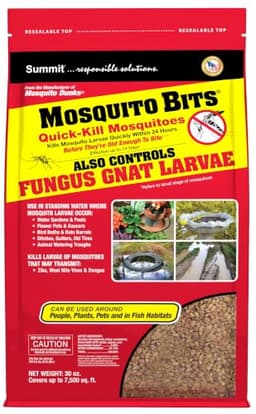
Granules containing Bacillus thuringiensis israelensis that specifically kill fungus gnat larvae within 24 hours. Soak in water for 30 minutes, strain, and use to drench soil. Harmless to plants, pets, humans, and all non-target organisms. Use with every watering for 4 weeks.
$8-$15 · Best for Gold standard treatment for fungus gnat larvae
Check price on Amazon →
Bright yellow adhesive cards that attract and trap fungus gnat adults. Place at soil level using included stakes. Non-toxic, odorless. Also catches whiteflies and shore flies. Replace every 3-5 days. Doubles as a monitoring tool to track treatment progress.
$6-$12 · Best for Catching adult fungus gnats and monitoring infestation levels
Check price on Amazon →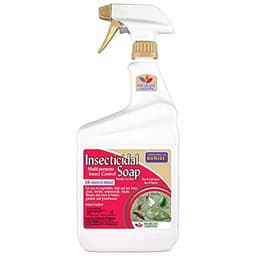
Potassium salts of fatty acids that kill thrips, black aphids, and other soft-bodied insects on contact. Must contact the pest directly. No toxic residue once dry. Safe for indoor use. Essential for thrips and aphid infestations where BTI won't work (BTI only targets gnat larvae).
$8-$14 · Best for Treating thrips and black aphids on foliage
Check price on Amazon →Treatment information on PlantFix is educational. When using any pesticide — including organic options like neem oil or insecticidal soap — read and follow the entire product label; the label is the law. For persistent or high-stakes problems, your local university extension service offers free, region-specific advice. Read about how we source and verify treatment guidance in our Editorial Standards.
FAQ
Are tiny black bugs on plants harmful?▼
It depends on the type. Fungus gnat adults are harmless — they don't bite or damage leaves — but their larvae can damage roots in severe infestations. Thrips actively damage leaves by scraping and feeding on cell contents, leaving silvery streaks. Black aphids suck sap and cause curling, yellowing leaves. Shore flies and drain flies are nuisance pests that don't damage plants at all.
Why do I have tiny black flies around my plants?▼
Overwatering. Fungus gnats lay eggs in moist soil, and the larvae need consistently damp conditions to survive. If your potting soil stays wet at the surface between waterings, you're providing ideal breeding conditions. The fix starts with letting the top inch of soil dry out between waterings. Improve drainage, use pots with drain holes, and avoid letting plants sit in saucers of water.
How long does it take to get rid of fungus gnats?▼
With consistent treatment, 3-4 weeks. The lifecycle from egg to adult takes about 3 weeks, so you need to maintain treatment for at least one full cycle to catch every stage. A single hydrogen peroxide drench or BTI application may provide visible relief within days, but stopping early allows surviving eggs to hatch and restart the population. Use BTI-treated water with every watering for a full month for complete control.
What kills fungus gnats instantly?▼
Hydrogen peroxide soil drench (1 part 3% hydrogen peroxide to 4 parts water) kills larvae on contact when used as a soil drench. Yellow sticky traps catch adults immediately. But instant kill isn't enough — eggs in the soil survive both treatments. You need ongoing treatment with BTI (Mosquito Bits) for 3-4 weeks to break the entire lifecycle and prevent the population from bouncing back.
How do I tell if I have gnats or fruit flies?▼
Look at the eyes: fruit flies have large, distinctive red eyes; fungus gnats have small dark eyes. Look at the body: fruit flies are round and stout; gnats are slender with long legs. Look at the location: gnats hover near plant soil; fruit flies hang around fruit, trash, and drains. The easiest test: set a yellow sticky card by the plants and a cup of apple cider vinegar by the kitchen. The trap that fills faster tells you what you have.
Related
- Plant Bugs: Identify Any Bug on Your Plant in 30 Seconds →
- Fungus Gnats: How to Identify & Eliminate Them for Good →
- How to Get Rid of Gnats in Plants Fast: 7 Proven Methods →
- Tiny Red Bugs: Clover Mites, Spider Mites & How to ID Them →
- Gnats vs Fruit Flies: How to Tell the Difference in 10 Seconds →
- Tiny White Bugs on Plants: Identify & Kill All 5 Types →
- Apple Cider Vinegar Gnat Trap: The Recipe That Works in Hours →
- Yellow Sticky Traps for Gnats: Placement & Best Picks →
- Mealy Bugs on Plants: How to Identify & Kill Them Fast →
- Best Indoor Fly Traps for Plant Owners (2026): What Actually Works →
- Hydrogen Peroxide for Fungus Gnats: The Exact Ratio & Why It Fails for Some People →
- Aphids on Plants: How to Kill Them Fast (and Stop the Ants) →
- Houseplant Pests: Visual ID Guide to Every Bug on Your Indoor Plants →
Not sure what's wrong?
Use the diagnosis tool →Get seasonal plant care reminders and pest alerts.