Plant Bugs: Identify Any Bug on Your Plant in 30 Seconds
Identify any bug on your plant in 30 seconds using color, location, and damage clues, then get the exact treatment for each of the common houseplant pests.
15 min read · Updated 2026-08-11
By PlantFix Editorial Team · Sources: University Extension Programs, USDA, EPA
The Most Common Bugs on Houseplants
The most common bugs on houseplants are fungus gnats, spider mites, mealybugs, aphids, scale insects, thrips, and whiteflies. These seven pests account for over 95% of all indoor plant bug problems, and nearly every houseplant owner encounters at least one of them eventually. The good news: all of them are treatable at home with basic supplies, and catching them early makes the difference between a quick fix and losing a plant.
I've spent years helping people identify plant bugs, and the same pattern repeats: someone spots something tiny moving on their plant, panics, and either drowns the plant in pesticide or pretends they didn't see it. Both approaches cause problems. This guide gives you a systematic way to identify exactly what's on your plant using three methods — color, location, and damage pattern — so you can skip the guesswork and go straight to the right treatment. If you're dealing with outdoor garden pests rather than houseplant bugs, see our guides on potato bugs, squash bugs, leaf footed bugs, cicada killer wasps, spotted lanternflies, and earwigs. For lawn-destroying caterpillars, see our armyworm guide. For caterpillars destroying trees and hedges, see our bagworm guide. For a complete seasonal identification chart covering all outdoor pests, see our garden pests guide.
For a quick visual chart matching indoor bugs to treatments in under 30 seconds, see our houseplant pests identification guide.
If you want a faster answer, work through our plant diagnosis tool. It narrows most common pests down in a few questions and suggests a treatment plan.
Identify Plant Bugs by Color
Color is the fastest way to narrow down what type of bug you're dealing with. Most houseplant pests fall into distinct color groups, and even without a magnifying glass, you can usually tell whether you're looking at something red, white, black, or green.
Red or reddish-brown bugs on plants are almost always spider mites. These tiny arachnids are barely visible without magnification but leave telltale fine webbing between leaves and stems. If you're finding red bugs on your windowsill or patio rather than directly on plant leaves, those are clover mites — completely harmless. Our tiny red bugs guide covers all the red bug lookalikes in detail, including tiny red spiders that are actually spider mites.
White bugs fall into three main categories: mealybugs (cottony clusters that don't move), whiteflies (tiny flying specks that scatter when you touch the plant), and root aphids (translucent white dots in the soil). Springtails also appear white and jump when disturbed, but they're harmless decomposers — not pests. See our tiny white bugs guide for the full breakdown, including how to identify mealybugs at every life stage.
Black bugs on plants are most commonly fungus gnats — those annoying small flies hovering around your soil. Thrips are another possibility: slender, dark insects that scrape leaf surfaces and leave silvery streaks. Black aphids cluster on new growth and buds. Our tiny black bugs guide walks through each type with identification tips.
Green bugs are aphids in the vast majority of cases. They're soft-bodied, pear-shaped, and cluster on tender new growth. Don't confuse them with green lacewing larvae, which are beneficial predators that eat pest insects.
Brown bumps on stems are typically scale insects. They don't look like insects at all until you scrape one off and see the soft body underneath the armored shell.
Identify Plant Bugs by Where You Find Them
Where you find the bug is just as diagnostic as what it looks like. Different pests prefer different parts of the plant, and this location preference is often the quickest clue.
Bugs flying near the soil surface: fungus gnats, almost certainly. These small, dark flies hover around moist potting soil because their larvae feed on fungi and organic matter in the top inch or two. They're weak fliers that stay close to the soil rather than zooming around the room. If the flies are stronger fliers heading toward fruit or trash, they're fruit flies — different pest, different treatment entirely.
Bugs on leaf undersides: check for spider mites (tiny red or green dots with webbing), whiteflies (small white insects that fly when disturbed), or aphids (clustered soft-bodied insects). Many pests prefer leaf undersides because it's a protected environment away from direct light and predators. Make checking undersides a weekly habit. By the time bugs show up on the tops of leaves, the infestation is usually advanced.
Bugs at leaf joints and stems: mealybugs love to wedge themselves where leaves meet stems. They look like small cotton puffs tucked into crevices. Scale insects also favor stems and the midribs of leaves.
Bugs on new growth and flower buds: aphids and thrips both target tender, nutrient-rich new growth. If new leaves are emerging distorted, curled, or with tiny scars, check these areas carefully.
Bugs in the soil: root mealybugs and root aphids live below the soil surface and feed on roots. You might not see them unless you unpot the plant. Springtails also live in soil but jump when disturbed — they're harmless.
Bugs on windowsills near plants: usually clover mites (harmless, seasonal) or fungus gnat adults that have wandered from your plants. They don't damage your home and will die within days indoors.
Identify Plant Bugs by the Damage They Leave
Even if you can't see the bugs themselves, the damage they leave behind tells you exactly what's been feeding on your plant.
Fine webbing between leaves and stems: spider mites. The webbing is silkier and finer than a house spider's web and often collects dust. By the time you notice webbing, the population is usually large. Look for tiny yellow or white stippling dots on the leaf surface — each dot is one drained cell.
Sticky, shiny residue on leaves (honeydew): aphids, mealybugs, scale, or whiteflies all excrete honeydew — a sugary waste product that makes leaves feel tacky. Black sooty mold may develop on the honeydew deposits. If your plant's leaves feel sticky and you didn't spray anything, something is feeding on them.
Silvery or bronze streaks on leaves: thrips. They scrape the leaf surface with rasping mouthparts and feed on the released cell contents. The damaged areas have a distinctive silvery, papery appearance. You may also see tiny dark dots of thrip excrement.
Yellowing leaves with no obvious cause: if you've ruled out watering and light issues, sap-sucking insects like spider mites, aphids, or scale could be draining enough nutrients to cause yellowing. Check our yellow leaves guide for the full diagnostic process.
Distorted or curled new growth: aphids and thrips both cause new leaves to emerge twisted, cupped, or stunted because they feed on the developing tissue before it fully unfurls.
Cottony white masses in leaf joints: mealybugs. The waxy coating protects both the insects and their eggs. Each cotton puff can contain hundreds of eggs.
Small brown bumps that don't wipe off easily: scale insects. They look like natural growths, which is why they often go unnoticed until severe. Scrape one off with a fingernail — if there's a soft body underneath, it's scale.
The 30-Second Bug ID Test
Found something on your plant and want to identify it fast? Answer these five questions.
Question 1: Does it fly? Yes — Is it near the soil? That's a fungus gnat. Is it on the leaves and white? That's a whitefly. Is it near fruit or trash, not the plant? That's a fruit fly, not a plant pest at all.
Question 2: Is there webbing? Yes — Spider mites. Start treatment today. They reproduce explosively and can overwhelm a plant in weeks.
Question 3: Does it look like cotton? Yes — Mealybugs. Check every leaf joint and stem crevice, because they hide everywhere and multiply fast.
Question 4: Does it look like a bump or blister on the stem? Yes — Scale insect. Scrape it with your fingernail to confirm there's a soft body underneath.
Question 5: Is it clustered on new growth? What color? Green: green aphids. Black: black aphids. Slender and dark: thrips.
If you've answered all five and still aren't sure, work through our diagnosis tool. It can narrow most common plant pests down in a few questions and recommend next steps.
Remember: not every bug near your plant is a pest. Springtails (white, jumping, in soil) are harmless decomposers. Clover mites (red, on windowsills) don't touch houseplants. Red velvet mites (large, fuzzy, outdoors) are beneficial predators. Don't spray what doesn't need spraying.
The 10 Most Common Plant Bugs (Quick Reference)
Here's every bug you're likely to encounter on houseplants, roughly ranked by how often they show up.
- Fungus gnats — Small dark flies hovering around soil. Larvae feed on roots in moist potting mix. Fix: let soil dry between waterings, use BTI (Mosquito Bits). The most frequently reported indoor plant pest.
- Spider mites — Barely visible dots on leaf undersides with fine webbing. Pierce individual plant cells and drain them. Fix: blast with water, insecticidal soap, neem oil. They thrive in dry air, so humidity is your best prevention.
- Mealybugs — White cottony clusters at leaf joints and stems. Suck sap and excrete honeydew. Fix: rubbing alcohol on cotton swab for small outbreaks, insecticidal soap or neem oil for larger ones. Check for root mealybugs too.
- Aphids — Soft, pear-shaped, clustered on new growth. Come in green, black, yellow, and white. Fix: strong water spray knocks off most of them, then insecticidal soap. A single aphid can start a colony without mating.
- Scale insects — Small brown bumps on stems and leaves. Easy to miss because they don't look like insects. Fix: scrape off by hand, rubbing alcohol, horticultural oil. Harder to treat than most pests because of their protective armor.
- Whiteflies — Tiny white flying insects on leaf undersides. Scatter in a cloud when you disturb the plant. Fix: yellow sticky traps, insecticidal soap, neem oil. More common in warm conditions.
- Thrips — Slender dark insects that scrape leaf surfaces. Leave silvery streaks and black frass dots. Fix: neem oil, insecticidal soap, blue sticky traps (thrips prefer blue over yellow). The hardest houseplant pest to fully eliminate.
- Root mealybugs — White waxy bugs living on roots below soil. Cause unexplained wilting and decline. Fix: neem oil soil drench or systemic granules, or repot with thorough root cleaning.
- Springtails — Tiny white jumping bugs in moist soil. Actually harmless decomposers that feed on fungi and organic matter. Fix: just water less. No treatment needed.
- Shore flies — Stockier than fungus gnats, stronger fliers, found in very wet soil with algae growth. Mostly harmless. Fix: same as fungus gnats — improve drainage, let soil dry.
Treatment Quick Reference: What Works on What
Most plant bugs respond to the same handful of treatments. Knowing which to reach for saves time and money.
Insecticidal soap — effective against aphids, mealybugs, spider mites, whiteflies, and thrips on contact. Must hit the bug directly; no residual effect once dry. Safe for most plants, though test sensitive species first (some ferns and calatheas react). Reapply every 5-7 days for at least 3 weeks.
Neem oil — effective against all soft-bodied insects plus some fungal diseases. Works through contact and by disrupting insect feeding and reproduction. Mix 1-2 tablespoons cold-pressed neem oil plus 1 teaspoon castile soap per gallon of warm water. Apply every 7 days for 3 weeks. Don't spray in direct sunlight — the oil can burn leaves.
Rubbing alcohol (70% isopropyl) — best for spot-treating mealybugs and scale. Apply with a cotton swab directly to the bugs. Kills on contact but can damage leaves if sprayed broadly. Use for targeted treatment, not whole-plant coverage.
BTI (Mosquito Bits or Dunks) — specifically targets fungus gnat and mosquito larvae. Soak granules in water for 30 minutes, then use the water to drench soil. Harmless to plants, pets, and humans. The single best treatment for fungus gnats.
Hydrogen peroxide (3%, diluted 1:4 with water) — kills fungus gnat larvae on contact when used as a soil drench. Breaks down into water and oxygen with no residue. Safe for all plants.
Yellow sticky traps — catch flying adults (fungus gnats, whiteflies). Place at soil level for gnats, near foliage for whiteflies. Also useful for monitoring: if catch rates drop each week, your treatment is working.
Systemic granules (imidacloprid) — absorbed by roots and distributed throughout the plant. Kills any insect that feeds on it for up to 8 weeks. Use as a last resort for severe or recurring infestations. Not safe for edible plants.
Important: always isolate an infested plant before starting treatment to prevent bugs from spreading to your other plants.
Bugs That Look Scary But Are Actually Harmless
Not everything crawling on or near your plant needs treatment. Here are the common "pests" that send people into a panic but are actually harmless or even beneficial.
Springtails — tiny white or gray bugs that jump when you water or disturb the soil. They feed on decaying organic matter and fungi, not your plant's roots. According to Iowa State University Extension, springtails are "essentially harmless" to houseplants. If you're seeing them, it means your soil stays wet. Let it dry out more and they'll move on. No insecticides needed.
Clover mites — tiny red specks on windowsills, especially in spring (March through May). They feed on outdoor grass and clover, not houseplants. They wander inside through window cracks and die within 2-3 days from dehydration. Vacuum them up — don't crush them, or they'll leave bright red stains.
Red velvet mites — bright red, fuzzy, visible-to-the-naked-eye mites found on soil or pavement after rain. They're predators that eat pest insects and their eggs. Leave them alone. They're doing free pest control.
Fungus gnat adults — while their larvae can damage roots in severe infestations, the adult flies themselves don't bite and don't damage foliage. They're annoying, but the real treatment target is the larvae in the soil.
Rove beetles — small, dark, elongated beetles sometimes found in potting soil. They're predators that eat fungus gnat larvae, springtails, and other soil-dwelling pests. Finding them means nature is handling pest control for you.
Soil mites — tiny tan or white dots barely visible in potting mix. These beneficial arachnids feed on decomposing organic matter and fungi. If they're round, slow-moving, and in the soil rather than on leaves, they're almost certainly harmless soil mites and need no treatment.
The rule of thumb: if the bug is on your plant's leaves and you see webbing, stippling, sticky residue, or visible feeding damage, it needs treatment. If it's in the soil and the plant looks healthy, it's probably a decomposer doing its job.
Prevention: The 5 Rules That Actually Work
Prevention is far easier than treatment, and five habits will keep the vast majority of plant bugs away.
Rule 1: Quarantine every new plant. Every single one, no exceptions. Keep it isolated from your collection for at least two weeks. Check leaf undersides, stem joints, and the soil surface every few days. This is how most infestations start, and it's the easiest one to prevent. I've seen entire 50-plant collections wiped out by one $4 grocery store succulent that wasn't quarantined.
Rule 2: Don't overwater. Moist soil breeds fungus gnats, the most common indoor plant pest. Consistently wet conditions also stress roots, making plants vulnerable to other pests. Let the top inch of soil dry between waterings for most houseplants. Use pots with drainage holes and empty saucers within 30 minutes. Overwatering is the number one cause of plant pests indoors.
Rule 3: Keep humidity above 40-50%. Spider mites — arguably the most destructive houseplant pest — thrive in dry air. A room humidifier near your plants, grouping plants together, or pebble trays all help. This is critical during winter when heating systems dry indoor air to desert levels.
Rule 4: Inspect weekly. Make it a routine: look at leaf undersides, check stem joints, examine new growth. Five minutes of inspection saves hours of treatment. Most infestations are easy to handle when caught in the first week. By the time you notice damage visible from across the room, the population is large and treatment becomes much harder.
Rule 5: Keep leaves clean. Dust on leaves provides hiding spots for mites and reduces the plant's photosynthesis. Wipe leaves with a damp cloth every 2-3 weeks. This simple habit physically removes early pest colonies before they establish and keeps your plants healthier overall.
Just Found Bugs? Do This Right Now
Found bugs on your plant and aren't sure where to start? Follow these steps in order.
Step 1: Isolate immediately. Move the infested plant away from all other plants. Bugs spread fast — fungus gnats fly, spider mites drift on air currents, and mealybug crawlers drop onto neighboring pots.
Step 2: Identify the pest. Use the color, location, and damage clues in this guide, or work through our diagnosis tool for a guided identification.
Step 3: Remove visible bugs by hand. For mealybugs and scale, wipe them off with a cotton swab dipped in rubbing alcohol. For spider mites, take the plant to a sink and blast all leaf surfaces with a strong stream of water. For aphids, a forceful water spray dislodges 80% of them.
Step 4: Apply first treatment. For most leaf pests, insecticidal soap or neem oil is the right first move. For fungus gnats specifically, a hydrogen peroxide soil drench (1 part 3% H2O2 to 4 parts water) works faster than anything else.
Step 5: Set a reminder to re-treat in 7 days. One treatment is never enough. Eggs survive most sprays, so you need to catch the next generation when it hatches. Plan for at least 3 weekly treatments, no exceptions.
Step 6: Check all nearby plants. If one plant has bugs, others in the same room may too. Inspect everything within a 6-foot radius and treat anything suspicious.
Step 7: Address the root cause. Why did this happen? New plant you didn't quarantine? Overwatering? Dry air? Fixing the underlying condition prevents the problem from returning. Treat the symptom and the cause.
Don't panic. The vast majority of houseplant pest infestations are treatable when caught within the first few weeks. Even severe cases can usually be resolved with 4-6 weeks of consistent treatment.
Recommended Products
We earn a commission if you buy through these links, at no extra cost to you. We recommend based on what works, not what pays. How this works.
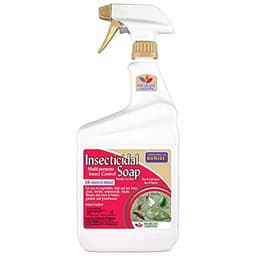
Potassium salts of fatty acids that kill aphids, mealybugs, spider mites, whiteflies, and thrips on contact. Must hit the pest directly to work. No toxic residue once dry. Safe for indoor use on most houseplants. The most versatile first-line treatment.
$8-$14 · Best for First-line treatment for any soft-bodied pest on leaves
Check price on Amazon →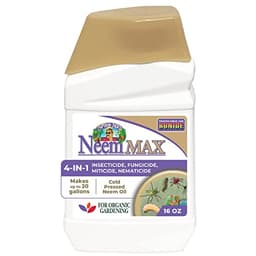
Pure neem oil with active azadirachtin that disrupts insect feeding and reproduction. Mix 1-2 tablespoons with 1 teaspoon castile soap per gallon of warm water. Effective against all common houseplant pests plus some fungal diseases. Provides residual repellent effect.
$10-$18 · Best for Multi-pest treatment with longer-lasting protection
Check price on Amazon →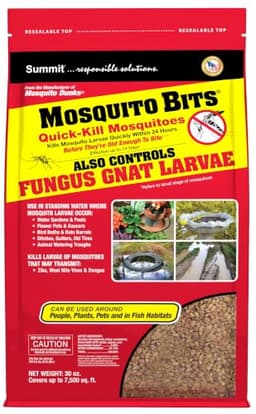
Granules containing Bacillus thuringiensis israelensis that specifically kills fungus gnat larvae in soil. Soak in water for 30 minutes, then drench soil. Harmless to plants, pets, children, and all non-target organisms. The gold standard for fungus gnats.
$8-$15 · Best for Eliminating fungus gnat larvae in potting soil
Check price on Amazon →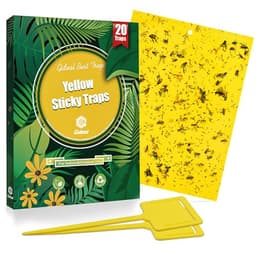
Bright yellow adhesive traps that attract and capture flying pests. Place at soil level for fungus gnats or near foliage for whiteflies. Non-toxic and odorless. Also useful as a monitoring tool — declining catch rates mean treatment is working.
$6-$12 · Best for Catching flying adults and monitoring infestation levels
Check price on Amazon →Treatment information on PlantFix is educational. When using any pesticide — including organic options like neem oil or insecticidal soap — read and follow the entire product label; the label is the law. For persistent or high-stakes problems, your local university extension service offers free, region-specific advice. Read about how we source and verify treatment guidance in our Editorial Standards.
FAQ
What is the most common bug on houseplants?▼
Fungus gnats are the most frequently seen bug on houseplants — those small dark flies hovering around the soil. However, spider mites cause the most damage. Fungus gnat adults are mostly annoying, though their larvae can harm roots in severe cases. Spider mites can kill a plant in weeks if left untreated. If you see tiny flies near the soil, it's likely fungus gnats. If you see fine webbing and stippling on leaves, it's spider mites.
How do I prevent bugs on indoor plants?▼
Five habits prevent the vast majority of houseplant pests: quarantine every new plant for at least two weeks before placing it with your collection; don't overwater (let the top inch of soil dry between waterings); maintain indoor humidity above 40-50% to deter spider mites; inspect plants weekly by checking leaf undersides and stem joints; and wipe leaves with a damp cloth every 2-3 weeks to remove dust and early pest colonies.
Can houseplant bugs spread to other plants?▼
Yes. Most houseplant pests can and will spread to nearby plants. Fungus gnats fly from pot to pot. Spider mites drift on air currents and can travel on clothing. Mealybug crawlers walk between touching pots. Aphids can spread winged forms to colonize new plants. This is why isolating infested plants immediately is step one of any treatment plan, and why treating all nearby plants is important even if they don't show obvious symptoms yet.
Are houseplant bugs harmful to humans?▼
No. Common houseplant bugs — fungus gnats, spider mites, mealybugs, aphids, scale, whiteflies, and thrips — do not bite, sting, or transmit diseases to humans or pets. Fungus gnats can be annoying when they fly near your face, but they're harmless. The only tiny bugs associated with biting are chiggers, which are outdoor pests found in tall grass and have nothing to do with houseplants.
Should I throw away a plant with bugs?▼
Almost never. The vast majority of houseplant pest infestations are treatable with insecticidal soap, neem oil, or BTI (for fungus gnats). Even severe infestations can usually be resolved with 4-6 weeks of consistent treatment. The only time to consider discarding a plant is if it's severely damaged beyond recovery, the infestation has spread to many plants and you need to stop it from spreading further, or you've tried treating for 2+ months with no improvement.
Related
- Tiny Red Bugs: Clover Mites, Spider Mites & How to ID Them →
- Tiny White Bugs on Plants: Identify & Kill All 5 Types →
- Tiny Black Bugs on Plants: Gnats, Thrips & How to Kill Them →
- Tiny Orange Bugs on Plants: What They Are (5 Culprits) →
- Tiny Green Bugs on Plants Are Almost Always Aphids →
- Spider Mites: Identification, Treatment & Prevention Guide →
- Fungus Gnats: How to Identify & Eliminate Them for Good →
- Mealy Bugs on Plants: How to Identify & Kill Them Fast →
- How to Get Rid of Thrips on Houseplants (4-Week Plan) →
- Scale Insects on Houseplants: How to Identify and Get Rid of Them →
- Gnats vs Fruit Flies: How to Tell the Difference in 10 Seconds →
- Tiny Red Spiders: Clover Mites vs Spider Mites vs Red Velvet Mites (ID Guide) →
- Potato Bug Pictures: 3 Insects, 1 Confusing Name (ID Guide) →
- Apple Cider Vinegar Gnat Trap: The Recipe That Works in Hours →
- Yellow Sticky Traps for Gnats: Placement & Best Picks →
- Leaf Footed Bug vs Assassin Bug: How to Tell Them Apart (And Not Kill the Wrong One) →
- How to Get Rid of Squash Bugs: Season-Long Battle Plan →
- Harlequin Bug: The Fastest Way to Save Your Brassicas →
- Best Indoor Fly Traps for Plant Owners (2026): What Actually Works →
- Tomato Hornworm ID: Kill It — Unless It Has White Cocoons →
- Hydrogen Peroxide for Fungus Gnats: The Exact Ratio & Why It Fails for Some People →
- Cucumber Beetle: Spotted vs Striped ID + Deadly Wilt →
- Earwig Pictures: What They Look Like & How to Get Rid of Them →
- Whiteflies: The Shake Test, Damage Chain & 3-Week Treatment Protocol →
- Aphids on Plants: How to Kill Them Fast (and Stop the Ants) →
- Japanese Beetles: Why Traps Backfire & a Week-by-Week Control Calendar →
- Springtails: The Tiny Jumping Bugs in Your Soil (They're Not the Problem — Your Watering Is) →
- Squash Vine Borer: Save a Wilted Plant (Surgical Rescue) →
- Soil Mites in Houseplants: The 4-Type ID Guide (Most Are Helping Your Plant, Not Hurting It) →
- Clover Mites: The Harmless Red Bugs That Stain When Crushed →
- Cicada Killer Wasp: Not a Murder Hornet (ID Guide + Yard Management) →
- Armyworms Destroyed My Lawn Overnight — Here's the Rescue Plan →
- Spotted Lanternfly: How to ID, Kill & Report Them (2026 State Guide) →
- Evergreen Bagworm: Identify Them and Save Your Evergreens →
- Houseplant Pests: Visual ID Guide to Every Bug on Your Indoor Plants →
- Garden Pest Identification: 25+ Bugs by the Damage They Do →
Not sure what's wrong?
Use the diagnosis tool →Get seasonal plant care reminders and pest alerts.