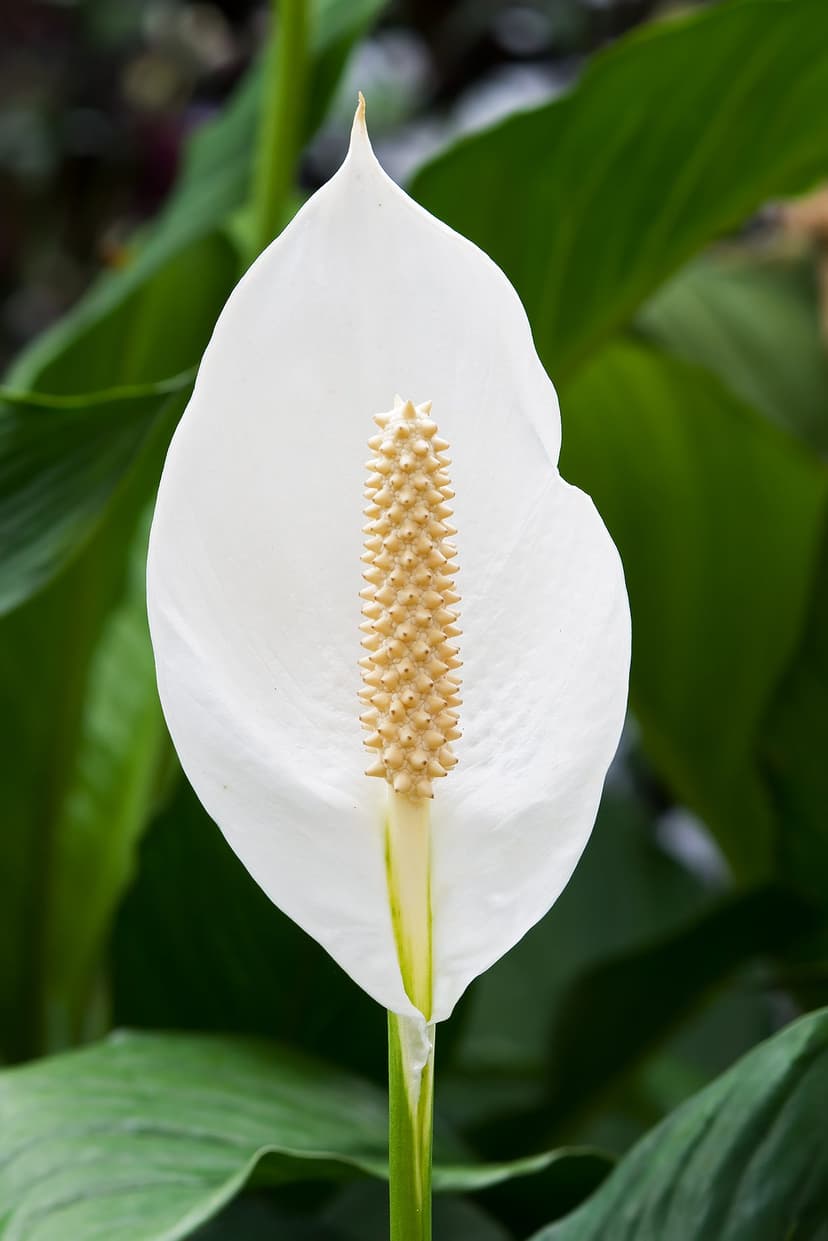
Peace Lily
Spathiphyllum wallisii
Also: Spathiphyllum, White Sails, Closet Plant
The peace lily is a lush, dark-leaved plant that produces elegant white spathes (often mistaken for flowers) even in low-light conditions. It is one of the best houseplants for beginners because it clearly communicates when it needs water by dramatically drooping. Peace lilies also rank among NASA's top air-purifying plants, filtering benzene, formaldehyde, and trichloroethylene.
By PlantFix Editorial Team · Sources: University Extension Programs, USDA
Care Summary
Tips
- – If your peace lily droops dramatically, water it thoroughly — it will perk back up within a few hours.
- – Wipe leaves regularly with a damp cloth to keep them glossy and free of dust.
- – Remove spent flower stalks by cutting them at the base to encourage new blooms.
- – Peace lilies prefer to be slightly root-bound, so only repot when roots circle the bottom of the pot.
Common Problems
Brown leaf tips
Causes
- – Low humidity — peace lilies are tropical plants that suffer in dry indoor air
- – Fluoride and chlorine in tap water, to which peace lilies are especially sensitive
- – Over-fertilizing, which burns the leaf margins
Solutions
- – Run a humidifier nearby or place the pot on a pebble tray filled with water
- – Switch to filtered, distilled, or rainwater — or let tap water sit out overnight to off-gas chlorine
- – Fertilize at half-strength only during spring and summer, and flush the soil with plain water monthly
Failure to bloom
Causes
- – Insufficient light — while peace lilies tolerate low light, they need medium indirect light to produce flowers
- – Plant is too young — peace lilies typically bloom once they are mature, around 1-2 years
- – Lack of fertilizer during the growing season
Solutions
- – Move to a brighter location with consistent indirect light for several hours daily
- – Apply a balanced liquid fertilizer (10-10-10) monthly during spring and summer
- – A brief exposure to slightly cooler nighttime temperatures (55-60°F) can sometimes trigger blooming
Yellowing leaves throughout the plant
Causes
- – Overwatering leading to oxygen-starved roots
- – Root rot from chronically wet soil or a pot sitting in a saucer of water
- – Old age — peace lilies naturally shed their oldest leaves
Solutions
- – Let the soil dry out slightly between waterings — the top inch should feel dry before watering again
- – Ensure the pot has drainage holes and empty the saucer 30 minutes after watering
- – Remove individual yellow leaves at the base to redirect energy to healthy growth
Fungus gnats around the soil
Causes
- – Consistently moist topsoil creates ideal breeding conditions for gnat larvae
- – Organic matter in the soil decomposing in warm, damp conditions
- – Overwatering keeping the soil surface perpetually wet
Solutions
- – Let the top inch of soil dry between waterings — gnat larvae need constant moisture to survive
- – Apply a 1/2-inch layer of sand or diatomaceous earth on the soil surface to prevent adult gnats from laying eggs
- – Use yellow sticky traps near the plant to catch adult gnats and break the breeding cycle
Drooping or wilting leaves
Causes
- – Underwatering — the most common cause; peace lilies wilt dramatically when the soil dries out
- – Overwatering and root rot, which cause drooping even in wet soil because damaged roots can't take up water
- – Transplant shock, cold drafts, or a root-bound pot that dries out within a day
Solutions
- – Check the soil first: if dry, water thoroughly and the plant recovers within a few hours
- – If the soil is wet, do not water — inspect the roots for brown, mushy rot and repot in fresh mix
- – Repot one size up if the plant droops within a day or two of every watering
Whole plant collapsing or dying
Causes
- – Root rot from chronic overwatering — the roots can't take up water, so the plant stays wilted even in wet soil
- – Severe underwatering — bone-dry soil causes a dramatic full-plant collapse that usually recovers after a deep soak
- – Cold shock — prolonged temperatures below about 60°F can damage the leaves, stems, and roots
Solutions
- – Unpot and squeeze the roots: firm and pale means it's savable; mushy and brown means trim all the rot and repot in fresh mix
- – If the soil is bone-dry, water thoroughly and a thirst-wilted peace lily usually revives within hours
- – Don't fertilize a stressed or rotting plant — it makes root rot worse; hold feeding until new growth appears
Treatment Guides
Spot something wrong with your Peace Lily? These guides cover the most common houseplant issues with step-by-step treatment plans.
Or use the diagnosis tool →More Plants
Get seasonal plant care reminders and pest alerts.