Peggy Greb, USDA Agricultural Research Service, Bugwood.org (CC BY 3.0)
Beneficial Nematodes: Which Species Kills Your Specific Pest (Buying Guide by Pest Type)
Beneficial nematodes kill 200+ soil pests in 24-48 hours — but buying the wrong species wastes your money. This pest-matched buying guide tells you exactly which nematode species to buy for grubs, fungus gnats, vine borers, and more, plus a USDA zone application calendar.
12 min read · Updated 2026-05-29
By PlantFix Editorial Team · Sources: University Extension Programs, USDA, EPA
Beneficial Nematodes: The 24-Hour Organic Pest Killer (Quick Answer)
Beneficial nematodes are microscopic soil-dwelling worms that kill grubs, fungus gnat larvae, vine borers, and 200+ other soil pests within 24-48 hours — including vine weevil grubs, where the cold-tolerant Steinernema kraussei is the species to reach for in cool autumn soil. They're completely safe for people, pets, plants, and earthworms — they only target insect larvae. The trick is buying the right species for your specific pest: use Heterorhabditis bacteriophora (Hb) for Japanese beetle grubs and lawn grubs, Steinernema feltiae (Sf) for fungus gnats in houseplant soil, or Steinernema carpocapsae (Sc) for squash vine borers and cutworms. A triple-species blend covers all bases if you're not sure.
Apply when soil temperature is between 50-90°F, always in the evening or on a cloudy day (UV light kills nematodes within minutes), and keep soil moist for at least a week after application. Most people waste money by applying the wrong species, at the wrong soil temperature, or to dry soil. This guide fixes all three mistakes.
Not sure what pest you're dealing with? Use the diagnosis tool, or check our plant bugs identification guide.
What Are Beneficial Nematodes? (And Why They're Not the Bad Kind)
When most gardeners hear "nematodes," they think of root-knot nematodes — the destructive ones that attack tomato and pepper roots. Beneficial nematodes are a completely different group. They're entomopathogenic (insect-killing) nematodes, microscopic roundworms about 0.5mm long that hunt insect larvae in soil.
Here's how they work: a nematode enters an insect larva through natural body openings (mouth, spiracles, anus), then releases symbiotic bacteria it carries inside its gut. Those bacteria multiply rapidly inside the host, killing it within 24-48 hours. The nematodes feed on the bacteria and the decomposing host, reproduce inside the cadaver, and release a new generation of nematodes into the surrounding soil to find more prey.
It sounds gruesome, but the result is remarkably targeted pest control. Beneficial nematodes don't affect earthworms, bees, butterflies, birds, mammals, or plants. They can't survive in the human body. The EPA doesn't even require registration for their use — they're classified as macrobial pest control agents with essentially zero environmental risk. University of Connecticut Extension calls them "one of the safest biological control agents available."
The three commercially available genera — Heterorhabditis, Steinernema, and occasionally Heterorhabditis indica for warm climates — each have different hunting strategies, pest targets, and temperature preferences. Choosing the right one is the single biggest factor in whether nematodes work for you.
Which Nematode Species for Which Pest? (The Buying Guide That Actually Matters)
This is where most nematode guides fail — they tell you to "buy beneficial nematodes" without specifying which species. That's like saying "buy medicine" without naming the drug. Here's the pest-matched selection chart:
Heterorhabditis bacteriophora (Hb) — The Grub Hunter
Hunting style: Active cruiser. Moves through soil seeking prey, can penetrate 1-7 inches deep.
Best for: Japanese beetle grubs, June beetle larvae, European chafer grubs, Northern masked chafer, and most white grubs in lawns.
Soil temperature: 60-90°F (optimal: 68-77°F)
Why Hb specifically: It's the only commercially available species that actively cruises through deep soil layers where grubs feed. Steinernema species are ambush predators that wait near the surface — they won't reach grubs 3-6 inches down.
Steinernema feltiae (Sf) — The Gnat Specialist
Hunting style: Intermediate — both cruises and ambushes.
Best for: Fungus gnat larvae, shore fly larvae, mushroom gnats, some thrip pupae, and cabbage root maggots.
Soil temperature: 50-86°F (optimal: 57-77°F). The most cold-tolerant commercial species.
Why Sf specifically: It thrives in the moist, organic-rich potting soil where fungus gnat larvae live. It's also the species most commonly used in greenhouse IPM programs worldwide. For indoor houseplant use, Sf is your only practical option — it works at room temperature and in containers.
Steinernema carpocapsae (Sc) — The Surface Ambusher
Hunting style: Ambush predator. Waits near the soil surface with its body raised, attacks passing larvae.
Best for: Squash vine borers, cutworms, sod webworms, armyworms, bagworm pupae, flea beetle larvae, billbugs, and flea larvae in yards.
Soil temperature: 60-90°F (optimal: 72-82°F). The most heat-tolerant common species.
Why Sc specifically: Its ambush hunting strategy is perfect for surface-dwelling and stem-boring pests. For vine borers, inject a nematode solution directly into affected stems — Sc thrives in the moist environment inside the vine.
Not sure which pest? → Buy a triple blend (Hb + Sf + Sc)
Arbico Organics, NaturesGoodGuys, and other suppliers sell triple-species blends. You sacrifice some concentration per species, but you get broad-spectrum coverage. For a first-time user or someone dealing with multiple pests, the triple blend is the smartest purchase. Studies show nematode blends achieve 85-96% pest mortality across a wider range of hosts than any single species.
Nematodes vs. Milky Spore: Which Is Better for Japanese Beetle Grubs?
If you're specifically fighting Japanese beetle grubs, you've probably seen both recommended. They work completely differently, and the best approach may be using both.
Speed: Nematodes kill grubs in 24-48 hours. Milky spore (Paenibacillus popilliae) takes 7-21 days per grub, and the spore population needs 1-3 years to build up in your soil to full effectiveness.
Target range: Nematodes (Hb) kill 200+ species of soil-dwelling larvae. Milky spore kills exactly one thing: Japanese beetle grubs. If your grub damage is from June beetles or European chafers, milky spore does nothing.
Longevity: This is milky spore's big advantage. Once established (2-3 years), milky spore bacteria persist in soil for 10-20 years without reapplication. Nematodes need annual reapplication — they don't establish permanent populations in most climates.
Cost comparison: Treating 1,000 sq ft costs roughly $15-25 for nematodes vs. $30-50 for milky spore powder. But nematodes are annual, so the 5-year cost favors milky spore.
Temperature requirements: Both need warm soil. Nematodes (Hb): 60-90°F. Milky spore: 60-70°F for initial establishment, though it persists through winter once established.
Can you use both at the same time? Yes. The Ecological Landscape Alliance recommends applying nematodes for immediate grub knockdown while simultaneously establishing milky spore for long-term control. Apply nematodes in late August (when new grubs are small) and milky spore in September. By year 2-3, the milky spore population handles ongoing control and you can stop annual nematode applications.
Our Japanese beetles guide covers the full month-by-month treatment calendar.
How to Apply Beneficial Nematodes (Step-by-Step)
Most nematode failures come down to application errors. Follow these six steps exactly:
Step 1: Check soil temperature. Stick a soil thermometer 2-3 inches deep. For Hb nematodes (grubs): need 60-90°F. For Sf nematodes (fungus gnats): need 50-86°F. If soil is too cold or too hot, wait. Applying outside the range wastes the entire product.
Step 2: Water the area thoroughly 1-2 hours before application. Nematodes need moist soil to move. They travel through water films between soil particles. Dry soil = dead nematodes within minutes. This is the #1 application mistake.
Step 3: Mix nematodes with water. Nematodes arrive in a sponge, gel pack, or powder. Follow package instructions — typically dissolve in 1-5 gallons of water per 200 sq ft of treatment area. Use room-temperature water (never hot). Remove any sprayer filters — nematodes are microscopic but can clump and clog fine mesh.
Step 4: Apply in the evening or on a cloudy day. UV light kills nematodes in less than 10 minutes of direct sun exposure. Late evening applications give nematodes all night to penetrate the soil before sunrise.
Step 5: Apply evenly. Use a watering can (easiest), hose-end sprayer (remove filter), or pump sprayer (remove filter, use low pressure). Stir the mixture frequently — nematodes settle to the bottom of the container. For potted houseplants, water directly into the soil like a normal watering.
Step 6: Water again immediately after application. A light watering rinses nematodes off grass blades and plant surfaces down into the soil where their targets live. Then keep soil consistently moist for 7-10 days. Don't flood it — just don't let it dry out. This is the make-or-break period.
For houseplant fungus gnats specifically: Mix Sf nematodes in a watering can with room-temperature water. Water each pot as you normally would — the nematodes go straight to where gnat larvae live. No need to adjust watering schedule. You can apply Sf nematodes alongside Mosquito Bits (BTI) or hydrogen peroxide drenches without interference — they work through completely different mechanisms.
When to Apply: USDA Zone Application Calendar
Timing is everything. Apply too early (cold soil) and the nematodes die. Apply too late (hot soil or after pest pupation) and you miss the target. Here's the zone-by-zone window:
Zones 3-4 (Minnesota, Montana, Vermont): Late May through September. Short window — soil stays below 60°F until late spring. For grubs, the August-September window is best because new grubs are small and soil is warm.
Zones 5-6 (Ohio, Pennsylvania, Colorado): Mid-April through October. Two ideal windows: April-May (spring grubs moving to surface) and August-September (new grub generation, most effective).
Zones 7-8 (Virginia, Texas, Georgia): March through November. Longest application window. Avoid July-August afternoon applications when soil exceeds 90°F in full sun. Early morning or evening applications work fine even in summer.
Zones 9-10 (Florida, Southern California, Arizona): February through December. Skip the hottest 6-8 weeks (mid-June through early August) when soil temperatures exceed 95°F. Otherwise, nearly year-round application is possible.
Indoor houseplants (any zone): Year-round. Indoor soil temperatures stay in the 65-80°F range that Sf nematodes prefer. Apply whenever you notice fungus gnats.
For Japanese beetle grubs specifically: Late August through mid-September is the single best application window nationwide. This is when newly hatched third-instar grubs are feeding near the surface and most vulnerable. Spring applications (April-May) work on overwintered grubs but are less effective because those grubs are larger and deeper.
Why Your Nematodes Didn't Work: 6 Expensive Mistakes
I hear it constantly on Reddit and gardening forums: "I tried nematodes and they did nothing." Almost every time, the failure traces to one of these six errors:
1. Wrong species for the target pest. Buying Sc nematodes for grubs is the most common mistake. Sc is an ambush predator that hunts at the soil surface — grubs are 2-6 inches deep. Only Hb nematodes actively cruise through deep soil to find grubs. For fungus gnats, you need Sf specifically.
2. Soil too dry. Nematodes are aquatic organisms that move through water films between soil particles. If you apply them to dry soil, they dehydrate and die within minutes. The soil should be pre-watered, and kept moist for a week after application.
3. Applied in direct sunlight. UV radiation destroys nematodes in under 10 minutes. Always apply in the evening, at dawn, or on a heavily overcast day. This single mistake wastes the entire application.
4. Soil temperature outside the effective range. Each species has a temperature range. Below the minimum, nematodes become inactive and can't find hosts. Above the maximum, they die. A $5 soil thermometer prevents a $25 mistake.
5. Expired or improperly stored product. Beneficial nematodes are living organisms. They must be refrigerated (not frozen) and used within 2-4 weeks of receiving them. If the package sat in a hot mailbox, on a warehouse shelf, or in your garage for a month, they're likely dead before you apply them. Buy from reputable suppliers (Arbico, NaturesGoodGuys, BioLogic) who ship with cold packs.
6. Expecting instant visible results. Nematodes kill larvae underground. You won't see dead bugs piling up. The evidence is a gradual decline in pest activity over 2-4 weeks. For grubs, the proof is fewer Japanese beetles the following summer. For fungus gnats, you'll see fewer adults within 1-2 weeks as the larval population collapses.
Where to Buy Beneficial Nematodes (And What to Check Before You Buy)
Not all nematode products are equal. Here's what matters:
Reputable suppliers:
- Arbico Organics: Widest species selection (individual Hb, Sf, Sc, and blends). Ships with cold packs. Includes application instructions specific to each pest. This is where I'd buy if you know exactly which species you need.
- NaturesGoodGuys: Known for their triple-blend product (Hb+Sf+Sc). Amazon Prime eligible. Good if you want broad-spectrum coverage without choosing a species.
- BioLogic Company: Scanmask brand. Available at many garden centers. Primarily Sf nematodes — ideal for fungus gnat problems.
What to check before buying:
- Species name must be listed. If a product just says "beneficial nematodes" without naming the species (Hb, Sf, Sc), skip it. You can't match the right species to your pest without knowing what's in the package.
- Shipping method. Nematodes must ship refrigerated or with cold packs. If a seller ships via standard mail with no temperature protection, the nematodes may arrive dead.
- Expiration date. Nematodes have a shelf life of 2-4 weeks when refrigerated. Avoid clearance or discount nematode products — they may be near expiration.
- Coverage area. A typical package covers 200-2,000 sq ft depending on species density. Overbuying is fine (more nematodes = more effective), underbuying reduces coverage.
Amazon note: Amazon sells nematodes, but summer shipping is risky. Packages sitting in hot delivery vans or on porches in 90°F heat can kill the entire contents. If ordering through Amazon, choose a day when you'll be home to refrigerate the package immediately. Winter and spring orders are safer.
Recommended Products
We earn a commission if you buy through these links, at no extra cost to you. We recommend based on what works, not what pays. How this works.
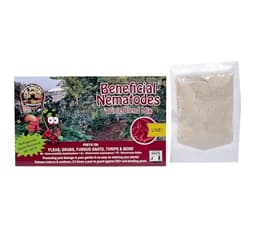
A three-species blend covering grubs, fungus gnats, vine borers, cutworms, and more. The best choice if you're not sure which pest you're targeting or want broad-spectrum soil pest control. Ships with cold packs. Available in 5M, 10M, and 50M counts.
$15-$35 · Best for First-time nematode users or gardeners with multiple soil pests
Check price on Amazon →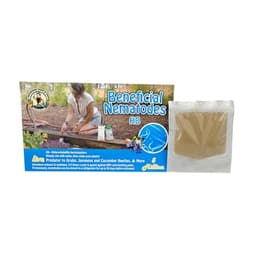
Pure Heterorhabditis bacteriophora — the deep-cruising species specifically targeting Japanese beetle grubs, June beetle larvae, and other white grubs in lawns. Higher concentration per package than blends means more nematodes per square foot of lawn.
$20-$40 · Best for Targeted Japanese beetle grub control in lawns and garden beds
Check price on Amazon →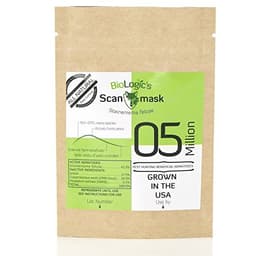
Steinernema feltiae for fungus gnat control in houseplants, greenhouses, and garden containers. Available at many garden centers. Mix with water and apply as a soil drench. Works at cooler temperatures (50-86°F) than other species.
$15-$25 · Best for Eliminating fungus gnat larvae in houseplant soil and containers
Check price on Amazon →Treatment information on PlantFix is educational. When using any pesticide — including organic options like neem oil or insecticidal soap — read and follow the entire product label; the label is the law. For persistent or high-stakes problems, your local university extension service offers free, region-specific advice. Read about how we source and verify treatment guidance in our Editorial Standards.
FAQ
How long do beneficial nematodes take to work?▼
Individual insect larvae die within 24-48 hours of nematode infection. However, you'll see population-level results over 2-4 weeks as the nematode generation reproduces and finds new hosts. For fungus gnats in houseplants, you should notice fewer adults flying around within 7-14 days. For Japanese beetle grubs in lawns, the evidence is fewer adult beetles the following summer.
Do beneficial nematodes hurt earthworms?▼
No. Entomopathogenic nematodes (Heterorhabditis and Steinernema species) are highly specific to insect larvae. The symbiotic bacteria they carry are lethal to insects but harmless to earthworms, which have completely different internal biology. University of Connecticut Extension confirms nematodes pose no risk to earthworms, pets, plants, or humans.
Can I apply nematodes and milky spore at the same time?▼
Yes. Nematodes and milky spore (Paenibacillus popilliae) work through completely different mechanisms and don't interfere with each other. The Ecological Landscape Alliance recommends applying both simultaneously: nematodes for immediate grub kill (24-48 hours), milky spore for long-term protection (establishes over 1-3 years, persists 10-20 years).
Do beneficial nematodes work for fungus gnats in houseplants?▼
Yes — Steinernema feltiae (Sf) is highly effective against fungus gnat larvae in potting soil. Mix Sf nematodes in a watering can and water pots normally. The nematodes survive in moist houseplant soil at room temperature (65-80°F) and actively hunt gnat larvae. You can use them alongside other treatments like Mosquito Bits or hydrogen peroxide drenches without any conflict.
How often do I need to reapply beneficial nematodes?▼
Annually for best results. Unlike milky spore, beneficial nematodes don't establish permanent self-sustaining populations in most climates. Some nematodes do reproduce in the soil after their initial application, but populations decline over winter and aren't reliable for year-over-year control without reapplication. For fungus gnats in houseplants, one application may be sufficient if you fix the underlying overwatering problem.
Related
- Japanese Beetles: Why Traps Backfire & a Week-by-Week Control Calendar →
- Fungus Gnats: How to Identify & Eliminate Them for Good →
- Squash Vine Borer: Save a Wilted Plant (Surgical Rescue) →
- Mosquito Bits for Fungus Gnats: Dosage + 24-Hour Kill →
- Hydrogen Peroxide for Fungus Gnats: The Exact Ratio & Why It Fails for Some People →
- Insecticidal Soap: What It Actually Kills (Including Spider Mites), DIY Recipe & Why Dawn Is Wrong →
- Milky Spore for Grubs: Does It Actually Work? (Honest Guide) →
- Earwig Pictures: What They Look Like & How to Get Rid of Them →
- Flea Beetle: The Jumping Test, Crop-by-Crop Species Guide, and Why Seedlings Die in 48 Hours →
- Armyworms Destroyed My Lawn Overnight — Here's the Rescue Plan →
- Lawn Grubs: The Underground Reason Your Grass Is Dying (ID + Treatment) →
- Evergreen Bagworm: Identify Them and Save Your Evergreens →
Not sure what's wrong?
Use the diagnosis tool →Get seasonal plant care reminders and pest alerts.