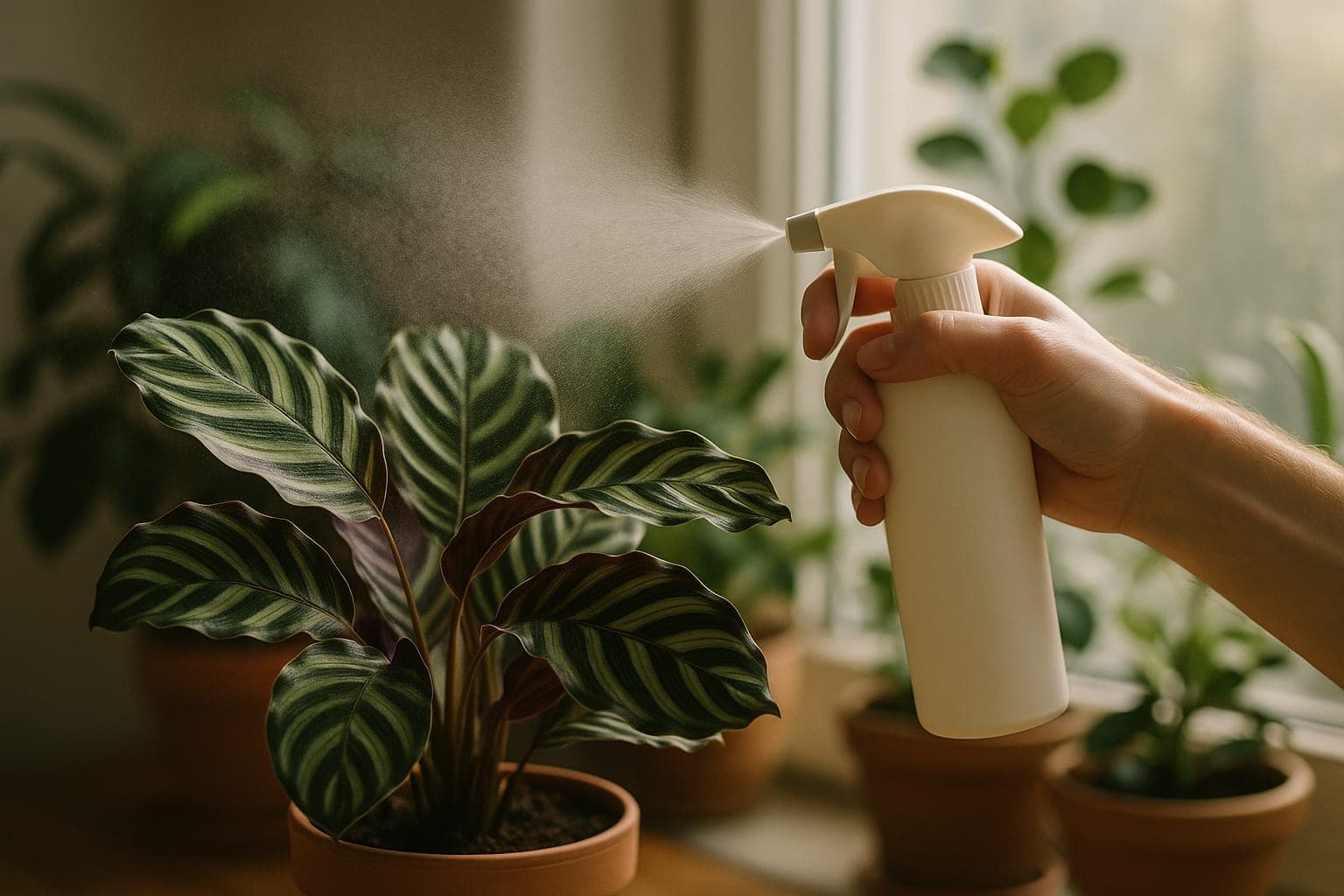
Insecticidal Soap: What It Actually Kills (Including Spider Mites), DIY Recipe & Why Dawn Is Wrong
Insecticidal soap kills aphids, mealybugs, spider mites, and whiteflies on contact — but does nothing to beetles or caterpillars. Includes a spider mite treatment protocol, the correct DIY recipe, pest-by-pest effectiveness matrix, and why dish soap damages plants.
11 min read · Updated 2026-06-12
By PlantFix Editorial Team · Sources: University Extension Programs, USDA, EPA
What Insecticidal Soap Kills (and What It Doesn't)
Insecticidal soap kills soft-bodied insects on contact: aphids, mealybugs, spider mites, whiteflies, thrips, scale crawlers, and psyllids. It works by dissolving the waxy coating on their exoskeleton, causing them to dehydrate and die within minutes of direct contact.
It does not kill beetles, caterpillars, wasps, bees, or any insect with a hard shell. If your pest problem involves cucumber beetles, hornworms, squash bugs, or flea beetles, insecticidal soap won't help — you need a different treatment for each.
The critical thing most guides skip: insecticidal soap has zero residual effect. Once it dries on the leaf, it stops working entirely. Unlike systemic insecticides that stay active for weeks, insecticidal soap only kills what it physically touches while wet. This means complete spray coverage and multiple applications are non-negotiable.
How Insecticidal Soap Actually Works (The Science)
The active ingredient in commercial insecticidal soap is potassium salts of fatty acids — long-chain fatty acids (C10-C18) reacted with potassium hydroxide. When sprayed on an insect, these fatty acid salts penetrate the insect's outer membrane through its spiracles (breathing pores) and disrupt cell membranes throughout its body. The cells leak their contents, and the insect dehydrates and dies.
This mechanism is why it only works on soft-bodied insects. Aphids, spider mites, and whiteflies have thin, porous exoskeletons that the fatty acids can penetrate. Beetles and caterpillars have thick, waxy cuticles that block absorption entirely. Spraying a cabbage worm with insecticidal soap is like trying to wash a raincoat — the water just beads off.
According to Colorado State University Extension, the soap must physically contact the insect while still wet to work. Once it dries — typically within 1-2 hours — it has no insecticidal activity whatsoever. A dried soap residue on a leaf won't kill anything that lands on it later. This is both the product's biggest limitation and its biggest safety advantage: it's functionally impossible to harm beneficial insects that arrive after application.
Water quality matters more than most people realize. Hard water (high in calcium and magnesium) neutralizes insecticidal soap by converting the potassium fatty acid salts into insoluble calcium salts that won't penetrate insect membranes. If your tap water leaves white mineral deposits, use distilled or rainwater for mixing. The University of Connecticut Extension specifically notes that soft water produces significantly better results.
Pest-by-Pest Effectiveness Matrix
I've compiled effectiveness ratings based on university extension research across Clemson, Iowa State, Colorado State, and Missouri:
Highly Effective (kills on contact when applied thoroughly):
Mealybugs — dissolves their waxy white coating, which is their primary defense. Multiple applications needed because mealybugs hide in leaf joints and crevices where spray misses. Check our tiny white bugs guide if you're not sure what you have.
Aphids on plants — kills all life stages on contact. Aphids cluster on new growth and leaf undersides, so spray those areas thoroughly. Most effective treatment for light-to-moderate infestations.
Spider mites — penetrates their thin exoskeleton easily. Spider mites build webbing that can block spray, so for heavy infestations, wipe webbing off first, then spray. Repeat every 5-7 days for 3 applications.
Whiteflies — kills nymphs and adults on contact. Whiteflies fly up when disturbed, so spray in early morning when they're sluggish. Target the leaf undersides where nymphs cluster.
Thrips — effective on exposed adults. Less effective on thrips in leaf tissue or soil (pupating stage). Best used as part of a rotation with spinosad — see our plant bugs identification guide for thrips ID.
Scale crawlers — the mobile juvenile stage of scale insects is vulnerable. Adult scale under their protective shell is completely resistant. Timing is everything — spray during crawler emergence (check the scale species for your plant).
Partially Effective (reduces population, won't eliminate):
Leafhoppers — soap kills nymphs but adults jump away before full contact. Use as a knockdown spray followed by a more persistent treatment.
Psyllids — similar to leafhoppers. Contact kills work on immobile stages.
Not Effective (don't waste your time):
Beetles (flea beetles, cucumber beetles, Japanese beetles) — hard exoskeleton blocks penetration.
Caterpillars (hornworms, cabbage worms, loopers, bagworms) — use Bt spray instead.
Squash bugs — too large and too armored. Use neem oil or hand-pick.
Fungus gnat larvae — they're in the soil, not on leaves. Use hydrogen peroxide soil drench instead.
Ants, flies, wasps — not target pests for soap sprays.
The DIY Recipe That Actually Works (and the One That Doesn't)
The recipe is simple, but the soap selection is everything.
The correct recipe: 1 tablespoon pure liquid Castile soap (like Dr. Bronner's unscented) per 1 quart of water. For a gallon batch: 4 tablespoons Castile soap per gallon of soft or distilled water. Optionally add 1 tablespoon of vegetable oil (canola or soybean) as a sticking agent — this helps the spray adhere to waxy leaves.
Castile soap works because it's a true soap: fatty acids saponified with potassium hydroxide (or sometimes sodium hydroxide). The long-chain fatty acids are the active ingredient. Dr. Bronner's Pure Castile in the unscented version is the most commonly recommended brand because it has no added fragrances, dyes, or detergent boosters.
Other true soaps that work: Kirk's Castile bar soap (grate and dissolve), any pure potassium-based soap. The key: the label must say "soap," and the ingredients should list saponified oils or potassium hydroxide. If it says "detergent" or lists sodium lauryl sulfate, it's not soap — it's a detergent.
What about store-bought insecticidal soap? Products like Safer Brand Insecticidal Soap ($8-$12) use refined potassium salts of fatty acids at precise concentrations. They're formulated specifically for plant safety and pest effectiveness. For houseplants, I think the commercial product is worth the money — it takes the guesswork out of concentration. For large gardens where you'd burn through bottles quickly, DIY Castile is more economical.
Cost comparison: A 32 oz bottle of Safer Brand costs about $10 and makes ~6 gallons (ready-to-use concentrate). A 32 oz bottle of Dr. Bronner's costs about $16 and makes ~30+ gallons of spray at the correct dilution. For a few houseplants, the difference is trivial. For a vegetable garden, DIY saves real money.
Why Dawn Dish Soap Is NOT Insecticidal Soap (This Matters)
This is the most persistent myth in home gardening, and it causes real damage to plants every spring.
Dawn, Palmolive, Ajax, and every other dish "soap" are actually detergents, not soaps. The difference matters. True soap is made by reacting fats or oils with an alkali (potassium hydroxide or sodium hydroxide). Detergents are synthetic surfactants — specifically, compounds like sodium lauryl sulfate and sodium laureth sulfate.
Both kill insects. That's why the myth persists — people spray Dawn on aphids, the aphids die, and they conclude Dawn works just like insecticidal soap. But here's what happens to the plant:
Plant leaves are covered in a thin waxy cuticle layer that prevents water loss and protects against pathogens. Detergent surfactants strip this waxy layer. That's literally what detergents are designed to do — cut grease and dissolve wax. According to the University of Florida IFAS Extension, even diluted dish detergent can damage the waxy cuticle on plant leaves.
The result: leaves develop brown spots, dry edges, or crispy patches within 24-48 hours of application. The plant becomes more vulnerable to disease, sunburn, and water loss. And because Dawn contains additives like fragrances, colorants, and antibacterial agents that true soap doesn't, the phytotoxicity risk is higher and less predictable.
Garden Myths (gardenmyths.com) tested this directly and documented visible leaf damage from Dawn solutions at concentrations commonly recommended online. Iowa State University Extension explicitly states: "Most dish-washing detergents or liquid hand-soaps are poor substitutes for insecticidal soaps."
The bottom line: Dawn kills bugs but also damages plants. Insecticidal soap (or Castile soap DIY) kills bugs without damaging plants. The $8-16 difference is worth it.
How to Apply Insecticidal Soap Correctly (Most People Get This Wrong)
The number one reason insecticidal soap "doesn't work" is incomplete coverage. Remember: it only kills on wet contact. If the spray doesn't physically touch an insect, that insect lives.
Step 1: Spray in early morning or evening. Never spray in direct sun or when temperatures exceed 90°F. Heat and sun cause the spray to evaporate faster (less contact time) and increase phytotoxicity risk. Early morning is ideal — pests are sluggish and less likely to scatter.
Step 2: Cover every surface, especially leaf undersides. Most soft-bodied pests feed on the undersides of leaves where they're protected from rain and predators. Lift the plant, turn it sideways if it's in a pot, and spray upward to coat undersides. For aphids on new growth tips, spray directly into the curled leaves where they hide.
Step 3: Spray until dripping. A light mist won't cut it. You need visible wet coverage — the solution should be dripping off leaves. This ensures contact with pests hiding in crevices and under leaf folds.
Step 4: Repeat every 5-7 days for at least 3 applications. Each spray only kills what it contacts that day. Eggs hatch between applications. New crawlers emerge. Insects you missed the first time are still feeding. Three sprays minimum; five or more for heavy mealybug or scale infestations.
Step 5: Rinse indoor plants 2 hours after treatment. For houseplants, a gentle water rinse after the soap has dried removes soap residue and dead insects. This isn't strictly necessary, but it reduces buildup over multiple applications and removes the slightly cloudy film soap leaves on leaves.
Test first on sensitive plants. Spray a small area and wait 48 hours before treating the whole plant. Plants known to be sensitive: ferns, calathea, jade plants, succulents with powdery coatings (like echeveria), palms, gardenias, and Japanese maples. If you see spotting or browning after the test spray, dilute further or switch to neem oil.
Plants You Should NOT Spray With Insecticidal Soap
Clemson Extension and the University of Connecticut maintain lists of plants with documented sensitivity to insecticidal soap. Phytotoxicity symptoms include yellow or brown leaf spots, burned leaf tips, premature leaf drop, and waxy coating removal.
High risk — avoid or test very carefully: Japanese maple, horse chestnut, mountain ash, bleeding heart, sweet peas, delicate ferns (maidenhair, Boston fern), Crown of Thorns, jade plant, lantana, portulaca, and succulents with powdery farina (echeveria, ghost plant).
Moderate risk — always test first: Begonia, chrysanthemum, cucumber, dieffenbachia, fuchsia, gardenia, impatiens, ornamental ivy, palms, poinsettia, schefflera, zebra plant.
Higher risk conditions (any plant): Plants under drought stress, temperatures above 90°F, high humidity, recent transplant, soft new growth, direct sunlight within 2 hours of application.
For sensitive plants, neem oil is generally a safer alternative — it works through a different mechanism (disrupting insect feeding and development) and is less likely to cause phytotoxicity. The trade-off is that neem works more slowly and has a strong smell indoors.
Commercial vs DIY: Which Should You Buy?
I'll be blunt: for 1-5 houseplants, just buy the commercial product. For a vegetable garden, DIY saves money and works identically.
Commercial insecticidal soap (Safer Brand, Natria, Garden Safe):
Pros: Pre-mixed at the correct concentration. Tested for plant safety. Includes spreader/sticker agents for better coverage. Ready to spray — no measuring. Contains only potassium salts of fatty acids at verified concentrations (typically 1-2%).
Cons: More expensive per ounce. $8-15 for a 32 oz ready-to-use bottle or $12-20 for a concentrate.
DIY Castile soap spray:
Pros: Much cheaper at scale — $16 of Castile soap makes 30+ gallons. You control the concentration. Same active ingredient (potassium fatty acid salts). Available at any grocery store.
Cons: Slightly higher phytotoxicity risk if you use too much. No sticking agents (add vegetable oil). Concentration varies by Castile brand. You have to measure and mix.
My recommendation by scenario:
Indoor houseplants with occasional pests: Buy Safer Brand concentrate ($12-15). One bottle lasts a year.
Vegetable garden with regular pest pressure: DIY with Dr. Bronner's. The volume you need makes commercial impractical. 4 tbsp per gallon, add 1 tbsp canola oil.
Mixed garden + houseplants: Keep a bottle of commercial for indoor use, make DIY batches for the garden.
Insecticidal Soap + Other Treatments: What Pairs Well
Insecticidal soap works best as part of a rotation, not as a standalone treatment. Here's what to combine it with and what to avoid.
Insecticidal soap + neem oil (excellent pairing):
Soap gives the immediate knockdown kill. Neem disrupts feeding and reproduction for residual control. Alternate weekly: soap one week, neem the next. Don't mix them in the same spray — neem emulsifies poorly in soap solutions and the concentration gets unpredictable.
Insecticidal soap + yellow sticky traps (essential for flying pests):
Soap kills whiteflies and fungus gnat adults on contact, but they scatter when you spray. Sticky traps catch the ones that fly away. Always use both together for whitefly or gnat infestations.
Insecticidal soap + rubbing alcohol (good for mealybugs):
Dab individual mealybugs with a cotton swab dipped in 70% isopropyl alcohol for spot treatment. Follow with a full soap spray to catch any you missed. The alcohol dissolves their waxy coating instantly; the soap provides broader coverage.
Insecticidal soap + Bt spray (for mixed pest situations):
If you have aphids AND caterpillars on your garden plants, spray soap for the aphids and Bt (Bacillus thuringiensis) for the caterpillars. Apply at different times — Bt in the evening (UV degrades it), soap in early morning.
Do NOT combine:
Insecticidal soap + sulfur-based fungicides (causes leaf burn).
Insecticidal soap + oil-based sprays on the same day (increases phytotoxicity).
Insecticidal soap + any treatment when temperatures exceed 90°F.
Insecticidal Soap for Spider Mites: The Complete Treatment Protocol
Spider mites are one of the pests insecticidal soap works best against. Their thin, soft exoskeletons are highly vulnerable to potassium fatty acid salts — the soap penetrates their body within seconds of contact, disrupting cell membranes and causing rapid dehydration. University extension programs at Clemson, Colorado State, and Iowa State all list insecticidal soap as a first-line treatment for spider mite infestations.
Why soap works so well on spider mites: Spider mites are tiny (under 1mm), soft-bodied, and spend their entire lifecycle on leaf surfaces — the exact conditions where contact sprays excel. Unlike beetles or caterpillars that have hard shells blocking penetration, spider mites have almost no defense against fatty acid salts. According to Colorado State University Extension, insecticidal soap provides "good to excellent" control of spider mites when applied correctly.
The webbing problem: Heavy spider mite infestations produce visible silk webbing on leaf undersides. This webbing acts as a physical barrier that blocks spray from reaching the mites underneath. Before spraying, wipe or rinse webbing off with a strong stream of water. A kitchen sink sprayer works for houseplants. For garden plants, use a hose nozzle aimed at leaf undersides. Once webbing is removed, spray immediately while mites are exposed.
Week-by-week treatment schedule:
- Day 1: Remove webbing with water spray. Apply insecticidal soap to all leaf surfaces, especially undersides where mites feed and lay eggs. Spray until dripping. Do this in early morning or evening.
- Day 7: Second application. Eggs laid before your first spray have now hatched — this application catches the new generation. Check leaf undersides for live mites and fresh webbing.
- Day 14: Third application. By now, you've covered two mite reproduction cycles. If you still see live mites, continue weekly. If leaves look clean and stippling has stopped spreading, you've broken the lifecycle.
- Day 21+: Monitor weekly. Spider mites can reinfest from neighboring plants, outdoor air currents, or contaminated soil. A single spray at the first sign of new stippling prevents a full relapse.
Soap vs neem vs miticides for spider mites: Insecticidal soap gives the fastest knockdown — mites die within minutes of contact. Neem oil is slower but disrupts mite reproduction for residual control. For the best results, alternate soap and neem on a weekly rotation: soap kills what's there now, neem prevents the next generation. Chemical miticides (bifenazate, spiromesifen) are reserved for severe infestations that don't respond to soap and neem after 3-4 weeks.
Plants to be careful with: Some plants are sensitive to insecticidal soap sprays. Test a small area first on ferns, calathea, jade plants, and succulents with powdery coatings. If you see spotting or browning after 48 hours, switch to neem oil for those plants. Most common houseplants — pothos, monstera, fiddle leaf fig, spider plant — tolerate soap sprays well.
Recommended Products
We earn a commission if you buy through these links, at no extra cost to you. We recommend based on what works, not what pays. How this works.
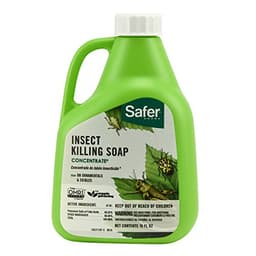
The most widely recommended commercial insecticidal soap. Contains potassium salts of fatty acids at tested concentrations. Mix 2.5 oz per gallon of water. One bottle makes about 6 gallons of ready-to-spray solution. OMRI-listed for organic use.
$12-$18 · Best for Most gardeners — reliable concentration, proven plant safety, works on all soft-bodied pests
Check price on Amazon →True potassium-based soap made from saponified organic oils. Use 1 tablespoon per quart of water for DIY insecticidal soap spray. The unscented version is critical — fragranced versions contain essential oils that can irritate plant tissue. Much cheaper per gallon of spray than commercial insecticidal soap.
$12-$18 (makes 30+ gallons of spray) · Best for DIY sprayers and large gardens where commercial volume gets expensive
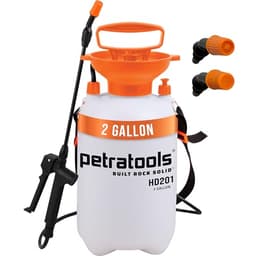
A pressurized sprayer produces the fine, thorough coverage insecticidal soap needs to work. Far more effective than a trigger spray bottle for anything beyond a single houseplant. Adjustable nozzle lets you spray leaf undersides easily.
$15-$25 · Best for Anyone spraying more than 2-3 plants — coverage quality makes or breaks soap effectiveness
Check price on Amazon →Treatment information on PlantFix is educational. When using any pesticide — including organic options like neem oil or insecticidal soap — read and follow the entire product label; the label is the law. For persistent or high-stakes problems, your local university extension service offers free, region-specific advice. Read about how we source and verify treatment guidance in our Editorial Standards.
FAQ
Does insecticidal soap kill spider mites?▼
Yes — insecticidal soap is highly effective against spider mites when it contacts them directly. Spider mites have thin exoskeletons that the fatty acids penetrate easily. For heavy infestations with webbing, wipe the webbing off first (it blocks spray coverage), then spray thoroughly on all leaf surfaces. Repeat every 5-7 days for at least 3 applications to catch newly hatched mites.
Can I use Dawn dish soap instead of insecticidal soap?▼
No — Dawn is a detergent, not a soap. While it kills insects, it also strips the waxy protective coating from plant leaves, causing brown spots, leaf burn, and increased vulnerability to disease. True insecticidal soap (potassium salts of fatty acids) kills pests without damaging plants. Use commercial insecticidal soap or make DIY spray with pure Castile soap instead.
How often should I spray insecticidal soap?▼
Every 5-7 days for at least 3 applications. Insecticidal soap has zero residual effect — it only kills insects it physically contacts while wet. Eggs and newly emerged pests between sprays survive. Three applications spaced 5-7 days apart covers roughly one pest generation cycle. For heavy infestations (mealybugs, scale), continue for 5+ weeks.
Will insecticidal soap kill ladybugs and bees?▼
If sprayed directly on them, yes — insecticidal soap kills any soft-bodied insect on contact, including beneficials. However, once the spray dries (within 1-2 hours), it has zero residual toxicity. Beneficials that land on treated plants after the spray dries are completely safe. Spray in early morning when pollinators aren't active to minimize risk.
Does insecticidal soap work on fungus gnats?▼
Not effectively. Fungus gnat larvae live in the soil where a foliar spray can't reach them, and adult gnats scatter when disturbed. For fungus gnats, use a hydrogen peroxide soil drench (1 part 3% H2O2 to 4 parts water) plus yellow sticky traps at soil level. See our full hydrogen peroxide for fungus gnats guide for the complete protocol.
Is insecticidal soap safe for edible plants?▼
Yes. Insecticidal soap is approved for organic gardening by OMRI and can be used on vegetables, herbs, and fruit up to the day of harvest. It breaks down rapidly into fatty acids and potassium — both naturally occurring in soil. Rinse produce at harvest as you normally would. Commercial products carry specific label instructions confirming food crop use.
Related
- Neem Oil for Plants: Complete Guide to Using It Effectively →
- Mealy Bugs on Plants: How to Identify & Kill Them Fast →
- Spider Mites: Identification, Treatment & Prevention Guide →
- Tiny White Bugs on Plants: Identify & Kill All 5 Types →
- Tiny Red Spiders: Clover Mites vs Spider Mites vs Red Velvet Mites (ID Guide) →
- Yellow Sticky Traps for Gnats: Placement & Best Picks →
- Plant Bugs: Identify Any Bug on Your Plant in 30 Seconds →
- Hydrogen Peroxide for Fungus Gnats: The Exact Ratio & Why It Fails for Some People →
- Cabbage Worm vs Cabbage Looper vs Diamondback Moth: 3-Way ID + Organic Treatment →
- Flea Beetle: The Jumping Test, Crop-by-Crop Species Guide, and Why Seedlings Die in 48 Hours →
- Whiteflies: The Shake Test, Damage Chain & 3-Week Treatment Protocol →
- Aphids on Plants: How to Kill Them Fast (and Stop the Ants) →
- Earwig Pictures: What They Look Like & How to Get Rid of Them →
- Japanese Beetles: Why Traps Backfire & a Week-by-Week Control Calendar →
- Diatomaceous Earth for Plants: Which Pests It Kills (And Which It Doesn't) →
- Copper Fungicide: Plant-by-Plant Dosage Chart + Safety Rules →
- Beneficial Nematodes: Which Species Kills Your Specific Pest (Buying Guide by Pest Type) →
- Kill Mealybugs With Rubbing Alcohol (on Contact, No Burn) →
Not sure what's wrong?
Use the diagnosis tool →Get seasonal plant care reminders and pest alerts.