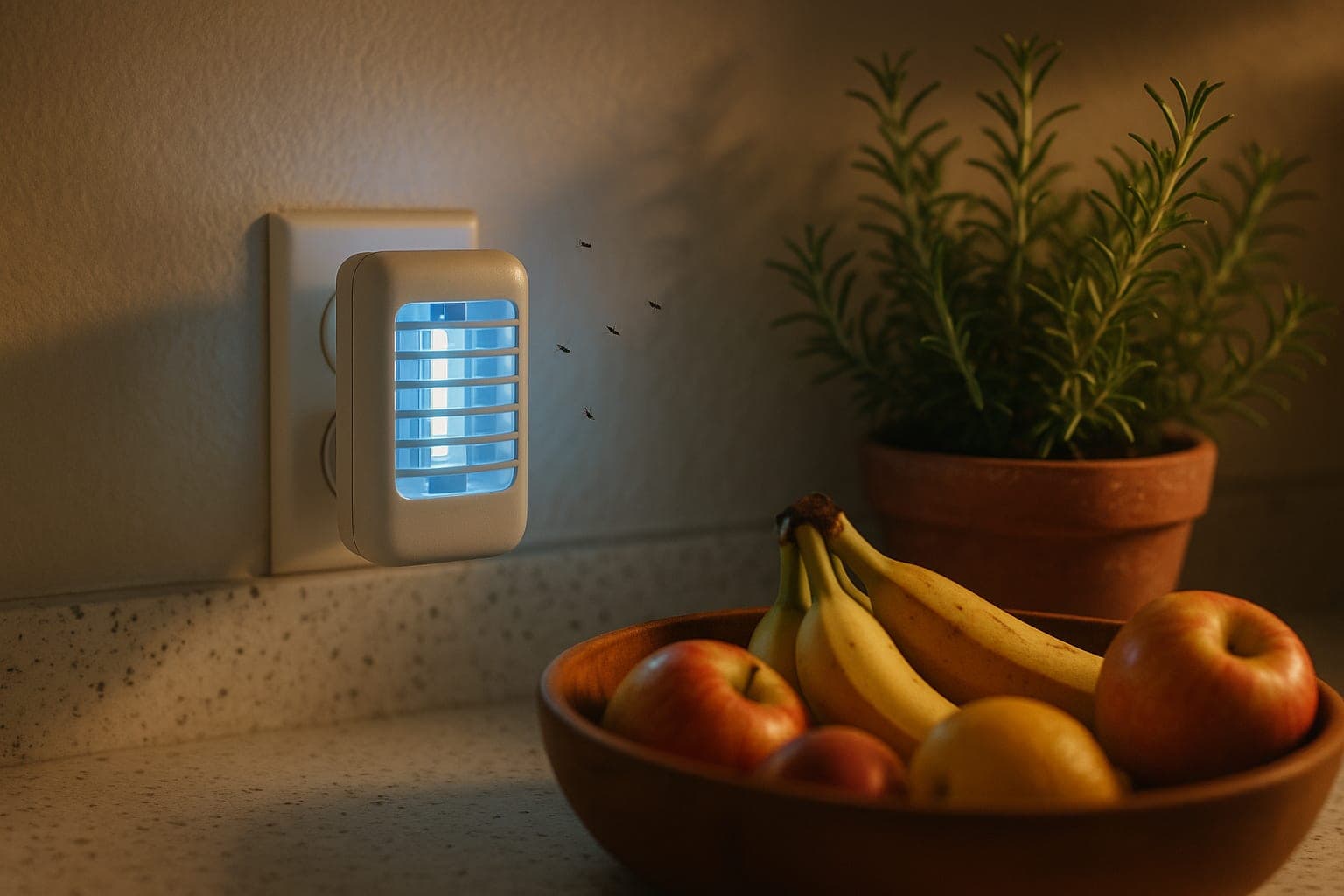
Best Indoor Fly Traps for Plant Owners (2026): What Actually Works
Fungus gnats from your houseplants? Fruit flies in the kitchen? The best indoor fly trap depends entirely on which pest you have. Here's what works for each one, from $6 sticky traps to $50 UV light traps — and why traps alone won't solve the problem.
13 min read · Updated 2026-05-16
By PlantFix Editorial Team · Sources: University Extension Programs, USDA, EPA
Best Indoor Fly Trap by Pest Type (30-Second Answer)
The best indoor fly trap depends on what's flying around your home. Wrong trap for your pest = zero catches.
Fungus gnats (tiny dark flies near houseplant soil): Yellow sticky traps placed horizontally at soil level. They exploit fungus gnats' natural attraction to yellow wavelengths. Pair with Mosquito Bits (BTI) in your watering to kill larvae in soil — traps alone only catch adults while hundreds of eggs hatch underground.
Fruit flies (tan flies with red eyes near kitchen): Apple cider vinegar + dish soap in a jar. Cheap, effective within hours. Or a TERRO Fruit Fly Trap ($7-10) if you want something you can set and forget.
House flies and larger flying insects: UV light trap like the Zevo plug-in ($20) or Katchy ($40-45). These use UV light to attract insects to a sticky board or fan. They work best in low-light conditions — most are ineffective during the day in a bright room.
Drain flies: No trap fixes drain flies. You need to clean the drain — enzyme drain cleaner breaks down the organic buildup where larvae breed.
Not sure which flying pest you have? Work through our plant diagnosis tool for a guided identification. Getting the ID right is the first step — using the wrong trap is the most common reason people think "traps don't work."
Indoor Fly Trap Comparison: 7 Products Tested
Here's how the most popular indoor fly traps stack up in real-world use. I'm focusing on what actually matters: which pests they catch, how well they work, and what people complain about.
Gideal Yellow Sticky Traps (20-pack, $8-10): The workhorse. Dual-sided adhesive that stays tacky for 2+ weeks. Best for fungus gnats from houseplants — lay them flat at soil level. 15,000+ Amazon reviews at 4.2 stars. Downsides: they look industrial (yellow cards sticking out of your pots), and they catch everything including beneficial insects if used outdoors. But for pure effectiveness per dollar, nothing beats them.
Zevo Flying Insect Trap (plug-in, $20): A discreet plug-in that uses blue and UV light to attract insects to a hidden sticky cartridge. Silent, odorless, chemical-free. Each cartridge lasts about 45 days. Best for kitchens and bathrooms where you want continuous, low-maintenance trapping. Catches fungus gnats, fruit flies, and small moths. Struggles with house flies — the sticky board doesn't have enough holding power for larger insects. Starter kit with 2 devices and 6 refills runs about $48 at Costco.
Katchy Indoor Insect Trap ($40-45): Three-step system — UV light attracts, fan sucks down, sticky glue board traps. Portable, USB-powered, relatively quiet. The big complaint: it's essentially a nighttime-only device. UV light can't compete with room lighting, so daytime catches are minimal. The fan is also too weak to suck in house flies — they just fly away. For fungus gnats and fruit flies at night, it works well. Replacement glue boards run $10-15 per pack.
Katchy Duo ($50-53): Upgraded model with 360-degree UV light halo, scent bait pod, and automatic day/night mode switching. Five adjustable fan/light settings. Addresses the biggest complaint about the original — better daytime performance. Worth the $8 premium over the original if you want 24-hour trapping.
Safer Home Indoor Fly Trap ($14-15): Budget UV plug-in. LED light plus disposable glue cards. Covers 400+ square feet. No chemicals. Good entry-level option at a lower price point than Zevo, though the UV light isn't as bright and it catches slightly less overall.
TERRO Fruit Fly Trap ($7-10 for 2-pack): Apple-shaped design with non-toxic liquid lure. Each trap lasts up to 45 days. Important limitation: this trap ONLY works for fruit flies. It uses acetic acid (vinegar-based) lure that mimics rotting fruit — fungus gnats, drain flies, and house flies are completely uninterested. Some users report fruit flies sitting near the trap but not entering. Others catch 40-50 flies per trap.
DIY ACV Trap (free): Half-inch of apple cider vinegar in a jar, one drop of dish soap to break surface tension. Cover with plastic wrap and poke small holes with a fork. The Kitchn tested this against commercial alternatives and caught 50+ fruit flies. Only works for fruit flies — useless for fungus gnats despite what countless blog posts claim.
How to Choose the Right Trap (Decision Guide)
Step 1: Identify your pest. This is non-negotiable — the wrong trap for your pest catches nothing. Where are the flies? Near houseplant soil = fungus gnats. Near fruit bowl or trash = fruit flies. Near drains = drain flies. Random house flies coming from outside = house flies. Not sure? Check our gnats vs fruit flies comparison guide or work through the diagnosis tool.
Step 2: Match trap type to pest behavior. Fungus gnats are attracted to yellow — use yellow sticky traps at soil level. Fruit flies are attracted to acetic acid (vinegar smell) — use ACV traps or TERRO lure traps. House flies and moths are attracted to UV light — use Katchy, Zevo, or similar UV + sticky/fan traps. Drain flies aren't attracted to any trap consistently — clean the drain.
Step 3: Consider your household. Pets: all UV + glue traps (Zevo, Katchy, Safer Home) are non-toxic and chemical-free. The only risk is a curious cat or dog getting sticky glue on their fur. Keep sticky traps inside pots or behind plants. Kids: plug-in traps (Zevo, Safer Home) are safest — no accessible moving parts or exposed adhesive. Avoid bug zappers with exposed electrical grids. Aesthetics: Zevo wins for discreet design — it looks like a nightlight. Yellow sticky cards are effective but ugly.
Step 4: Set expectations. UV light traps work best in the dark. If you're running a Katchy in a bright living room during the day, you'll be disappointed. Use it at night, or place it in a darker corner near your plant shelf. For daytime trapping, yellow sticky traps work regardless of lighting.
Why Your Indoor Fly Trap Isn't Working (5 Fixes)
If your trap isn't catching anything, one of these five issues is almost certainly the problem.
Fix 1: You're using the wrong trap type. This is the number one reason traps "don't work." An ACV trap won't catch fungus gnats. A UV trap won't attract drain flies. A yellow sticky trap in a kitchen won't catch fruit flies as well as an ACV trap near the fruit bowl. Match the trap to the pest.
Fix 2: Poor placement. UV traps need low-light conditions — they can't compete with sunlight or bright room lighting. Sticky traps for fungus gnats should be at soil level, not stuck vertically above the plant. Fruit fly traps should be within 2 feet of the food source (fruit bowl, trash can, compost bin). Moving a trap 3 feet can change catches from zero to dozens.
Fix 3: Competing scents or lights. Candles, air fresheners, essential oil diffusers, and bright overhead lights all reduce trap effectiveness. If you're running a UV trap, turn off nearby lights for maximum contrast.
Fix 4: The trap is full or degraded. Sticky boards covered in dead insects stop catching. Glue degrades in low humidity, turning hard and non-sticky within days. ACV loses its potency after 5-7 days. Replace sticky boards every 7-14 days and refresh ACV traps weekly.
Fix 5: You're not addressing the source. This is the most important point and I can't emphasize it enough. Traps catch adult flying insects. They do nothing about eggs and larvae at the breeding site. If your houseplant soil is wet, fungus gnat larvae are hatching faster than any trap can catch adults. If rotting fruit sits on the counter, fruit flies are reproducing faster than traps can keep up. Traps are symptom management. Source control is the cure.
The Houseplant Connection: Why You Have Indoor Flies
If you're a houseplant owner dealing with indoor flying insects, there's a very good chance your plants are the source — specifically, overwatered soil.
Fungus gnats are the number one indoor flying pest for plant owners. Adult females lay eggs in moist topsoil. Larvae feed on fungi and decaying organic matter in the top 2-3 inches. Each female produces 200+ eggs. The lifecycle from egg to adult takes just 3 weeks in warm indoor conditions. That means a single plant with consistently wet soil becomes a fly factory.
The trap-only approach fails because traps catch adults while the soil keeps producing them. You need a two-pronged strategy: yellow sticky traps at soil level to catch adults AND Mosquito Bits (BTI) in your watering to kill larvae in the soil. Soak 4 tablespoons of Mosquito Bits in a gallon of water for 30 minutes, then water normally. A hydrogen peroxide soil drench is a faster alternative that kills larvae on contact. The BTI bacteria specifically target gnat and mosquito larvae — safe for plants, pets, and people. Continue for 3+ weeks to break the lifecycle.
Simultaneously: let the top inch of soil dry out between waterings. Add a layer of sand, perlite, or decorative stones on the soil surface to block egg-laying access. Bottom-watering (filling the saucer and letting soil wick up moisture) keeps the topsoil dry.
If you're dealing with severe infestations across multiple plants, our complete fungus gnat treatment guide covers every option in detail. Our complete gnat elimination guide covers both fungus gnats and fruit flies in one place. And our apple cider vinegar gnat trap guide explains why ACV traps catch fruit flies but not fungus gnats — the most common DIY trap mistake plant owners make.
DIY Indoor Fly Traps That Actually Work
If you need a trap tonight and can't wait for a delivery, these DIY options use things you already have.
ACV + Plastic Wrap Cone (best DIY for fruit flies): Fill a jar with half an inch of apple cider vinegar. Cover tightly with plastic wrap secured by a rubber band. Poke 4-5 small holes with a fork. Fruit flies crawl through the holes following the vinegar scent but can't figure out how to escape. Testing by The Kitchn found this caught 50+ fruit flies. Replace the ACV every 5-7 days.
ACV + Dish Soap Bowl (fastest setup): Pour a splash of ACV in any shallow bowl. Add one drop of dish soap — this breaks the surface tension so flies sink instead of sitting on top. Set near the fruit bowl or trash can. Works within hours for fruit flies.
Red Wine Trap: Same setup as the ACV trap but use leftover wine. The deeper fermented aroma can attract fruit flies that ACV alone doesn't catch. Especially effective with wines that have gone slightly off.
DIY Yellow Sticky Trap (for fungus gnats): Coat a piece of yellow construction paper or a yellow index card with a thick layer of petroleum jelly (Vaseline). Stick it into the pot soil with a popsicle stick. It works — gnats land on the yellow and get stuck. But honestly, commercial sticky traps ($0.30-$0.50 each) are much stickier, last longer, and catch more effectively. The DIY version is a one-night bridge until you get real traps.
What doesn't work: white vinegar (no acetic acid aroma to attract flies), essential oil traps (not enough evidence they attract anything), banana peel traps without a cover (flies eat and leave).
Preventing Indoor Flies: Fix the Source, Not Just the Symptom
Traps manage symptoms. Prevention eliminates the problem.
For fungus gnats: water only when the top inch of soil is dry. Switch to bottom-watering for prone plants. Add perlite or sand to your potting mix for better drainage. Quarantine new plants for 2 weeks before placing near your collection. Use Mosquito Bits in your regular watering routine as prevention — it costs about 10 cents per treatment.
For fruit flies: store ripe fruit in the refrigerator, not on the counter. Empty kitchen trash daily during warm months. Clean recycling bins — bottles with juice or wine residue are breeding sites. Wipe down counters to remove juice spills. Clean drains with enzyme cleaner monthly.
For drain flies: run water in infrequently-used drains weekly. Clean drain traps. Use an enzyme drain cleaner (not bleach — bleach doesn't break down the organic biofilm where drain fly larvae live). If you see tiny moth-like flies near a sink or shower drain, place clear tape over the drain overnight — you'll find adults stuck to it in the morning, confirming the source.
For house flies: seal entry points — torn screens, gaps around doors, open windows without screens. House flies breed outside (in garbage, animal waste, compost) and come inside for food and shelter. No amount of indoor trapping fixes an outdoor breeding source combined with open entry points.
Recommended Products
We earn a commission if you buy through these links, at no extra cost to you. We recommend based on what works, not what pays. How this works.
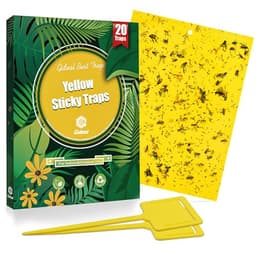
The most effective and affordable option for fungus gnats. Aggressive adhesive stays tacky for 2+ weeks. Lay flat at soil level for best results. Also catches whiteflies, leafminers, and small moths. 15,000+ Amazon reviews at 4.2 stars.
$8-$10 · Best for Fungus gnats from houseplants — best value trap available
Check price on Amazon →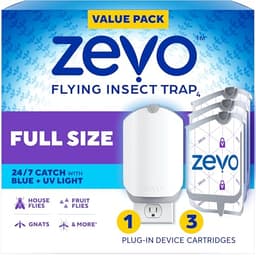
Discreet plug-in design with blue + UV light and hidden sticky cartridge. Silent, odorless, chemical-free. Each cartridge lasts up to 45 days. Works best in kitchens, bathrooms, and anywhere near plants in low-light conditions. Struggles with larger house flies.
$20 single / $48 starter kit · Best for Continuous, low-maintenance trapping in living spaces
Check price on Amazon →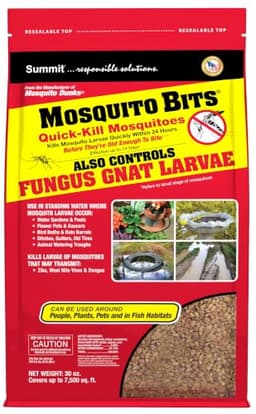
Not a trap — but the essential companion to any trap for plant owners. BTI bacteria specifically kill fungus gnat and mosquito larvae in soil. Soak granules in water for 30 minutes, water plants normally. Safe for pets, kids, and plants. Traps catch adults; BTI kills the next generation.
$8-$15 · Best for Killing fungus gnat larvae in soil — the other half of the solution
Check price on Amazon →Treatment information on PlantFix is educational. When using any pesticide — including organic options like neem oil or insecticidal soap — read and follow the entire product label; the label is the law. For persistent or high-stakes problems, your local university extension service offers free, region-specific advice. Read about how we source and verify treatment guidance in our Editorial Standards.
FAQ
What is the best indoor fly trap?▼
It depends on your pest. For fungus gnats from houseplants, yellow sticky traps at soil level are most effective ($6-10 for 20+). For fruit flies, ACV traps or TERRO liquid lure traps ($7-10) work best. For house flies and moths, UV light traps like Zevo ($20) or Katchy ($40-45) catch the most. No single trap works for all flying insects.
Do UV light fly traps work during the day?▼
Poorly. UV light traps rely on contrast — they can't compete with sunlight or bright room lighting. Most UV traps (Katchy, Zevo) are most effective at night or in low-light conditions. The upgraded Katchy Duo ($50-53) has improved daytime performance with a scent bait pod, but even it works better after dark. Yellow sticky traps work regardless of lighting conditions.
Why is my fly trap not catching anything?▼
The five most common reasons: (1) wrong trap type for your pest, (2) poor placement (too far from source, too bright for UV traps, wrong height for sticky traps), (3) competing scents from candles or diffusers, (4) full or degraded glue board, or (5) not addressing the breeding source. Traps only catch adults — if the source keeps producing larvae, traps can't keep up.
Do indoor fly traps work for fungus gnats?▼
Yellow sticky traps work excellently for catching adult fungus gnats — place them horizontally at soil level near affected plants. UV light traps like Katchy and Zevo also catch fungus gnats at night. But traps alone won't solve the problem. You must also treat the soil to kill larvae — use Mosquito Bits (BTI) as a soil drench alongside traps to break the lifecycle in 3-4 weeks.
Are indoor fly traps safe for pets?▼
Yes — the top-rated 2026 traps (Zevo, Katchy, Safer Home, yellow sticky traps) are all chemical-free and use physical trapping mechanisms. The only risk is a pet getting sticky glue on their fur, which is messy but non-toxic. Remove with vegetable oil if it happens. BTI (Mosquito Bits) used for soil treatment is also safe for dogs and cats.
How much do indoor fly traps cost to maintain?▼
Yellow sticky traps: $30-50/year (cheapest ongoing cost). Zevo refill cartridges: $30-40/year per device. Katchy glue boards: $30-45/year. DIY ACV traps: essentially free. Factor in refill costs when choosing — a $20 Zevo device with $35/year in cartridges costs more long-term than a $10 pack of sticky traps that covers 6+ months.
Related
- Fungus Gnats: How to Identify & Eliminate Them for Good →
- Yellow Sticky Traps for Gnats: Placement & Best Picks →
- Apple Cider Vinegar Gnat Trap: The Recipe That Works in Hours →
- Homemade Fly Trap: 5 DIY Builds, Ranked by What They Actually Catch →
- Gnats vs Fruit Flies: How to Tell the Difference in 10 Seconds →
- Tiny Black Bugs on Plants: Identify & Get Rid of Gnats, Thrips & More →
- Plant Bugs: Identify Any Bug on Your Plant in 30 Seconds →
- Hydrogen Peroxide for Fungus Gnats: The Exact Ratio & Why It Fails for Some People →
- How to Get Rid of Gnats in Plants Fast: 7 Proven Methods →
- Mosquito Bits for Fungus Gnats: Dosage + 24-Hour Kill →
Not sure what's wrong?
Use the diagnosis tool →Get seasonal plant care reminders and pest alerts.