Squash Bugs: The Week-by-Week Battle Plan to Save Your Garden
14 min read · Updated 2026-06-04
grey bugs on my squash plants
Squash bugs.
Act this week to save the crop.
- Treat for
- The season
- Spreads?
- Across the bed
- Kills plant?
- Yes, via wilt
Do this in the next 5 minutes
Check leaf undersides for bronze egg clusters
Remove every one you find today. Eggs hatch in seven to nine days, and nymphs are far harder to deal with than eggs. Wrap duct tape sticky-side-out around two fingers and press it against the cluster.
What kills them
- Likely at home
Duct tape
Sticky-side-out around two fingers, pressed onto egg clusters. Faster than scraping and it won't tear the leaf.
- Likely at home
Hand-picking into soapy water
One tablespoon of dish soap per gallon. Best before 9am while the bugs are cool and slow. On a home-garden scale this is still the single most effective method.
- Likely at home
A flat board by each plant
They shelter underneath it overnight. Flip it every morning and collect what's there. Absurdly simple and it works all season.
- $12–18
Four teaspoons per gallon with a teaspoon of castile soap. Sprayed directly onto nymph clusters, early morning or evening.
Confirm before you treat
- Flat grey-brown adults about 1.5cm, on stems and leaf undersides
- Bronze egg clusters in neat rows on the undersides
- Grey nymphs with dark legs, clustered together
Failure point · Bloom
Spraying while the plant is flowering
The effective chemical window is on young pre-bloom plants. Spraying during bloom kills the pollinators the crop depends on, so once flowers appear switch to hand-picking and egg removal.
US Department of Agriculture, Division of Entomology — Circular No. 39, The Common Squash Bug
By PlantFix Editorial Team · Sources: University Extension Programs, USDA, EPA
How to Get Rid of Squash Bugs (Fast Version)
Squash bugs are flat-backed, gray-brown, 5/8-inch shield-shaped insects that feed on squash, zucchini, pumpkins, and other cucurbits. They inject toxic saliva while feeding, causing "anasa wilt" — leaves yellow, blacken, and the entire vine collapses. A single female lays up to 250 copper-colored eggs per season on leaf undersides.
The fastest treatment: hand-pick adults every morning (they're sluggish before 9am), scrape bronze egg clusters from leaf undersides with tape or a spoon, and lay boards flat near plants at night — squash bugs hide underneath, and you flip-and-crush every morning. For nymphs, spray insecticidal soap or neem oil directly on contact.
The real fix is prevention: use floating row covers from planting until flowering, plant resistant varieties (Butternut is the most resistant), and do a thorough fall cleanup — removing all vine debris eliminates up to 80% of next year's population. Keep reading for the full season-long battle plan.
Identification: Adults, Eggs, and Nymphs
Adults are 5/8 to 3/4 inch long, flat-backed, gray to dark brown, with orange and brown stripes along the edges of the abdomen visible when the wings are lifted. Their wings form an X-shape when folded on the back. They produce a disagreeable odor when crushed — which is why people often confuse them with stink bugs. Adults are strong fliers and can colonize new gardens quickly in spring.
Eggs are one of the most recognizable features. They're elliptical, slightly flattened, and copper or bronze colored — about 1.5mm long. Females lay them in orderly clusters averaging 18-20 eggs per mass on the undersides of leaves, often in the angle where leaf veins form a V. The metallic bronze color against a green leaf makes them easy to spot once you know what you're looking for. They hatch in 7-9 days.
Nymphs are where most of the feeding damage happens. First instars are tiny (2.5mm), with light green abdomens, red-black heads, and black legs. They cluster tightly in groups — if you flip a leaf and see a huddle of small pale-green bugs, those are squash bug nymphs. By the fourth and fifth instar (6-10mm), they've darkened to brownish-gray with black legs and antennae. Full development from egg to adult takes 4-6 weeks.
Damage signs: look for yellow specks on leaves that turn brown and crispy. Leaves wilt even when the soil is moist. Entire vines blacken, become brittle, and collapse. This is anasa wilt — it often kills one plant while adjacent plants look perfectly healthy, which is confusing until you realize the wilting is from bug feeding, not a soil problem.
Why Squash Bugs Kill Plants: Anasa Wilt Explained
Anasa wilt isn't caused by a pathogen — it's a direct physiological response to squash bug feeding. Both adults and nymphs have piercing-sucking mouthparts that inject highly toxic saliva into plant tissue while extracting sap. This saliva disrupts the flow of water and nutrients through the xylem (the plant's water-transport system).
The progression is predictable: yellow specks appear at feeding sites, then turn brown as tissue dies. Foliage wilts even though the soil is moist, then blackens and becomes brittle. Under heavy feeding pressure, entire vines collapse and die. The damage is proportional to bug density — one or two bugs cause cosmetic damage, but a colony causes plant death.
There's a second problem that's less well known. Squash bugs also vector cucurbit yellow vine disease (CYVD), caused by the bacterium Serratia marcescens. Overwintering adults carry the bacteria in their gut and transmit it to new plants in spring. CYVD causes yellowing, wilting, and plant decline through a different mechanism — it colonizes the phloem (nutrient transport system) rather than disrupting the xylem. According to a 2025 paper in Plant Disease journal, the causal agent was recently reclassified within the S. marcescens complex.
The practical takeaway: squash bugs don't just weaken plants by feeding. They can kill them through anasa wilt AND infect them with bacterial disease. That's why early intervention — before populations build — matters so much.
Week-by-Week Treatment Timeline (The Full Season Battle Plan)
This is the treatment calendar no other guide gives you. It sequences every action by where you are in the growing season.
April-May (Pre-Planting): Remove all old cucurbit vine debris, mulch, and boards from last year's garden bed. Move woodpiles, stacked pots, and lumber at least 20 feet from your planting area — these are overwintering sites. This single step reduces next year's population by up to 80%.
Late May-Early June (Planting): Install floating row covers immediately at transplant or seeding time. Seal edges with soil or weights. Start board traps — lay flat boards or roof shingles next to plant bases. Plant companion deterrents between cucurbit rows: catnip (contains nepetalactone, a documented insect deterrent), tansy, and nasturtiums.
Early-Mid June (Colonization): Overwintered adults arrive and begin laying eggs. This is the critical chemical window if you're using insecticides — treat young, pre-bloom plants now. Start daily hand-picking and egg inspection. Check board traps every morning; drown collected bugs in soapy water.
Mid June-Early July (Peak Egg-Laying): Scout for egg masses at least weekly. Treatment threshold: 1 egg mass per plant on average, according to University of Minnesota Extension. Remove eggs by wrapping duct tape sticky-side-out around your fingers and pressing against egg clusters, or scrape them into soapy water. Apply neem oil every 7-14 days.
July (Nymph Peak): This is when nymphs are most vulnerable and treatments are most effective. Apply insecticidal soap, neem oil, or food-grade diatomaceous earth directly to nymph clusters. Continue weekly egg-mass scouting. If you used row covers, remove them for pollination — the optimal window is 2 hours in the morning (8-10 AM) when bees are most active.
August (Second Generation in South): In Georgia, Florida, Oklahoma, and other southern states, watch for second-generation adults and new egg-laying. Northern growers (Minnesota, Wisconsin) typically deal with only one generation. Continue monitoring and hand-picking.
September-October (Season End): Bugs congregating on late-season fruit don't need treatment — the harvest is wrapping up. Focus shifts entirely to fall cleanup. Pull and destroy (burn or hot-compost) ALL cucurbit vines. Clear debris. Move shelter materials away from garden areas.
Organic Treatment Methods That Actually Work
Hand-picking is the most effective single method for home gardens, especially when populations are small. Check plants daily, focusing on leaf undersides and the plant crown. Drop bugs into soapy water (1 tablespoon dish soap per gallon). Best done before 9 AM when bugs are cool and slow.
The board trap technique is almost absurdly simple and effective. Lay a flat board, old roof shingle, or piece of cardboard on the ground right next to plant bases. Squash bugs congregate underneath at night for shelter and moisture. Every morning, flip the board and crush or collect the bugs. Repeat daily throughout the season.
Egg removal by the duct tape method: wrap tape sticky-side-out around two fingers, press firmly against egg clusters on leaf undersides, and discard the tape. Faster than scraping and less likely to damage the leaf. Check every 7-10 days to stay ahead of the hatch cycle — eggs take 7-9 days to hatch.
Neem oil foliar spray: mix 4 teaspoons clarified neem oil per gallon of water with 1 teaspoon castile soap as emulsifier. Spray directly on nymphs — neem requires contact to work. Apply early morning or evening to avoid leaf burn. Reapply every 7-14 days; every 2 days during severe infestations for 2 weeks.
Diatomaceous earth: apply food-grade DE around plant bases and on leaves. It works by abrading insect exoskeletons, causing dehydration. Effective against nymphs, less so against armored adults. Must be reapplied after rain. Caution: DE also harms beneficial insects.
Kaolin clay (Surround WP): mix 1 quart kaolin clay + 1 tablespoon liquid soap per 2 gallons water. Creates a white physical barrier film on plants that deters feeding and egg-laying. Minimum 3 applications, every 7-21 days.
Row covers: the single most reliable organic control. Apply lightweight floating covers at planting. When flowers appear (30-35 days in), remove for 2 hours in the morning for bee pollination. University of Nebraska research found that row covers combined with trap crop monitoring achieve 90%+ control rates.
Chemical Treatment Options (When Organic Fails)
Reserve chemical options for heavy infestations where organic methods aren't keeping up. Target nymphs — adults are highly resistant to most insecticides.
Permethrin is the most accessible option for home gardeners. Apply to young, pre-bloom plants when overwintered adults are colonizing (early June). Follow with a second application 7-14 days later timed for nymph hatch. 0-day pre-harvest interval (PHI) on most formulations. HIGH toxicity to bees — apply only in the evening when bees are inactive.
Carbaryl (Sevin) is a long-time home garden standard. Broad-spectrum, effective against nymphs and moderately effective against adults. 3-day PHI. HIGH bee toxicity — evening application only.
Bifenthrin is considered less likely to trigger secondary pest outbreaks (spider mites, aphids) than other pyrethroids. 3-day PHI. HIGH bee toxicity.
Bee-safety protocol (critical): Apply all chemical treatments to young, pre-bloom plants whenever possible — this eliminates bee exposure entirely. If spraying during bloom is unavoidable, apply late in the evening when bees have stopped foraging and flowers have closed. Never spray when bees are actively visiting flowers. Allow residue to dry overnight before bees return the following morning.
Squash Varieties That Resist Squash Bugs
Not all squash is created equal when it comes to squash bug resistance. Choosing the right variety can make the difference between a frustrating battle and a manageable season.
Most resistant: Butternut squash is consistently rated the most resistant variety across university trials. The species Cucurbita moschata (which includes Butternut, Tromboncino, and Cushaw types) shows broad resistance to squash bugs, squash vine borers, AND powdery mildew. Tromboncino (also called Zuchetta) has been described as "virtually immune" by some experienced growers. If you're tired of fighting squash bugs every year, switching to C. moschata varieties is the single most impactful change you can make.
Moderately resistant: Royal Acorn, Sweet Cheese pumpkin, Green-Striped Cushaw, Pink Banana squash, and Black Zucchini (more resistant than standard green zucchini).
Most susceptible: Standard green zucchini is the most vulnerable. Yellow crookneck is somewhat better but still heavily attacked. Hubbard squash is so attractive to squash bugs that some gardeners intentionally plant it as a trap crop — the bugs swarm the Hubbard and leave other squash alone.
The practical strategy: plant Butternut or another C. moschata variety as your main crop, and if you must grow zucchini, plant a few Hubbard squash plants 20+ feet away as sacrificial trap crops. Monitor the Hubbard plants heavily and hand-pick the concentrated bugs before they spread.
Squash Bug vs Stink Bug: How to Tell Them Apart
Squash bugs produce a foul odor when crushed, which leads many gardeners to call them stink bugs. But they're different insects in different families, with different behaviors and different host plant preferences.
Body shape is the fastest tell. Squash bugs are elongated and narrower — shaped like a slightly flattened football. Stink bugs are wider and rounder with a more prominent shield shape. When looking at them side by side, the difference is obvious.
Antennae: squash bug antennae are uniformly dark. Many stink bug species have white or cream-colored bands on their antennae — look for alternating light and dark segments.
Egg color: squash bug eggs are bronze or copper. Stink bug eggs are typically pearly white, cream, or pale green.
Host plants: squash bugs are specialists — they almost exclusively feed on cucurbits (squash, pumpkins, zucchini, gourds, melons). Stink bugs are generalists that feed on tomatoes, beans, fruit trees, ornamentals, and many other plants.
Both are in the broader order Hemiptera (true bugs), but squash bugs belong to Coreidae (leaf footed bug family) while stink bugs belong to Pentatomidae (shield bug family). Yes — squash bugs are technically leaf footed bugs, just without the dramatic leaf-shaped leg expansion that the larger Leptoglossus species have. For other vegetable garden pests, see our guides on tomato hornworms, cucumber beetles, cabbage worms, harlequin bugs (the orange-and-black Pentatomidae shield bug that drains brassicas), flea beetles, earwigs, Japanese beetles, squash vine borers, armyworms (lawn-destroying caterpillars that surge after summer storms), and cicada killer wasps (the giant solitary wasps that dig burrows near garden beds in summer).
Recommended Products
We earn a commission if you buy through these links, at no extra cost to you. We recommend based on what works, not what pays. How this works.
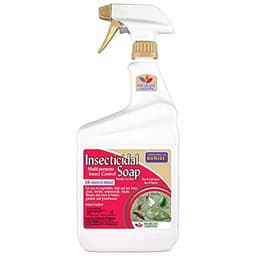
Kills soft-bodied squash bug nymphs on contact by disrupting cell membranes. Spray directly on nymph clusters — undersides of leaves and near the plant crown. Safe for vegetables up to day of harvest. Won't harm beneficial insects once dry.
$8-$14 · Best for Direct treatment of squash bug nymph clusters
Check price on Amazon →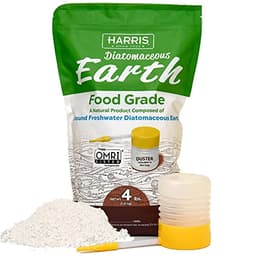
Microscopic fossilized diatoms that damage insect exoskeletons through physical abrasion, causing dehydration. Sprinkle around squash plant bases and on foliage. USDA-approved for organic food production. Must be reapplied after rain or irrigation.
$8-$15 · Best for Barrier treatment around squash plant bases
Check price on Amazon →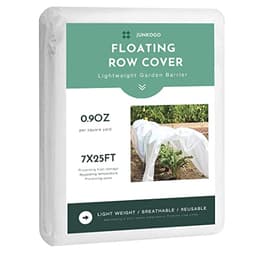
Spun-bond polypropylene fabric that excludes adult squash bugs from reaching plants. Transmits 85%+ of light and allows rain through. Install at planting and remove for 2 hours in the morning when flowers appear for bee pollination. The most effective prevention method.
$15-$30 · Best for Preventing squash bug colonization — install at planting time
Check price on Amazon →Treatment information on PlantFix is educational. When using any pesticide — including organic options like neem oil or insecticidal soap — read and follow the entire product label; the label is the law. For persistent or high-stakes problems, your local university extension service offers free, region-specific advice. Read about how we source and verify treatment guidance in our Editorial Standards.
FAQ
How do you get rid of squash bugs?▼
Hand-pick adults in early morning, scrape copper-colored egg clusters from leaf undersides daily, place boards near plants as overnight traps (bugs hide under them — flip and crush each morning), and spray nymphs directly with insecticidal soap or neem oil. Prevention: use row covers until flowering, plant resistant varieties like Butternut, and remove all vine debris in fall.
What do squash bug eggs look like?▼
Squash bug eggs are elliptical, slightly flattened, and copper or bronze colored — about 1.5mm long. They're laid in orderly clusters of 18-20 eggs on leaf undersides, often in the angle where leaf veins form a V-shape. They hatch in 7-9 days. Check leaf undersides at least weekly and remove eggs promptly by pressing duct tape against the clusters.
What is anasa wilt?▼
Anasa wilt is a physiological condition caused directly by squash bug feeding — not a pathogen. The bugs inject toxic saliva that disrupts water transport through the plant's xylem. Leaves develop yellow specks, turn brown, wilt, blacken, and the vine collapses. It often kills one plant while adjacent plants look fine. The damage is proportional to bug population density.
What squash varieties are resistant to squash bugs?▼
Butternut squash is the most resistant variety. The entire Cucurbita moschata species (Butternut, Tromboncino, Cushaw) shows broad pest resistance. Tromboncino has been described as virtually immune by experienced growers. Most susceptible: standard green zucchini and yellow crookneck. Some gardeners plant Hubbard squash as a trap crop because it's so attractive to squash bugs.
Are squash bugs the same as stink bugs?▼
No. Squash bugs (Anasa tristis, family Coreidae) are elongated, narrow, and feed almost exclusively on cucurbits. Stink bugs (family Pentatomidae) are wider, shield-shaped, and feed on a broad range of plants. Both produce a foul odor when crushed. The easiest ID difference: squash bug antennae are uniformly dark, while many stink bug antennae have alternating light and dark bands.
How many eggs does a squash bug lay?▼
A single female can lay up to 250 eggs per season in clusters of 18-20 eggs each. She lays about 10 eggs per day over several weeks. In northern climates there's one generation per year; in southern states (Georgia, Florida) there can be 2-3 generations, with extended egg-laying meaning all life stages are present on plants simultaneously.
Related
- Cabbage Worm vs Cabbage Looper vs Diamondback Moth: 3-Way ID + Organic Treatment →
- Harlequin Bug: The Fastest Way to Save Your Brassicas →
- Cicada Killer Wasp: Not a Murder Hornet (ID Guide + Yard Management) →
- Cucumber Beetle: Spotted vs Striped ID + Deadly Wilt →
- Earwig Pictures: What They Look Like & How to Get Rid of Them →
- Flea Beetle: The Jumping Test, Crop-by-Crop Species Guide, and Why Seedlings Die in 48 Hours →
- Garden Pest Identification: 25+ Bugs by the Damage They Do →
- Insecticidal Soap: What It Actually Kills (Including Spider Mites), DIY Recipe & Why Dawn Is Wrong →
- Japanese Beetles: Why Traps Backfire & a Week-by-Week Control Calendar →
- Leaf Footed Bug vs Assassin Bug: How to Tell Them Apart (And Not Kill the Wrong One) →
- Neem Oil for Plants: Complete Guide to Using It Effectively →
- Plant Bugs: Identify Any Bug on Your Plant in 30 Seconds →
- Potato Bug Pictures: 3 Insects, 1 Confusing Name (ID Guide) →
- Squash Vine Borer: Save a Wilted Plant (Surgical Rescue) →
- Tomato Hornworm ID: Kill It — Unless It Has White Cocoons →
- Whiteflies: The Shake Test, Damage Chain & 3-Week Treatment Protocol →
Not sure what's wrong?
Use the diagnosis tool →Get seasonal plant care reminders and pest alerts.