Flea Beetle: The Jumping Test, Crop-by-Crop Species Guide, and Why Seedlings Die in 48 Hours
Flea beetles are tiny black or striped beetles that jump like fleas when disturbed — and they can kill vegetable seedlings in 2-3 days. Different species target different crops. Here's the crop-specific ID guide, organic treatments ranked, and the delayed planting trick most people miss.
12 min read · Updated 2026-06-11
By PlantFix Editorial Team · Sources: University Extension Programs, USDA, EPA
How to Get Rid of Flea Beetles (30-Second Answer)
Flea beetles are tiny (1/16 to 1/8 inch) shiny beetles that jump like fleas when disturbed — that jumping behavior is the instant ID. They chew hundreds of tiny round holes in leaves, giving plants a "shotgunned" appearance. Seedlings can die in 2-3 days under heavy feeding; established plants usually survive.
For seedlings, cover with floating row covers at planting — this is the single most effective protection. For active infestations, apply kaolin clay spray (Surround WP) to create a physical barrier on leaves that deters feeding and egg-laying. For severe outbreaks, spray spinosad in the evening (OMRI-listed organic, but toxic to bees for 3 hours after application).
The most underrated prevention trick: delay planting by 2-3 weeks. Flea beetles emerge in a burst in early spring when soil temperatures hit 50°F. If your seedlings aren't there yet, the beetles disperse to wild plants. By the time you transplant 2-3 weeks later, peak beetle pressure has passed and your plants are larger — large enough to outgrow the damage.
The Jumping Test: Instant Flea Beetle ID
Walk up to your garden plants and wave your hand near the leaves. If tiny black dots launch themselves into the air like popcorn, you have flea beetles. That flea-like jumping ability (powered by enlarged hind legs, just like actual fleas) is unique — no other garden pest this size jumps.
Flea beetles are 1/16 to 1/8 inch long — about the size of a sesame seed. Most species are shiny black, but some are striped (black and yellow), bronze, blue-black, or brown depending on the species. They have hard, rounded shells typical of beetles and six legs, with the hind pair noticeably larger than the front two.
The damage pattern is equally distinctive. Flea beetles chew small, round holes through leaves — each hole about 1/16 inch in diameter, remarkably uniform. Heavy feeding gives the leaf a "shothole" pattern, like someone blasted it with fine birdshot. This is different from caterpillar damage (large irregular holes) or slug damage (ragged edges with slime trails).
Look for flea beetles in morning when they're sluggish and easier to spot. During midday heat, they're most active and will jump away before you can get close. In cool weather (below 60°F), they tend to cluster on the sunny side of plants where they're warming up.
Flea beetle larvae are thin, white, legless grubs that live in the soil and feed on plant roots — much smaller than lawn grubs, which are thick, C-shaped Japanese beetle larvae that feed on grass roots in lawns. You rarely see flea beetle larvae — the adults doing the leaf damage are the visible problem. But root damage from larvae can weaken plants independently of the leaf feeding above.
Crop-Specific Flea Beetle Species (Not All Flea Beetles Are the Same)
This is the part most general pest guides skip entirely. There are dozens of flea beetle species in North American gardens, and they're not interchangeable — each specializes in specific crop families. Knowing which species you're dealing with tells you which crops to protect and which are safe.
Crucifer Flea Beetle (Phyllotreta cruciferae) — Brassica crops
Small (2mm), shiny black. Attacks cabbage, broccoli, kale, cauliflower, Brussels sprouts, radishes, turnips, arugula, and mustard greens. The most common garden flea beetle. Peak damage: April-June. The same crops that cabbage worms attack, but flea beetles hit earlier in the season.
Striped Flea Beetle (Phyllotreta striolata) — Also brassicas
Slightly larger than crucifer flea beetle, with two yellow stripes on a black body. Same host range as the crucifer flea beetle. These two species often appear together on the same plants and are treated identically.
Eggplant Flea Beetle (Epitrix fuscula) — Eggplant specialist
Tiny (1.5mm), brownish-black. Eggplant is the most flea-beetle-susceptible vegetable in the garden, bar none. University of Maryland Extension reports yield reductions exceeding 60% from flea beetle damage on unprotected eggplant. Seedlings under 3 inches are at highest risk.
Potato Flea Beetle (Epitrix cucumeris) — Nightshade family
Dark brown, 1.5mm. Feeds on potatoes, tomatoes, eggplant, and peppers. Also attacks some weeds in the nightshade family (black nightshade, jimsonweed). Larvae feed on potato tubers, causing shallow brown tunnels in the skin.
Tobacco Flea Beetle (Epitrix hirtipennis) — Nightshade family
Pale brown, slightly larger (2mm). Overlaps with potato flea beetle on nightshades. More common in southern states.
Corn Flea Beetle (Chaetocnema pulicaria) — Corn and grasses
Dark bronze or black, 1.5mm. Damages corn seedlings and, more importantly, vectors Stewart's bacterial wilt of corn. A warm winter (above average temperatures in December-February) predicts heavy spring corn flea beetle populations.
Pale-Striped Flea Beetle (Systena blanda) — Generalist
White or pale yellow stripe on each wing cover. Feeds on beans, potatoes, corn, squash, lettuce, and many other crops. Less crop-specific than other species — will eat almost anything in the garden.
Why Seedlings Die So Fast (and When Established Plants Are Fine)
Flea beetles are a seedling killer. An established tomato plant with 30+ leaves can lose 20% of its foliage to flea beetles and barely notice. A 3-inch seedling with 4 leaves loses 2 leaves and it's fighting for its life.
The math is brutal: a single flea beetle can create 30-50 feeding holes per day. Ten beetles on one seedling — easily possible during a spring emergence — create 300-500 holes in a day. On a small seedling, that means every leaf is riddled within 24 hours. Two days of sustained feeding and the seedling has more hole than leaf. It can't photosynthesize, can't grow, and either dies outright or is so stunted it never recovers.
University of Maryland Extension provides specific treatment thresholds based on plant size for eggplant:
- Under 3 inches tall: treat at 2 beetles per plant
- 3-6 inches tall: treat at 4 beetles per plant
- Over 6 inches tall: treat at 8 beetles per plant
These thresholds reflect the reality that larger plants outgrow the damage. A 12-inch tomato transplant with flea beetle holes on its lower leaves will keep growing from the top and the damage becomes irrelevant. But a direct-seeded radish emerging from the soil with its first true leaves is immediately vulnerable.
This is exactly why the delayed planting strategy works. Flea beetle adults emerge from soil in a synchronized burst in early spring. If your seedlings are in the ground during that emergence wave, they take the full force. Wait 2-3 weeks, and the beetle population has dispersed and the surviving beetles are less concentrated. Your transplants go in larger and stronger, and face less pressure.
Organic Treatment Methods (Ranked by Effectiveness)
1. Floating row covers (best prevention)
Lightweight spun-bond fabric physically excludes flea beetles from reaching plants. Install at planting or transplanting — don't wait until you see damage. Secure edges tightly: flea beetles are small enough to crawl under loose fabric. Row covers also warm the soil slightly, which helps seedlings grow faster past the vulnerable stage. Remove when plants flower if they need pollination (peppers, eggplant, tomatoes). Brassica leaf crops can stay covered indefinitely.
2. Kaolin clay spray (Surround WP) — best active treatment
Kaolin clay leaves a fine white mineral film on leaves that physically deters flea beetle feeding and egg-laying. A 2025 peer-reviewed study in the Canadian Journal of Plant Science found that kaolin applications reduced crucifer flea beetle damage and beetle captures to levels comparable to conventional insecticide treatments.
Mix 3 cups kaolin clay per gallon of water plus 1 tablespoon liquid soap as a sticker. Spray until leaves are coated white. Reapply after rain — the coating washes off. Safe for all plants, doesn't harm beneficial insects, OMRI-listed for organic use. The white residue washes off produce at harvest. Kaolin also reduces heat stress on plants by reflecting sunlight.
3. Spinosad spray (for severe outbreaks)
Spinosad kills flea beetles through contact and ingestion. It's the strongest organic option when row covers aren't practical and kaolin isn't providing enough control. Apply in evening only — spinosad is toxic to bees for 3 hours after application. Remains active on leaves for 5-7 days. OMRI-listed for organic use.
4. Diatomaceous earth (DE) — supplemental only
DE is a fine powder of fossilized diatoms that scratches insect exoskeletons, causing dehydration. Dust directly on leaves. The limitation: DE only works when dry. Morning dew, rain, or irrigation renders it useless until it dries again. In humid climates, DE requires constant reapplication. Better as a supplement to other methods than a standalone treatment.
5. Neem oil — deterrent, not a killer
Neem disrupts feeding behavior and may reduce egg-laying when applied to leaf surfaces. It won't kill adult flea beetles reliably — their hard shells resist the fatty acid penetration that makes neem effective on soft-bodied pests. Use as a preventive spray to make your plants less attractive, not as a rescue treatment during an active infestation.
6. Beneficial nematodes — soil-based larval control
Heterorhabditis bacteriophora nematodes applied to the soil attack flea beetle larvae feeding on roots. This doesn't help with the current generation of adults eating your leaves, but it reduces the next generation. Apply in late spring when soil temperatures are above 60°F. Water in thoroughly.
The Delayed Planting Strategy (Most Underrated Prevention Method)
Every spring, flea beetle adults that overwintered in the soil emerge in a burst when soil temperatures reach approximately 50°F. This is typically late April to early May in northern states, earlier in the south. The emergence is synchronized — most adults come out within a 1-2 week window.
These freshly emerged beetles are hungry and concentrated. They immediately seek out host plants in the immediate area. If your eggplant seedlings, radish sprouts, or brassica transplants are sitting there waiting, they get hammered.
Here's the hack: delay your planting by 2-3 weeks past the typical last frost date. The beetles emerge, don't find cultivated host plants, and disperse to weeds and wild brassicas in the area. By the time you transplant your seedlings, the beetle population has spread out and thinned. Your transplants are also larger (started indoors during those extra weeks) and better able to outgrow any remaining beetle damage.
This strategy works especially well for eggplant and direct-seeded brassicas — the two most vulnerable crop types. It doesn't eliminate flea beetles entirely, but it shifts the odds dramatically in your favor.
Combine delayed planting with trap cropping for even better results. Plant a row of radishes or mustard greens 2 weeks before your main crop. These fast-growing brassicas attract the emerging beetles, concentrating them on the trap crop. When your main crop goes in, the beetles are already occupied. Some growers even treat the trap crop with spinosad, turning it into a kill trap.
The old-school advice to "plant early to get ahead of pests" is backwards for flea beetles. Plant later, plant larger transplants, and let the spring beetle wave pass before your crops are exposed.
Flea Beetle Life Cycle: Understanding the Two Damage Phases
Flea beetles have a complete metamorphosis: egg, larva, pupa, adult. Understanding the lifecycle reveals why damage comes in waves and when your intervention is most effective.
Spring emergence (April-May): Overwintering adults emerge from soil as temperatures warm. These are last year's beetles that spent winter in leaf litter and topsoil. They feed immediately on any available host plants — this is the first and often worst damage wave.
Egg-laying (May-June): After 2-3 weeks of feeding, females lay tiny white eggs in the soil near host plant roots. Each female lays 200-400 eggs over several weeks.
Larval feeding (June-July): Larvae hatch and feed on plant roots for 2-4 weeks. This damage is invisible — you don't see it happening. Root-fed plants may appear stunted or wilting despite adequate water. Potato flea beetle larvae tunnel into potato tubers, causing cosmetic damage.
Pupation (July): Larvae pupate in the soil for 1-2 weeks.
Second generation adults (July-August): New adults emerge and feed on foliage again — the second damage wave. This generation is typically less damaging than the spring emergence because plants are larger and more established.
Overwintering (September-October): As temperatures drop, adults stop feeding and burrow into soil and leaf litter to overwinter.
In southern states, there may be 2-3 generations per year. In northern states, typically just one generation with the overwintering adults and their offspring.
Management implication: The spring emergence wave is the critical intervention point. Protect seedlings during April-June, and the rest of the season is manageable. Fall cleanup — removing crop debris and cultivating soil — exposes overwintering adults and reduces next year's spring population. Note: if you're seeing caterpillar-type damage on your lawn rather than the characteristic shothole pattern on vegetable leaves, you likely have armyworms rather than flea beetles — the treatment approach is completely different. For caterpillar damage on trees — especially evergreens with small spindle-shaped bags hanging from branches — check our bagworm guide. And if your lawn has brown patches in sunny areas during summer that look like drought damage but don't respond to watering, you may have chinch bugs — tiny sap-sucking lawn pests that peak in June through August.
Eggplant + Flea Beetles: A Special Nightmare (And What Actually Works)
I'm giving eggplant its own section because no other vegetable attracts flea beetles like eggplant does. If you grow eggplant without protection, you will have flea beetles. It's not a question of if.
Eggplant flea beetles (Epitrix fuscula) are attracted to eggplant from remarkable distances. Even isolated plants in suburban gardens get found. The beetles target young plants aggressively — University of Maryland Extension documents yield reductions exceeding 60% on unprotected eggplant.
The combination protocol that works for eggplant:
Step 1: Start seedlings indoors. Transplant when plants are 6+ inches tall with several true leaves. Larger transplants survive flea beetle damage that would kill smaller seedlings.
Step 2: Transplant under row covers. Keep covers on until plants begin flowering, then remove for pollination (eggplant needs bee pollination for fruit set).
Step 3: After row cover removal, immediately apply kaolin clay spray. Maintain the white coating throughout the season. Reapply after every significant rain.
Step 4: Monitor. If beetle numbers are overwhelming despite kaolin, apply spinosad in evening. Target the first 3-4 weeks after row cover removal — once fruit begins setting, the plant is robust enough to tolerate moderate beetle feeding without yield loss.
Some gardeners grow eggplant on their patio or deck, away from the garden beds where flea beetles overwinter. The physical distance (even 20-30 feet) reduces beetle pressure compared to plants in the main garden bed. Container-grown eggplant also benefits from being elevated off the ground where adult beetles emerge.
Recommended Products
We earn a commission if you buy through these links, at no extra cost to you. We recommend based on what works, not what pays. How this works.
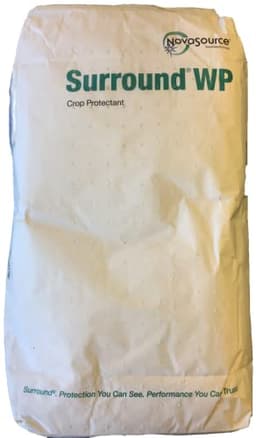
Creates a white physical barrier on plant surfaces that deters flea beetle feeding. Research-backed: reduced beetle damage comparable to conventional insecticides in peer-reviewed studies. Safe for all plants, bees, and beneficial insects. Reapply after rain. Washes off produce at harvest.
$20-$35 (makes many gallons) · Best for Primary organic treatment after row covers — proven, research-backed, safe for everything
Check price on Amazon →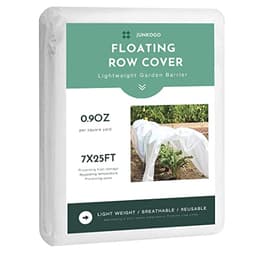
Spun-bond polypropylene that physically blocks flea beetles from reaching plants. Install at planting, secure edges tightly. Transmits 85%+ light, allows rain through. The most reliable prevention method for seedlings and young transplants.
$15-$30 · Best for Seedling protection — install at planting and forget about flea beetles entirely
Check price on Amazon →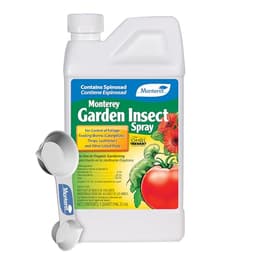
Derived from naturally occurring soil bacteria. Kills flea beetles through contact and ingestion. Remains active on leaves for 5-7 days. OMRI-listed for organic use. Apply in evening only — toxic to bees for 3 hours after application. Strongest organic option for severe outbreaks.
$12-$20 · Best for Severe infestations when row covers and kaolin aren't enough — the heavy artillery
Check price on Amazon →Treatment information on PlantFix is educational. When using any pesticide — including organic options like neem oil or insecticidal soap — read and follow the entire product label; the label is the law. For persistent or high-stakes problems, your local university extension service offers free, region-specific advice. Read about how we source and verify treatment guidance in our Editorial Standards.
FAQ
Do flea beetles bite humans?▼
No. Flea beetles are plant feeders — their mouthparts are designed for chewing leaves, not skin. Despite their name and jumping ability, they are not related to fleas (which are blood-feeding parasites). Flea beetles cannot bite, sting, or otherwise harm humans or pets. They are purely a plant pest.
What do flea beetles look like?▼
Flea beetles are tiny (1/16 to 1/8 inch, about sesame seed size), shiny beetles with enlarged hind legs that allow them to jump when disturbed. Most species are solid black, but some are striped (yellow and black), bronze, or brown. The jumping behavior is the easiest identification — no other tiny garden beetle jumps like a flea.
Will flea beetles kill my plants?▼
They can kill seedlings and very young transplants in 2-3 days of heavy feeding. Established plants rarely die — they survive with cosmetic leaf damage (small round holes) and continue growing. The critical period is the first 2-3 weeks after transplanting when plants are small. Protect seedlings with row covers and they'll grow past the danger zone quickly.
What attracts flea beetles?▼
Flea beetles are attracted to specific plant families depending on species: crucifer flea beetles target brassicas (cabbage, broccoli, kale), eggplant flea beetles target nightshades (eggplant, potato, tomato). They detect host plants by chemical cues from the leaves. Young, tender growth is more attractive than mature foliage. Warm sunny conditions increase beetle activity.
Does diatomaceous earth work on flea beetles?▼
It helps but isn't reliable as a standalone treatment. Diatomaceous earth works by scratching insect exoskeletons and causing dehydration, but it only works when dry. Dew, rain, or irrigation renders it useless until it dries. It's best as a supplement to kaolin clay or row covers, not a primary defense. Reapply after any moisture.
When do flea beetles go away?▼
Flea beetle adults are most active from spring emergence (April-May) through midsummer (July). Activity drops as temperatures exceed 90°F and picks up again in fall for the second generation. They stop feeding and go dormant when temperatures consistently drop below 50°F in fall. The worst damage window is typically April-June when overwintering adults emerge and seedlings are young.
Related
- Cabbage Worm vs Cabbage Looper vs Diamondback Moth: 3-Way ID + Organic Treatment →
- Harlequin Bug: The Fastest Way to Save Your Brassicas →
- Insecticidal Soap: What It Actually Kills (Including Spider Mites), DIY Recipe & Why Dawn Is Wrong →
- Cucumber Beetle: Spotted vs Striped ID + Deadly Wilt →
- Tomato Hornworm ID: Kill It — Unless It Has White Cocoons →
- Squash Bugs: The Week-by-Week Battle Plan to Save Your Garden →
- Neem Oil for Plants: Complete Guide to Using It Effectively →
- Plant Bugs: Identify Any Bug on Your Plant in 30 Seconds →
- Leaf Footed Bug vs Assassin Bug: How to Tell Them Apart (And Not Kill the Wrong One) →
- Earwig Pictures: What They Look Like & How to Get Rid of Them →
- Japanese Beetles: Why Traps Backfire & a Week-by-Week Control Calendar →
- Evergreen Bagworm: Identify Them and Save Your Evergreens →
- Lawn Grubs: The Underground Reason Your Grass Is Dying (ID + Treatment) →
- Garden Pest Identification: 25+ Bugs by the Damage They Do →
Not sure what's wrong?
Use the diagnosis tool →Get seasonal plant care reminders and pest alerts.