Hydrogen Peroxide for Fungus Gnats: The Exact Ratio & Why It Fails for Some People
Mix 1 part 3% hydrogen peroxide with 4 parts water and drench the soil — it kills fungus gnat larvae on contact. But one treatment won't work. Here's the full protocol, the right concentration for every H2O2 strength, and why Reddit says 'it made it worse.'
10 min read · Updated 2026-05-28
By PlantFix Editorial Team · Sources: University Extension Programs, USDA, EPA
The Exact H2O2 Ratio for Fungus Gnats
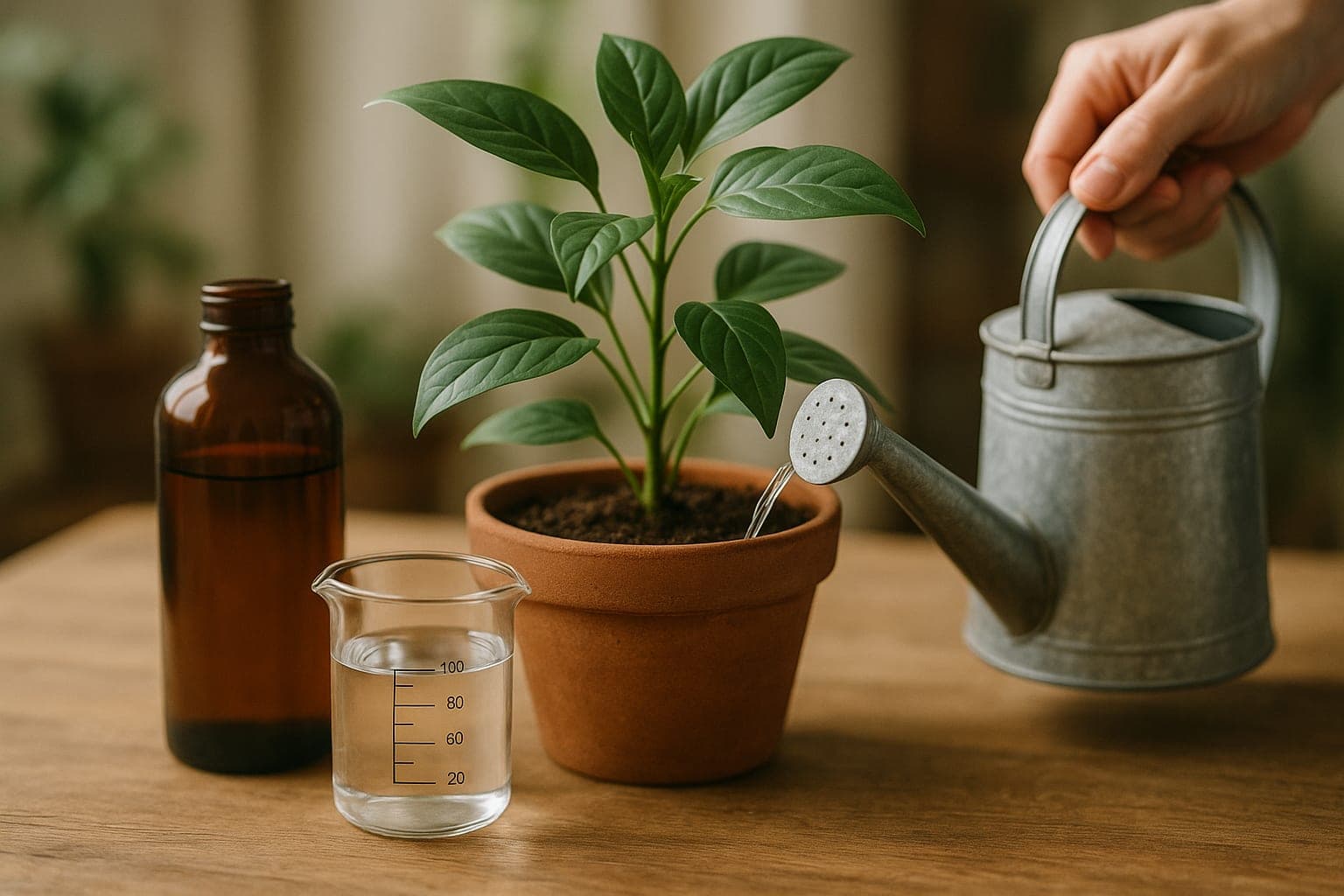
Mix 1 part 3% hydrogen peroxide with 4 parts water. That gives you a 0.6% final concentration — strong enough to kill fungus gnat larvae on contact, gentle enough for any houseplant. Water your plant with this solution until it drains from the bottom. The fizzing you see is the H2O2 releasing oxygen and killing larvae in the top 2-3 inches of soil.
For a single plant: 1/4 cup H2O2 + 1 cup water. For a batch: 1 cup H2O2 + 4 cups water. Use standard 3% hydrogen peroxide from the drugstore — the brown bottle in the first aid aisle.
Here's the part most guides skip: one treatment is not enough. H2O2 kills larvae but not eggs. Eggs hatch every 4-6 days. You need to repeat the soil drench at every watering for 2-3 weeks to catch each new wave of hatching larvae. Stop after one treatment and you'll be back on Reddit posting "hydrogen peroxide didn't work" within a week.
Why Hydrogen Peroxide Kills Fungus Gnat Larvae (and When It Doesn't)
Hydrogen peroxide (H2O2) is a reactive oxygen compound. When it contacts organic material in the soil, it breaks down into water (H2O) and free oxygen (O). That fizzing action you see isn't just chemistry theater — the reactive oxygen damages the cell membranes of soft-bodied fungus gnat larvae, killing them within seconds.
Research shows a 1:4 dilution of 3% H2O2 can reduce fungus gnat larval populations by up to 80% in two treatments. The treatment works because fungus gnat larvae are extremely soft-bodied and live in the top 2-3 inches of soil, exactly where the peroxide solution reaches.
What H2O2 does NOT do:
It doesn't kill eggs. Fungus gnat eggs have a protective shell that resists the brief oxygen burst. This is why a single treatment fails — eggs hatch 4-6 days later and replenish the larval population. You need repeated treatments to break the cycle.
It doesn't kill adult gnats. The little flies buzzing around your plants aren't affected by a soil drench. You need yellow sticky traps at soil level to catch adults, or an apple cider vinegar trap to catch fruit flies (which are a different pest entirely — check our gnats vs fruit flies guide if you're not sure which you have).
It doesn't fix overwatering. Hydrogen peroxide kills the current larval population, but if you keep the soil constantly wet, females will lay new eggs immediately. The H2O2 treatment must be paired with better watering habits — let the top inch of soil dry between waterings.
Step-by-Step Protocol: The Full 3-Week Treatment
Step 1: Confirm you have fungus gnats.
Fungus gnats are tiny dark flies that hover near the soil surface. If your flies are tan with red eyes and hang around the kitchen, you have fruit flies — completely different pest, completely different treatment. Fungus gnats are always near your plants, not your fruit bowl.
Step 2: Let the soil dry out.
Before treating, let the soil dry as much as your plant can tolerate — typically 2-3 days of no watering. Dry soil kills some larvae on its own and makes the H2O2 treatment more effective since the larvae are concentrated near any remaining moisture.
Step 3: Mix the solution.
Pour 1 part 3% hydrogen peroxide into 4 parts room-temperature water. Mix in a watering can or pitcher. Don't use hot water — heat accelerates peroxide breakdown before it reaches the soil.
Step 4: Soil drench — not a spray.
Water the entire soil surface with the H2O2 solution until it runs out of the drainage holes. This is a soil drench, not a foliar spray. You want the solution to penetrate the top 2-3 inches where larvae live. Avoid getting the solution on foliage — it won't hurt leaves at this concentration, but it's wasted there.
Step 5: Drain completely.
Don't let the pot sit in runoff water. Empty the saucer after 15 minutes. Standing water defeats the purpose of letting soil dry between treatments.
Step 6: Place yellow sticky traps.
While you're treating the soil, place yellow sticky traps horizontally at soil level to catch adults. This is critical — adults lay 200+ eggs each, so every adult you trap prevents hundreds of new larvae.
Step 7: Repeat at every watering for 2-3 weeks.
Use the H2O2 solution instead of plain water at every watering for at least 3 weeks. The fungus gnat life cycle from egg to adult takes about 3 weeks — you need to cover at least one full cycle to catch every wave of newly hatching larvae.
Which Hydrogen Peroxide Strength to Use (Dilution Chart)
Not all hydrogen peroxide is the same strength. Using the wrong concentration can either be too weak to kill larvae or strong enough to damage roots.
3% H2O2 (standard drugstore) — The brown bottle in the first aid aisle. Mix 1:4 with water (1 part H2O2, 4 parts water). Final concentration: ~0.6%. This is the safest, most commonly available option. Use this if you're unsure.
6% H2O2 (salon grade / hair developer) — Sometimes found at beauty supply stores. Mix 1:8 with water. Final concentration: ~0.67%. Slightly harder to find but works identically once diluted.
12% H2O2 (food-grade concentrate) — Available online and at health food stores. Mix 1:16 with water. Wear gloves when handling — undiluted 12% causes skin irritation on contact.
35% H2O2 (industrial food-grade) — Dangerous undiluted. Causes chemical burns on skin. Mix 1:50 with water at minimum. Honestly, don't bother with this concentration for houseplants. The 3% drugstore bottle costs $1-2 and is perfectly effective. Using 35% adds unnecessary risk for zero additional benefit.
NEVER use any concentration undiluted. Even 3% straight from the bottle is too strong for sustained root contact. A 2021 study in plant biology found concentrations above 1% can damage fine root hairs and kill beneficial soil microbes. The 1:4 dilution of 3% (yielding ~0.6%) keeps you safely below this threshold.
"Hydrogen Peroxide Made It Worse" — Why It Fails for Some People
The current top Google result for this query is a Reddit post titled "hydrogen peroxide made it worse." That post has convinced a lot of people that H2O2 doesn't work. Here's what's actually going on in every case I've seen.
Mistake #1: Only treating once.
This is the most common failure. One H2O2 drench kills larvae but not eggs. Eggs hatch in 4-6 days, producing a fresh crop of larvae. If you treated once and stopped, the population rebounds within a week — and it looks like the treatment made things worse because now you're paying attention.
Mistake #2: Having fruit flies, not fungus gnats.
Fruit flies look similar but live near food sources, not plant soil. H2O2 soil drenches do absolutely nothing for fruit flies. If your flies are tan with red eyes and cluster around the kitchen, you need an ACV trap, not a soil drench.
Mistake #3: Continuing to overwater.
H2O2 kills current larvae, but if the soil stays constantly wet, adult gnats lay new eggs immediately. You must let the top inch dry between waterings. Treating with H2O2 while overwatering is like mopping the floor while the faucet is still running.
Mistake #4: Using too weak a concentration.
Some guides recommend a "splash" of H2O2 in a gallon of water. That's way too dilute. The 1:4 ratio (1 part 3% H2O2 to 4 parts water) is the research-backed concentration. Less than that and you're basically watering with slightly fizzy water.
Mistake #5: Not targeting adults simultaneously.
H2O2 only kills larvae in the soil. Adults keep flying, mating, and laying eggs. You need yellow sticky traps at soil level to break the adult breeding cycle at the same time.
H2O2 vs Other Gnat Treatments: When to Use What
Every gnat treatment targets a different life stage. The mistake most people make is using only one method — you need at least two.
Hydrogen peroxide soil drench: Kills larvae in soil. Doesn't affect adults or eggs. Best for: active soil infestation where you can see larvae or the fizzing reaction is strong. Cost: ~$2 for months of treatment.
Apple cider vinegar trap: Catches fruit flies (NOT fungus gnats). The acetic acid in ACV attracts fruit flies specifically. Fungus gnats are indifferent to ACV. If you set an ACV trap and it catches nothing near your plants but fills up in the kitchen, you have fruit flies, not gnats.
Yellow sticky traps: Catches adult fungus gnats. Place at soil level — fungus gnats are attracted to yellow wavelengths and fly low near the soil. Essential companion to any larval treatment.
Mosquito Bits (BTI): Kills larvae using Bacillus thuringiensis israelensis bacteria. More persistent than H2O2 — the bacteria continue working in the soil for days. Best for ongoing prevention. Soak granules in water for 30 minutes, then use as your regular watering. Safe for all plants, pets, and people.
Letting soil dry: Kills some larvae and prevents egg-laying. The cheapest treatment — just stop overwatering. Effective for mild infestations. Won't clear a heavy infestation alone.
The optimal combination for moderate-to-heavy infestations: H2O2 soil drench (kills existing larvae immediately) + yellow sticky traps (catches adults) + let soil dry between waterings (prevents re-infestation). For ongoing prevention after the infestation clears, switch to BTI in your watering routine.
Will Hydrogen Peroxide Hurt My Plants?
At the recommended 1:4 dilution with 3% H2O2, the final concentration (~0.6%) is safe for all common houseplants. In fact, it can actually benefit root health — the released oxygen combats anaerobic conditions that lead to root rot, which is often a co-problem with fungus gnats since both thrive in overwatered soil.
That said, a few plants deserve extra caution. Ferns, calathea, and some orchids have sensitive root systems. For these, consider testing on one pot first or using a slightly more diluted ratio (1:5 instead of 1:4). Wait 48 hours and check for any yellowing or drooping before treating the rest.
Signs you used too much: leaf yellowing within 24 hours of treatment (not the gradual yellowing from overwatering), wilting despite moist soil, or browning leaf tips appearing immediately after treatment. If this happens, flush the soil with plain water and wait a week before treating again at a lower concentration.
Repeat applications over 3 weeks at the recommended dilution will not accumulate peroxide in the soil — H2O2 breaks down rapidly into water and oxygen. There's no long-term soil damage from this treatment. However, very frequent use (daily for weeks) at stronger concentrations can temporarily reduce populations of beneficial soil microorganisms and soil mites that help decompose organic matter. Stick to the recommended schedule: treat at each watering, which should be every 5-7 days once you've corrected your watering habits.
Recommended Products
We earn a commission if you buy through these links, at no extra cost to you. We recommend based on what works, not what pays. How this works.
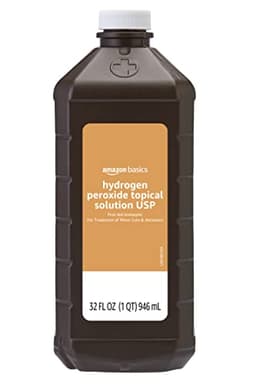
The standard brown bottle from any pharmacy or grocery store. Mix 1:4 with water for fungus gnat treatment. Costs $1-2 per bottle, lasts months of treatment. Look for 3% concentration on the label — this is the most common strength available.
$1-$3 · Best for Immediate fungus gnat larval treatment — cheap, effective, available everywhere
Check price on Amazon →
Essential companion to H2O2 treatment. Catches adult fungus gnats while you kill larvae in the soil. Place horizontally at soil level — gnats are attracted to yellow and fly low. Replace every 7-14 days.
$6-$12 for 20-pack · Best for Catching adult fungus gnats — the other half of the treatment protocol
Check price on Amazon →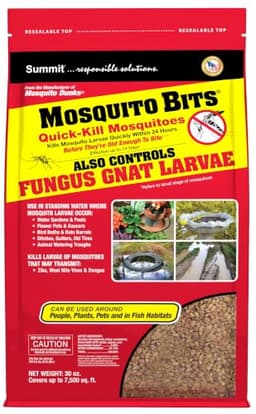
For long-term prevention after the H2O2 treatment clears the active infestation. Soak granules in water for 30 minutes, then water plants normally. BTI bacteria persist in soil and kill newly hatched larvae for days. Safe for all plants, pets, and children.
$8-$15 · Best for Ongoing prevention after initial H2O2 treatment — set it and forget it
Check price on Amazon →Treatment information on PlantFix is educational. When using any pesticide — including organic options like neem oil or insecticidal soap — read and follow the entire product label; the label is the law. For persistent or high-stakes problems, your local university extension service offers free, region-specific advice. Read about how we source and verify treatment guidance in our Editorial Standards.
FAQ
How much hydrogen peroxide for fungus gnats?▼
Mix 1 part 3% hydrogen peroxide with 4 parts water. For one plant: 1/4 cup H2O2 + 1 cup water. For multiple plants: 1 cup H2O2 + 4 cups water. Water plants thoroughly with this solution until it drains from the bottom. Repeat at every watering for 2-3 weeks.
Does hydrogen peroxide kill fungus gnats?▼
Yes — it kills the larvae living in the soil. The reactive oxygen released when H2O2 contacts soil destroys soft-bodied larvae on contact. Research shows an 80% reduction in larval populations after two treatments. However, it doesn't kill eggs or adult gnats, which is why you need repeated treatments over 2-3 weeks plus yellow sticky traps for adults.
Does hydrogen peroxide hurt plants?▼
At the recommended 1:4 dilution with 3% H2O2, it's safe for all common houseplants. The final concentration of ~0.6% is well below the threshold that damages roots. It actually benefits plants by releasing oxygen to roots and combating root rot conditions. Sensitive plants (ferns, calathea) may need a slightly more diluted ratio — test on one pot first.
How often should I use hydrogen peroxide on my plants?▼
During active treatment: use at every watering for 2-3 weeks. This covers the full fungus gnat life cycle. After the infestation clears, you can stop using H2O2 and switch to proper watering habits (letting the top inch dry between waterings) for prevention. For ongoing protection, BTI (Mosquito Bits) in your watering is more sustained than H2O2.
Why did hydrogen peroxide make my gnats worse?▼
Five common reasons: (1) Only treated once — eggs survived and hatched within a week, (2) Had fruit flies, not fungus gnats — H2O2 doesn't affect fruit flies, (3) Continued overwatering between treatments, (4) Used too weak a concentration (less than 1:4 ratio), or (5) Didn't use sticky traps to catch adults simultaneously. The treatment requires 2-3 weeks of repeated application plus adult trapping to break the full life cycle.
Can I spray hydrogen peroxide on plant leaves?▼
You can, but it's wasteful for fungus gnats — the larvae are in the soil, not on leaves. A foliar spray is better suited for treating fungal issues like powdery mildew. For fungus gnats, focus on a thorough soil drench that penetrates the top 2-3 inches where larvae live.
Related
- Apple Cider Vinegar Gnat Trap: The Recipe That Works in Hours →
- Yellow Sticky Traps for Gnats: Placement & Best Picks →
- Fungus Gnats: How to Identify & Eliminate Them for Good →
- Gnats vs Fruit Flies: How to Tell the Difference in 10 Seconds →
- How to Get Rid of Gnats in Plants Fast: 7 Proven Methods →
- Plant Bugs: Identify Any Bug on Your Plant in 30 Seconds →
- Springtails: The Tiny Jumping Bugs in Your Soil (They're Not the Problem — Your Watering Is) →
- Mosquito Bits for Fungus Gnats: Dosage + 24-Hour Kill →
- Soil Mites in Houseplants: The 4-Type ID Guide (Most Are Helping Your Plant, Not Hurting It) →
- Houseplant Pests: Visual ID Guide to Every Bug on Your Indoor Plants →
Not sure what's wrong?
Use the diagnosis tool →Get seasonal plant care reminders and pest alerts.