Tomato Hornworm ID: Kill It — Unless It Has White Cocoons
4-inch green caterpillars that strip a tomato plant in days. But if yours has white cocoons on its back, leave it — those are beneficial wasps killing it for you.
12 min read · Updated 2026-08-11
By PlantFix Editorial Team · Sources: University Extension Programs, USDA, EPA
How to Get Rid of Tomato Hornworms (30-Second Answer)
Tomato hornworms are fat, bright green caterpillars — up to 4 inches long — with white V-shaped markings on their sides and a black horn on their rear end. They can defoliate an entire tomato plant in 2-3 days.
But before you squish one: check its back. If you see small white, rice-shaped cocoons sticking out of its skin, do not kill that hornworm. Those cocoons belong to braconid wasps (Cotesia congregatus), a parasitic wasp that's eating the hornworm from the inside out. The hornworm is already dying. Those wasps will hatch and go on to kill dozens more hornworms in your garden.
No cocoons? Hand-pick the hornworm and drop it in a bucket of soapy water. For larger infestations, spray Bt (Bacillus thuringiensis var. kurstaki) — it's an organic bacteria that specifically kills caterpillars and nothing else. Spray when hornworms are small (under 2 inches) for best results. And here's a trick most people don't know: hornworms glow bright yellow-green under a UV blacklight at night, making them absurdly easy to find after dark.
Identification: Tomato Hornworm vs Tobacco Hornworm
Two hornworm species attack tomatoes, and most gardeners mix them up. Here's how to tell them apart in 5 seconds.
Tomato hornworm (Manduca quinquemaculata): Eight white V-shaped marks on each side. Black horn on the rear. Adults become five-spotted hawk moths.
Tobacco hornworm (Manduca sexta): Seven white diagonal stripes on each side — they look like forward slashes (/), not V-shapes. Red horn on the rear. Adults become Carolina sphinx moths.
Both species feed on tomatoes, peppers, eggplant, and other solanaceous plants. Both cause identical damage. And both are treated exactly the same way. So the identification matters more for bragging rights than treatment — but the horn color (black vs red) is a dead giveaway.
Size ranges from barely visible (newly hatched, about 1/8 inch) to genuinely startling (mature larvae reach 3.5-4 inches and are as thick as your index finger). Small hornworms are yellow to pale green with no markings. The distinctive V-marks and stripes develop as they grow, typically by the third instar.
Frass (caterpillar droppings) is often the first clue you have hornworms. Look for dark green or black pellets the size of peppercorns on leaves and on the ground under your tomato plants. Fresh frass means there's a hornworm feeding directly above — look up.
The White Cocoons: Why You Should NEVER Kill a Parasitized Hornworm
This is the single most important thing to know about hornworms, and it's the mistake I see gardeners make most often.
If a hornworm is covered in small white, oval, rice-grain-sized projections, those are the cocoons of braconid wasps — specifically Cotesia congregatus. Here's what happened: a female wasp, barely 1/8 inch long, landed on that hornworm and used her ovipositor to inject eggs beneath its skin. She also injected a polydnavirus — a virus that suppresses the hornworm's immune system so it can't fight off the wasp larvae.
The wasp larvae feed on the hornworm's internal organs for about two weeks, carefully avoiding vital organs to keep the host alive as long as possible. When they're ready to pupate, the larvae chew through the hornworm's skin and spin tiny white cocoons on the outside of its body. At this point, the hornworm is essentially a zombie — still alive but barely moving, eating little or nothing.
Adult wasps emerge from the cocoons in about 5 days and immediately begin searching for more hornworms to parasitize. A single generation of wasps from one hornworm can parasitize 20-30 additional hornworms.
This is free, self-sustaining biological pest control. If you kill parasitized hornworms, you're destroying the very predators that would have controlled future generations. Leave them in the garden. Move them to a visible spot if you want to monitor them. But don't remove them. Note: these tiny beneficial braconid wasps are completely different from the large, intimidating cicada killer wasps you might see digging burrows in your garden soil — those are also harmless allies that hunt cicadas, not plants or people.
Damage Assessment: How Fast Can Hornworms Destroy a Plant?
Hornworms are voracious. A single mature caterpillar can consume all the foliage on a tomato branch in one day and strip an entire plant in 2-3 days. They feed from the top of the plant downward, so the first sign is often bare stems at the top while the lower canopy still looks fine.
Feeding damage progresses in stages. First you'll notice irregular holes in leaves at the top of the plant. Then entire leaves disappear, leaving just bare stems and midribs. In severe cases, they'll also eat green fruit, leaving deep scars and gouges. Ripe tomatoes are usually left alone — hornworms prefer foliage and green fruit.
The frustrating part is how hard they are to spot despite their size. Their green coloring is almost identical to tomato foliage, and they tend to rest along the underside of stems during the day. Most gardeners don't notice them until significant damage has already occurred. According to University of Minnesota Extension, a single plant can sustain 20-30% defoliation without significant yield loss in healthy, well-established plants. But seedlings and young transplants can be killed outright.
Damage appears suddenly because hornworms do 90% of their eating in the final two instars (growth stages). A 1-inch hornworm causes barely noticeable damage. A 4-inch hornworm eats exponentially more.
The UV Blacklight Trick: Find Every Hornworm in 10 Minutes
This is the technique that changed how I deal with hornworms, and it's absurdly simple.
Tomato hornworms contain pigments that fluoresce under ultraviolet light. At night, when you shine a UV blacklight flashlight (the same kind used for detecting pet urine stains — $10-15 online), hornworms glow bright yellow-green against the dark foliage. They look like tiny neon tubes on your tomato plants.
During the day, hornworms are nearly impossible to spot. Their camouflage is so effective that experienced gardeners can stare directly at a hornworm and miss it. At night with a UV flashlight, you'll find every single one in a fraction of the time — including tiny ones you'd never see in daylight.
The best time to hunt is after full dark, roughly 9-10 PM. Hornworms are typically on the upper and outer parts of the plant where they've been feeding. Walk slowly along your rows, sweeping the UV light across the foliage. Every glowing blob is a hornworm. Pick them off by hand and drop into a bucket of soapy water.
I've seen gardeners go from "I checked the plants and didn't find any" to finding 15+ hornworms on the same plants in one UV flashlight session. If you grow tomatoes and don't own a UV flashlight, you're making your life harder than it needs to be.
Organic Treatment Methods (Ranked by Effectiveness)
1. Hand-picking (most effective for home gardens)
The fastest, most reliable method for small-to-medium gardens. Check plants daily in early morning or at dusk. Use the UV blacklight technique at night for thorough removal. Drop hornworms into a bucket of soapy water. If you see one with white cocoons, leave it — those braconid wasps are your allies.
2. Bt spray (Bacillus thuringiensis var. kurstaki)
Bt is a naturally occurring soil bacterium that produces a protein toxic specifically to caterpillars. When a hornworm eats Bt-treated foliage, the protein dissolves in its alkaline gut and destroys the gut lining. The hornworm stops eating within hours and dies within 2-3 days. Bt is completely harmless to humans, pets, bees, and beneficial insects — it only affects caterpillars.
Critical timing: Bt works best on small hornworms (under 2 inches). Large hornworms are much more resistant. Apply in late afternoon or evening, since UV light degrades Bt rapidly. Reapply after rain. Spray every 7 days during active hornworm season (June-August). According to Utah State University Extension, Bt is the recommended organic treatment for hornworm control.
3. Companion planting
Basil planted near tomatoes deters adult moths from laying eggs — the strong scent masks the tomato plant's chemical signals. Dill and borage attract beneficial insects including braconid wasps. Marigolds are a general pest deterrent. These won't eliminate hornworms alone, but they reduce egg-laying and support the beneficial insect population.
4. Beneficial insect habitat
Braconid wasps, green lacewings, and ladybugs all prey on hornworm eggs or young larvae. Plant small-flowered herbs (dill, fennel, yarrow, sweet alyssum) to provide nectar sources for parasitic wasps. Avoid broad-spectrum insecticides that kill these beneficial species — if you nuke everything with permethrin, you lose the natural predators that would have done the work for free.
5. Neem oil spray
Neem disrupts hornworm feeding and development but works more slowly than Bt. Best used as a preventive spray on foliage before infestations start. Mix 2 tablespoons cold-pressed neem oil with 1 teaspoon castile soap per gallon of water. Spray in evening to avoid leaf burn.
6. Beneficial nematodes (soil treatment)
Heterorhabditis bacteriophora nematodes applied to garden soil in late summer target hornworm pupae overwintering underground. This biological approach reduces next year's moth population at the source — before they can lay eggs on your tomatoes. The same nematodes also target armyworm pupae and lawn grubs — the white C-shaped beetle larvae that destroy grass roots, causing brown patches that peel up like carpet.
Hornworm Life Cycle: What That Giant Moth in Your Garden Really Is
Adult tomato hornworms are five-spotted hawk moths — large, fast-flying moths with a 4-5 inch wingspan and a hovering flight pattern that makes them look remarkably like hummingbirds. If you've ever seen a "hummingbird moth" feeding on flowers at dusk, there's a good chance it was a hawk moth — and there's a good chance its offspring are eating your tomatoes.
The life cycle runs roughly 30-50 days in warm conditions. Adult moths emerge from soil pupae in late spring (May-June in most of the US). They feed on flower nectar at dusk and dawn, using their long proboscis to reach into deep tubular flowers like petunias, moonflowers, and nicotiana. Females lay pale green, spherical eggs on the undersides of tomato and pepper leaves — one egg per leaf, typically on upper foliage.
Eggs hatch in 4-5 days. Larvae go through 5 instar stages over 3-4 weeks, growing from 1/8 inch to 4 inches. After reaching full size, mature larvae drop to the ground and burrow 3-4 inches into the soil to pupate. The pupa is dark brown, 2 inches long, with a distinctive curved "handle" (actually the developing proboscis case).
In northern states, there's typically one generation per year. In southern states (Texas, Florida, Georgia), two generations are common — expect a second wave of moths in August. Pupae overwinter in the soil, which is why fall tilling is effective prevention.
Prevention: Stopping Hornworms Before They Start
Fall soil tilling is the single most effective prevention method. Hornworm pupae overwinter 3-4 inches deep in the soil beneath where your tomatoes grew. Turning the soil in late fall exposes pupae to cold temperatures, predators (birds, ground beetles), and desiccation. University of Minnesota Extension estimates tilling can destroy up to 90% of overwintering pupae.
Crop rotation breaks the cycle for any survivors. Don't plant tomatoes, peppers, or eggplant in the same bed where they grew the previous year. The emerging moths orient to where they pupated and will search that area first for host plants.
Row covers during moth flight season (June-July in most areas) prevent egg-laying entirely. Use lightweight floating row covers over young transplants. Remove when plants need pollination (tomatoes are mostly self-pollinating, so you can leave covers on longer than with cucurbits).
Wasp-friendly plantings near your tomato patch attract and sustain populations of braconid wasps and other parasitoids. Dill, fennel, yarrow, sweet alyssum, and other small-flowered plants provide nectar sources these tiny wasps need to survive. A healthy parasitoid population can suppress hornworm numbers below damaging levels without any intervention from you. These same beneficial insects also help control Japanese beetles and squash vine borers — two other destructive summer garden pests that peak during the same June-August window. If you grow brassicas alongside tomatoes, watch for cabbage worms — Bt spray kills both hornworms and cabbageworms, so a single application protects multiple crops. On nearby trees and shrubs, keep an eye out for bagworms — moth caterpillars that build spindle-shaped cases on evergreen branches. Bt is equally effective against bagworms, but timing is critical: spray in late May through mid-June when caterpillars are small.
After heavy hornworm defoliation, stressed tomato plants become more susceptible to fungal diseases like early blight and septoria leaf spot. A preventive application of copper fungicide on recovering plants helps protect new growth while the canopy fills back in. If your recovering tomato plants also develop curling leaves, don't panic — physiological leaf roll from stress is the most common cause and doesn't affect fruit production.
Recommended Products
We earn a commission if you buy through these links, at no extra cost to you. We recommend based on what works, not what pays. How this works.
Organic biological insecticide that specifically kills caterpillars, including hornworms, without harming bees, beneficial insects, or humans. Spray on foliage in evening — UV light degrades Bt. Most effective on small hornworms under 2 inches.
$10-$18 · Best for Killing hornworms and caterpillars organically — the gold standard treatment
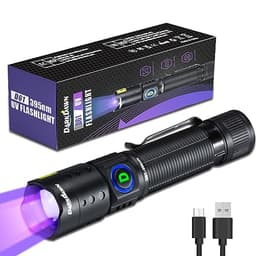
Makes hornworms glow bright yellow-green at night for easy detection. Works on all caterpillar species. The same flashlight used for pet urine detection. Take it into the garden after dark and every hornworm lights up like a neon sign.
$10-$15 · Best for Finding hornworms at night — far more effective than daytime searching
Check price on Amazon →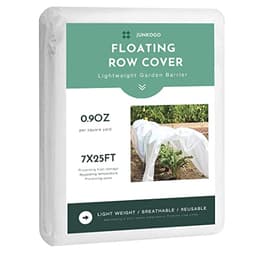
Spun-bond fabric that blocks adult hawk moths from landing on tomato plants to lay eggs. Transmits 85%+ light and allows rain through. Tomatoes are self-pollinating, so covers can stay on longer than with crops that need bee pollination.
$15-$30 · Best for Preventing hornworm egg-laying — install during moth flight season (June-July)
Check price on Amazon →Treatment information on PlantFix is educational. When using any pesticide — including organic options like neem oil or insecticidal soap — read and follow the entire product label; the label is the law. For persistent or high-stakes problems, your local university extension service offers free, region-specific advice. Read about how we source and verify treatment guidance in our Editorial Standards.
FAQ
Are tomato hornworms poisonous?▼
No. Tomato hornworms are not poisonous and do not bite or sting. The horn on their rear end looks intimidating but is completely harmless — it's soft and flexible. You can safely pick them up by hand. The only risk is to your tomato plants, not to you.
What does a tomato hornworm turn into?▼
Tomato hornworms become five-spotted hawk moths (Manduca quinquemaculata) — large moths with a 4-5 inch wingspan that hover like hummingbirds while feeding on flower nectar at dusk. Tobacco hornworms become Carolina sphinx moths (Manduca sexta). Both are sometimes called hummingbird moths because of their hovering flight.
What are the white things on a hornworm?▼
The white rice-shaped objects on a hornworm are cocoons of braconid wasps (Cotesia congregatus). The wasp larvae have been feeding inside the hornworm and emerged to pupate on its surface. Do NOT kill a hornworm with these cocoons — the emerging wasps will parasitize and kill dozens more hornworms. This is free biological pest control.
Do hornworms bite?▼
No. Hornworms have chewing mouthparts designed for eating plant foliage, not biting animals. They are completely harmless to humans. The black or red horn on their rear end is not a stinger — it's a soft, flexible appendage with no defensive function.
Can you eat a tomato that a hornworm was on?▼
Yes. Hornworm feeding on fruit leaves cosmetic scarring but doesn't make the tomato unsafe to eat. Cut away any damaged portions and use the rest normally. Hornworm frass (droppings) on the plant surface washes off easily and poses no food safety risk.
How do you find hornworms at night?▼
Use a UV blacklight flashlight ($10-15 online). Hornworm skin fluoresces bright yellow-green under ultraviolet light, making them glow against the dark foliage. Shine the light across your tomato plants after dark and every hornworm becomes immediately visible — even tiny ones that are invisible during the day.
Related
- Armyworms Destroyed My Lawn Overnight — Here's the Rescue Plan →
- Evergreen Bagworm: Identify Them and Save Your Evergreens →
- Cabbage Worm vs Cabbage Looper vs Diamondback Moth: 3-Way ID + Organic Treatment →
- Cicada Killer Wasp: Not a Murder Hornet (ID Guide + Yard Management) →
- Cucumber Beetle: Spotted vs Striped ID + Deadly Wilt →
- Earwig Pictures: What They Look Like & How to Get Rid of Them →
- Flea Beetle: The Jumping Test, Crop-by-Crop Species Guide, and Why Seedlings Die in 48 Hours →
- Garden Pest Identification: 25+ Bugs by the Damage They Do →
- Insecticidal Soap: What It Actually Kills (Including Spider Mites), DIY Recipe & Why Dawn Is Wrong →
- Japanese Beetles: Why Traps Backfire & a Week-by-Week Control Calendar →
- Lawn Grubs: The Underground Reason Your Grass Is Dying (ID + Treatment) →
- Leaf Footed Bug vs Assassin Bug: How to Tell Them Apart (And Not Kill the Wrong One) →
- Neem Oil for Plants: Complete Guide to Using It Effectively →
- Plant Bugs: Identify Any Bug on Your Plant in 30 Seconds →
- Squash Bugs: The Week-by-Week Battle Plan to Save Your Garden →
- Tomato Leaves Curling? 5 Causes Ranked by How Worried You Should Be →
Not sure what's wrong?
Use the diagnosis tool →Get seasonal plant care reminders and pest alerts.