Armyworms Destroyed My Lawn Overnight — Here's the Rescue Plan
Armyworms can eat an entire lawn in 1-3 nights. Use the soapy water flush test to confirm them, treat with Bt or spinosad at dusk, and follow this grass-type recovery timeline to know if your lawn will come back.
12 min read · Updated 2026-06-03
By PlantFix Editorial Team · Sources: University Extension Programs, USDA, EPA
How to Get Rid of Armyworms (Quick Answer)
Armyworms are caterpillars that eat grass blades down to the stem, turning a green lawn brown in 1-3 nights. Fall armyworms (Spodoptera frugiperda) are the worst lawn species — 1 to 1.5 inches long, green to brown, with a distinctive inverted white Y on the head capsule. To stop them: apply Bt (Bacillus thuringiensis var. kurstaki) or spinosad at dusk when caterpillars are actively feeding. Mow the lawn first to expose them to the treatment. Treat the perimeter of the damaged area first to cut off their advance.
Most warm-season lawns (Bermuda, zoysia, St. Augustine) recover within 3-4 weeks because armyworms eat the blades but not the crowns. Cool-season grasses (fescue, bluegrass) may need overseeding. The biggest mistake people make: treating during the day when armyworms are hiding in thatch. They feed at night.
Not sure if it's armyworms, grubs, or sod webworm? Identify it with the diagnosis tool — the treatments are completely different for each.
Armyworm Identification: The Inverted Y
The definitive field ID for fall armyworms is a white or light-colored inverted Y shape on the front of the head capsule. Grab a caterpillar from your lawn (they don't bite), look at its face, and check for that Y. No other common lawn caterpillar has it.
Full ID profile:
- Size: 1 to 1.5 inches when fully grown. Younger caterpillars start at about 1/4 inch and are easy to miss.
- Color: Variable — green, brown, or nearly black. Older caterpillars tend to be darker. There's often a lighter stripe running along each side.
- The Y: Inverted white or cream Y on the head. This is the feature that separates fall armyworms from other lawn caterpillars.
- Behavior: Feed at night, hide in thatch and soil during the day. You'll rarely see them in bright sunlight unless the infestation is massive.
- Moth stage: Tan-gray moths with a 1.5-inch wingspan. They fly at dusk and are attracted to lights. You might notice a surge of small moths around your porch light a few weeks before lawn damage appears — that's the adult generation laying eggs.
Armyworm vs. grub: Grubs are white, C-shaped, live IN the soil, and eat roots. Armyworms are surface caterpillars that eat grass blades. Pull up damaged turf — if the root zone is intact and the blades are chewed off at the base, it's armyworms. If the turf peels up like carpet because the roots are gone, it's grubs — see our lawn grubs guide for the square-foot test and treatment calendar.
Armyworm vs. sod webworm: Sod webworms are smaller (3/4 inch max), pale green or beige, and create small irregular patches. Armyworms are larger and create massive damage fronts that advance across the lawn. Webworm damage builds gradually over weeks; armyworm damage happens in days.
Armyworm vs. cutworm: Cutworms curl into a tight C-shape when disturbed. Armyworms stretch out and try to flee. Cutworms typically cut individual seedlings at the base; armyworms mow down whole sections of lawn.
The Soapy Water Flush Test (Do This Right Now)
This is the fastest way to confirm armyworms and estimate how bad the problem is. You need a bucket, dish soap, and water. That's it.
Step 1: Mix 3 tablespoons of liquid dish soap into 1 gallon of water. Lemon-scented soap works best — according to Sod Solutions, the citrus compounds are more irritating to caterpillar skin.
Step 2: Pour the soapy water slowly and evenly over a 3-foot by 3-foot section of lawn at the edge of the damage zone (where brown grass meets green grass — this is the active feeding front).
Step 3: Wait 10 minutes. Watch the area. Armyworm caterpillars will wriggle to the surface because the soap irritates their skin.
Step 4: Count what surfaces.
What the numbers mean:
- 0-2 caterpillars per square foot: Below treatment threshold. Minor population — monitor weekly but no action needed yet.
- 3-5 per square foot: Treatment threshold reached. Apply Bt or spinosad this evening.
- 5+ per square foot: Heavy infestation. Treat immediately — this density causes visible damage overnight.
Alabama Cooperative Extension and Clemson Extension both use this flush test as their recommended field diagnostic. It's also useful for detecting sod webworms and other lawn caterpillars that hide during the day.
Another telltale sign: if you see large numbers of birds (starlings, grackles, robins) suddenly foraging intensely on your lawn, they're eating armyworms. Birds are the best early warning system — they find the caterpillars before the damage becomes visible.
How to Kill Armyworms (Timing Is Everything)
The single most important treatment detail: armyworms feed at night and hide during the day. If you spray at noon, the caterpillars are buried in thatch and the treatment degrades in UV light before they emerge. Always treat at dusk or in the early evening.
Treatment 1: Bt (Bacillus thuringiensis var. kurstaki) — organic, selective
Bt is a naturally occurring soil bacterium that produces a protein toxic specifically to caterpillars. When armyworms eat Bt-treated grass blades, the protein dissolves their gut lining. They stop feeding within hours and die within 1-3 days. Bt does NOT harm bees, birds, pets, earthworms, or beneficial insects — it's one of the safest insecticides in existence.
The limitation: Bt residue only persists on turf for 1-2 days before UV light breaks it down. You may need a second application 7 days later to catch caterpillars that were too small to eat enough during the first round. Apply Bt while caterpillars are young (under 1 inch) for best results — larger caterpillars are harder to kill.
Treatment 2: Spinosad — organic, fast-acting
Derived from a soil bacterium (Saccharopolyspora spinosa), spinosad kills armyworms within 1-2 days through both contact and ingestion. It's slightly more forgiving than Bt because it has contact activity — caterpillars don't have to eat it. Spinosad also has a wider effective window against larger caterpillars. Apply in the evening, and if the infestation is severe, apply again the following evening.
Spinosad won't harm earthworms or most beneficial insects that don't chew on treated grass. It is toxic to bees if sprayed directly on them, so avoid application during bloom if your lawn has flowering clover.
Treatment 3: Bifenthrin or permethrin — synthetic, fast knockdown
For severe infestations where organic options aren't controlling the damage fast enough, synthetic pyrethroids provide near-instant knockdown. These are broad-spectrum — they kill armyworms but also kill beneficial insects including ground beetles, parasitic wasps, and other natural predators. Use only when damage is extensive and spreading rapidly. Follow label rates exactly.
Pre-treatment steps that double effectiveness:
- Mow the lawn short before treating. This exposes caterpillars hiding in tall grass and removes the dew layer that dilutes sprays.
- Treat the perimeter first. Armyworms advance in a front from damaged to fresh grass. Spray a 10-foot band around the leading edge of damage to create a chemical barrier, then treat the damaged area.
- Water lightly before treatment (not after). A light watering brings caterpillars toward the surface. Avoid heavy watering after application, which washes the product into the soil.
- Don't mow for 2-3 days after treatment to maintain product on the grass blades.
Will My Lawn Grow Back? (Recovery Timeline by Grass Type)
This is the first question every homeowner asks, and the answer depends on one thing: did the crowns survive?
Armyworms eat grass blades — the visible green part above ground. They generally do not eat the crowns (the growing point at the soil surface) or the roots. If the crowns are still alive, the grass will regrow from that point. If the crowns are dead — which happens with extreme feeding pressure or drought stress compounded by caterpillar damage — the grass needs to be replaced.
How to check: Tug on the damaged grass. If it's anchored firmly and the base of the stems shows any green when you scrape with your thumbnail, the crowns are alive. If the grass pulls up easily with no resistance and the crowns are brown and dry, that section is dead.
Warm-season grasses (Bermuda, zoysia, St. Augustine, centipede):
Recovery timeline: 3-4 weeks if crowns are alive. These grasses spread via stolons and rhizomes, so they'll fill in damaged areas laterally. Water deeply (1 inch per week) and apply a light fertilizer (half the normal rate) 2 weeks after the armyworms are gone to accelerate regrowth. Don't fertilize immediately — stressed grass needs water first. Bermuda recovers fastest; St. Augustine is slowest because it spreads only by stolons.
Cool-season grasses (tall fescue, Kentucky bluegrass, perennial ryegrass):
Recovery timeline: 6-8 weeks, and you'll likely need to overseed. Tall fescue is a bunch-type grass — it doesn't spread laterally, so eaten areas won't fill in on their own. You need to overseed bare patches in early fall (September). Kentucky bluegrass spreads by rhizomes and can self-repair, but slowly. Apply starter fertilizer with new seed.
When the lawn IS dead:
If the crowns are brown and the grass pulls up like a rug, resodding or reseeding is the only option. For warm-season lawns, sod is fastest (immediate coverage). For cool-season lawns, seed in September when temperatures favor germination. Either way, address the armyworm population first — there's no point replanting into an active infestation.
One reassuring note: In my research across multiple university extension reports, the consensus is that most properly irrigated warm-season lawns recover fully from armyworm damage without reseeding. The grass looks terrible for a few weeks, but the recovery is usually complete.
Armyworm Prevention: Timing and Tropical Storms
Here's something most guides don't mention: fall armyworm outbreaks in the southern and central US are closely tied to tropical weather systems. Adult moths can't overwinter north of roughly southern Texas and Florida. Every year, they repopulate the rest of the country by migrating north on storm systems. Tropical storms and hurricanes carry billions of armyworm moths hundreds of miles inland on wind currents.
Texas A&M AgriLife has documented this pattern repeatedly — 2-3 weeks after a tropical system makes landfall, the first armyworm damage reports appear in the affected region. That's the egg-to-damage timeline.
Seasonal monitoring calendar:
- Late May – June: First generation arrives in the Gulf states. Monitor lawns weekly.
- July – August: Second generation peak. This is when the worst lawn damage occurs.
- August – October: Third generation possible in warm years. Check after any tropical weather.
- After ANY tropical storm or heavy rain event: Start monitoring 10-14 days later. Run the soapy water flush test.
Other prevention strategies:
- Keep your lawn healthy. Well-fertilized, properly watered turf tolerates some feeding and recovers faster. Don't cut grass too short — taller grass has more blade area to lose before crowns are exposed.
- Encourage natural predators. Ground beetles, parasitic wasps (Cotesia marginiventris), and birds all feed on armyworms. Avoid broad-spectrum insecticides that kill these beneficial species.
- Beneficial nematodes (Steinernema carpocapsae) can be applied to lawn soil in fall to kill armyworm pupae overwintering in the upper soil layer.
- Porch light management: Armyworm moths are attracted to light. If you have a severe moth problem, switch outdoor lights to yellow or sodium vapor bulbs that are less attractive to moths, reducing egg-laying near your lawn.
Types of Armyworms in the US
The word "armyworm" covers several species, and the one destroying your lawn is almost certainly the fall armyworm. But it helps to know the full cast:
Fall armyworm (Spodoptera frugiperda): The main lawn destroyer. Named "fall" because its populations peak in late summer and fall, not because it only appears in autumn. It's the most common species reported by homeowners, and the one responsible for the dramatic overnight lawn damage that sends people to Google at 6 AM. Found across the southern and central US, migrating north annually.
True armyworm (Mythimna unipuncta): Primarily a cereal crop pest (wheat, corn, oats). Occasionally damages lawns, especially cool-season grasses in spring. Greenish-brown with pale stripes. More common in the Midwest and Northeast.
Beet armyworm (Spodoptera exigua): A vegetable garden pest more than a lawn pest. Attacks beets, peppers, tomatoes, lettuce, and other crops. Smaller and greener than fall armyworms. If you're finding caterpillars on your vegetable plants rather than your lawn, this may be the culprit — though cabbage worms and tomato hornworms are more common veggie pests.
Why "army" worm? The name comes from their mass movement behavior. When a population exhausts the food supply in one area, the caterpillars march in a group to fresh vegetation — like an army advancing across the landscape. Homeowners sometimes see dozens or hundreds of caterpillars crossing driveways, sidewalks, or patios as they move from a consumed lawn to the next available grass.
Recommended Products
We earn a commission if you buy through these links, at no extra cost to you. We recommend based on what works, not what pays. How this works.
The most targeted organic treatment for armyworms. Mix with water and spray on lawn at dusk. Caterpillars stop feeding within hours of ingestion and die within 1-3 days. Safe for pets, bees, birds, and earthworms. Reapply after 7 days for complete control.
$12-$20 · Best for Selective caterpillar control without harming beneficial insects
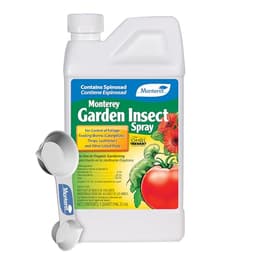
Derived from soil bacteria, kills armyworms by contact and ingestion within 1-2 days. Slightly more forgiving than Bt — effective on larger caterpillars and provides some residual. Apply at dusk. Safe for earthworms and most beneficials.
$15-$25 · Best for Severe infestations where fast knockdown is needed and caterpillars are past small stage
Check price on Amazon →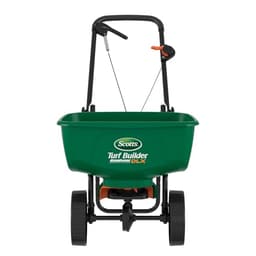
Essential for applying granular insecticide, grass seed, or fertilizer evenly across a lawn. If you're overseeding after armyworm damage, a broadcast spreader ensures even coverage and faster recovery. Choose a handheld model for small lawns or a push model for larger areas.
$25-$60 · Best for Even application of granular treatments and seed for lawn recovery after armyworm damage
Check price on Amazon →Treatment information on PlantFix is educational. When using any pesticide — including organic options like neem oil or insecticidal soap — read and follow the entire product label; the label is the law. For persistent or high-stakes problems, your local university extension service offers free, region-specific advice. Read about how we source and verify treatment guidance in our Editorial Standards.
FAQ
Can armyworms kill my lawn?▼
Armyworms eat grass blades but usually not the crowns or roots. Most warm-season lawns (Bermuda, zoysia, St. Augustine) recover within 3-4 weeks if the crowns survive. Cool-season grasses like tall fescue may need overseeding because they don't spread laterally. The lawn looks dead but usually isn't — check the crowns for green tissue before panicking.
Do armyworms bite humans?▼
No. Armyworms are caterpillars with chewing mouthparts designed for grass blades. They cannot bite human skin and pose zero direct threat to people or pets. You can safely pick them up to identify them.
What time of day should I spray for armyworms?▼
Spray at dusk or in the early evening. Armyworms are nocturnal feeders — they hide in thatch during the day and emerge to eat after dark. Treating at dusk ensures the product is fresh on the grass blades when caterpillars start feeding. Daytime application is largely wasted because UV light degrades Bt within 24 hours and the caterpillars aren't exposed.
Are armyworms the same as grubs?▼
No — they're completely different pests with different treatments. Armyworms are caterpillars (moth larvae) that live on the surface and eat grass blades. Grubs are beetle larvae that live underground and eat grass roots. Armyworm damage: grass blades chewed off at the base, turf still anchored. Grub damage: turf pulls up like loose carpet because roots are gone.
Do armyworms come back every year?▼
Fall armyworms can't overwinter north of southern Texas and Florida. They repopulate the US annually by migrating north on storm systems. Whether they appear in your yard depends on weather patterns, particularly tropical storms, rather than a permanent local population. Some years are devastating; others you won't see a single one.
Will armyworms eat my vegetable garden?▼
Fall armyworms primarily target grass, but they can feed on corn, some leafy greens, and other crops when lawn food runs out. The beet armyworm species is a more common vegetable pest. If caterpillars are eating your vegetable plants, check whether they're armyworms, cabbage worms, or tomato hornworms — the ID guide and treatment differ for each.
Related
- Beneficial Nematodes: Which Species Kills Your Specific Pest (Buying Guide by Pest Type) →
- Insecticidal Soap: What It Actually Kills (Including Spider Mites), DIY Recipe & Why Dawn Is Wrong →
- Japanese Beetles: Why Traps Backfire & a Week-by-Week Control Calendar →
- Cabbage Worm vs Cabbage Looper vs Diamondback Moth: 3-Way ID + Organic Treatment →
- Tomato Hornworm ID: Kill It — Unless It Has White Cocoons →
- Plant Bugs: Identify Any Bug on Your Plant in 30 Seconds →
- How to Get Rid of Squash Bugs: Season-Long Battle Plan →
- Diatomaceous Earth for Plants: Which Pests It Kills (And Which It Doesn't) →
- Lawn Grubs: The Underground Reason Your Grass Is Dying (ID + Treatment) →
- Evergreen Bagworm: Identify Them and Save Your Evergreens →
- Garden Pest Identification: 25+ Bugs by the Damage They Do →
- Chinch Bugs vs. Drought: How to Tell What's Actually Killing Your Lawn →
Not sure what's wrong?
Use the diagnosis tool →Get seasonal plant care reminders and pest alerts.