Springtails: The Tiny Jumping Bugs in Your Soil (They're Not the Problem — Your Watering Is)
Springtails are tiny jumping bugs in houseplant soil that signal overwatering, not a pest infestation. Learn the jump test to ID them instantly, why they're actually beneficial, and how fixing your watering eliminates them without pesticides.
11 min read · Updated 2026-05-22
By PlantFix Editorial Team · Sources: University Extension Programs, USDA, EPA
What Are Those Tiny Jumping Bugs in Your Plant Soil?
If tiny bugs in your houseplant soil leap several inches into the air when you water or disturb the pot, those are springtails (Collembola). They're 1-2mm long, usually white or gray, and they jump using a forked tail-like appendage called a furcula. They're almost always harmless — springtails eat decaying organic matter and fungi in your soil, not your plant's roots or leaves.
Here's the part most pest guides won't tell you: springtails aren't the problem. They're a symptom. A large springtail population in your houseplant soil means you're overwatering. Fix the watering, and the springtails disappear on their own — no pesticides needed. Let the top 2 inches of soil dry completely between waterings, and populations crash within 1-2 weeks.
Not sure if you're seeing springtails, fungus gnats, or soil mites? The jump is the giveaway — no other common houseplant bug does it. Identify it with the diagnosis tool.
Springtail Identification: The Jump Test
Forget magnifying glasses and entomology charts. Springtail identification takes about three seconds:
Poke the soil surface with your finger or a pencil. If tiny bugs launch themselves into the air and scatter, those are springtails.
That jumping behavior is unique among common houseplant bugs. It's caused by the furcula — a forked appendage tucked under the abdomen that works like a spring-loaded catapult. When released, it snaps against the ground and launches the springtail several inches upward. It's their primary escape mechanism, and nothing else in your potting soil does it.
Once you've confirmed the jump, here's what you're looking at up close:
- Size: 1-2mm long. Some species reach 3mm, but most are smaller than a grain of rice.
- Color: White, cream, gray, or light brown (the most common species in potting soil). Some outdoor species are dark brown, blue, or even iridescent.
- Shape: Elongated or globular depending on species. The elongated type is most common in houseplant soil.
- Wings: None. They don't fly.
- Location: Soil surface, drainage holes, pot saucers, and the gap between pot and tray. You'll see them when watering, repotting, or moving pots.
Springtails vs. fungus gnats: Fungus gnats are tiny dark flies that hover around the soil surface and fly toward windows. They don't jump — they fly. Springtails jump but don't fly. If bugs are airborne near your plant, those are gnats. If they're leaping off the soil surface but can't sustain flight, springtails.
Springtails vs. soil mites: Soil mites are slow crawlers that don't jump at all. They're usually tiny white or tan dots moving across the soil surface. Springtails are faster and obviously jump when startled.
Springtails vs. other tiny white bugs: Mealybugs are white and cottony but they cling to stems and leaves, not soil. Whiteflies are white and fly off leaves, not soil. Springtails are in the soil exclusively.
Are Springtails Good or Bad for Your Plants? (Genuinely Good)
Here's the answer most pest control sites dance around: springtails are beneficial. They're not pests. They don't damage your plants, and in moderate numbers, they actively improve soil health.
Springtails are decomposers. Their diet consists of:
- Decaying organic matter (dead leaves, dead roots, decomposing bark in potting mix)
- Fungal hyphae and spores (including some plant-pathogenic fungi)
- Bacteria and algae growing on moist soil surfaces
By breaking down this material, springtails accelerate nutrient cycling in your soil. UC Integrated Pest Management explicitly states that springtails are not plant pests and rarely require treatment. University of Minnesota Extension classifies them as nuisance organisms that cause no structural or plant damage.
What springtails do NOT eat:
- Living plant roots
- Living plant leaves or stems
- Other insects
If your plant has visible leaf damage, yellowing, or wilting alongside a springtail population, the springtails aren't causing those symptoms. The overwatering that attracted the springtails is likely the actual culprit — root oxygen deprivation, root rot from Pythium or Fusarium, or nutrient uptake problems in waterlogged soil.
This is the diagnostic reframe that matters: springtails are an overwatering alarm, not a pest problem. When you see them in large numbers, they're telling you something about your soil conditions. Killing them with pesticides treats the messenger, not the message.
Why Springtails = An Overwatering Problem (The Real Fix)
Springtails have one absolute requirement: moisture. They breathe through their skin and dehydrate rapidly in dry conditions. A springtail population in your houseplant soil can only exist if the soil stays consistently moist — which in most cases means you're watering too frequently.
Here's the chain of events:
- You water your plant on a schedule (every 3 days, every week, etc.) instead of checking whether the soil actually needs water
- The top layer of soil never fully dries out
- Fungi and algae grow on the persistently moist soil surface
- Springtails move in to feed on the fungi and organic matter
- With a continuous food supply and moisture, they reproduce rapidly
- You notice tiny jumping bugs and assume you have a pest problem
The fix isn't pesticide — it's watering correctly:
Step 1: Let the soil dry. Stop watering until the top 2 inches of soil are dry to the touch. For most houseplants, this takes 5-10 days depending on pot size, soil mix, and humidity. Springtails can't survive in dry soil — populations crash within days once their moisture source disappears.
Step 2: Water by need, not schedule. Stick your finger 2 inches into the soil before every watering. If it's still damp, wait. Most houseplants — pothos, philodendrons, monsteras, snake plants, ZZ plants — prefer to dry out between waterings.
Step 3: Improve drainage. Add perlite to your potting mix (20-30% by volume). Ensure pots have drainage holes. Empty saucers within 30 minutes of watering. Dense, water-retentive soil is the root cause of most springtail buildups.
Step 4: Bottom water instead of top watering. Setting your pot in a tray of water for 20 minutes and then draining keeps the soil surface drier, which is where springtails live. The roots get water from below while the top layer stays inhospitable to springtails.
That's it. No chemicals, no sprays, no panic. Fix the watering and the springtails resolve themselves.
How to Get Rid of Springtails Quickly (If You Can't Wait)
Adjusting your watering schedule is the real solution, but if you need springtails gone faster — guests coming over, you're selling plants, or the sight of them just bothers you — here are immediate-action methods:
1. Hydrogen peroxide soil drench
Mix 1 part 3% hydrogen peroxide with 4 parts water and water your plant normally with this solution. The peroxide fizzes on contact with organic matter in the soil, killing springtails and their eggs on contact. It also kills fungus gnat larvae, so this is a good dual-purpose treatment. The peroxide breaks down into water and oxygen within hours — no residue, no harm to roots. You can use this method with the same ratios described in our hydrogen peroxide for fungus gnats guide.
2. Diatomaceous earth on soil surface
Dust a thin layer of food-grade diatomaceous earth (DE) across the soil surface. DE is composed of microscopic fossilized diatoms with sharp edges that damage springtail exoskeletons, causing dehydration. It works only when dry, so don't water from the top after applying. Reapply if it gets wet.
3. Replace the top inch of soil
Remove and discard the top inch of potting mix where springtails congregate. Replace with fresh, dry potting mix with added perlite. This physically removes most of the population and their food source in one step.
4. Full repot with dry mix
For severe cases, unpot the plant, shake off as much old soil as possible, and repot into completely fresh, dry potting mix with 25-30% perlite. Let the soil dry before the first watering. This is overkill for springtails but effective if you want a clean start.
What NOT to do:
- Don't use insecticidal soap or neem oil in the soil for springtails — these are designed for insects feeding on plant tissue, not soil decomposers
- Don't use chemical pesticides — springtails aren't causing damage, and you'd be contaminating your soil for no benefit
- Don't throw away the plant — springtails are among the most benign creatures you'll find in a pot
Springtails in Your House (Bathroom, Basement, Kitchen)
Finding springtails in your bathroom, basement, or kitchen doesn't mean you have an infestation — it means you have a moisture problem somewhere.
Springtails enter homes by following moisture gradients. They're typically outdoor soil organisms, but when conditions dry out outside (drought, heat) or when indoor conditions are persistently damp, they migrate to the nearest reliable moisture source. Common locations:
- Bathrooms: Around showers, tubs, and sinks where moisture collects on tile and grout. Poor ventilation keeps surfaces damp between uses.
- Basements: High humidity, condensation on cool surfaces, water seepage through foundation cracks.
- Kitchens: Under sinks with slow leaks, around dishwashers, on damp sponges.
- Laundry rooms: Dryer vent condensation, damp clothing piles.
Springtails are NOT structural pests. They don't damage wood, drywall, fabric, food, or furniture. They don't bite. They don't carry disease. The National Pest Management Association classifies them as nuisance pests only.
To remove them from indoor spaces:
- Fix the moisture. Repair leaky faucets and pipes. Run bathroom fans during and 20 minutes after showers. Use a dehumidifier in basements to keep humidity below 60%.
- Improve ventilation. Open bathroom windows. Ensure dryer vents exit the home properly.
- Seal entry points. Caulk gaps around pipes, windows, and foundation cracks.
- Let surfaces dry. Wipe down bathroom tile and countertops after use. Don't leave wet towels or sponges in piles.
Once moisture levels drop, springtails leave or die. No pesticides needed indoors.
When You Actually WANT Springtails (Terrariums & Bioactive Setups)
Here's the plot twist: while houseplant owners are trying to get rid of springtails, the terrarium and vivarium community is buying them on purpose. Springtails are the foundation of bioactive ecosystems.
In a closed or semi-closed terrarium, mold is the biggest threat. Decaying plant material, excess moisture, and warm temperatures create perfect conditions for mold growth. Springtails eat mold. A healthy springtail population in a terrarium keeps mold under control naturally — they function as a tiny, self-sustaining cleanup crew.
The standard bioactive setup pairs springtails with isopods (pill bugs). Isopods handle larger decaying material; springtails handle the microscopic stuff. Together, they create a self-maintaining ecosystem that recycles waste and prevents mold without human intervention.
Popular springtail species for terrariums:
- Tropical white springtails (Folsomia candida) — the most commonly cultured species, small and prolific
- Giant orange springtails — larger, slower-reproducing, visible and attractive in vivariums
- Pink springtails — mid-sized, popular for dart frog enclosures
If you're finding springtails in your houseplant soil and you also keep terrariums — congratulations, you have a free springtail culture. Scoop some soil into a container with a damp paper towel and a few grains of rice. The springtails will colonize it within days, and you can transfer them to your terrarium.
So before you eliminate springtails from your houseplants, consider whether they're actually a resource you didn't know you had.
Recommended Products
We earn a commission if you buy through these links, at no extra cost to you. We recommend based on what works, not what pays. How this works.
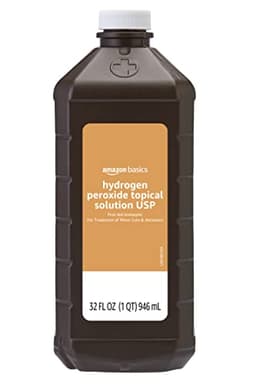
Standard pharmacy hydrogen peroxide mixed 1:4 with water makes an effective soil drench for springtails (and fungus gnat larvae). The peroxide fizzes on contact with organic matter, killing springtails and eggs. Breaks down to water and oxygen within hours — no residue.
$1-$3 · Best for Fast knockdown when you need springtails gone immediately
Check price on Amazon →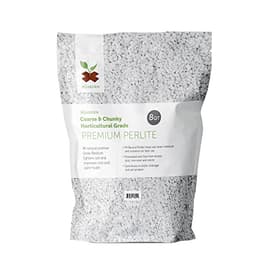
Volcanic glass expanded into lightweight white granules. Mix 20-30% perlite into potting soil to dramatically improve drainage and aeration. This is the long-term fix for springtails — better drainage means drier soil surfaces, which makes the environment inhospitable to springtails.
$5-$10 · Best for Preventing future springtail buildup by fixing the underlying drainage and overwatering issue
Check price on Amazon →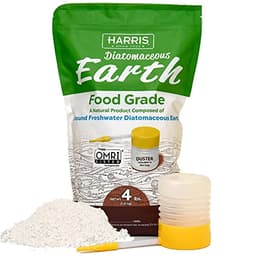
Microscopic fossilized diatoms that damage springtail exoskeletons on contact. Dust a thin layer on the soil surface. Only effective when dry — don't water from the top after applying. Safe for pets and humans. Reapply after watering.
$8-$15 · Best for Soil surface barrier that kills springtails on contact without chemicals
Check price on Amazon →Treatment information on PlantFix is educational. When using any pesticide — including organic options like neem oil or insecticidal soap — read and follow the entire product label; the label is the law. For persistent or high-stakes problems, your local university extension service offers free, region-specific advice. Read about how we source and verify treatment guidance in our Editorial Standards.
FAQ
Do springtails bite?▼
No. Springtails have no ability to bite humans or pets. Their mouthparts are designed for chewing decaying organic matter, fungi, and bacteria in soil — not piercing skin. They're completely harmless to people and animals. If you're getting bitten by something tiny, you likely have a different pest (fleas, mites, or no-see-ums).
Can springtails infest your house?▼
Not in the way roaches or ants do. Springtails don't build nests, don't breed in walls, and don't damage structures. They appear indoors when moisture conditions attract them — usually in bathrooms, basements, and around leaky pipes. Fix the moisture source and they disappear. They're classified as nuisance pests by the National Pest Management Association.
Are springtails harmful to humans or pets?▼
No. Springtails don't bite, don't sting, don't carry diseases, and don't produce allergens. They're one of the most harmless organisms you'll encounter in your home or garden. Dogs and cats may eat them accidentally while sniffing soil — this is completely safe.
Why do springtails jump?▼
Springtails jump using a forked appendage called a furcula, tucked under the abdomen and held in place by a clasp called the retinaculum. When released, the furcula snaps against the ground like a spring-loaded catapult, launching the springtail several inches into the air. It's an escape mechanism — they jump to evade predators. They can't control direction well, so the jump is essentially a random evasive leap.
Do springtails fly?▼
No. Springtails are wingless and cannot fly. Their jumping — which can look like flying at a quick glance — is purely mechanical (the furcula snap). If you see tiny bugs that sustain flight around your houseplants, those are likely fungus gnats, not springtails. Springtails launch upward and land; gnats hover and fly.
Related
- Fungus Gnats: How to Identify & Eliminate Them for Good →
- Hydrogen Peroxide for Fungus Gnats: The Exact Ratio & Why It Fails for Some People →
- Tiny White Bugs on Plants: Identify & Kill All 5 Types →
- Plant Bugs: Identify Any Bug on Your Plant in 30 Seconds →
- Yellow Leaves on Plants: Every Cause & How to Fix It →
- Tiny Black Bugs on Plants: Identify & Get Rid of Gnats, Thrips & More →
- Mosquito Bits for Fungus Gnats: Dosage + 24-Hour Kill →
- Soil Mites in Houseplants: The 4-Type ID Guide (Most Are Helping Your Plant, Not Hurting It) →
- Houseplant Pests: Visual ID Guide to Every Bug on Your Indoor Plants →
Not sure what's wrong?
Use the diagnosis tool →Get seasonal plant care reminders and pest alerts.