Aphids on Plants: How to Kill Them Fast (and Stop the Ants)
11 min read · Updated 2026-08-06
clusters of tiny bugs on new growth
Aphids.
The easiest pest on this site.
- Treat for
- 1–2 wks
- Spreads?
- Yes
- Kills plant?
- Rarely
Do this in the next 5 minutes
Blast them off with water
Medium-high pressure at the affected stems and leaf undersides. Aphids are soft-bodied and cling weakly, so this alone removes most of the colony in about a minute.
What kills them
- Likely at home
Water, medium-high pressure
At the sink, warm not hot. For delicate plants, invert the whole pot into a bucket of soapy water and swish gently instead.
- Likely at home
Dish soap and water
One teaspoon per litre, sprayed until dripping. Repeat every 3–5 days for a fortnight to catch nymphs born after each pass.
- $8–14
The workhorse if the colony keeps coming back. Every 3–5 days for two weeks.
Confirm before you treat
- Clustered on the newest growth and stem tips
- Soft, pear-shaped bodies — green, black, pink or grey
- Sticky residue on the leaves or the surface below
Failure point · Day 3
Ignoring the ants
Ants farm aphids for honeydew and will actively defend the colony from predators and move it to fresh growth. If ants are still running up the stems, deal with them or the aphids simply return.
By PlantFix Editorial Team · Sources: University Extension Programs, USDA, EPA
How to Get Rid of Aphids (Quick Answer)
Blast aphids off with a strong stream of water — this instantly removes 70-80% of a colony. For houseplants, take them to the sink or shower and spray the stems, leaf undersides, and new growth tips where aphids cluster. Follow up with insecticidal soap or neem oil spray every 3-5 days for 2 weeks to kill stragglers and prevent regrowth. Aphids reproduce without mating and can produce a new generation every 10 days, so a single surviving female restarts the whole colony.
If you see ants crawling up your plant stems, check for aphids immediately. Ants farm aphids for their honeydew (a sticky sugary excretion) and will actively protect aphid colonies from predators. Ants on a plant are often the first visible sign of an aphid infestation you haven't noticed yet. Use the diagnosis tool to identify the bugs on your plant.
What Do Aphids Look Like? (Size, Color & Shape Guide)
Aphids are soft-bodied, pear-shaped insects about 1/16 to 1/8 inch long — roughly the size of a pinhead. They have two short tubes (cornicles) projecting from the rear of their abdomen, which is the easiest way to confirm you're looking at aphids and not some other small bug.
The part that confuses people: aphids come in almost every color. The color depends on the species and host plant:
- Green aphids — Most common on houseplants. Nearly invisible on green stems and leaf undersides. The green peach aphid (Myzus persicae) attacks virtually every plant species.
- Black aphids — Common on beans, nasturtiums, and cherry trees. Bean black aphid (Aphis fabae) forms dense colonies on stem tips.
- White/woolly aphids — Covered in a white waxy coating that makes them look like tiny cotton balls. Easy to confuse with mealybugs, but woolly aphids cluster more tightly and are found on stems rather than in leaf axils.
- Yellow aphids — Often found on oleander, milkweed, and some vegetables.
- Pink/red aphids — Rose aphids. Dense clusters on rose buds and new stems.
Most aphids are wingless, but when a colony gets overcrowded or the plant starts declining, some aphids develop wings and fly to new host plants. Finding winged aphids means the colony is established and spreading. This is also how tiny green bugs mysteriously appear on indoor plants that haven't been outside.
Aphids cluster on the soft parts of plants: new growth tips, flower buds, and leaf undersides. They rarely spread across the entire leaf surface the way spider mites do. If you see a dense clump of tiny bugs on a stem tip with sticky residue below it, that's aphids.
Born Pregnant: Why Aphid Infestations Explode Overnight
Aphid reproduction is genuinely bizarre and explains why a clean plant can be covered in bugs within two weeks.
During spring and summer (or year-round indoors), female aphids reproduce through parthenogenesis — cloning themselves without mating. No males needed. Each female gives birth to live nymphs (not eggs), and each nymph is already carrying developing embryos inside her. Entomologists call this "telescoping generations" — a grandmother, mother, and daughter are all nested inside each other like Russian dolls.
The math is staggering. One aphid produces about 5-10 nymphs per day for 2-3 weeks. Each of those nymphs reaches reproductive age in 7-10 days and starts producing her own 5-10 daily nymphs. Under ideal indoor conditions (warm, no predators, unlimited plant sap), a single aphid can theoretically produce billions of descendants in one growing season.
In practice, plant nutrition limits population growth before it reaches billions. But going from 1 aphid to 1,000 in three weeks is absolutely realistic indoors. This is why early detection matters more for aphids than almost any other houseplant pest. Catching 5 aphids is a 30-second problem. Catching 500 is a multi-week treatment project.
Indoors, the asexual cycle never stops because there's no winter trigger. Outdoors, shortening fall days trigger a sexual generation that produces males, mates, and lays cold-hardy eggs for winter. But your heated living room is perpetual summer to an aphid.
Where Do Indoor Aphids Come From? (The 4 Entry Routes)
One of the most common questions plant owners ask: how did aphids get on my indoor plant that never goes outside?
1. New plants from the nursery (most common)
This is the #1 source. You buy a beautiful new pothos, bring it home, and within a week, you notice tiny bugs on the stems. The aphids were already there — just too few to notice during a quick store inspection. A handful of aphids hiding on leaf undersides or inside curled new growth multiplies rapidly in your warm home. Always quarantine new plants for 2 weeks.
2. Plants moved outdoors and back
If you put houseplants on the patio during summer, aphids from nearby garden plants colonize them. You bring the plant back inside in fall and the aphids come along for the ride — straight into a predator-free indoor environment where they reproduce explosively. Treat and inspect every plant before it comes back inside.
3. Open windows and doors
Winged aphids are weak fliers, but they're small enough to drift on air currents through open windows, especially during spring and early summer when outdoor aphid populations produce winged dispersal forms. Window screens help but don't block everything this small. A plant sitting right next to a regularly opened window is more at risk.
4. Cut flowers and produce
Fresh garden flowers and even grocery produce (herbs especially) can carry aphids indoors. If you put a bouquet of garden roses on the same table as your houseplants, any aphids on the roses can walk right over to your pothos.
The common thread: aphids almost never spontaneously generate indoors. Something carried them in. Identifying the entry route helps you prevent the next infestation.
Ants on Your Plant? Check for Aphids (The Ant-Aphid Symbiosis)
This is one of the most useful diagnostic shortcuts in plant care, and most guides bury it in a footnote: if ants are crawling up and down your plant stems, you almost certainly have aphids.
Ants and aphids have one of nature's most well-documented symbiotic relationships. Aphids excrete honeydew — a sugary liquid waste — and ants love it. In exchange for this food source, ants actively protect aphid colonies from predators (ladybugs, lacewings, parasitic wasps). If ants led you here, read ants on plants — the ants are a diagnostic clue that a sap-sucker like this is present. Some ant species even carry aphids to new plants to establish fresh colonies, essentially farming them.
What this means for you: ant trails on a plant are often the FIRST sign of an aphid problem. The aphids themselves are tiny and green on green stems — easy to miss. The ants are larger, darker, and move in obvious lines up and down the stem. Many gardeners notice the ants weeks before they notice the aphids.
If you find ants on your plants:
- Inspect immediately for aphids on new growth tips, flower buds, and leaf undersides
- Control the aphids first — once the honeydew food source is gone, ants leave on their own
- Don't just kill the ants — that removes predator protection but doesn't address the actual pest
- For outdoor plants, a ring of sticky barrier (Tanglefoot) around the stem base prevents ants from climbing up, which exposes the aphid colony to natural predators that the ants were blocking
This dynamic also explains why some plants get chronic, recurring aphid problems: the ants keep re-establishing aphid colonies even after you treat them. Address the ants and the aphids together.
Outdoors, this same honeydew-ant cycle plays out on a larger scale with spotted lanternflies — an invasive sap-feeding insect now in 21+ states. Spotted lanternflies produce even more honeydew than aphids, coating trees, decks, and cars below infested branches in sticky residue that grows black sooty mold. If your outdoor trees are dripping sap and attracting swarms of ants, the source may be lanternflies rather than aphids.
3 Treatment Methods (From Mild Infestation to Full Invasion)
Mild infestation (a few clusters on 1-2 stems):
Blast them off with water. Take the plant to the sink, turn on warm (not hot) water at medium-high pressure, and spray the affected stems and leaf undersides thoroughly. Aphids are soft-bodied and cling weakly — water pressure dislodges them easily. For delicate plants that can't handle strong spray, dunk the entire plant (pot and all) upside-down into a bucket of water with a drop of dish soap and swish gently. Repeat every 2-3 days for a week.
Moderate infestation (multiple stems, sticky honeydew visible):
Insecticidal soap is the workhorse treatment. Spray all plant surfaces — stems, leaf tops, leaf undersides, new growth tips — until dripping wet. Soap must contact the aphid directly to work; it breaks down the waxy coating on their bodies. Repeat every 3-5 days for 2 weeks. The repeat applications catch nymphs born after the first treatment.
Alternatively, neem oil works through a different mechanism — it disrupts aphid feeding behavior and reproduction. Mix 2 tablespoons neem oil + a few drops liquid soap per gallon of warm water. Spray in the evening (neem degrades in sunlight). Neem has residual anti-feeding effects for several days, making it more persistent than soap alone.
Severe infestation (entire plant affected, sooty mold present, plant declining):
Combine treatments: water blast first to reduce the population, then insecticidal soap or neem oil. For houseplants, consider systemic granules (imidacloprid) mixed into the soil — the plant absorbs the insecticide through its roots, and any sap-sucking insect that feeds on the plant is killed. Systemics provide 6-8 weeks of protection and are the most effective option for chronic, recurring aphid problems. Not for use on edible plants.
For outdoor gardens, skip chemicals and encourage natural predators: ladybugs, lacewings, parasitic wasps (Aphidius colemani), and hoverfly larvae are all voracious aphid predators. A single ladybug can eat 50+ aphids per day. Plant alyssum, dill, fennel, and yarrow to attract these beneficial insects to your garden. For persistent soil-dwelling aphid species, beneficial nematodes applied to the soil can target root aphids that surface treatments miss. A ring of diatomaceous earth around plant bases also deters crawling aphids from climbing stems.
Plants Aphids Love Most (And Why)
Aphids are attracted to soft, nitrogen-rich new growth. Plants that produce lots of tender new shoots — especially after fertilizing — are aphid magnets.
Roses: The classic aphid target. Rose aphids (Macrosiphum rosae, green or pink) cluster on buds and new stem tips, distorting flowers and spreading rose mosaic virus. Check buds daily from April through June.
Pothos and philodendrons: Green peach aphids love the new growth tips of these popular houseplants. Because pothos vines constantly produce new leaves, there's always fresh growth for aphids to colonize. Check the newest leaves and stem tips.
Herbs (basil, dill, parsley): Kitchen herbs on windowsills are aphid favorites — soft tissue, warm location near windows, and close to entry routes. Inspect regularly, especially after opening windows in spring.
Peppers and tomatoes: In the garden, green peach aphids and potato aphids attack peppers and tomatoes. Heavy aphid feeding can cause leaf curling on tomatoes that looks alarming but is treatable — our tomato leaf curl guide helps you distinguish pest-caused curling from the four other common causes. They're usually manageable outdoors because natural predators keep populations in check — unless you've killed the predators with broad-spectrum insecticides.
Milkweed: Oleander aphids (bright yellow-orange) colonize milkweed aggressively. If you grow milkweed for monarchs, be careful with aphid treatment — insecticidal soap harms monarch caterpillars too. Hand-remove aphids from milkweed or blast with water only.
Succulents: Surprisingly common. Root aphids (hidden in soil) and leaf aphids both attack succulents. Root aphids look like small white dots on roots and are often discovered during repotting. If your succulent is wilting despite proper watering, check the roots.
Preventing Aphids (Especially Indoors)
Quarantine religiously. Every new plant gets 2 weeks alone before joining your collection. This single habit prevents the majority of houseplant pest introductions — aphids, mealybugs, and spider mites alike.
Inspect weekly. Take 30 seconds per plant during watering to check new growth tips and leaf undersides. Catching 5 aphids takes 30 seconds to fix. Catching 500 takes weeks. Early detection is the entire game.
Don't over-fertilize. Excess nitrogen produces soft, lush new growth that's irresistible to aphids. Feed your plants at the recommended rate — more is not better. Slow-release fertilizer is less likely to produce the growth flushes that attract aphids.
Treat incoming outdoor plants. Before any plant comes back inside from summer on the patio, spray thoroughly with insecticidal soap or neem oil and let it dry. Check again 3 days later. This catches aphids, spider mites, whiteflies, and other hitchhikers.
Keep windows screened. If you have plants near frequently opened windows, ensure screens are in good condition. Winged aphid dispersal peaks in spring and early summer.
Inspect cut flowers. Garden bouquets and even grocery store herbs can carry aphids. Give them a quick look and a gentle shake over the sink before placing them near houseplants.
Encourage biodiversity outdoors. A garden with flowering herbs (dill, fennel, yarrow, alyssum), ground cover, and minimal pesticide use supports ladybugs, lacewings, and parasitic wasps that naturally control aphid populations. Broad-spectrum insecticide kills the predators that keep aphids in check — creating worse aphid problems long-term.
Recommended Products
We earn a commission if you buy through these links, at no extra cost to you. We recommend based on what works, not what pays. How this works.
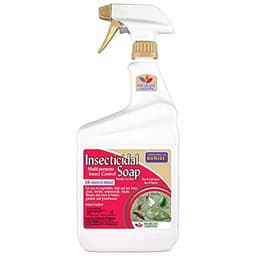
Potassium salts of fatty acids that kill aphids on contact by dissolving their waxy coating. Spray directly on aphid clusters, especially leaf undersides and stem tips. No residual activity — repeat every 3-5 days for 2 weeks. Safe for most plants and edibles.
$8-$14 · Best for Primary treatment for mild-to-moderate infestations — safe, effective, widely available
Check price on Amazon →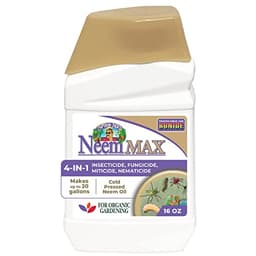
Cold-pressed neem oil disrupts aphid feeding and reproduction. Mix 2 tablespoons per gallon of water with dish soap as emulsifier. Has residual anti-feeding effects for several days, making it more persistent than soap alone. Spray in the evening — neem breaks down in sunlight.
$10-$18 · Best for Moderate infestations and prevention — residual effects reduce recolonization between sprays
Check price on Amazon →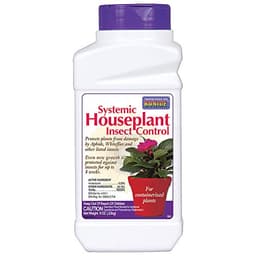
Imidacloprid-based granules mixed into soil and absorbed by plant roots. Kills any sap-sucking insect (aphids, mealybugs, whiteflies) that feeds on the plant for 6-8 weeks. The most effective option for chronic, recurring aphid problems on ornamental houseplants. Not for edible plants.
$7-$14 · Best for Chronic recurring infestations that soap and neem can't fully resolve — set it and forget it
Check price on Amazon →Treatment information on PlantFix is educational. When using any pesticide — including organic options like neem oil or insecticidal soap — read and follow the entire product label; the label is the law. For persistent or high-stakes problems, your local university extension service offers free, region-specific advice. Read about how we source and verify treatment guidance in our Editorial Standards.
FAQ
Where do aphids come from on indoor plants?▼
The most common source is new plants from nurseries or garden centers that already carry a small, unnoticed aphid population. Plants moved outdoors during summer and brought back in also frequently carry aphids. Winged aphids can drift through open windows, and cut flowers or fresh herbs from the garden can introduce them. Aphids almost never spontaneously appear — something always carries them in.
Do aphids bite humans?▼
No. Aphids have needle-like mouthparts designed exclusively for piercing plant cells and extracting sap. They cannot bite human skin and pose no direct health risk. The worst they'll do to you is leave a sticky honeydew residue on your hands when you handle an infested plant.
What is the fastest way to kill aphids?▼
A strong water blast removes most aphids immediately — take the plant to the sink and spray the stems and leaf undersides with warm water at medium-high pressure. Follow up with insecticidal soap spray to kill remaining aphids and prevent regrowth. For very small infestations, you can simply wipe aphids off with a damp cloth or cotton swab dipped in rubbing alcohol.
Why do aphids keep coming back?▼
Three common reasons: First, aphid reproduction is explosive — a single surviving female can rebuild the colony in 10-14 days through parthenogenesis (cloning). Second, ants may be actively farming aphids on your plant, re-establishing colonies after you remove them. Third, the source hasn't been addressed — nearby infested plants, open windows, or un-quarantined new purchases keep reintroducing aphids. Address all three for lasting control.
Can aphids kill a plant?▼
Healthy mature plants can usually survive aphid feeding, though heavy infestations cause yellowing, stunted growth, and distorted new leaves. Seedlings, young plants, and already-stressed plants can be killed by severe infestations. The secondary damage — honeydew causing sooty mold, and virus transmission — is often more harmful than the aphids themselves. Act early to prevent colonies from reaching damaging levels.
Related
- Earwig Pictures: What They Look Like & How to Get Rid of Them →
- Garden Pest Identification: 25+ Bugs by the Damage They Do →
- Houseplant Pests: Visual ID Guide to Every Bug on Your Indoor Plants →
- Insecticidal Soap: What It Actually Kills (Including Spider Mites), DIY Recipe & Why Dawn Is Wrong →
- Mealy Bugs on Plants: How to Identify & Kill Them Fast →
- Neem Oil for Plants: Complete Guide to Using It Effectively →
- Plant Bugs: Identify Any Bug on Your Plant in 30 Seconds →
- Spider Mites: Identification, Treatment & Prevention Guide →
- Spotted Lanternfly: How to ID, Kill & Report Them (2026 State Guide) →
- Tiny Green Bugs on Plants Are Almost Always Aphids →
- Tomato Leaves Curling? 5 Causes Ranked by How Worried You Should Be →
- Whiteflies: The Shake Test, Damage Chain & 3-Week Treatment Protocol →
Not sure what's wrong?
Use the diagnosis tool →Get seasonal plant care reminders and pest alerts.