Tiny Green Bugs on Plants Are Almost Always Aphids
Tiny green bugs on your plants? 95% of the time they're green aphids. Here's how to confirm it, the beneficial look-alike to spare, and how to clear them.
8 min read · Updated 2026-09-04
By PlantFix Editorial Team · Sources: University Extension Programs, USDA, EPA
What Are the Tiny Green Bugs? (Quick Answer)
The tiny green bugs on your plants are almost certainly aphids — specifically green peach aphids (Myzus persicae) or a related species. On houseplants they account for the large majority of green-bug sightings. Look for soft, pear-shaped insects about 1/16 to 1/8 inch long clustered on the newest growth, flower buds, and leaf undersides, with two little tailpipe-like tubes (cornicles) sticking out of the rear — that pair of tubes is the feature that confirms aphid over anything else.
If you also see a clear, sticky film on the leaves below (honeydew), sometimes with black sooty mold on it, that clinches it. The good news is aphids are one of the easier pests to clear once you know they're the target. Blast them off with water, follow with insecticidal soap or neem oil, and repeat for a couple of weeks. Before you spray, though, make sure you're not about to kill a beneficial look-alike — more on that below — or confirm the ID from a photo first.
Green Aphids: Full Identification
Green aphids blend into green stems and leaf undersides, which is exactly why people notice the ants or the sticky residue before they notice the bugs. Here's what you're looking for:
Shape and size: Soft-bodied, pear-shaped, 1/16 to 1/8 inch — about a pinhead. Translucent pale green to bright green depending on species and what they're feeding on.
The confirming feature: two cornicles (short tubes) projecting from the back of the abdomen. No other common tiny green bug has them. Under a phone camera zoomed in, they're easy to spot.
Where they cluster: new growth tips, unopened flower buds, and the undersides of young leaves — the soft, nitrogen-rich tissue they can pierce easily. They rarely spread evenly across a whole leaf the way spider mites do.
Signs before you see them: sticky honeydew on lower leaves, curled or puckered new growth, sooty black mold, and ant trails running up the stem.
The green peach aphid is the usual suspect indoors because it feeds on an enormous range of plants — pothos, philodendron, peppers, herbs, and dozens more. Winged forms appear when a colony gets crowded, which is how green aphids seem to 'appear from nowhere' on a plant that never went outside: a winged female flew in through an open window and started a colony. Our full guide to aphids on plants covers the ant connection and severe infestations in depth.
Why They Seem to Appear Overnight
One day the plant is clean; two days later a stem tip is crawling. That's not your imagination, and the reason is one of the strangest facts in entomology: aphids are effectively born pregnant.
During the warm season, female aphids skip mating and eggs entirely and give live birth to cloned daughters — and those daughters already contain the beginnings of the next generation inside them before they're even born. Entomologists call this telescoping generations: three generations can exist nested inside one aphid at once. The practical result is explosive, compounding growth. A single winged female that lands on your plant can found a visible colony in days, with no eggs, no males, and no waiting.
This biology is why treatment has to be repeated. Any spray you apply kills the aphids present that day, but nymphs are being born continuously, and a female matures and starts producing her own young in about a week. Hit the colony once and the survivors and newborns rebuild it. That's the single most common reason people think aphid treatments 'don't work' — they treated once and stopped. Plan on spraying every 5-7 days for two to three weeks to break the reproductive cycle.
Green Look-Alikes (One Is Beneficial — Don't Kill It)
Not every green insect on a plant is an aphid, and one of them is actively helping you. Check before you spray broadly.
Green lacewing larvae — BENEFICIAL, spare these. These are the single most important look-alike to recognize. Lacewing larvae are pale, alligator-shaped, with visible legs and a pair of long curved pincers at the head — nothing like a round, sluggish aphid. Nicknamed 'aphid lions,' a single larva can eat around 100 aphids in a week, per University of Minnesota Extension. If you see one prowling among your aphids, you have free pest control at work — leave it be.
Leafhoppers — wedge-shaped, hold their wings tent-like over the body, and jump or run sideways when disturbed. Mostly an outdoor pest; they cause pale stippling rather than clustering on buds.
Green shield / stink bugs — much larger, flat, shield-shaped; an outdoor find, not a houseplant colony.
Katydids — big, leaf-shaped, grasshopper-like; unmistakable and outdoor-only.
Whitefly nymphs — pale, scale-like, and immobile on leaf undersides; if the bugs flutter up in a cloud when disturbed, see our whiteflies guide instead.
The quick test: soft, round, slow, clustered on new growth with two rear tubes = aphid. Anything that jumps, flies well, or has big jaws is something else.
How to Get Rid of Green Aphids
Match the method to the severity, and commit to repeating it — the reproduction section above is why.
Mild (a few clusters on one or two stems): Take the plant to the sink and blast the colonies off with medium-pressure warm water, hitting leaf undersides and growth tips. Aphids cling weakly and don't climb back. Repeat every 2-3 days for a week.
Moderate (multiple stems, honeydew visible): Insecticidal soap is the workhorse — it breaks down their soft outer coating, but only if it contacts them directly, so spray until every surface drips. Or use neem oil, which also disrupts feeding and reproduction for several days after. Repeat every 5-7 days for 2-3 weeks.
Severe (whole plant, sooty mold, decline): Water-blast first to cut the numbers, then follow with soap or neem. For chronic recurring infestations on non-edible houseplants, a systemic soil granule (imidacloprid) protects for 6-8 weeks. A spot treatment of 70% rubbing alcohol on a cotton swab handles stubborn clusters.
Outdoors, let predators work. Ladybugs, lacewings, and parasitic wasps devour aphids — a single ladybug eats 50+ a day. Avoid broad-spectrum sprays that wipe them out, and plant alyssum, dill, and yarrow to draw them in. Our recommended gear kits list the soap, neem, and alcohol worth keeping on hand.
Keeping Aphids From Coming Back
Aphids target soft, fast-growing tissue, so prevention is mostly about not handing them a buffet and catching new arrivals early.
Go easy on nitrogen. Over-fertilizing pushes lush, tender new growth that aphids find irresistible. Feed moderately, especially on plants that have had aphids before.
Quarantine new plants. Keep any new arrival away from your collection for a couple of weeks and inspect the growth tips — most indoor aphid outbreaks hitchhike in on a new plant or fresh-cut flowers.
Inspect the new growth weekly. That's where aphids start. Catching a single winged founder or a small cluster is the difference between a wipe-down and a three-week spray campaign.
Watch the ants. Ant trails up a stem are often the first visible sign — the ants farm aphids for honeydew and even protect them from predators. If you see ants, check for aphids underneath, and read ants on plants for the full dynamic.
Rinse outdoor arrivals. Before bringing a plant in for the season, hose it down and check undersides.
Still unsure the green bugs you found are aphids? Run a photo through the diagnosis tool or browse the plant bugs identification hub to compare against every common houseplant pest.
Frequently Asked Questions
Common tiny green bug questions, answered.
Recommended Products
We earn a commission if you buy through these links, at no extra cost to you. We recommend based on what works, not what pays. How this works.
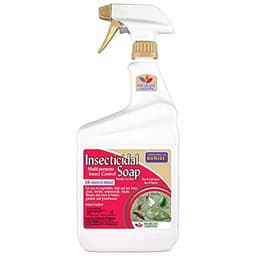
The go-to contact spray for green aphids. Breaks down their soft outer coating on contact, so spray every surface until dripping, including leaf undersides. Repeat every 5-7 days for 2-3 weeks to catch newborn nymphs.
$10-$18 · Best for Moderate aphid colonies on houseplants
Check price on Amazon →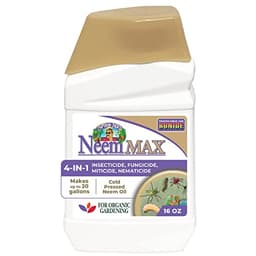
Disrupts aphid feeding and reproduction with several days of residual effect, so it keeps working between sprays. Mix with a drop of soap and apply in the evening. A good rotation partner with insecticidal soap.
$10-$18 · Best for Persistent or recurring aphid problems
Check price on Amazon →Biological control for outdoor plants and greenhouses. Ladybugs eat 50+ aphids a day and lacewing larvae around 100 a week. Release near infested plants and skip broad-spectrum sprays that would kill them.
$15-$30 · Best for Outdoor and greenhouse aphid control
Treatment information on PlantFix is educational. When using any pesticide — including organic options like neem oil or insecticidal soap — read and follow the entire product label; the label is the law. For persistent or high-stakes problems, your local university extension service offers free, region-specific advice. Read about how we source and verify treatment guidance in our Editorial Standards.
FAQ
What are the tiny green bugs on my plants?▼
In the large majority of cases they're green aphids — soft, pear-shaped insects about a pinhead in size that cluster on new growth and leaf undersides. The confirming feature is a pair of short tubes (cornicles) at the rear of the body; no other common tiny green bug has them. Sticky honeydew on lower leaves and ant trails up the stem are supporting clues.
Are green aphids harmful to plants?▼
Yes. Green aphids pierce plant tissue and drain sap, which distorts and curls new growth, weakens the plant, and coats leaves in sticky honeydew that grows black sooty mold. They can also spread plant viruses between hosts. A small colony is easy to manage, but because aphids reproduce explosively, an untreated infestation can stunt or seriously stress a plant within a few weeks.
How do you get rid of green aphids naturally?▼
Start by blasting them off with a firm spray of warm water, focusing on growth tips and leaf undersides. Follow with insecticidal soap or neem oil, repeating every 5-7 days for two to three weeks to catch newly born nymphs. Outdoors, encourage ladybugs and lacewings and avoid broad-spectrum sprays. The repeat applications matter — aphids are born pregnant and rebuild fast from any survivors.
Do ladybugs eat green aphids?▼
Yes — ladybugs are among the most effective aphid predators, and a single adult can eat 50 or more aphids a day. Green lacewing larvae are even hungrier, eating roughly 100 aphids a week. Because these beneficials do so much of the work outdoors, the key is to avoid broad-spectrum insecticides that kill them along with the aphids, and to plant flowers like alyssum and dill that attract them.
Related
- Aphids on Plants: How to Kill Them Fast (and Stop the Ants) →
- Plant Bugs: Identify Any Bug on Your Plant in 30 Seconds →
- Tiny Red Bugs: Clover Mites, Spider Mites & How to ID Them →
- Tiny White Bugs on Plants: Identify & Kill All 5 Types →
- Tiny Black Bugs on Plants: Identify & Get Rid of Gnats, Thrips & More →
- Tiny Orange Bugs on Plants: What They Are (5 Culprits) →
- Neem Oil for Plants: Complete Guide to Using It Effectively →
- Insecticidal Soap: What It Actually Kills (Including Spider Mites), DIY Recipe & Why Dawn Is Wrong →
- Ants on Your Plants? The Real Problem Is Usually Aphids →
- Spider Mites: Identification, Treatment & Prevention Guide →
Not sure what's wrong?
Use the diagnosis tool →Get seasonal plant care reminders and pest alerts.