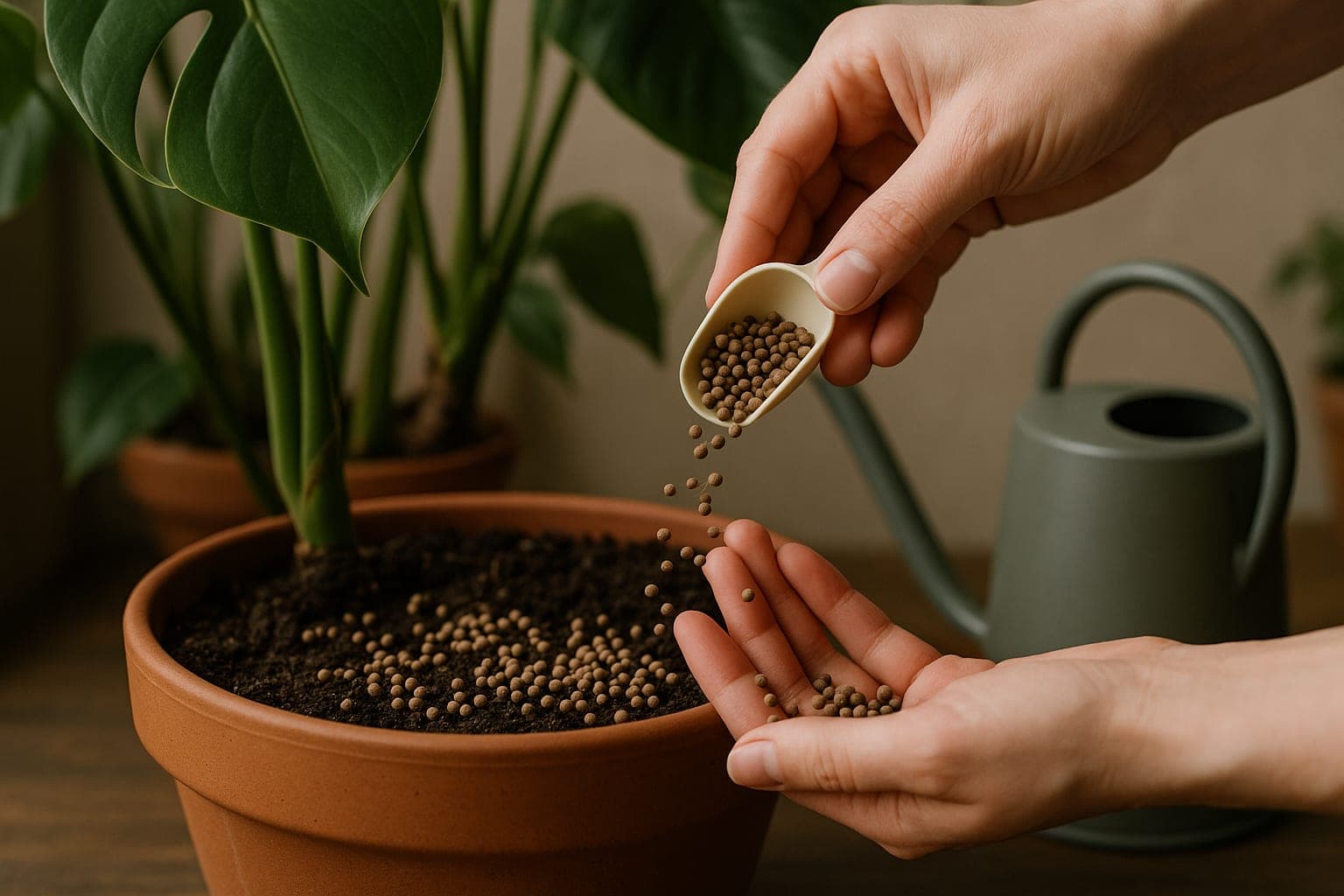
Mosquito Bits for Fungus Gnats: Dosage + 24-Hour Kill
Mosquito Bits kill fungus gnat larvae within 24 hours using Bti. Get the exact tea-soak dosage, Bits vs Dunks, and a timeline to clear gnats fast.
10 min read · Updated 2026-08-25
By PlantFix Editorial Team · Sources: University Extension Programs, USDA, EPA
How to Use Mosquito Bits for Fungus Gnats (Quick Answer)
Mosquito Bits kill fungus gnat larvae within 24 hours using Bti (Bacillus thuringiensis israelensis), a naturally occurring soil bacterium that's toxic only to fly and mosquito larvae. Soak 4 tablespoons of Mosquito Bits in 1 gallon of water for 30 minutes, strain out the granules, and water your plants with the treated water. Repeat with every watering for 3-4 weeks to break the entire lifecycle.
Bits target larvae only — the worm-like creatures living in your soil. You still need yellow sticky traps to catch adults that are already flying around. That dual approach — Bits for larvae below the soil, sticky traps for adults above it — is the most effective combination I've found for clearing a gnat infestation completely. Most people see dramatic improvement by week 2 and total elimination by week 3-4.
Not sure if you actually have fungus gnats? Check our gnats vs. fruit flies identification guide — the treatments are completely different, and misidentification wastes weeks.
How Mosquito Bits Actually Kill Fungus Gnats
The active ingredient in Mosquito Bits is Bti — Bacillus thuringiensis subspecies israelensis. It's not a chemical pesticide. It's a naturally occurring soil bacterium that produces crystal proteins toxic specifically to the larvae of flies and mosquitoes (order Diptera). Fungus gnats are Diptera, so they're a direct target.
Here's the mechanism: when a fungus gnat larva ingests Bti proteins while feeding in the soil, those proteins bind to receptors in the larva's gut and create holes in the intestinal wall. The gut lining breaks down within hours, and the larva dies within 24-48 hours. It's highly targeted — the specific gut receptors Bti binds to exist only in fly and mosquito larvae, not in beetles, worms, bees, or any other insect order.
This selectivity is why Bti is considered one of the safest biological pest controls available. The EPA has registered Bti products since 1983 with no evidence of harm to non-target organisms. The OMRI (Organic Materials Review Institute) lists Bti as approved for organic gardening. Washington State Department of Health states that Bti is nontoxic to mammals, birds, and fish.
One critical distinction: Bti kills larvae, not adults. The adult gnats flying around your plants will continue doing so until they die naturally (7-10 day lifespan) or get caught on a sticky trap. Bti stops the next generation from hatching. This is why patience matters — you won't see instant results with the flying adults, but the population crashes once you cut off larval recruitment.
Mosquito Bits vs. Mosquito Dunks: Which One for Houseplants?
Summit Chemical makes both products with the same active ingredient (Bti), but the delivery format is completely different — and for houseplants, one is clearly better than the other.
Mosquito Bits are small corn-cob granules coated with Bti. They release their payload quickly when soaked in water — most of the Bti dissolves within 30 minutes. This fast-release design makes them perfect for the "tea method" used on houseplants: soak, strain, water. You're making a Bti-infused water that saturates the entire soil column.
Mosquito Dunks are solid, donut-shaped blocks designed for standing water. They float and release Bti slowly over 30 days. They're designed for rain barrels, bird baths, ponds, and livestock troughs — situations where you want continuous, gradual treatment.
For houseplant fungus gnats, Bits are the better choice. The fast-release format delivers a concentrated Bti dose directly to the soil where gnat larvae live. Dunks work technically — you can crumble a piece into water and soak it overnight — but the slow-release design means you're waiting 24+ hours for extraction instead of 30 minutes with Bits.
The one scenario where Dunks make sense for indoor use: if you have a self-watering planter with a reservoir, dropping a quarter-Dunk into the reservoir provides continuous Bti treatment as the plant wicks up water. But for standard pots, Bits are faster and easier to dose accurately.
Cost comparison: An 8oz bag of Mosquito Bits ($10-12) makes roughly 50+ gallons of treatment water — enough for months of weekly treatment on a dozen houseplants. A 6-pack of Dunks ($12-15) is designed for outdoor water features and is overkill for indoor pots.
The Bti Tea Method: Step-by-Step (Best for Houseplants)
This is the method recommended by Summit Chemical (the manufacturer) and endorsed by most university extension programs for indoor plants. It delivers Bti directly into the soil where fungus gnat larvae feed.
What you need:
- Mosquito Bits (Summit brand is the original and most widely available)
- A container with a lid (gallon jug, pitcher, or watering can)
- A strainer, cheesecloth, or old pantyhose for filtering
Step 1: Measure. Add Mosquito Bits to room-temperature water using these ratios:
Dosage by pot size:
- 2-4 inch pots: 1 teaspoon Bits in 1 cup water
- 6 inch pots: 1 tablespoon Bits in 2 cups water
- 8-10 inch pots: 2 tablespoons Bits in 1 quart water
- Large floor planters: 4 tablespoons (1/4 cup) Bits in 1 gallon water
- Batch mixing (multiple plants): 4 tablespoons per gallon is the standard ratio
Step 2: Soak. Let the Bits sit in the water for at least 30 minutes. The Bti dissolves off the corn-cob carrier into the water. You'll see the water turn slightly cloudy or yellowish — that's the Bti. For maximum potency, Summit recommends soaking up to 6 hours, but 30 minutes delivers most of the active ingredient.
Step 3: Strain. Pour the treated water through a strainer to remove the corn-cob granules. The granules themselves are spent — you can compost them or discard them. All the Bti is now in the water.
Step 4: Water normally. Use the Bti-treated water to water your plants as you normally would. Soak the soil thoroughly so the Bti reaches larvae at all depths. Water until it drains from the bottom.
Step 5: Repeat weekly. Use Bti-treated water for every watering for at least 3-4 weeks. This covers the full fungus gnat lifecycle (egg to adult is ~17-21 days). Stopping early lets surviving eggs or young larvae restart the infestation.
The treated water can be stored for up to 24 hours, but use it the same day for best results. Bti degrades in light and warmth.
The Top-Dress Method (Alternative for Forgetful Waterers)
If the tea method feels like too much effort, there's a simpler alternative: just sprinkle dry Mosquito Bits directly on the soil surface.
How it works: Sprinkle 1-2 teaspoons of Bits on the soil surface of small pots (under 6 inches) or 1 tablespoon on larger pots. When you water the plant, the water dissolves Bti off the granules and carries it into the soil. Each watering releases a fresh dose.
Pros: Zero prep work. No soaking, no straining. Just sprinkle and water as usual.
Cons: Less precise dosing — the Bti concentration depends on how much water you use and how fast it flows through. The granules sit on the soil surface and can attract mold in humid conditions (not harmful, just unsightly). And cats may find the corn-cob granules interesting enough to investigate, which leads to the pet safety question below.
I generally recommend the tea method for the first 3-4 weeks of active treatment (better Bti distribution in the soil column), then switching to top-dressing as a maintenance routine once the infestation is cleared.
Treatment Timeline: What to Expect Day by Day
The most common reason people give up on Mosquito Bits is unrealistic expectations. Bti doesn't produce instant dead-gnat results — it works by collapsing the next generation. Here's what actually happens:
Day 1-2: Larvae in the top 2-3 inches of soil begin dying as they ingest Bti. You won't see this happening — larvae are tiny (1/4 inch), translucent, and buried in soil. The adult gnats flying around your plant? Still alive and still annoying.
Day 3-7: Adult gnats are still active. Some may even seem worse because surviving adults concentrate near remaining food sources. This is the phase where most people panic and think it's not working. It IS working — the larvae are dying, but adults live 7-10 days regardless of treatment.
Week 2: You should notice fewer adults. The gnats that hatched before treatment are dying of natural causes, and new adults aren't emerging because the larvae are dead. Sticky traps catch noticeably fewer gnats per day.
Week 3: Dramatic reduction. Occasionally you'll see a straggler — eggs laid in deep soil or pot crevices may have escaped the first few treatments. Keep treating.
Week 4: Gnats should be gone or nearly so. Continue Bti treatment for one more week after the last adult sighting to catch any late hatchers.
If gnats persist after 4 weeks: You either have a secondary infestation source (a plant you forgot to treat, a drain, or a bag of potting soil), or the flying insects aren't actually fungus gnats. Check our gnats vs. fruit flies guide — if they're fruit flies hovering around your kitchen rather than your plants, Bti won't help.
Is Bti Safe for Cats, Dogs & Edible Herbs? (Yes, With Caveats)
This is the number one question on every Reddit thread and houseplant forum about Mosquito Bits, and the answer is reassuring.
Safety for cats and dogs: Bti is nontoxic to mammals. The EPA classifies it in Toxicity Category IV (the lowest category — "practically nontoxic"). The Washington State Department of Health states explicitly that Bti is nontoxic to mammals, birds, and fish. The mechanism that kills fly larvae — crystal proteins binding to specific gut receptors — simply doesn't work in mammalian digestive systems. We don't have the receptors.
That said, Mosquito Bits themselves (the corn-cob granules) aren't meant to be eaten. If your cat nibbles a few granules off the soil surface, the Bti won't hurt them, but eating a large amount of corn-cob material could cause gastrointestinal upset just like eating any non-food item. The practical solution: use the tea method (strain out the granules) rather than top-dressing if you have curious cats. No granules on the soil surface = nothing for them to eat.
Safety for edible herbs and vegetables: Yes, Bti is OMRI-listed for organic gardening. You can safely use Mosquito Bits on basil, lettuce, tomatoes, peppers, and any other edible plant. Bti breaks down rapidly in soil and doesn't get absorbed by plant roots or translocated into foliage or fruit. There's no waiting period between treatment and harvest.
Safety for earthworms and beneficial insects: Bti doesn't affect earthworms, beetles, bees, ladybugs, or any non-Diptera organism. The only non-target organisms affected are some aquatic midges (Chironomidae), which aren't present in houseplant soil.
The one actual risk: Some Bacillus thuringiensis products (not specifically Bti) have caused skin and eye irritation on direct contact. Wash your hands after handling Mosquito Bits, and keep the granules out of your eyes. Standard-issue precautions for any garden product.
Mosquito Bits vs. Other Fungus Gnat Treatments: When to Use What
Mosquito Bits aren't the only tool for fungus gnats, and they're not always the best standalone option. Here's how they compare to the other treatments in our gnat control ecosystem:
Mosquito Bits vs. hydrogen peroxide drench: H2O2 kills larvae and eggs on contact by fizzing through the soil — it's faster-acting (kills on contact vs. 24 hours for Bti). But it's less targeted: hydrogen peroxide also kills some beneficial soil microorganisms. Bti is selective — it only affects fly larvae. Best approach: use H2O2 for the initial knockdown of a heavy infestation, then switch to Bti for the ongoing 3-4 week treatment cycle.
Mosquito Bits vs. ACV traps: Not an either-or — they serve different purposes. ACV traps catch adult gnats (and are better at catching fruit flies). Bti kills larvae in the soil. Use both simultaneously: Bti in the soil, ACV trap nearby to grab adults. Note: ACV traps are more effective for fruit flies than fungus gnats. If your ACV trap catches a lot of bugs, you might have fruit flies, not gnats.
Mosquito Bits vs. yellow sticky traps: Again, complementary. Sticky traps catch flying adults; Bti kills soil larvae. The combination is the gold standard. Sticky traps also serve as monitoring tools — when the trap goes a full week without catching a gnat, your treatment has succeeded.
Mosquito Bits vs. letting soil dry out: Drying the soil surface kills larvae and discourages egg-laying, and it's the simplest prevention method. But some plants (ferns, calatheas, fittonias) genuinely need consistently moist soil. For moisture-loving plants where drying isn't an option, Bti is the answer — it kills larvae in wet soil without requiring you to change your watering schedule.
The combination I recommend for most infestations:
- Bti tea (Mosquito Bits) with every watering for 3-4 weeks — kills larvae
- Yellow sticky traps at soil level — catches adults
- Let top inch of soil dry between waterings (where possible)
- After clearing the infestation, maintain with Bti tea once a month as prevention
5 Mistakes That Make Mosquito Bits Fail
When people say "Mosquito Bits didn't work for me," it's almost always one of these five issues:
1. Stopping treatment too early. The most common mistake. You see fewer gnats by week 2, declare victory, and stop treating. But fungus gnat eggs can take 4-6 days to hatch, and new eggs may have been laid since your last treatment. Continue Bti treatment for at least one full week after the last adult sighting. The lifecycle is 17-21 days — cutting treatment short at 2 weeks leaves a gap.
2. Not treating ALL plants. You treated the plant with visible gnats but forgot the one on the windowsill across the room. Fungus gnats fly. If any plant in the room has untreated soil with viable larvae, adults will emerge and re-infest everything. Treat every plant in the space, including the one that "doesn't seem to have gnats."
3. Expecting dead adults immediately. Bti kills larvae, not adults. Adult gnats live 7-10 days regardless. You'll keep seeing flying adults for at least a week after starting treatment. This doesn't mean it's not working.
4. Using expired product. Bti is a living organism. It degrades over time, especially if stored in heat or moisture. Check the expiration date. If your Mosquito Bits are more than 2 years old or have been stored in a hot garage, they may have lost potency. Fresh product stored in a cool, dry place maintains effectiveness for 2+ years.
5. Ignoring other moisture sources. Fungus gnats breed in any moist organic material, not just potting soil. Check sink drains (especially kitchen and bathroom), compost bins, bags of open potting soil, and even the damp tray under your refrigerator. If gnats persist after treating all your plants, the source is elsewhere.
Common Questions About Mosquito Bits and Fungus Gnats
Beyond the FAQ section below, a few additional questions come up constantly in plant communities:
Can I reuse the soaked Mosquito Bits granules? No — the Bti dissolves off the corn-cob carrier during soaking. After 30 minutes in water, the granules are spent. Compost or discard them and use fresh Bits for the next batch.
Does Bti smell? The treated water has a faintly earthy, slightly musty smell — like wet corn cobs and soil bacteria, which is exactly what it is. It dissipates within an hour of watering. It's not unpleasant, just noticeable.
Where do I buy Mosquito Bits? Summit Mosquito Bits (the original brand) are sold at Home Depot, Lowe's, Ace Hardware, Amazon, and most garden centers. The 8oz bag ($10-12) is the best value for houseplant use. Avoid no-name "Bti granules" from unfamiliar sellers — Bti concentration varies, and cheap products may have degraded bacteria.
Can I use Mosquito Bits preventively? Absolutely. Once you've cleared an infestation, using Bti tea once a month (or every other month) as your regular watering water keeps the soil inhospitable to any new gnat larvae. It's particularly useful if you tend to overwater or if you bring new plants home frequently.
Recommended Products
We earn a commission if you buy through these links, at no extra cost to you. We recommend based on what works, not what pays. How this works.
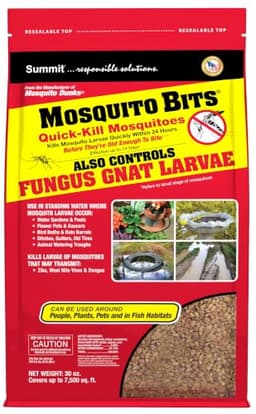
The original Bti granules for fungus gnat control. Soak 4 tablespoons in 1 gallon of water for 30 minutes, strain, and water plants. One bag makes 50+ gallons of treatment water. OMRI-listed for organic use.
$10-$12 · Best for Killing fungus gnat larvae in houseplant soil — the single most effective biological treatment
Check price on Amazon →
Place at soil level to catch adult fungus gnats while Bti handles the larvae below. Also serves as a monitoring tool — when the trap goes a week without catching gnats, treatment has succeeded.
$6-$12 · Best for Catching flying adult gnats to complement Bti larval treatment
Check price on Amazon →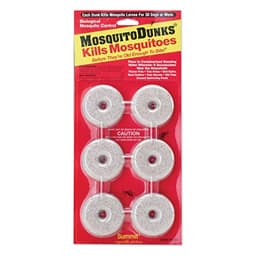
Slow-release Bti rings designed for standing water. Best for self-watering planters, rain barrels, and outdoor containers. For standard pots, Bits are faster and easier to dose — but Dunks work in reservoir-style planters.
$12-$15 · Best for Self-watering planters and outdoor water features with fungus gnat or mosquito issues
Check price on Amazon →Treatment information on PlantFix is educational. When using any pesticide — including organic options like neem oil or insecticidal soap — read and follow the entire product label; the label is the law. For persistent or high-stakes problems, your local university extension service offers free, region-specific advice. Read about how we source and verify treatment guidance in our Editorial Standards.
FAQ
Do Mosquito Bits actually work for fungus gnats?▼
Yes. Mosquito Bits contain Bti (Bacillus thuringiensis israelensis), which specifically kills the larvae of flies and mosquitoes — and fungus gnats are flies. The Bti proteins destroy the larva's gut lining within 24 hours. Summit Chemical, the manufacturer, explicitly markets them for fungus gnat control. The key is treating consistently for 3-4 weeks to break the entire lifecycle, and pairing with yellow sticky traps to catch adults while the Bti handles larvae.
How often should I use Mosquito Bits for fungus gnats?▼
Use Bti-treated water with every watering for 3-4 weeks during active treatment. After the infestation clears, switch to once a month as preventive maintenance. The fungus gnat lifecycle is 17-21 days, so treating for less than 3 weeks risks letting late-hatching eggs restart the cycle.
Do Mosquito Bits kill adult fungus gnats?▼
No. Bti only kills larvae — the worm-like creatures living in the soil. Adult gnats that are already flying around will continue for their natural 7-10 day lifespan. Use yellow sticky traps alongside Mosquito Bits to catch flying adults. The combination eliminates both life stages simultaneously.
Are Mosquito Bits safe for cats and dogs?▼
The active ingredient (Bti) is nontoxic to mammals — the EPA classifies it in Toxicity Category IV, the lowest risk category. However, the corn-cob granules themselves are not intended for consumption. If you have curious cats, use the tea method (strain out granules before watering) rather than sprinkling Bits directly on soil. The Bti in the water is completely safe if pets drink from the saucer.
Can I use Mosquito Bits on edible herbs and vegetables?▼
Yes. Bti is OMRI-listed for organic gardening and does not get absorbed into plant tissue. It breaks down rapidly in soil into harmless components. There's no waiting period between treatment and harvest. You can safely use Mosquito Bits on basil, lettuce, tomatoes, herbs, and any other edible plant.
Related
- Fungus Gnats: How to Identify & Eliminate Them for Good →
- Hydrogen Peroxide for Fungus Gnats: The Exact Ratio & Why It Fails for Some People →
- Yellow Sticky Traps for Gnats: Placement & Best Picks →
- Apple Cider Vinegar Gnat Trap: The Recipe That Works in Hours →
- Gnats vs Fruit Flies: How to Tell the Difference in 10 Seconds →
- How to Get Rid of Gnats in Plants Fast: 7 Proven Methods →
- Best Indoor Fly Traps for Plant Owners (2026): What Actually Works →
- Insecticidal Soap: What It Actually Kills (Including Spider Mites), DIY Recipe & Why Dawn Is Wrong →
- Springtails: The Tiny Jumping Bugs in Your Soil (They're Not the Problem — Your Watering Is) →
- Houseplant Pests: Visual ID Guide to Every Bug on Your Indoor Plants →
Not sure what's wrong?
Use the diagnosis tool →Get seasonal plant care reminders and pest alerts.