Diatomaceous Earth for Plants: Which Pests It Kills (And Which It Doesn't)
Diatomaceous earth kills ants, earwigs, slugs, and other crawling pests on contact — but it's useless against fungus gnats, spider mites, and mealybugs. This pest-by-pest effectiveness guide shows exactly when DE works and when you need a different treatment.
11 min read · Updated 2026-06-06
By PlantFix Editorial Team · Sources: University Extension Programs, USDA, EPA
Does Diatomaceous Earth Work for Plant Pests? (Quick Answer)
Food-grade diatomaceous earth kills soft-bodied crawling insects — ants, earwigs, slugs, and aphids — by scratching their exoskeletons and causing fatal dehydration within 24-48 hours. Dust it on dry soil surfaces, plant bases, and the undersides of leaves. It only works when dry. Rain, watering, and even heavy humidity neutralize it, and you'll need to reapply.
Here's what most guides won't tell you: DE is poor to useless against many common houseplant pests. It doesn't work well for fungus gnat larvae (soil is too moist), spider mites (too small and hard to target), or mealybugs (waxy coating protects them). For those pests, you're better off with insecticidal soap, hydrogen peroxide drenches, or beneficial nematodes.
Always use food-grade DE — never pool-grade, which contains 60-70% crystalline silica and is dangerous to inhale. Not sure what pest you're dealing with? Use the diagnosis tool.
What Is Diatomaceous Earth? (And Why Bugs Can't Develop Resistance to It)
Diatomaceous earth is a powder made from fossilized diatoms — microscopic single-celled algae that lived in ancient lakes and oceans. When these organisms died, their silica-based shells accumulated into massive sedimentary deposits. Ground into a fine powder, those shells become razor-sharp at the microscopic level.
DE kills insects through a purely mechanical process, not a chemical one. When an insect walks across DE powder, the microscopic silica particles scratch and cut the waxy outer layer of its exoskeleton (the cuticle). Once that protective coating is damaged, the insect loses moisture rapidly through the cuts and dies from dehydration, typically within 24-48 hours.
This mechanical action is what makes DE unique among pest treatments: insects cannot develop resistance to it. Pesticide resistance happens when bugs evolve biochemical defenses against chemical poisons. You can't evolve resistance to being physically cut and dried out — the mechanism is too fundamental. DE worked on insects 50 years ago and it works identically today.
The trade-off? DE is slow, messy, requires dry conditions, and doesn't discriminate between pests and beneficial insects. It's not a spray-and-forget solution. But for the right pests in the right conditions, it's one of the cheapest and safest treatments available.
Food-Grade vs. Pool-Grade: The Safety Difference That Matters
This is a safety-critical distinction. There are two main types of DE, and using the wrong one can harm you.
Food-grade diatomaceous earth (SAFE for garden/home use):
- Contains less than 1% crystalline silica
- Amorphous (non-crystalline) form — the silica particles are irregular, not sharp at the molecular level in the way that causes lung disease
- EPA-approved as a food additive and pest control product
- Safe to use around pets and children when applied as directed
- Still wear a dust mask during application — any fine powder can irritate airways
Pool-grade diatomaceous earth (DANGEROUS — never use on plants):
- Contains 60-70% crystalline silica — the form linked to silicosis (irreversible lung scarring)
- Heat-treated (calcined) during manufacturing, which converts amorphous silica to crystalline form
- Used exclusively as a swimming pool filter medium
- Inhaling even small amounts is a serious respiratory hazard
- Will not effectively kill insects (the calcination process changes the particle structure)
Garden-grade DE: Some products are labeled "garden grade" rather than "food grade." These are usually food-grade DE with different labeling for EPA pesticide registration purposes. Check the label: if it says "contains less than 1% crystalline silica," it's functionally identical to food-grade. If it doesn't specify, contact the manufacturer.
Pet safety: Food-grade DE is safe around dogs and cats when applied carefully. The main risk is respiratory irritation from airborne dust — avoid applying it in enclosed spaces where pets breathe, and keep pets away until dust settles. Extra caution for brachycephalic breeds (pugs, bulldogs, Persian cats) and pets with existing respiratory conditions. Never use pool-grade DE anywhere near animals.
The Pest-by-Pest DE Effectiveness Chart (What It Kills and What It Doesn't)
This is the chart that doesn't exist anywhere else online — an honest assessment of DE's effectiveness against specific plant pests, rated from field testing and university extension data.
EXCELLENT effectiveness (DE is a primary treatment option):
- Ants: Perimeter application around pots and plant bases. Ants walk through DE and carry it back to the colony. Works within 24-48 hours for foragers, colony decline within 1-2 weeks. Particularly relevant because ants farm aphids — killing ants disrupts the ant-aphid symbiosis.
- Earwigs: Dust around plant bases, pot rims, and garden bed edges. Earwigs are nocturnal crawlers that cross treated ground. Very effective as a perimeter barrier.
- Slugs and snails: Ring of DE around individual pots or garden plants. The abrasive particles irritate their soft bodies. Reapply after rain — this is the biggest limitation for slug use.
- Cockroaches (in plant areas): Dust behind pots, under shelves, in drainage trays. Highly effective because roaches groom themselves and ingest the DE.
MODERATE effectiveness (works in specific conditions):
- Aphids: Only effective if you dust it directly onto aphid colonies on leaf undersides. Requires dry conditions. Impractical for large infestations — insecticidal soap is faster.
- Fungus gnat adults: A thin layer on the soil surface catches adults landing to lay eggs. But the real damage comes from larvae IN the soil, where DE doesn't work (too moist).
- Flea beetles: Dusting leaves creates a deterrent barrier, but flea beetles fly — they can land on undusted surfaces. Better as a complement to row covers.
- Cucumber beetles: Similar to flea beetles — contact kill works, but they fly and reinfest. DE is a speed bump, not a roadblock.
POOR effectiveness (don't waste your time):
- Fungus gnat larvae: Larvae live in moist soil 1-2 inches deep. DE only works when dry. The conditions these larvae thrive in (wet soil) are exactly the conditions that neutralize DE. Use Mosquito Bits, hydrogen peroxide, or Sf nematodes instead.
- Spider mites: At 0.4mm, spider mites are too small to reliably contact enough DE particles. They live on leaf undersides, and DE dust on leaves washes off with misting (which spider mites hate anyway). Use insecticidal soap or neem oil.
- Mealybugs: Their cottony, waxy coating physically blocks DE from contacting the exoskeleton. Rubbing alcohol on a cotton swab is more effective.
- Thrips: Flying insects that rarely contact soil surfaces long enough for DE to work.
- Scale insects: Hard shells or waxy covers protect them from DE's abrasive action.
- Whiteflies: Flying, and spend most of their time on leaf undersides where DE washes off with normal watering.
How to Apply DE for Houseplants (The Dry Soil Problem and How to Solve It)
DE's biggest limitation is the moisture paradox: it only works when dry, but your plants need water. Here's how to manage it.
Soil surface application:
- Let the top inch of soil dry out (you should be doing this anyway to prevent fungus gnats).
- Sprinkle a thin, visible layer of DE on the soil surface. Thin means you can still see soil through it — thick piles are wasteful and can impede water absorption.
- After watering, the DE gets wet and stops working. Reapply once the surface dries again.
Bottom-watering trick: If you bottom-water your plants (set pots in a tray of water and let soil wick moisture up from below), the soil surface stays dry while roots get moisture. This keeps DE active on the surface indefinitely. Bottom-watering + DE is the most effective combination for crawling soil-surface pests.
Leaf application:
- Dust DE on the undersides of leaves using a powder duster or a DIY applicator (a sock filled with DE, tied at the top, patted against leaves).
- Target lower leaves where crawling pests climb up from the soil.
- Avoid dusting flowers — DE kills pollinators too.
- Leaf DE washes off when you mist or shower your plants. Reapply after.
Pot perimeter application:
Dust a ring of DE around the base of each pot. This creates a barrier that crawling insects (ants, earwigs, slugs) must cross to reach your plant. Effective on shelves, windowsills, and any hard, dry surface. Sweep and reapply weekly or after cleaning.
Dosage: Less is more. A light dusting is all you need — the particles are microscopic and effective even in thin layers. Thick piles can cake when wet, creating a crust that blocks air and water movement in soil. If you can see a thick white layer, you've applied too much.
How to Apply DE for Garden Plants (Outdoor Use)
Outdoor use has extra challenges: rain, dew, irrigation, wind, and beneficial insect concerns.
Best application timing: Early morning after dew dries, or late afternoon before pests become active at dusk. Never apply immediately before rain or irrigation — you'll wash it all away.
Application methods:
- Soil surface: Dust around plant stems, over raised bed edges, and along garden bed borders. Focus on the soil-stem junction where crawling pests climb plants.
- Leaf dusting: Use a powder duster to apply a light coating on leaf surfaces and undersides. Best for plants with large, accessible leaves (squash, cucumber, tomato).
- Raised bed edges: A strip of DE along the top edge of a raised bed creates a barrier against slugs, earwigs, and crawling insects. Reapply after rain.
Reapplication schedule: After any rainfall over 0.5 inches, after overhead irrigation, or when you can no longer see the white powder. In a dry climate, DE can remain effective for weeks. In a humid or rainy climate, you may need to reapply every 2-3 days.
The beneficial insect warning: DE kills beneficial insects just as effectively as pests. Ground beetles, ladybug larvae, predatory mites, and any other insect that walks through it will be affected. This is DE's biggest ecological downside.
- Never apply to flowers — it will kill visiting bees, butterflies, and other pollinators.
- Avoid broadcasting DE across entire garden beds. Apply it as targeted barriers around specific plants that need protection.
- If you see ladybugs, lacewings, or ground beetles in your garden, they're already doing pest control for you. Adding DE may kill your allies faster than your enemies.
DE vs. Other Treatments: When to Choose What
DE is one tool in the toolbox. Here's when to pick it — and when something else works better.
DE vs. insecticidal soap:
Insecticidal soap works WET (spray and kill on contact). DE works DRY (barrier and slow dehydration). For active infestations on leaves, soap is faster. For perimeter protection on dry surfaces, DE is better. They're complementary — soap for knockdown, DE for ongoing barrier.
DE vs. neem oil:
Neem oil has both contact kill and systemic action (absorbed by the plant, affects pests that feed on treated tissue). DE is surface-only. For pests that hide in leaf crevices or feed from inside plant tissue, neem oil reaches them where DE can't.
DE vs. Mosquito Bits (BTI):
For fungus gnats, Mosquito Bits wins. BTI works in wet soil (exactly where gnat larvae are), while DE is neutralized by moisture. Use Mosquito Bits as a soil drench and DE on the soil surface as a complementary barrier against egg-laying adults.
DE vs. beneficial nematodes:
Nematodes hunt pest larvae underground. DE works only on the surface. For soil-dwelling pests like lawn grubs, nematodes are vastly more effective. For surface-crawling pests like earwigs, DE is easier and cheaper.
DE vs. chemical insecticides:
DE is non-toxic to humans and pets, can't contaminate groundwater, and insects can't develop resistance. But it's slower, less effective, and requires dry conditions. For severe infestations that threaten plant survival, targeted chemical treatment may be warranted. For prevention and mild infestations, DE keeps things chemical-free.
When NOT to Use Diatomaceous Earth (6 Situations Where It's the Wrong Choice)
DE gets recommended for everything on gardening forums. Here's when it's actually the wrong tool:
1. In constantly moist soil. If your potting mix stays wet (overwatered plants, bog plants, self-watering containers), DE is useless — it deactivates on contact with water. Fix the moisture problem first, or use a wet-compatible treatment like BTI or nematodes.
2. On flowering plants during bloom. DE kills pollinators. If your tomatoes, squash, or flowers are actively blooming and being visited by bees, don't apply DE to leaves or flowers. Wait until evening when pollinators are gone, or apply only to stems and soil.
3. In enclosed spaces without ventilation. Even food-grade DE is a respiratory irritant as airborne dust. Don't apply it inside a small enclosed grow tent, terrarium, or closet garden without wearing a dust mask and allowing time for dust to settle before spending time in the space.
4. As the sole treatment for severe infestations. DE is slow (24-48 hours per individual, weeks for population control) and only kills on contact. If your plant is severely infested and declining, you need a faster intervention first (insecticidal soap, neem oil, or manual removal), then DE as a follow-up barrier.
5. When beneficial insects are present and working. If you see ladybugs eating aphids, parasitic wasps on hornworm eggs, or ground beetles patrolling your garden, adding DE may kill these beneficial predators. Natural predators are more effective than DE for long-term pest control — don't sabotage them.
6. For flying pests. Whiteflies, adult fungus gnats, thrips, and other flying insects spend minimal time on treated surfaces. DE is fundamentally a crawling-pest treatment. If your problem is airborne, use yellow sticky traps or sprays instead.
Recommended Products
We earn a commission if you buy through these links, at no extra cost to you. We recommend based on what works, not what pays. How this works.
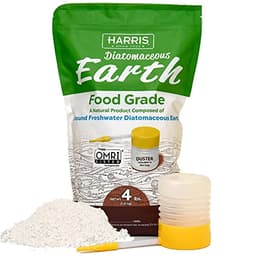
The most popular food-grade DE product for home and garden use. Comes with a powder duster for easy application. OMRI-listed for organic gardening. Less than 1% crystalline silica. Enough to treat a small garden and dozens of houseplants.
$10-$15 · Best for All-purpose home and garden insect control on dry surfaces
Check price on Amazon →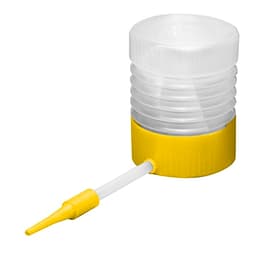
A squeeze-bulb applicator that puffs DE into cracks, along baseboards, under pots, and onto leaf undersides with precise control. Much more effective than scattering DE by hand — targets exactly where pests travel without wasting product.
$8-$12 · Best for Precise DE application to cracks, crevices, and plant surfaces
Check price on Amazon →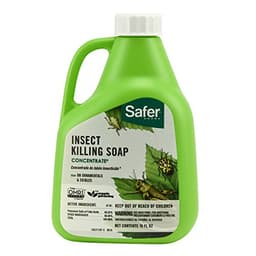
For pests that DE doesn't handle well (spider mites, mealybugs, aphid colonies on leaves), insecticidal soap provides the wet-application alternative. Spray directly on pests for instant contact kill. Use alongside DE for complete coverage.
$8-$15 · Best for Complementing DE for pests that require wet-spray treatment
Check price on Amazon →Treatment information on PlantFix is educational. When using any pesticide — including organic options like neem oil or insecticidal soap — read and follow the entire product label; the label is the law. For persistent or high-stakes problems, your local university extension service offers free, region-specific advice. Read about how we source and verify treatment guidance in our Editorial Standards.
FAQ
Is diatomaceous earth safe for cats and dogs?▼
Food-grade DE is safe around pets when applied carefully. The main risk is respiratory irritation from airborne dust — keep pets away during application and until dust settles (about 30 minutes). Don't apply it in areas where pets regularly sleep or play. Extra caution for brachycephalic breeds (pugs, bulldogs, Persian cats) with compromised airways. Never use pool-grade DE near pets — it contains 60-70% crystalline silica, which is a serious inhalation hazard.
Can I use diatomaceous earth on edible plants?▼
Yes. Food-grade DE is EPA-approved as a food additive and safe to use on vegetables, herbs, and fruit plants. Wash produce before eating to remove the powder residue. Apply to stems and leaf undersides rather than directly on the edible parts. Avoid applying to flowers while pollinators are active — it kills bees on contact.
How long does diatomaceous earth take to kill bugs?▼
Individual insects die within 24-48 hours of walking through DE. Larger insects with harder exoskeletons (beetles, roaches) may take 3-7 days. Population-level results take 1-3 weeks as more individuals contact the treated area. DE provides no instant knockdown — it's a slow, cumulative barrier treatment.
Does rain wash away diatomaceous earth?▼
Yes. Any significant moisture — rain, overhead irrigation, heavy dew, even high humidity — reduces DE's effectiveness. The powder clumps when wet and can't damage insect exoskeletons. Reapply after any rainfall over 0.25 inches. In rainy climates, DE is more practical indoors or under covered areas than in open garden beds.
Can I mix diatomaceous earth with water and spray it?▼
You can mix DE with water to spray it onto surfaces as a slurry, but it only works after the water evaporates and the powder dries. This is actually a useful application method for coating the undersides of leaves evenly — spray the slurry, let it dry, and the DE coating remains. Reapply after rain or watering washes it off.
Related
- Earwig Pictures: What They Look Like & How to Get Rid of Them →
- Aphids on Plants: How to Kill Them Fast (and Stop the Ants) →
- Insecticidal Soap: What It Actually Kills (Including Spider Mites), DIY Recipe & Why Dawn Is Wrong →
- Neem Oil for Plants: Complete Guide to Using It Effectively →
- Fungus Gnats: How to Identify & Eliminate Them for Good →
- Beneficial Nematodes: Which Species Kills Your Specific Pest (Buying Guide by Pest Type) →
- Spider Mites: Identification, Treatment & Prevention Guide →
- Clover Mites: The Harmless Red Bugs That Stain When Crushed →
- Plant Bugs: Identify Any Bug on Your Plant in 30 Seconds →
- Lawn Grubs: The Underground Reason Your Grass Is Dying (ID + Treatment) →
Not sure what's wrong?
Use the diagnosis tool →Get seasonal plant care reminders and pest alerts.