Lawn Grubs: The Underground Reason Your Grass Is Dying (ID + Treatment)
Those brown lawn patches that peel up like carpet? Probably grubs — the larval stage of Japanese beetles and June bugs. Here's the square-foot test to confirm, treatment options by timing, and the beetle-to-grub lifecycle connection most guides miss.
12 min read · Updated 2026-06-05
By PlantFix Editorial Team · Sources: University Extension Programs, USDA, EPA
What Are Lawn Grubs and How Do You Kill Them? (Quick Answer)
Lawn grubs are C-shaped, white beetle larvae that live 1-3 inches below the soil surface and eat grass roots. (Find the same C-shaped grubs in a plant pot rather than the lawn? That's more likely vine weevil, which kills container plants from the roots up.) They're the immature stage of scarab beetles — most commonly Japanese beetles, June bugs (May/June beetles), and European chafers. Signs of grub damage: brown lawn patches that don't respond to watering, turf that feels spongy underfoot and peels up like loose carpet, and animals (skunks, raccoons, crows) tearing up your lawn at night to feast on the grubs.
To confirm before you treat: cut a 1-foot-square section of turf with a flat shovel, peel it back, and count the white C-shaped grubs in the top 3 inches of soil. Fewer than 5 per square foot is normal — every lawn has some. Treatment is needed at 10 or more per square foot.
For treatment, timing determines your product:
- Preventive (apply June–July, BEFORE damage): Chlorantraniliprole (GrubEx) is the safest and most effective. Apply in June, water it in, and it protects all season.
- Curative (apply August–October, TO KILL active grubs): Trichlorfon (Dylox) is the fastest-acting rescue treatment, killing grubs in 1-3 days.
- Organic options (apply late summer): Beneficial nematodes (Heterorhabditis bacteriophora) applied to moist soil, or milky spore for Japanese beetle grubs specifically — milky spore takes 2-3 years to establish but lasts 15+ years.
Here's the connection most people miss: the grubs destroying your lawn right now become next summer's beetles. Treating grubs in your lawn means fewer Japanese beetles chewing your roses, fewer June bugs swarming your porch light, fewer chafers flying into your hair at dusk. Use the diagnosis tool if you're not sure what's eating your lawn.
Grub Identification: What's Eating Your Lawn Underground
All lawn grubs share the same basic body plan: white or cream-colored body curled into a C-shape, tan or brown head capsule, six small legs clustered near the head, and a dark area at the tail end (visible soil particles inside the gut). They range from 1/4 inch when newly hatched to over 1 inch when fully grown.
But not all grubs are created equal. Different beetle species produce different grubs, and the species matters because it determines which treatments work best.
Japanese beetle grubs (Popillia japonica):
- Most common lawn grub in the eastern US
- About 1 inch at maturity, classic C-shape
- The defining ID feature: a V-shaped pattern of raster spines (tiny hairs) on the underside of the last abdominal segment. Flip the grub over and look with a magnifying glass — only Japanese beetle grubs have this V pattern.
- Adults are the iridescent green-and-copper beetles that shred roses, grapes, and linden trees every July. See our Japanese beetle guide for adult-stage control.
June bug / May beetle grubs (Phyllophaga spp.):
- Larger than Japanese beetle grubs — up to 1.5 inches
- Have a 3-year lifecycle (vs. 1 year for Japanese beetles), so populations build more slowly
- Adults are the large brown beetles that swarm porch lights in May and June
- Milky spore does NOT work on June bug grubs — it's specific to Japanese beetles
European chafer grubs (Amphimallon majale):
- Similar size to Japanese beetle grubs
- Increasingly common in the Northeast and Midwest
- Feed later into fall and resume earlier in spring than other species
- Adults swarm at dusk in late June — you'll see them rising from lawns by the hundreds
Masked chafer grubs (Cyclocephala spp.):
- Common in the central and southern US
- Similar appearance to other grubs but adults are smaller, tan beetles
Grubs vs. other lawn-destroying creatures:
Grubs eat roots underground. Armyworms eat grass blades on the surface. If your turf peels up because roots are gone, it's grubs. If blades are chewed off at the base but roots are intact, it's armyworms or sod webworm. Dig before you treat — the wrong treatment wastes time and money.
5 Signs You Have Grubs (and the Square-Foot Test to Confirm)
Grub damage often gets misdiagnosed as drought stress, fungal disease, or just "bad soil." People water more, fertilize more, and watch the brown patches spread. Here are the five signs that point specifically to grubs.
Sign 1: Brown patches that don't respond to watering. You've been watering consistently but certain areas stay brown and get worse. Drought stress browns the whole lawn uniformly. Grub damage creates irregular patches that spread outward from a center point.
Sign 2: Spongy, loose turf. Walk across the brown area. If it feels spongy — like walking on a loose carpet — the root system has been eaten. Healthy turf is anchored firmly. Grub-damaged turf has nothing holding it down.
Sign 3: Turf rolls up like carpet. This is the classic grub test. Grab the edge of a brown patch and pull. If it peels up easily with no resistance — like rolling up a rug — the roots have been severed by feeding grubs. Healthy turf has intact roots and resists pulling.
Sign 4: Animals digging up your lawn at night. Skunks, raccoons, armadillos, and crows dig up lawns to eat grubs. If you're waking up to torn-up patches of turf every morning, something underground is attracting digging predators. The animals are doing you a diagnostic favor — they're better at finding grubs than you are.
Sign 5: Increased beetle activity. Heavy June bug flights around your porch light, Japanese beetles shredding your roses, or European chafers swarming at dusk all signal that beetles are breeding in your lawn. Where there are adult beetles, there were grubs — and there will be more grubs after they lay eggs.
The square-foot test (do this before spending money on treatment):
- Choose a spot at the edge of a brown patch — where damaged grass meets green grass. This is the active feeding front.
- Cut a 12-by-12-inch square of turf about 3 inches deep using a flat shovel.
- Peel the turf back and examine the soil underneath.
- Count the white C-shaped grubs in the exposed area.
- Less than 5 per square foot: Normal. All lawns have some grubs. No treatment needed.
- 5-9 per square foot: Monitor. Some grass types tolerate this level (tall fescue handles 12-14 grubs/sq ft according to university research), but thinner lawns may show damage.
- 10+ per square foot: Treatment threshold. You need to act.
- Test multiple spots — grub populations aren't evenly distributed.
Best time to test: August through September, when grubs are largest and most visible. In spring, grubs are deeper in the soil and harder to find.
Grub Treatment Options: Preventive vs. Curative (Timing Guide)
This is where most people go wrong. Grub control products fall into two categories that work at completely different times of year, and using the wrong one at the wrong time accomplishes nothing.
PREVENTIVE treatments (apply June–July, BEFORE grubs hatch):
Chlorantraniliprole (GrubEx) — Best overall choice
Apply in June through early July. It moves into the soil and is taken up by grass roots, killing newly hatched grubs when they begin feeding. Michigan State University reports 65-80% control rates. Relatively low toxicity to bees and earthworms compared to older chemistry. One application lasts all season. Water in thoroughly after application (at least 1/2 inch of irrigation).
Imidacloprid — Effective but harder on beneficials
Apply in July, slightly later than chlorantraniliprole. A neonicotinoid that works systemically through grass roots. Very effective on grubs but more toxic to pollinators and earthworms. If you choose this, apply in the evening and water in immediately to move it off the surface and into the root zone. Not recommended if you have flowering clover or ground cover in your lawn that bees visit.
CURATIVE treatments (apply August–October, TO KILL active grubs):
Trichlorfon (Dylox) — Fastest rescue treatment
The only fast-acting curative grub killer. Kills on contact within 1-3 days. Use this when you've confirmed 10+ grubs per square foot and damage is actively spreading. Water in immediately after application — it needs to reach the grub feeding zone. Breaks down quickly in soil (days, not weeks), so it doesn't persist. This is the product for "my lawn is dying right now" emergencies.
Carbaryl (Sevin) — Backup curative option
Slower than Dylox but effective. Works within 1-2 weeks. Broader environmental impact — kills earthworms and beneficial ground beetles too. Use only if Dylox isn't available.
ORGANIC options (apply late summer to early fall):
Beneficial nematodes (Heterorhabditis bacteriophora) — Best organic choice
Microscopic roundworms that actively hunt grubs in the soil, penetrate them, and release bacteria that kill within 24-48 hours. University of New Hampshire Extension specifies that H. bacteriophora is the effective species — Steinernema species do NOT work well on white grubs. Apply to moist soil in late August or September when soil temperature is above 60°F. Water in thoroughly and keep the soil moist for a week after application. Can be reapplied every 2 weeks for heavy infestations.
Milky spore (Paenibacillus popilliae) — Long game for Japanese beetle grubs only
This bacterium infects and kills specifically Japanese beetle grubs — it won't work on June bugs, European chafers, or other species. Apply in late summer to early fall following package directions (usually teaspoon-sized dots on a grid pattern). Here's the trade-off: milky spore takes 2-3 years to build sufficient populations in the soil for effective control, but once established, it persists for 15-20 years with no reapplication. The Ecological Landscape Alliance notes it only infects 2-5% of the grub population per year initially — it's a decade-long strategy, not a rescue treatment. Best for people who know they have Japanese beetle grubs specifically and want permanent organic control — but read our honest milky spore guide first, because university research shows it often fails to establish in cooler northern lawns.
The Beetle Connection: Why Grubs and Beetles Are the Same Problem
This is the connection that transforms your grub control from a one-time fix into a long-term solution. The grubs in your lawn right now are next summer's beetles. And next summer's beetles lay eggs that become the following year's grubs. Break the cycle in either stage and you reduce both.
The lifecycle loop:
- June–July: Adult beetles emerge from pupae in the soil. Japanese beetles immediately start feeding on roses, linden trees, grapes, and 300+ other ornamental plants. June bugs swarm porch lights. European chafers rise from lawns at dusk.
- July–August: Females mate and burrow into turf to lay eggs — 40-60 eggs each, deposited 2-4 inches deep in moist soil. They prefer well-watered, sunny lawns (irrigated lawns attract more egg-laying than dry ones).
- August–October: Eggs hatch. Tiny grubs begin feeding on grass roots, growing rapidly. This is when damage first becomes visible.
- October–November: As soil cools below 50°F, grubs burrow deeper (4-8 inches) for winter dormancy.
- March–April: Grubs return to the root zone as soil warms and resume feeding for a few weeks.
- May–June: Grubs pupate (transform into adult beetles) in the soil. The cycle starts again.
What this means for your treatment timing:
Preventive grub treatments applied in June–July target newly hatched grubs before they grow large enough to cause visible damage. Curative treatments in August–October kill the grubs after damage appears. Treating in spring is largely pointless — the grubs are already full-sized, feeding minimally, and about to pupate anyway.
The dual-strategy approach:
If Japanese beetles are destroying your ornamental plants, treating grubs in your lawn directly reduces next year's beetle population. If grubs are destroying your lawn, treating adult beetles with traps or contact sprays reduces next year's egg-laying in your turf. Attacking both life stages simultaneously is more effective than treating either one alone.
One important caveat from every university extension I've read: your neighbors' lawns produce grubs too. Treating your lawn alone helps, but adult beetles will fly in from surrounding properties. That's why beneficial nematodes and milky spore — which persist in the soil — offer better long-term protection than annual chemical applications. They're always working, even against grubs from eggs laid by beetles that flew in from next door.
Lawn Recovery After Grub Damage: What Comes Back and What Needs Reseeding
Good news first: most grub-damaged lawns recover. Unlike armyworm damage (which destroys blades but leaves roots intact), grub damage destroys roots — but if the grass crowns survive, the lawn can regrow. The recovery timeline depends on your grass type, the severity of damage, and when you address it.
Light damage (brown patches, turf still attached to some roots):
Water deeply and consistently — 1 inch per week minimum. The surviving roots will regrow into the damaged zone within 4-6 weeks during the growing season. Apply a balanced fertilizer (not high nitrogen) to support root growth. Don't mow too short — keep the height at 3+ inches to reduce stress on recovering grass.
Heavy damage (turf peels up freely, roots completely gone):
The bare soil needs reseeding. The best time to overseed is early fall (September in most of the US) when soil is still warm, air is cooler, and fall rains provide natural moisture. Here's the process:
- Remove dead turf and any remaining grubs
- Loosen the top 1-2 inches of soil with a rake
- Apply grass seed appropriate for your region (consult your local extension office)
- Rake seed lightly into soil, then top-dress with 1/4 inch of compost
- Water lightly 2-3 times daily until seed germinates (7-21 days depending on species)
- Reduce watering frequency once grass is 2 inches tall
Recovery by grass type:
- Kentucky bluegrass: Spreads via underground rhizomes — even badly damaged areas fill in on their own if some grass survives nearby. Slower recovery (6-8 weeks) but self-repairing.
- Bermudagrass / zoysiagrass: Aggressive spreaders. These recover fastest (3-4 weeks) from even severe grub damage because they spread laterally via stolons and rhizomes.
- Tall fescue: Does NOT spread laterally — it's a bunch-type grass. Dead patches won't fill in on their own and must be overseeded. However, tall fescue tolerates higher grub counts (12-14 per square foot) before showing damage.
- Perennial ryegrass: Fast germination (5-7 days) makes it great for quick patching, but like fescue, it's bunch-type and won't spread to fill gaps.
Prevent repeat damage next year: Apply preventive grub treatment (chlorantraniliprole) in June of the following year. One year of grubs often leads to another because adult beetles return to lay eggs in the same moist, sunny lawns.
Frequently Asked Questions
The grub questions I get asked most — especially the ones about whether to treat and when.
Recommended Products
We earn a commission if you buy through these links, at no extra cost to you. We recommend based on what works, not what pays. How this works.
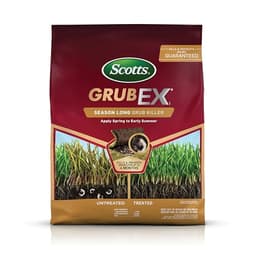
The most effective preventive grub control product for homeowners. Apply once in June, water in thoroughly, and it protects your lawn all season by killing newly hatched grubs before they grow large enough to cause damage. Relatively low toxicity to earthworms and pollinators compared to older neonicotinoid chemistry. One bag treats 5,000-10,000 sq ft depending on the product size.
$25-$45 · Best for Annual preventive grub control applied before grubs hatch (June–July)
Check price on Amazon →The rescue treatment for active grub infestations. Kills grubs within 1-3 days of application — the fastest-acting curative option. Apply when you've confirmed 10+ grubs per square foot and damage is actively spreading. Water in immediately and heavily after application. Not a preventive — it breaks down within days and doesn't provide lasting protection.
$30-$50 · Best for Emergency curative treatment when grub damage is already visible (August–October)
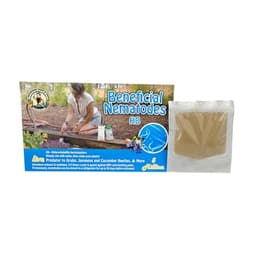
Microscopic predatory roundworms that actively hunt and kill grubs in the soil. Apply to moist soil when temperatures are above 60°F, water in, and keep the soil moist for a week. Effective against all grub species. Can be combined with milky spore for layered organic control. Requires refrigerated shipping — buy from reputable suppliers to ensure live nematodes.
$25-$40 · Best for Organic grub control effective against all beetle species (apply late summer)
Check price on Amazon →Treatment information on PlantFix is educational. When using any pesticide — including organic options like neem oil or insecticidal soap — read and follow the entire product label; the label is the law. For persistent or high-stakes problems, your local university extension service offers free, region-specific advice. Read about how we source and verify treatment guidance in our Editorial Standards.
FAQ
How do I know if I have grubs in my lawn?▼
Look for four signs: brown patches that don't respond to watering, spongy turf that feels loose underfoot, turf that peels up like carpet when pulled, and animals (skunks, raccoons, crows) digging up your lawn at night. To confirm, cut a 12-inch-square section of turf, peel it back, and count the white C-shaped grubs in the top 3 inches of soil. More than 10 per square foot means you need treatment. Fewer than 5 is normal — don't treat.
What is the fastest way to kill grubs?▼
Trichlorfon (sold as Dylox or Bayer 24-Hour Grub Killer Plus) is the fastest-acting curative treatment, killing grubs within 1-3 days of application. Water it in immediately after spreading — it needs to reach the grub feeding zone 1-3 inches below the surface. For organic options, beneficial nematodes (Heterorhabditis bacteriophora) kill grubs within 24-48 hours of finding them, but the nematodes need 1-2 weeks to spread through the treatment area.
Can I use milky spore and nematodes together?▼
Yes. They work through different mechanisms and don't interfere with each other. Milky spore targets specifically Japanese beetle grubs and builds up over 2-3 years for long-term control. Nematodes provide more immediate control and work on all grub species. Applying both creates a layered defense: nematodes for short-term grub reduction and milky spore for 15+ year Japanese beetle suppression.
When is it too late to treat for grubs?▼
For preventive products (chlorantraniliprole, imidacloprid), the window is June through early August. After that, eggs have already hatched and the products can't reach feeding grubs effectively. For curative products (trichlorfon), you can treat through October — these work on active grubs of any size. By November, grubs burrow deep for winter dormancy and are out of reach. Spring treatment is largely ineffective because grubs are finishing feeding and about to pupate.
Will grass grow back after grub damage?▼
It depends on the grass type and severity. Spreading grasses like Kentucky bluegrass, Bermudagrass, and zoysiagrass can fill in damaged areas on their own from surviving plants — give them 4-8 weeks with consistent watering. Bunch-type grasses like tall fescue and perennial ryegrass won't spread into bare patches and need overseeding. For severe damage where turf peels up completely, overseed in early fall for best results.
Are lawn grubs harmful to humans or pets?▼
Grubs themselves are not harmful to humans or pets — they don't bite, sting, or carry diseases. Dogs sometimes dig them up and eat them, which is gross but not dangerous. The real concern is with chemical grub treatments: keep children and pets off treated areas until the product has been watered in and the lawn has dried. Organic options like beneficial nematodes and milky spore are safe for all contact immediately after application.
Related
- Japanese Beetles: Why Traps Backfire & a Week-by-Week Control Calendar →
- Beneficial Nematodes: Which Species Kills Your Specific Pest (Buying Guide by Pest Type) →
- Milky Spore for Grubs: Does It Actually Work? (Honest Guide) →
- Armyworms Destroyed My Lawn Overnight — Here's the Rescue Plan →
- Earwig Pictures: What They Look Like & How to Get Rid of Them →
- Diatomaceous Earth for Plants: Which Pests It Kills (And Which It Doesn't) →
- Cicada Killer Wasp: Not a Murder Hornet (ID Guide + Yard Management) →
- Insecticidal Soap: What It Actually Kills (Including Spider Mites), DIY Recipe & Why Dawn Is Wrong →
- Neem Oil for Plants: Complete Guide to Using It Effectively →
- Plant Bugs: Identify Any Bug on Your Plant in 30 Seconds →
- Garden Pest Identification: 25+ Bugs by the Damage They Do →
- Chinch Bugs vs. Drought: How to Tell What's Actually Killing Your Lawn →
Not sure what's wrong?
Use the diagnosis tool →Get seasonal plant care reminders and pest alerts.