Chinch Bugs vs. Drought: How to Tell What's Actually Killing Your Lawn
Those brown lawn patches that appeared in the heat — are they drought or chinch bugs? Use the tin can test to find out in 10 minutes. If it's chinch bugs, here's the treatment plan by grass type.
11 min read · Updated 2026-06-10
By PlantFix Editorial Team · Sources: University Extension Programs, USDA, EPA
Chinch Bugs or Drought? Here's How to Tell (Quick Answer)
Chinch bugs are tiny black-and-white insects (1/6 inch) that suck sap from grass blades and inject a toxin that kills the grass outright. The damage looks identical to drought — irregular brown patches expanding from sunny, hot areas near driveways and sidewalks. The critical difference: drought-stressed grass recovers after you water it. Chinch bug damage doesn't.
If you've been watering your brown patches for a week and nothing's greening up, do the tin can test. Push a bottomless coffee can 3 inches into the turf at the edge of a brown patch, fill it with water, and watch for 10 minutes. Chinch bugs — tiny black bugs with white wings — will float to the surface. Count 15-20 or more per square foot and you've confirmed an active infestation.
Treat with bifenthrin granules applied at the border where dead grass meets green grass — that's the active feeding front. For organic options, beneficial nematodes and big-eyed bug conservation both work but are slower. Water the lawn after treatment, and don't mow for 24 hours.
The most vulnerable grass? St. Augustinegrass in the Southeast — the University of Florida's IFAS program calls the southern chinch bug the #1 pest of St. Augustine lawns. In the North, hairy chinch bugs target Kentucky bluegrass and fine fescue. Use the diagnosis tool if you're not sure what you're dealing with.
Chinch Bug Identification: Adults, Nymphs, and the Species That Matter
Four chinch bug species attack turfgrass in the US, but two do the vast majority of damage.
Southern chinch bug (Blissus insularis)
The primary pest of St. Augustinegrass in Florida, Texas, and the Gulf Coast states. Adults are about 1/6 inch long with a black body and white wings, each wing bearing a distinctive black triangular patch. They're tiny — about the size of the tip of a ballpoint pen — which is why most homeowners never see them until the lawn is badly damaged.
Hairy chinch bug (Blissus leucopterus hirtus)
Damages Kentucky bluegrass, perennial ryegrass, and fine fescue in the Northeast, Midwest, and upper South. Same general appearance as the southern species — black body, white wings — but slightly hairier (hence the name, though you won't notice without magnification).
Nymphs are the tricky part. Chinch bug nymphs don't look like adults at all. First-instar nymphs are bright red-orange with a white band across the abdomen. As they molt through five stages, they gradually darken — from red-orange to orange-brown to dark brown to black. This color change confuses people who see different-colored bugs at the same spot and assume they're multiple species. They're not — they're different life stages of the same chinch bug.
The full lifecycle from egg to adult takes 30-45 days in warm weather, and females produce 2-3 generations per summer. According to Texas A&M AgriLife Extension, a single female lays 250+ eggs over her lifetime, inserting them into grass sheaths near the soil surface. That reproductive rate means a small population in June becomes a devastating one by August.
Don't confuse chinch bugs with big-eyed bugs. Big-eyed bugs (Geocoris) look remarkably similar — same size, same black-and-white coloring — but they're predators that eat chinch bugs. The key difference is in the name: big-eyed bugs have disproportionately large, bulging eyes. If you kill big-eyed bugs with insecticide, you're removing your lawn's natural defense and the chinch bug population can rebound faster than before. North Carolina State Extension calls this "secondary pest outbreak."
Chinch Bug Damage vs. Drought Stress: The Side-by-Side Comparison
This is the diagnostic section that no other chinch bug guide does well. Both conditions cause brown lawn patches in summer. Both look terrible. But the causes, patterns, and solutions are completely different.
Where the brown patches appear:
Drought: uniform browning across the entire lawn, with sun-exposed areas affected first but no strong pattern relative to pavement
Chinch bugs: patches start near driveways, sidewalks, building foundations, and other heat islands. The reflected heat from pavement creates the warm, dry microclimate chinch bugs prefer. Woodlands Water District (Texas) specifically notes this near-pavement pattern as the #1 chinch bug indicator.
How the damage spreads:
Drought: grass browns gradually across wide areas as soil moisture drops
Chinch bugs: patches expand outward from a center point, growing larger each week. You can often see a clear transition zone — dead grass, then yellowing grass, then green grass — marking the active feeding front.
The watering test (simplest diagnostic):
Water the brown area deeply for 2-3 consecutive days.
Drought: grass begins to green up within 24-48 hours
Chinch bugs: no recovery. The toxin chinch bugs inject actually kills the grass cells — unlike drought stress, which puts grass into dormancy. Dead is dead; dormant recovers.
The time-of-day test:
Drought: grass may wilt in afternoon heat but partially recovers by morning (dormancy mechanism)
Chinch bugs: damage is permanent. The patch doesn't look any different morning vs. afternoon.
Thatch depth:
Chinch bugs thrive in thick thatch (1/2 inch or more) because it protects them from predators and contact insecticides. If your lawn has heavy thatch buildup AND sun-adjacent brown patches, chinch bugs should be your first suspect.
Lawn grubs look different:
Grub damage also causes brown patches, but the turf feels spongy and peels up like loose carpet because the roots are gone. Chinch bug damage stays rooted — the blades die but the roots may still be intact initially. Pull on the brown grass: if it peels up easily, check for grubs. If it's rooted but dead, check for chinch bugs.
Armyworm damage also looks different: grass is chewed at the blade level (looks mowed too short), and armyworms leave frass (small pellets) on the soil surface. Armyworms also work in clear, expanding fronts — you can literally see the line of green-to-bare grass.
The Tin Can Test: Confirm Chinch Bugs in 10 Minutes
Before you spend money on insecticide, confirm the diagnosis. The tin can test is simple, free, and recommended by every university extension program.
What you need: A large coffee can or soup can with both ends removed (or a PVC pipe section, or even a plastic cup with the bottom cut out — anything cylindrical that you can push into the ground).
Step 1: Choose your test location carefully. Go to the EDGE of a brown patch — the transition zone where brown grass meets yellow or green grass. This is where chinch bugs are actively feeding. Testing in the center of dead grass won't find them because they've already killed everything there and moved outward.
Step 2: Twist the can 2-3 inches into the soil. Push firmly and rock it back and forth if the soil is hard. You need a seal between the can and the soil so water doesn't leak out the bottom.
Step 3: Fill the can with water — about 3/4 full. Optionally add a drop of dish soap, which acts as a surfactant and makes chinch bugs release their grip on grass blades faster.
Step 4: Keep the water level up for a full 10 minutes. Add more water if it drains through the soil. The water forces chinch bugs to the surface where you can see and count them.
Step 5: Watch for tiny bugs floating to the surface. Adults are black with white wings. Nymphs are reddish-orange. Both are very small — about 1/16 to 1/6 inch.
Step 6: Count what you find. Research from NC State Extension and Texas A&M sets the treatment threshold at 15-25 chinch bugs per square foot. Since the can covers less than a square foot, adjust proportionally:
- 0-3 bugs in the can: below threshold, no treatment needed
- 4-8 bugs: borderline — retest in another spot, consider monitoring
- 8+ bugs: above threshold, treatment recommended
Test at least 3 different locations along the brown patch perimeter. Chinch bug populations are patchy — one spot might have 20 while a spot 3 feet away has none. Multiple tests give you a reliable picture.
Best time to test: mid-afternoon on a hot, sunny day. Chinch bugs are most active (and nearest the surface) when temperatures are 70-90°F. Early morning or cool days may give falsely low counts because bugs are deeper in the thatch.
How to Get Rid of Chinch Bugs: Treatment Options Ranked
Once you've confirmed chinch bugs with the tin can test, treatment depends on severity and whether you want chemical or organic options. I'll rank them by effectiveness.
1. Bifenthrin granules or liquid — most effective conventional treatment
Apply at the border between dead and green grass — the active feeding front. Bifenthrin (a synthetic pyrethroid) kills chinch bugs on contact and provides 2-4 weeks of residual protection. Water in lightly after application (1/4 inch irrigation) to move the product through the thatch layer to where chinch bugs actually live. The UF/IFAS Extension recommends targeting the thatch-soil interface specifically.
Here's an important caution from Michigan State University: bifenthrin kills natural enemies too — especially big-eyed bugs, the primary chinch bug predator. Chemical treatment can create a cycle where chinch bugs rebound faster after treatment because their predators are gone. Use it for severe infestations but don't make it your only strategy.
2. Trichlorfon (Dylox) — fast knockdown for severe infestations
Works within 24-48 hours. Use this when the infestation is spreading rapidly and you need immediate results. Less residual activity than bifenthrin — it breaks down within days. Water in immediately after application.
3. Imidacloprid — systemic preventive option
A neonicotinoid that's taken up by grass roots and kills chinch bugs when they feed. Works preventively — apply before peak chinch bug season (late May in the South, June in the North). Stays active for several months. The concern: neonicotinoids are controversial for their effects on pollinators. If your lawn has flowering weeds (clover, dandelion) that bees visit, mow them first or choose a different product.
4. Beneficial nematodes (Steinernema carpocapsae) — organic option
These microscopic predators can reduce chinch bug populations, though research results are mixed compared to grub control where nematodes excel. Apply to moist turf in the evening (UV kills nematodes), water in, and keep the lawn moist for a week. Slower than chemical options — expect 2-3 weeks for visible impact.
5. Big-eyed bug conservation — the long-term approach
Big-eyed bugs are the most important natural predator of chinch bugs. They're naturally present in most lawns. To encourage them: reduce broad-spectrum insecticide use, maintain diverse lawn borders with native plants, and avoid mowing all the way to property edges (leave unmowed strips where predators overwinter). NC State Extension emphasizes that conserving natural enemies is the most sustainable chinch bug management strategy.
6. Insecticidal soap — limited effectiveness
Can kill chinch bugs on direct contact, but the thatch layer makes getting good coverage difficult. Soap has zero residual activity. It can work for spot-treating small areas you've identified with the tin can test but isn't practical for large lawn infestations.
Critical application tip: regardless of product, water the lawn before treatment. Pre-watering forces chinch bugs up from the thatch layer into a zone where the insecticide can reach them. Then apply the product and water it in lightly (1/4 inch) afterward.
Chinch Bug-Resistant Grass Varieties by Region
Chemical treatment handles the current infestation. Resistant grass varieties solve the long-term problem.
Southeast / Gulf Coast (St. Augustinegrass zone):
St. Augustine is the most chinch-bug-susceptible turfgrass in the US, but not all varieties are equally vulnerable.
- Captiva — the most chinch bug-resistant St. Augustine currently available. Developed by the University of Florida specifically for chinch bug tolerance. Also handles moderate shade. Available as sod from specialty suppliers in FL, TX, and along the Gulf Coast.
- Floratam — was bred for chinch bug resistance in the 1970s, but resistant chinch bug populations have evolved. It's still more tolerant than common St. Augustine but no longer the top choice. Floratam also doesn't tolerate shade well.
- Avoid common St. Augustine (the unnamed variety sold cheap) — it has no resistance whatsoever.
Northeast / Midwest (cool-season zone):
Hairy chinch bugs target Kentucky bluegrass and fine fescue.
- Endophyte-enhanced varieties are the key here. Endophytes are naturally occurring fungi that live inside grass plants and produce compounds toxic to chinch bugs and other surface-feeding insects. Perennial ryegrass and tall fescue are available in endophyte-enhanced cultivars — check seed labels for "endophyte-enhanced" or "E+" designation.
- Tall fescue naturally tolerates chinch bugs better than bluegrass because its coarser texture and deeper roots make it more resilient. If you're re-seeding chinch bug-damaged areas in the North, tall fescue blends are the most pest-resistant option.
- Avoid monoculture Kentucky bluegrass lawns — a mixed lawn (bluegrass + fescue + ryegrass) distributes pest pressure and is harder for chinch bugs to devastate.
Transition zone (Mid-Atlantic, upper South):
Both chinch bug species can occur here. Zoysiagrass is a strong option — it's dense enough to resist chinch bug feeding and recovers quickly from damage. Bermudagrass is also relatively resistant compared to bluegrass and St. Augustine.
Preventing Chinch Bug Infestations
The cultural practices that prevent chinch bugs are also the practices that make a healthier lawn overall. If I could give lawn owners just three rules, these would be it.
1. Manage thatch. Chinch bugs live in the thatch layer — the spongy mat of dead grass between the soil surface and the green blades. If your thatch is over 1/2 inch thick, chinch bugs are protected from predators, contact insecticides, and environmental extremes. Dethatch mechanically when thatch exceeds 1/2 inch. Core aeration in fall also reduces thatch buildup.
2. Don't over-fertilize with nitrogen. Heavy nitrogen feeding produces the lush, succulent growth that chinch bugs prefer. UF/IFAS Extension specifically warns that excessive nitrogen makes St. Augustine more attractive to chinch bugs. Follow soil test recommendations — most lawns need far less fertilizer than people apply. Slow-release nitrogen sources (organic fertilizers, composted materials) are less likely to create the flush of soft growth that attracting chinch bugs.
3. Water deeply but infrequently. Light, frequent watering encourages shallow roots and keeps the thatch moist — perfect chinch bug habitat. Water your lawn 1 inch per week in one or two deep sessions. This encourages deep roots that tolerate heat stress AND keeps the thatch drier between waterings. The exception: during active chinch bug treatment, water before and after applying products as described in the treatment section.
Additional prevention measures:
- Mow at the proper height for your grass type (3-4 inches for bluegrass and fescue, 3-4 inches for St. Augustine). Taller grass shades the soil and thatch, keeping temperatures lower.
- Overseed thin areas in fall. Dense turf outcompetes chinch bugs and supports more predator habitat.
- Monitor hot spots proactively. Do tin can tests in June and July in the areas near pavement where chinch bugs historically appear first. Catching them early — at 5-10 per square foot instead of 50 — makes treatment much simpler.
Frequently Asked Questions
Quick answers to the chinch bug questions I hear most — especially the ones about diagnosis and timing.
Recommended Products
We earn a commission if you buy through these links, at no extra cost to you. We recommend based on what works, not what pays. How this works.
The most effective conventional chinch bug treatment. Spread at label rate across the affected area and transition zone (where brown meets green). Water in with 1/4 inch of irrigation to move granules through the thatch. Provides 2-4 weeks of residual control. One bag treats 5,000-10,000 sq ft depending on the product.
$20-$35 · Best for Fast, effective treatment of active chinch bug infestations
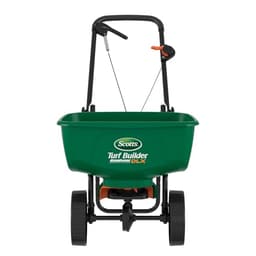
Essential for even application of granular insecticide. Drop spreaders give more precise coverage for targeted treatment along feeding fronts. Rotary spreaders cover large areas faster for full-lawn treatment. Set to the calibration rate on the product label — over-application wastes product and under-application gives poor control.
$25-$60 · Best for Even distribution of granular treatments and lawn seed
Check price on Amazon →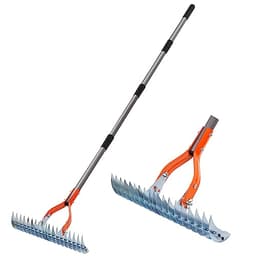
Removing excess thatch (over 1/2 inch) eliminates chinch bug habitat and improves insecticide penetration. Manual rakes work for small areas; power dethatchers handle full lawns. Dethatch in early fall when grass is actively growing and can recover. Don't dethatch during summer heat stress — it compounds the damage.
$30-$50 (manual) / $100-$200 (power rental) · Best for Long-term chinch bug prevention through thatch management
Check price on Amazon →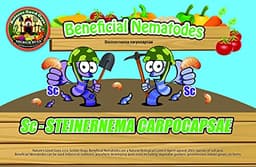
Organic biological control option. Apply to moist turf in the evening (UV kills nematodes), water in, keep lawn moist for a week. Works more slowly than chemical treatments but has no impact on predatory big-eyed bugs. Refrigerate unused nematodes. Best results when combined with cultural practices (thatch management, proper mowing height).
$25-$40 · Best for Organic chinch bug control combined with predator conservation
Check price on Amazon →Treatment information on PlantFix is educational. When using any pesticide — including organic options like neem oil or insecticidal soap — read and follow the entire product label; the label is the law. For persistent or high-stakes problems, your local university extension service offers free, region-specific advice. Read about how we source and verify treatment guidance in our Editorial Standards.
FAQ
Do chinch bugs bite humans?▼
No. Chinch bugs feed exclusively on grass sap using specialized piercing mouthparts designed for plant tissue. They cannot bite or sting humans or pets. They're also too small to be a physical nuisance — at 1/6 inch, most people never see them even in a heavily infested lawn.
Will chinch bug damage grow back?▼
It depends on the grass type. Spreading grasses like St. Augustine, Bermuda, and zoysiagrass can fill in damaged areas from surrounding healthy grass — give it 4-6 weeks with adequate water after treatment. Bunch-type grasses like tall fescue and perennial ryegrass won't spread into bare patches and need overseeding. For severe damage where large areas died completely, overseed in early fall for the best germination rates.
When are chinch bugs most active?▼
Peak activity runs June through August, peaking during the hottest, driest stretches. Chinch bugs lay eggs at soil temperatures above 70°F and reproduce fastest at 80-90°F. In the Southeast, they can produce 2-3 generations per summer starting as early as April. In the North, hairy chinch bugs typically peak in July-August with 1-2 generations.
What grass is resistant to chinch bugs?▼
In the South, Captiva St. Augustine has the strongest chinch bug resistance currently available — it was bred specifically for this purpose by the University of Florida. In the North, endophyte-enhanced perennial ryegrass and tall fescue varieties contain internal fungi that repel chinch bugs. Zoysiagrass and Bermudagrass are naturally more tolerant across all regions. Avoid monoculture Kentucky bluegrass — it's the most susceptible cool-season grass.
How do I test for chinch bugs in my lawn?▼
Use the tin can test: remove both ends of a large can, push it 3 inches into the turf at the edge of a brown patch (not the center), fill with water, and keep it full for 10 minutes. Chinch bugs — tiny black bugs with white wings — float to the surface. Test on a hot afternoon for best results. Finding 15-20+ per square foot indicates treatment is needed. Test at least 3 spots along the patch border since populations are patchy.
Can chinch bug damage be confused with fungal disease?▼
Yes. Brown patch fungus creates circular dead spots that can look similar to chinch bug patches. The differences: fungal disease patches are usually circular with a darker border ring, appear overnight after humid conditions, and the grass blades show lesions (tan spots with dark borders). Chinch bug patches are irregular, expand slowly outward from sunny areas near pavement, and show no lesions on individual blades — the grass is simply dead from toxin injection.
Related
- Lawn Grubs: The Underground Reason Your Grass Is Dying (ID + Treatment) →
- Armyworms Destroyed My Lawn Overnight — Here's the Rescue Plan →
- Beneficial Nematodes: Which Species Kills Your Specific Pest (Buying Guide by Pest Type) →
- Garden Pest Identification: 25+ Bugs by the Damage They Do →
- Japanese Beetles: Why Traps Backfire & a Week-by-Week Control Calendar →
- Diatomaceous Earth for Plants: Which Pests It Kills (And Which It Doesn't) →
- Plant Bugs: Identify Any Bug on Your Plant in 30 Seconds →
- Insecticidal Soap: What It Actually Kills (Including Spider Mites), DIY Recipe & Why Dawn Is Wrong →
- Flea Beetle: The Jumping Test, Crop-by-Crop Species Guide, and Why Seedlings Die in 48 Hours →
Not sure what's wrong?
Use the diagnosis tool →Get seasonal plant care reminders and pest alerts.