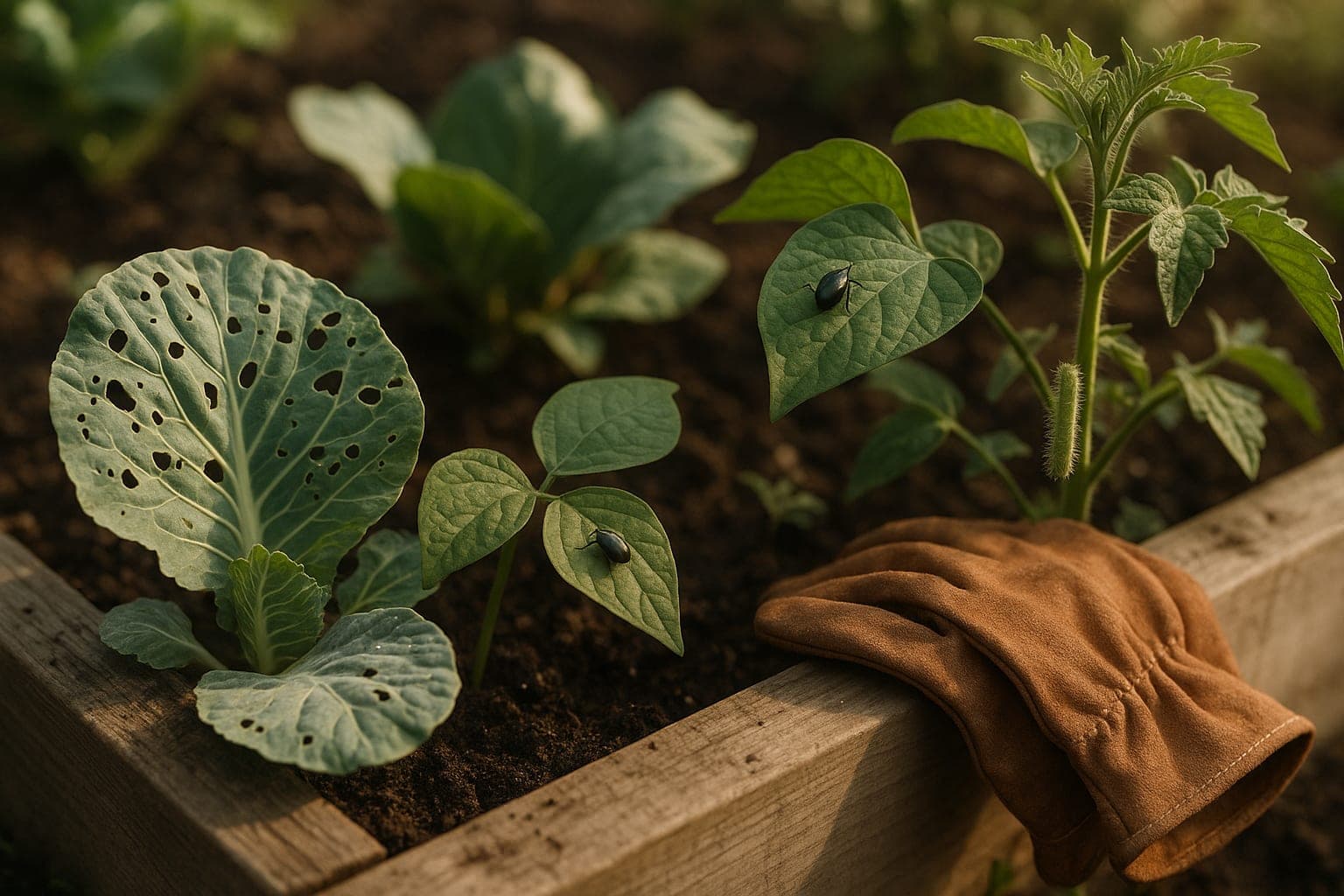
Garden Pest Identification: 25+ Bugs by the Damage They Do
Garden pest identification, fast: match the damage — holes, wilting, skeletonized or browned leaves, silk webs — to one of 25+ common garden pests.
15 min read · Updated 2026-08-18
By PlantFix Editorial Team · Sources: University Extension Programs, USDA, EPA
Identify Your Garden Pest by What You See (Quick Answer)
Most garden pest guides list 50 bugs alphabetically — useless when something is destroying your tomatoes right now. Instead, match the damage you see to the pest responsible. Start with the identification chart, then jump to the full write-up below it.
| What you're seeing | Most likely culprit | Where to look |
|---|---|---|
| Holes chewed through leaves | Caterpillars, beetles, or earwigs | Leaves, most plants |
| Leaves skeletonized (veins left, tissue gone) | Japanese beetles, flea beetles, or sawfly larvae | Roses, beans, ornamentals |
| Wilting despite moist soil | Squash vine borers or squash bugs | Squash, zucchini, cucurbit stems |
| Brown lawn patches (not drought) | Grubs, armyworms, or chinch bugs | Turf and grass roots |
| Curling or yellowing leaves with sticky residue | Aphids, whiteflies, or spotted lanternfly | New growth, leaf undersides |
| Silk webs in trees | Tent caterpillars, fall webworms, or bagworms | Branch forks and tips |
Holes chewed through leaves: caterpillars (cabbage worms, hornworms, armyworms), beetles (flea beetles, Japanese beetles), or earwigs
Leaves skeletonized (veins left, tissue eaten): Japanese beetles, flea beetles, or sawfly larvae
Wilting despite adequate water: squash vine borers (inside stems) or squash bugs (injecting toxin)
Brown lawn patches: grubs (underground), armyworms (surface), or chinch bugs (sap-sucking)
Curling or yellowing leaves with sticky residue: aphids, whiteflies, or spotted lanternfly
Silk webs in trees: tent caterpillars (in branch forks), fall webworms (at branch tips), or bagworms (individual hanging bags)
Not sure what you're looking at? Work through our diagnosis tool — it handles everything from tomato diseases to lawn pests.
Chewing Pests: Holes, Notches, and Eaten Leaves
Chewing damage is the most visible type. You walk out to the garden and leaves have holes, ragged edges, or are missing entirely. The size and pattern of holes tells you what's feeding.
Large irregular holes or entire leaves eaten:
Tomato hornworms — 4-inch green caterpillars that strip tomato, pepper, and eggplant foliage overnight. Look for dark green droppings on the ground below. Despite their size, their camouflage is remarkable. They're the larvae of the five-lined sphinx moth.
Cabbage worms — small velvety green caterpillars on brassicas (broccoli, kale, cabbage, cauliflower). You'll see white butterflies hovering around your brassicas before the caterpillars appear. Bt spray is the targeted solution — it kills only caterpillars and nothing else.
Armyworms — march across lawns and grass areas eating everything in their path. They feed at night and hide in thatch during the day. Do the soapy water flush test: mix 2 tablespoons dish soap in a gallon of water, pour over a 4-square-foot area, and count the caterpillars that emerge within 10 minutes.
Tiny round holes (shothole pattern):
Flea beetles — tiny jumping beetles that riddle leaves with pinpoint holes. They're particularly damaging to seedlings and transplants. Mature plants can tolerate moderate flea beetle feeding, but seedlings can be killed. Row covers are the best organic prevention.
Cucumber beetles — striped or spotted beetles on cucurbits that chew holes and transmit bacterial wilt disease. The disease transmission is often worse than the feeding damage itself. University of Illinois Extension notes that as few as 3-4 beetles per plant can transmit enough bacteria to kill a cucumber plant.
Notched leaf edges:
Vine weevils — adults notch leaf margins in a distinctive scalloped pattern at night. The real damage, though, is underground: their C-shaped larvae eat roots, killing container plants and perennials from the soil up. If you see the leaf notching, treat the soil with beneficial nematodes to kill the larvae.
Chewing at night only:
Earwigs — hide during the day in dark, damp crevices and feed at night. Roll up damp newspaper and set it near damaged plants in the evening; in the morning, you'll find earwigs hiding inside. Despite the common myth, earwigs are not dangerous and don't crawl in ears. They chew irregular holes in soft leaves, flower petals, and ripe fruit.
Slugs and snails — leave slime trails. Beer traps or iron phosphate bait pellets are the standard treatments.
Serpentine trails inside leaves:
Leaf miners — the larvae of small flies or moths that tunnel between leaf surfaces, leaving distinctive winding white or brown trails visible against the leaf. Common on tomatoes, spinach, and ornamentals. Remove and destroy affected leaves; apply neem oil to deter adult flies from laying eggs.
Sap-Sucking Pests: Yellowing, Curling, Sticky Leaves
Sap-sucking insects feed by inserting needle-like mouthparts into plant tissue and draining fluid. The damage shows as yellowing, curling, wilting, or distorted growth — plus the telltale honeydew (sticky sugary residue) that coats leaves below the feeding site. Black sooty mold often grows on the honeydew.
Aphids — the most common sap-sucking pest in any garden. Small, pear-shaped, green/black/pink/white depending on species. They colonize tender new growth in massive clusters. One wingless female can produce 60-100 offspring in her lifetime without mating. A strong blast from the garden hose knocks most of them off and breaks the colony. For persistent infestations, insecticidal soap or neem oil are effective.
Squash bugs — flat, shield-shaped, brown/gray. They inject a toxin while feeding on cucurbit stems that causes sudden wilting (called anasa wilt). The telltale sign: your squash or zucchini plant wilts on a sunny afternoon even though the soil is moist. Flip leaves over to find clusters of bronze eggs. Hand-picking adults and destroying egg masses is surprisingly effective for small gardens. Board traps work too — lay a board near the base at night, squash bugs hide under it by morning.
Whiteflies — tiny white flies that erupt in a cloud when you brush foliage. Common on tomatoes, peppers, and hibiscus. The adults fly; the nymphs are flat, immobile, and do most of the feeding damage on leaf undersides. Yellow sticky traps catch adults effectively. Reflective mulch (silver plastic or aluminum foil strips) confuses whiteflies and reduces colonization — Texas A&M AgriLife Extension reports up to 50% fewer whiteflies with reflective mulch.
Leaf-footed bugs — large bugs (3/4 inch) with a distinctive flattened leaf-like expansion on the hind legs. They pierce fruit and seeds, causing dimpled or catfacing damage on tomatoes, citrus, almonds, and pomegranates. Often confused with assassin bugs (beneficial predators) — leaf-footed bugs have the flared hind legs; assassin bugs don't.
Spotted lanternfly — an invasive planthopper now established in 17+ states. Adults have gray wings with black spots (revealing red hind wings in flight). They mass-feed on hardwood trees and grapevines, producing torrents of honeydew. If you're in an affected state (primarily the Northeast and mid-Atlantic), check your state agriculture department for the latest quarantine zone and reporting requirements.
Lawn Pests: Why Your Grass Is Dying (and It's Not Drought)
Brown lawn patches in summer get blamed on drought by default. But three pests cause damage that looks exactly like drought — and watering doesn't fix it.
Grubs (beetle larvae)
What you see: brown patches that feel spongy underfoot. Turf peels up like loose carpet because the roots have been eaten.
Who they are: C-shaped white larvae of Japanese beetles, June bugs, and European chafers living 1-3 inches below the soil surface.
The test: cut a 1-foot square of turf with a shovel, peel it back, count the grubs. More than 10 per square foot = treat.
Timing: damage appears August-October, when grubs are large and actively feeding.
Treatment: preventive GrubEx (chlorantraniliprole) applied in June, or curative Dylox for active infestations. Beneficial nematodes (Heterorhabditis bacteriophora) are the best organic option.
Armyworms (caterpillars)
What you see: grass blades chewed to stubs overnight. Lawn looks scalped. Starlings and other ground-feeding birds suddenly mobbing your lawn.
Who they are: 1-1.5 inch caterpillars that feed at night in mass waves, moving across lawns like an army.
The test: soapy water flush — 2 tablespoons dish soap in a gallon of water poured over 4 square feet. Count caterpillars surfacing within 10 minutes.
Timing: worst after tropical storms carry moths north (summer-fall). Populations can explode seemingly overnight.
Treatment: Bt (Bacillus thuringiensis) or spinosad applied at dusk when caterpillars begin feeding.
What you see: yellow-then-brown patches expanding outward, especially near driveways and sidewalks in hot weather.
Who they are: tiny (1/6 inch) black-and-white bugs that suck grass sap and inject a toxin that kills the grass cells.
The test: the tin can test — push a bottomless can into the turf, fill with water, and chinch bugs float to the surface.
Timing: June-August, worst in hot, dry summers. The damage mimics drought so closely that most people water more — which doesn't help.
Treatment: bifenthrin granules applied at the border between dead and green grass. Resistant grass varieties (Captiva St. Augustine) for long-term prevention.
The quick way to distinguish all three: grub damage peels up (roots gone), armyworm damage is chewed at the base (roots intact), chinch bug damage is in hot sunny spots near pavement (toxin injection, grass doesn't recover with water).
Tree and Shrub Pests: Defoliation, Silk Webs, and Bark Damage
Tree pests tend to be seasonal and dramatic — the kind of thing that makes you think your tree is dying. Most aren't as catastrophic as they look.
Japanese beetles — metallic green-and-copper adults that skeletonize leaves on 300+ plant species from June through August. Roses, linden trees, grapevines, and birch are favorites. They feed in groups — the damage to one branch attracts more beetles. Peak feeding is 90.5K search volume for a reason: they're everywhere east of the Mississippi.
Bagworms — the Christmas-ornament pest. Caterpillars build silk bags covered with bits of foliage and hang them from branches. Each bag contains one caterpillar that feeds on the surrounding foliage. On evergreens (arborvitae, juniper, cedar), heavy infestations can kill branches or entire trees because evergreens can't regrow defoliated branches. Treatment timing is critical: Bt spray works only on young caterpillars (late May through June). Once bags are 1 inch or larger, hand-picking is the only option.
Tent caterpillars — build communal silk tents in the forks of tree branches, usually on cherry, apple, and crabapple trees. Despite the alarming appearance, they rarely kill healthy trees. Trees tolerate significant defoliation and regrow leaves the same season. Remove tents by pruning the branch early in the morning when caterpillars are gathered inside. Do NOT burn tents — fire damages trees far more than the caterpillars do.
Spotted lanternfly — this invasive pest deserves special mention because it's still spreading. Native to China, established in the eastern US since 2014, and now confirmed in 17+ states as of 2026. They mass-feed on tree of heaven, grapevines, maples, and oaks, producing so much honeydew that sidewalks and cars become sticky. Ohio issued a statewide quarantine in 2025. If you find them in a new area, report to your state agriculture department.
Cicada killer wasps — technically not a plant pest, but I include them because panicked homeowners find them every summer. These 1.5-inch wasps dig burrows in sandy soil near lawns and gardens. They look terrifying but are not aggressive toward humans (males can't sting; females rarely do). They hunt cicadas, not people. If the burrows are damaging your lawn, water the area heavily — they prefer dry soil for nesting.
Seasonal Pest Calendar: When to Watch for What
Pest timing is predictable. If you know what to expect each month, you can prevent damage instead of reacting to it.
Early Spring (March–April)
Aphids colonize early growth on roses, vegetable transplants, and fruit trees. Tent caterpillar eggs hatch and build their first tents. Flea beetles emerge and attack seedlings — this is when row covers matter most.
Action: inspect transplants weekly, apply row covers to direct-seeded crops, spray dormant oil on fruit trees for overwintering scale and mite eggs.
Late Spring (May–June)
Cabbage worms (the small white butterflies are laying eggs now). Cucumber beetles arrive as cucurbits vine out. Squash bug adults emerge and lay bronze egg clusters on squash leaves. Bagworm eggs hatch — this is the ONLY effective Bt window.
Action: check brassica leaf undersides for yellow eggs, deploy cucumber beetle traps, hand-remove squash bug eggs, spray small bagworm caterpillars with Bt.
Peak Summer (June–August)
Japanese beetles feed on everything in sight. Squash vine borers drill into squash stems. Hornworms strip tomato plants. Chinch bugs and grubs damage lawns. Whiteflies peak on tomatoes and peppers. Spotted lanternfly nymphs mature into adults.
Action: apply preventive grub treatment (June), hand-pick hornworms and Japanese beetles, check squash stems weekly for borer entry holes, set Japanese beetle traps 30 feet AWAY from target plants (traps attract more beetles to the area).
Late Summer–Fall (August–October)
Armyworm populations surge, especially after tropical storms. Grub damage becomes visible in lawns. Fall webworms build nests at branch tips. Spotted lanternfly adults lay egg masses on any flat surface.
Action: apply curative grub treatment if needed, treat armyworms with Bt at dusk, scrape and destroy spotted lanternfly egg masses (they look like dried mud patches).
Winter (November–February)
Most pests are dormant, but this is the time for prevention. Remove bagworm bags from trees (each bag holds 500-1,000 eggs). Scrape spotted lanternfly egg masses. Apply dormant horticultural oil to fruit trees. Turn the top few inches of garden soil to expose overwintering pupae to cold and predators.
Action: winter cleanup prevents spring outbreaks. 30 minutes of egg mass removal now saves hours of spraying later.
Organic Pest Control: What Works in the Garden
Organic doesn't mean ineffective — but it does mean matching the right tool to the right pest. Here's the honest comparison.
Bt (Bacillus thuringiensis) — caterpillars only
The most targeted organic pesticide. Bt var. kurstaki kills caterpillars that eat treated foliage: cabbage worms, hornworms, armyworms, bagworms, tent caterpillars, fall webworms. It does NOT work on sawfly larvae (which look like caterpillars but aren't) — that's a common and expensive mistake.
Critical: Bt degrades in UV sunlight within 1-2 days. Apply in the evening for maximum effectiveness. Reapply after rain.
Neem oil — broad spectrum
Works on soft-bodied pests: aphids, whiteflies, spider mites, young caterpillars, flea beetle larvae. Acts as repellent and feeding disruptor. Don't spray in midday heat — it can burn foliage. Spray in early morning or evening.
Insecticidal soap — contact killer
Kills aphids, whiteflies, mites, and mealybugs on contact. No residual effect — once dry, it's inert. You have to hit the pest directly. Excellent safety profile: breaks down immediately, no harm to pollinators once dry.
Beneficial nematodes — soil pest control
Heterorhabditis bacteriophora for grubs, Steinernema feltiae for fungus gnat larvae and thrips pupae. Apply to moist soil when temperatures exceed 60°F. Water in thoroughly and keep soil moist for 5-7 days. These microscopic predators hunt their prey in the soil — no chemicals involved.
Diatomaceous earth — physical barrier
Microscopic fossils with razor-sharp edges that cut through insect exoskeletons. Effective against crawling pests: earwigs, beetles, ants, slugs. Only works when dry — becomes useless when wet. Apply around plant bases and garden borders.
Copper fungicide — disease prevention
Not a pest treatment, but included here because garden problems are often diseases, not pests. Curling tomato leaves might be virus, not bugs. Copper fungicide prevents bacterial and fungal diseases but doesn't cure existing infections. Apply preventively before symptoms appear.
Row covers — physical exclusion
Lightweight fabric draped over crops blocks egg-laying adults from reaching plants. The single best organic prevention for flea beetles, cabbage worms, cucumber beetles, and squash vine borers. Remove when plants need pollination (squash, cucumbers) or during extreme heat.
Can't Identify It? Use Our Free Diagnosis Tool
This guide covers the 25 most common garden pests, but gardens host hundreds of species. If your pest doesn't match any description above — or if you're not sure whether you're dealing with a pest, a disease, or a nutrient problem — work through our diagnosis tool.
It works for:
- Identifying unknown insects on your plants (including beneficial insects you don't want to kill)
- Distinguishing pest damage from disease damage (holes from beetles vs. spots from fungi)
- Diagnosing leaf curling, yellowing, and other ambiguous symptoms
- Identifying lawn problems (grubs vs. fungus vs. drought vs. chinch bugs)
For best results: have the affected plant in front of you before you start, and check the leaf undersides and soil surface as well as the obvious damage. Knowing your plant species and roughly when the damage first appeared will help you answer accurately.
Frequently Asked Questions
The garden pest questions I get asked most, with direct answers.
Recommended Products
We earn a commission if you buy through these links, at no extra cost to you. We recommend based on what works, not what pays. How this works.
The most targeted organic caterpillar killer. Mix per label and spray foliage at dusk. Kills cabbage worms, hornworms, armyworms, bagworms, and tent caterpillars without harming beneficial insects, bees, or earthworms. Apply every 5-7 days and after rain.
$12-$20 · Best for Caterpillar control on vegetables, trees, and lawns
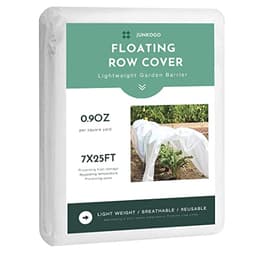
Physical barrier that blocks egg-laying adults while letting in light and water. Drape over hoops or directly on plants. Prevents flea beetles, cabbage worms, cucumber beetles, and squash vine borers without any chemicals. Remove for pollinator access when flowers appear.
$15-$30 · Best for Chemical-free prevention of chewing and boring pests on vegetables
Check price on Amazon →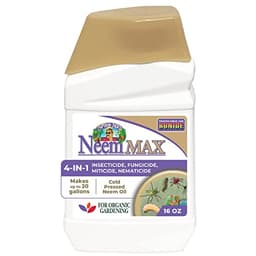
Broad-spectrum organic pest control that works as a repellent, feeding disruptor, and growth regulator. Effective on aphids, whiteflies, spider mites, and young caterpillars. Mix per label directions with water and a surfactant. Spray in evening to avoid leaf burn. Reapply every 7-14 days.
$10-$18 · Best for Broad-spectrum organic treatment for most soft-bodied garden pests
Check price on Amazon →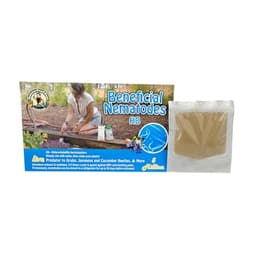
Microscopic predatory roundworms that hunt and kill grubs, vine borer larvae, and other soil-dwelling pests. Apply to moist soil when temperatures exceed 60°F. Water thoroughly and keep soil moist for one week after application. Refrigerate unused nematodes — they're alive and perishable.
$25-$40 · Best for Organic control of grubs, vine borers, and soil-dwelling larvae
Check price on Amazon →Treatment information on PlantFix is educational. When using any pesticide — including organic options like neem oil or insecticidal soap — read and follow the entire product label; the label is the law. For persistent or high-stakes problems, your local university extension service offers free, region-specific advice. Read about how we source and verify treatment guidance in our Editorial Standards.
FAQ
What are the most common garden pests?▼
For vegetable gardens: aphids, squash bugs, tomato hornworms, cucumber beetles, flea beetles, and cabbage worms. For lawns: grubs, armyworms, and chinch bugs. For trees and shrubs: Japanese beetles, bagworms, tent caterpillars, and spotted lanternfly. The specific pests you'll encounter depend on your region, your plants, and the season.
How do I identify what is eating my garden?▼
Start with the damage type. Holes chewed through leaves = beetles or caterpillars. Skeletonized leaves (veins remain) = Japanese beetles or flea beetles. Wilting despite wet soil = stem borers or squash bugs. Brown lawn patches = grubs, armyworms, or chinch bugs. Sticky residue with yellowing = sap-sucking pests (aphids, whiteflies). Photograph the damage and any bugs you find — check both upper and lower leaf surfaces.
What is the best natural pesticide for a vegetable garden?▼
Bt (Bacillus thuringiensis) for caterpillars — it's the most effective and targeted organic option. Insecticidal soap for aphids and whiteflies. Neem oil as a broad-spectrum preventive. Beneficial nematodes for soil pests. No single product handles everything — match the treatment to the pest. Row covers prevent many problems entirely by blocking egg-laying adults from reaching plants.
When should I spray for garden pests?▼
Spray only when you've confirmed a pest is present and above the treatment threshold. For caterpillars (Bt spray): at dusk, when caterpillars are actively feeding and UV doesn't break down the Bt. For aphids and whiteflies: early morning when they're sluggish. For soil treatments (nematodes): when soil temperature is above 60°F. Preventive spraying without a confirmed pest often kills beneficial insects and makes future pest problems worse.
How do I prevent garden pests naturally?▼
Rotate crops (don't plant the same family in the same spot two years running). Use row covers on vulnerable crops. Encourage predators: plant flowers that attract parasitic wasps (dill, yarrow, sweet alyssum) and ground beetles (leave leaf litter borders). Water at the soil line, not overhead. Remove plant debris at season's end — overwintering pests hide in dead stalks. Healthy soil grows stronger plants that resist pest damage better.
Related
- How to Get Rid of Squash Bugs: Season-Long Battle Plan →
- Japanese Beetles: Why Traps Backfire & a Week-by-Week Control Calendar →
- Tomato Hornworm ID: Kill It — Unless It Has White Cocoons →
- Cucumber Beetle: Spotted vs Striped ID + Deadly Wilt →
- Cabbage Worm vs Cabbage Looper vs Diamondback Moth: 3-Way ID + Organic Treatment →
- Flea Beetle: The Jumping Test, Crop-by-Crop Species Guide, and Why Seedlings Die in 48 Hours →
- Earwig Pictures: What They Look Like & How to Get Rid of Them →
- Leaf Footed Bug vs Assassin Bug: How to Tell Them Apart (And Not Kill the Wrong One) →
- Whiteflies: The Shake Test, Damage Chain & 3-Week Treatment Protocol →
- Aphids on Plants: How to Kill Them Fast (and Stop the Ants) →
- Spider Mites: Identification, Treatment & Prevention Guide →
- Squash Vine Borer: Save a Wilted Plant (Surgical Rescue) →
- Potato Bug Pictures: 3 Insects, 1 Confusing Name (ID Guide) →
- Armyworms Destroyed My Lawn Overnight — Here's the Rescue Plan →
- Evergreen Bagworm: Identify Them and Save Your Evergreens →
- Spotted Lanternfly: How to ID, Kill & Report Them (2026 State Guide) →
- Lawn Grubs: The Underground Reason Your Grass Is Dying (ID + Treatment) →
- Cicada Killer Wasp: Not a Murder Hornet (ID Guide + Yard Management) →
- Tomato Leaves Curling? 5 Causes Ranked by How Worried You Should Be →
- Chinch Bugs vs. Drought: How to Tell What's Actually Killing Your Lawn →
- Clover Mites: The Harmless Red Bugs That Stain When Crushed →
- Neem Oil for Plants: Complete Guide to Using It Effectively →
- Insecticidal Soap: What It Actually Kills (Including Spider Mites), DIY Recipe & Why Dawn Is Wrong →
- Beneficial Nematodes: Which Species Kills Your Specific Pest (Buying Guide by Pest Type) →
- Diatomaceous Earth for Plants: Which Pests It Kills (And Which It Doesn't) →
- Copper Fungicide: Plant-by-Plant Dosage Chart + Safety Rules →
- Tent Caterpillar vs. Bagworm vs. Fall Webworm: ID Guide + Removal →
- Leaf Miners: Those Squiggly White Lines on Your Leaves (ID + Treatment) →
Not sure what's wrong?
Use the diagnosis tool →Get seasonal plant care reminders and pest alerts.