Tent Caterpillar vs. Bagworm vs. Fall Webworm: ID Guide + Removal
Those silky webs in your tree — are they tent caterpillars, bagworms, or fall webworms? Here's how to tell in 10 seconds, whether they'll kill your tree, and the one thing you should never do (burn them).
10 min read · Updated 2026-06-12
By PlantFix Editorial Team · Sources: University Extension Programs, USDA, EPA
What's Making Webs in Your Tree? (Quick Answer)
Tent caterpillars build dense, white silk tents in the forks of tree branches — where a branch splits into two. They leave the tent during the day to feed on nearby leaves, then return to the tent at night. You'll most commonly find them on cherry, crabapple, and apple trees in spring and early summer.
The good news: tent caterpillars rarely kill healthy trees. Trees typically regrow leaves within weeks after caterpillars pupate, according to the University of Maryland Extension. The only trees at risk are those already stressed by drought, disease, or repeated years of heavy defoliation.
The bad news: people confuse tent caterpillars with bagworms and fall webworms constantly, and the treatments are different. Tent caterpillar webs sit in branch forks in spring. Bagworm bags hang individually from branches in summer. Fall webworm webs enclose branch tips in late summer/fall. Get the ID wrong, and you'll apply the wrong treatment at the wrong time.
Do NOT burn the web. This is the most common (and worst) advice on the internet. Holding a torch or lighter to a tent damages the tree's bark and branch tissue far more than the caterpillars ever would. Instead: prune out the tent early morning when caterpillars are inside, spray Bt (Bacillus thuringiensis) on surrounding foliage, or simply leave them alone if the tree is healthy — they'll be gone in 4-6 weeks.
Tent Caterpillar vs. Bagworm vs. Fall Webworm: The 10-Second ID
This is the comparison chart that every Google result buries three pages deep. Look at your tree and answer two questions: where is the web? and what month is it?
Tent caterpillar (Malacosoma americanum)
- Web location: in branch FORKS — the V-shaped junction where branches divide
- Season: spring to early summer (April through June)
- Behavior: caterpillars leave the tent to feed on nearby leaves, return at night
- Host trees: cherry, crabapple, apple, plum, hawthorn
- Caterpillar appearance: black with a white or gold stripe down the back, blue dots along the sides, moderately hairy
- Severity: usually cosmetic — healthy trees recover. One generation per year.
Bagworm (Thyridopteryx ephemeraeformis)
- Web location: individual spindle-shaped BAGS (1-2 inches) hanging from branches — no communal tent
- Season: summer (June through August)
- Behavior: caterpillar lives inside the bag, carries it everywhere, feeds from within
- Host trees: arborvitae, Leyland cypress, juniper, spruce, other evergreens
- Severity: CAN kill evergreens. Unlike deciduous trees, evergreens don't regrow needles from defoliated branches.
Fall webworm (Hyphantria cunea)
- Web location: at branch TIPS — enclosing the outer ends of branches
- Season: late summer into fall (August through October)
- Behavior: caterpillars feed INSIDE the web, expanding it as they consume leaves
- Host trees: walnut, hickory, pecan, crabapple, cherry — over 600 host species
- Severity: almost always cosmetic. Appears late enough in the season that trees are preparing for dormancy anyway.
Quick decision rule: Fork webs in spring = tent caterpillar. Hanging bags in summer = bagworm. Tip webs in fall = fall webworm. If you've got individual bags on an evergreen, read the bagworm guide instead — that's the one that actually kills trees.
Will Tent Caterpillars Kill My Tree? (Honest Assessment)
Almost certainly not — if the tree was healthy before the caterpillars arrived.
The University of Connecticut's Home Garden Education Office puts it plainly: eastern tent caterpillars can completely defoliate a tree, but healthy trees recover by producing a second flush of leaves within a few weeks after the caterpillars pupate and stop feeding. The key word is "healthy." Trees already weakened by drought, root damage, fungal disease, or poor soil tolerate defoliation much less well.
The real risk comes from consecutive years of heavy defoliation. According to Penn State Extension, trees can generally handle 1-2 years of significant defoliation. Three or more consecutive years depletes the tree's carbohydrate reserves — it's spending energy regrowing leaves that should be building roots, trunk, and fruit. Michigan State University Extension notes that forest tent caterpillars have caused dieback and mortality in sugar maple stands after 3+ years of repeated defoliation.
Fruit tree impact: the most practical concern isn't tree death — it's lost fruit production. Cherry and apple trees defoliated by tent caterpillars in spring will produce smaller, fewer, or no fruit that season. The University of Georgia CAES Extension notes that defoliation concentrated early in the season — exactly when tent caterpillars feed — has the greatest impact on fruit yield.
When to be concerned:
- Young trees (planted within the last 3-5 years): less established root systems, lower reserves
- Trees with existing stress: drought, construction root damage, canker, or other disease
- Third consecutive year of heavy infestation on the same tree
- More than 50% defoliation across the entire canopy
For most homeowners with established trees and a single year's infestation — it looks scary, but the tree will be fine.
How to Remove Tent Caterpillars (4 Methods, Ranked)
Listed from most to least effective. Pick based on the infestation size and tree height.
1. Physical removal — prune out the tent (most effective for small trees)
Early morning is key. At dawn, caterpillars are congregated inside the tent (they leave to feed during the day). Cut the branch containing the tent with bypass pruners or a pole pruner. Drop the tent into a bucket of soapy water and leave it for 24 hours — this kills the caterpillars by drowning and suffocation. Dispose of the soapy water on pavement or in the trash, not on garden soil. For larger tents, you can wind them onto a stick like cotton candy and drop the whole thing into soapy water. Iowa State Extension recommends this as the simplest and most effective approach for accessible tents.
2. Bt spray (Bacillus thuringiensis var. kurstaki) — best for larger trees
Bt is a naturally occurring soil bacterium that's lethal to caterpillars but harmless to humans, pets, birds, and beneficial insects (it only affects Lepidoptera larvae). Spray Bt on the foliage surrounding the tent — caterpillars eat the treated leaves when they leave the tent to feed. Timing is critical: Bt works best when caterpillars are small (under 1 inch), which means treating shortly after tents first appear in spring. Larger caterpillars are more resistant. Most university extension programs list Bt as their #1 recommended insecticide for tent caterpillars because of its specificity.
Note: Bt degrades in sunlight within 3-5 days, so reapply if caterpillars are still actively feeding. It also needs to be ingested — it won't kill caterpillars on contact.
3. Soapy water knockdown — simple but labor-intensive
For tents you can reach, tear open the web with a stick and knock the caterpillars into a bucket of water with a generous squirt of dish soap. The soap breaks the surface tension so caterpillars can't float and crawl out. This is messy and requires getting close to the tent, but it's chemical-free and immediate. Works best for individual tents on smaller trees.
4. Spinosad spray — alternative organic option
Spinosad is derived from a soil bacterium (Saccharopolyspora spinosa) and kills caterpillars through both contact and ingestion. It's more persistent than Bt (lasts 7-14 days vs 3-5 days) and works on larger caterpillars. The downside: spinosad is toxic to bees for 3 hours after application, so spray in the evening when bees aren't active. Available in organic formulations.
What NOT to do: never burn the tent.
I'll say it again because this bad advice refuses to die. Holding a propane torch or lighter to a tent chars the bark, kills the cambium layer (the living tissue under the bark), and can girdle the branch — causing permanent damage or branch death. The caterpillars, ironically, often survive because they drop from the tent before the flame reaches them. Fire damages the tree more than the caterpillars ever would. NC State Extension, UMN Extension, and virtually every university program warns against burning.
Prevention: Egg Mass Removal and Natural Predators
The easiest way to prevent tent caterpillars is to remove their egg masses in winter — before the caterpillars hatch in spring.
Identifying egg masses:
Tent caterpillar egg masses are distinctive — dark, shiny, barrel-shaped bands that encircle small twigs and branches. They look like a small section of the twig has been coated in dark shellac or dried mud. Each egg mass contains 150-350 eggs cemented together with a protective coating called spumaline. MSU Extension recommends checking trees in late fall through early spring when leaves are off and egg masses are visible.
Removal:
Scrape egg masses off with a knife, thumbnail, or pruning shears. Drop them into a bucket of soapy water and let them soak overnight. You can also prune off the twig section bearing the egg mass — on larger trees, this is often easier than scraping. Check cherry, apple, and crabapple trees first — these are the preferred hosts.
Natural predators (your free pest control):
Tent caterpillar populations naturally cycle — they build up over 3-5 years, then crash due to predators and disease. Major natural enemies include:
- Parasitic wasps and flies: several species lay eggs inside tent caterpillar larvae. Multiple parasitoid species attack eastern tent caterpillars, and they're a major factor in population crashes.
- Birds: cuckoos (especially black-billed and yellow-billed cuckoos), orioles, and blue jays actively feed on tent caterpillars. Most birds avoid hairy caterpillars, but cuckoos specialize in them.
- Nuclear polyhedrosis virus (NPV): a naturally occurring viral disease that kills tent caterpillars during population outbreaks. You'll sometimes find caterpillars hanging limp in a characteristic "V" shape — that's NPV at work. This virus is species-specific and harmless to other organisms.
Encouraging predators is the most sustainable long-term strategy. Avoid broad-spectrum insecticides that kill parasitic wasps and other natural enemies. Plant native trees and shrubs that provide nesting habitat for birds. In most years, natural predators keep tent caterpillar populations below damaging levels.
Forest Tent Caterpillar: The One That Doesn't Build Tents
This causes endless confusion. The forest tent caterpillar (Malacosoma disstria) is a close relative of the eastern tent caterpillar — but it doesn't build tents. Instead, forest tent caterpillars spin loose silk mats on the sides of branches and tree trunks where they gather in groups. No enclosed structure, no "tent."
How to identify: Forest tent caterpillars have a row of keyhole-shaped or footprint-shaped white spots down the back — not a continuous stripe like the eastern tent caterpillar. They're roughly the same size (about 2 inches fully grown) and equally hairy.
Host trees: Aspen, birch, sugar maple, oak, sweetgum, and basswood. They don't target fruit trees the way eastern tent caterpillars do.
Damage: Forest tent caterpillars are actually the more damaging species during outbreaks because they feed on shade and forest trees in large numbers. UMN Extension notes that severe outbreaks in Minnesota have defoliated millions of acres of aspen and sugar maple. Individual landscape trees usually recover from a single year of defoliation, but repeated outbreaks (3+ years) combined with drought can cause branch dieback and even tree mortality — especially in sugar maples.
Control: Same methods as eastern tent caterpillar — Bt spray when caterpillars are small, physical removal of caterpillar clusters, spinosad. The difference is that forest tent caterpillars are harder to find and collect because they don't concentrate in a tent. Bt spray is usually the most practical option.
If you're seeing caterpillars on hardwood trees without an actual tent structure, you likely have forest tent caterpillars rather than eastern tent caterpillars. The good news: outbreaks typically last 2-3 years before natural enemies (parasitic wasps, NPV virus, birds) bring the population down.
Frequently Asked Questions
The questions homeowners ask most — plus the ones they should be asking.
Recommended Products
We earn a commission if you buy through these links, at no extra cost to you. We recommend based on what works, not what pays. How this works.
The #1 recommended treatment by university extension programs. Mix per label rate and spray on foliage surrounding the tent — caterpillars eat the treated leaves when they leave the tent to feed. Only affects caterpillar larvae; harmless to humans, pets, birds, and beneficial insects. Apply when caterpillars are small (under 1 inch) for best results. Reapply after 3-5 days since Bt degrades in sunlight.
$12-$20 · Best for Trees too tall for physical tent removal, or multiple tents on one tree

For tents within reach, pruning is the most effective single action. Cut the branch below the tent, drop it into soapy water. Pole pruners extend your reach to 12-15 feet. Use bypass-style (scissor action) rather than anvil-style — bypass pruners make cleaner cuts that heal faster. Prune early morning when all caterpillars are inside the tent.
$15-$40 (hand) / $40-$80 (pole) · Best for Small trees, individual accessible tents, immediate physical removal
Check price on Amazon →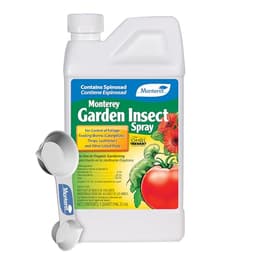
Alternative to Bt that lasts longer (7-14 days vs 3-5 days) and works on larger caterpillars. Kills through contact and ingestion. Apply in the evening to avoid bee exposure (toxic to bees for 3 hours after application). OMRI-listed for organic use. Good choice when Bt timing was missed and caterpillars are already over 1 inch long.
$12-$18 · Best for Late-season treatment when caterpillars are too large for Bt to be effective
Check price on Amazon →Treatment information on PlantFix is educational. When using any pesticide — including organic options like neem oil or insecticidal soap — read and follow the entire product label; the label is the law. For persistent or high-stakes problems, your local university extension service offers free, region-specific advice. Read about how we source and verify treatment guidance in our Editorial Standards.
FAQ
When do tent caterpillars go away?▼
Eastern tent caterpillars feed for 4-6 weeks in spring, then pupate in cocoons on tree bark, fences, or building eaves. Adults emerge as small brown moths in late June or July, lay eggs, and die within a few days. From the time you first see a tent to the time the caterpillars are gone is typically 5-7 weeks. By July, all feeding has stopped for the year — they have only one generation annually.
Are tent caterpillars poisonous or dangerous to humans?▼
Eastern tent caterpillars are not poisonous and cannot sting. Some people experience mild skin irritation from handling them (the hairs can be mildly irritating), but this is uncommon. Forest tent caterpillars are similarly non-toxic. Neither species poses any danger to humans or pets. The main nuisance is aesthetic — the webs look unsightly, and the caterpillars can be numerous enough to create visible frass (droppings) under infested trees.
Do tent caterpillars come back every year?▼
Yes — tent caterpillars return annually because females lay eggs on branches in summer that hatch the following spring. However, population levels cycle significantly. A given area typically experiences 2-3 years of heavy populations followed by several years of low populations, driven by natural enemies (parasitic wasps, viral disease) catching up. If you remove egg masses in winter, you can break the cycle on individual trees.
Can I just leave tent caterpillars alone?▼
For healthy, established trees — yes, and this is often the best approach. The University of Connecticut recommends doing nothing if the tree is healthy and the defoliation is less than 50%. The caterpillars will be gone within weeks, the tree will regrow leaves, and natural predators will help keep next year's population lower. Intervene only if: the tree is young, already stressed, or you've had heavy infestations for 2+ consecutive years.
Why shouldn't I burn tent caterpillar webs?▼
Fire damages the tree far more than the caterpillars do. Open flame chars bark, kills the cambium layer (the living tissue under the bark responsible for growth), and can girdle and kill the branch entirely. Caterpillars typically drop from the tent and survive — so you've hurt the tree and not even killed the pest. Every major university extension program (UMN, NC State, Penn State, Iowa State) explicitly warns against burning. Prune the branch out instead, or spray with Bt.
Related
- Evergreen Bagworm: Identify Them and Save Your Evergreens →
- Cabbage Worm vs Cabbage Looper vs Diamondback Moth: 3-Way ID + Organic Treatment →
- Tomato Hornworm ID: Kill It — Unless It Has White Cocoons →
- Armyworms Destroyed My Lawn Overnight — Here's the Rescue Plan →
- Garden Pest Identification: 25+ Bugs by the Damage They Do →
- Plant Bugs: Identify Any Bug on Your Plant in 30 Seconds →
- Japanese Beetles: Why Traps Backfire & a Week-by-Week Control Calendar →
Not sure what's wrong?
Use the diagnosis tool →Get seasonal plant care reminders and pest alerts.