Clover Mites: The Harmless Red Bugs That Stain When Crushed
Clover mites are the tiny red bugs swarming windowsills in spring. Harmless to you and plants — but they stain when crushed. Here's how to stop them.
11 min read · Updated 2026-08-04
By PlantFix Editorial Team · Sources: University Extension Programs, USDA, EPA
What Are Those Tiny Red Bugs? (Clover Mites — Quick Answer)
The tiny red bugs massing on your windowsills, concrete, and house siding in spring and fall are almost certainly clover mites (Bryobia praetiosa). They're 0.75mm long — smaller than a pinhead — with eight legs and a distinctive feature: their front pair of legs is nearly twice as long as the others, making them look like they have antennae (they don't). They feed on grass, clover, and lawn weeds — not on people, pets, or houseplants.
Clover mites don't bite, don't transmit diseases, and can't survive indoors for more than 2-3 weeks without their outdoor food source. The only real problem? They leave a bright red stain when crushed. That red pigment is their body fluid (hemolymph), and it permanently stains curtains, paint, and fabric. Never wipe or crush them — vacuum instead.
To stop them from entering your home: create an 18-24 inch plant-free gravel barrier around your foundation (Penn State Extension's #1 recommendation), and seal cracks around windows and doors. This one prevention measure eliminates 90%+ of indoor invasions.
Not sure you're looking at clover mites? They're frequently confused with spider mites and chiggers. Our tiny red bugs identification guide has the full comparison. You can also use the diagnosis tool.
Clover Mite Identification: What They Look Like Up Close
Clover mites belong to the family Tetranychidae (spider mites, broadly), but they behave completely differently from the plant-damaging spider mites houseplant owners dread. Here's what to look for:
Size: 0.75mm (1/30 of an inch). About the size of a period at the end of this sentence. You'll see them as tiny moving dots — individual features aren't visible without magnification.
Color: Bright red to reddish-brown. Larvae are the brightest red. Adults darken to a reddish-brown or sometimes olive-green. The color is the primary reason people confuse them with chiggers.
Body shape: Oval, slightly flattened. Eight legs (they're arachnids, not insects).
Key ID feature: The front pair of legs is conspicuously longer than the other three pairs — nearly twice as long. When a clover mite crawls, those long front legs extend forward and wave around like antennae. This is the single most reliable visual ID if you can get close enough (a phone camera zoom works). No other common household mite has this proportion.
Eggs: Bright red, spherical, laid in protected cracks on sun-warmed surfaces — foundation walls, window frames, fence posts, bark crevices. A single female can lay about 70 eggs. In the species common in North America, reproduction is entirely parthenogenetic — all individuals are female, no males needed. This is why populations can explode rapidly.
Where you'll find them:
- Sunny sides of buildings (south and west-facing walls)
- On and around windows (they're attracted to warmth)
- On concrete, brick, and stone surfaces
- In cracks at the foundation-soil junction
- On lawn grass, clover patches, and ornamental plants in the yard
- NOT on houseplants, food, furniture, beds, or in closets
Clover Mites vs. Spider Mites vs. Chiggers: The Comparison That Matters
These three "tiny red bugs" cause the most confusion — and misidentification leads to wasted effort (and unnecessary panic about bites that aren't happening). Here's the definitive breakdown:
Clover mites (Bryobia praetiosa):
- Where: Outdoors on sunny walls, windows, concrete. Enter homes through cracks.
- Size: 0.75mm (visible as a moving dot)
- Bite? NO. Cannot bite humans or pets.
- Damage: Red stains when crushed. No structural, plant, or health damage.
- Season: Spring (primary) and fall (secondary). Most active 50-75°F.
- Feed on: Grass, clover, lawn weeds.
Spider mites (Tetranychus urticae):
- Where: On the UNDERSIDES of plant leaves. Never on walls or concrete.
- Size: 0.4mm (smaller than clover mites, need magnification)
- Bite? No. But they damage plants severely.
- Damage: Stippled/speckled leaves, fine webbing, leaf drop, plant death.
- Season: Year-round indoors. Worse in hot, dry conditions.
- Feed on: Plant sap. They pierce leaf cells with needle-like mouthparts.
Chiggers (Trombiculidae larvae):
- Where: Tall grass, wooded areas, overgrown fields. Never indoors on walls.
- Size: 0.15mm (barely visible, often not seen at all before bites appear)
- Bite? YES. Intensely itchy welts that last 1-2 weeks. Worst at waistline, ankles, armpits.
- Damage: Skin irritation only. No plant or structural damage.
- Season: Summer (June-September). Active above 60°F.
- Feed on: Human and animal skin cells (larvae only). Adults live in soil.
The quick diagnostic:
- On your windowsill or house wall? → Clover mites
- On your plant's leaves with webbing? → Spider mites
- Itchy bite marks after being outdoors in tall grass? → Chiggers
If you walked through grass and have bites, you have chiggers. If you see red dots on your houseplant leaves, you have spider mites. If you see red dots on your windowsill or exterior wall, you have clover mites. The habitats don't overlap.
The Red Stain Problem: Why You Should Never Crush a Clover Mite
This is the section no other guide covers well, and it's the single most practical thing to know about clover mites.
When you crush a clover mite — by wiping a windowsill with a cloth, pressing on curtains, or stepping on them — their body fluid (hemolymph) leaves a bright red-orange stain. This pigment is remarkably persistent. On porous surfaces like paint, fabric, wood, and grout, the stain can be permanent.
Prevention (the best approach): Never wipe, smash, or brush clover mites. Always vacuum them. Use a hose attachment to suck them off windowsills, walls, and curtains. Empty the vacuum canister into a sealed bag immediately — live mites in the vacuum can crawl back out.
Removing fresh stains (act within 30 minutes):
- Fabric (curtains, clothing): Blot (don't rub!) with a damp cloth, then apply a small amount of dish soap or laundry pre-treatment. Machine wash in cold water. Hot water sets the stain.
- Painted walls: Dampen a cloth with rubbing alcohol or a magic eraser and gently dab the stain. Test on an inconspicuous area first — some paints are alcohol-sensitive.
- Windowsills (wood): Wipe immediately with a damp cloth. If the stain has set, light sanding and repainting may be necessary for painted sills. For natural wood, try a baking soda paste.
- Concrete/stone: Scrub with an enzyme-based cleaner or oxygen bleach (OxiClean). Pressure washing works for outdoor surfaces.
For set-in stains: Once the red pigment has oxidized (dried and darkened), it bonds to porous materials and may be permanent on natural fabrics and untreated wood. Prevention — not staining in the first place — is genuinely the best strategy here. Vacuum, don't squish.
Are Clover Mites Harmful? (To People, Pets, Plants, and Your Home)
To humans: No. Clover mites cannot bite — their mouthparts are designed to pierce plant cells (grass, clover) and are physically incapable of penetrating human skin. They don't transmit any diseases. If you're finding bites alongside tiny red bugs, you either have a different pest (chiggers, fleas, bird mites) or the bites are from something else entirely. Penn State Extension, Clemson Extension, and the National Pest Management Association all classify clover mites as nuisance-only pests.
To pets: No. Same reasoning — they can't bite dogs or cats. If your pet eats a few mites (cats investigating windowsill invaders), there's no toxicity concern.
To houseplants: Essentially no. Clover mites feed on outdoor lawn grasses and clover — they're not interested in your monstera or pothos. Even on outdoor ornamental plants, the feeding damage is minimal and rarely visible. They're not in the same category as spider mites, which can devastate houseplants.
To your home: Only the red stain. Clover mites don't damage wood, fabric, food, or structural materials. They don't nest in walls or breed indoors. They wander in through cracks seeking warmth, fail to find food (no grass or clover inside), and die within a few weeks. The damage is entirely cosmetic — red stains from crushed mites on light-colored surfaces.
The seasonal nuisance pattern: Clover mites appear in huge numbers because of their parthenogenetic reproduction — every individual is female, every individual can lay eggs without mating. A well-fertilized lawn with sun-warmed south-facing walls can produce hundreds of thousands of mites in spring. They don't invade because something is wrong with your house; they invade because your lawn is healthy and your house is warm.
How to Get Rid of Clover Mites (Indoor and Outdoor Treatment)
Immediate indoor removal:
- Vacuum everything. Use a hose attachment on windowsills, walls, curtains, and any surface where you see mites. This is the only safe removal method that avoids staining. Empty the vacuum immediately.
- Wipe surfaces with soapy water after vacuuming. A few drops of dish soap in warm water cleans residual mites and removes the invisible chemical trails they follow.
- Do NOT spray insecticide indoors for clover mites. It's overkill for a harmless pest that dies indoors on its own within weeks. Indoor insecticide creates unnecessary chemical exposure for you and your pets.
Outdoor perimeter treatment (stops them from entering):
- Bifenthrin or cyfluthrin perimeter spray: Apply a residual insecticide along the foundation, around windows, and at door thresholds. Reapply every 2-3 months during active season (spring and fall). Bifenthrin is the most commonly recommended active ingredient for clover mites by university extension programs.
- Diatomaceous earth around entry points: Dust food-grade DE along the foundation perimeter and windowsills. DE damages mite exoskeletons on contact. Only effective when dry — reapply after rain.
- Seal entry points: Caulk cracks around windows, doors, utility pipes, and foundation joints. Clover mites enter through gaps as small as 0.5mm. Weather-strip windows and doors that don't seal tightly.
Natural alternatives:
- White vinegar spray directly on mites (kills on contact but no residual effect)
- Soapy water spray (same — contact kill, no residual)
- Boric acid powder along windowsills and entry points (desiccant effect, similar to DE)
- Essential oils (peppermint, clove) as deterrents — some anecdotal support, no university-backed data
The 18-Inch Gravel Barrier: The Single Best Prevention Method
If you do one thing to prevent clover mite invasions, this is it. Penn State Extension, University of Connecticut Extension, and Ohio State Extension all recommend the same approach: create a vegetation-free barrier around your home's foundation.
Here's why it works: clover mites feed on grass and clover. They migrate toward buildings because sun-warmed walls provide ideal egg-laying sites. When grass grows right up to your foundation, mites have a direct highway from their food source to your home's exterior and from there through cracks into your interior.
Remove that highway and the problem largely disappears.
How to build the barrier:
- Remove all grass, clover, weeds, and ground cover within 18-24 inches of your foundation walls. Wider is better — UConn Extension suggests 24 inches.
- Fill the cleared strip with pea gravel, river rock, or coarse mulch. The material should be something clover mites can't feed on and don't like to cross.
- Make sure the barrier extends around the entire perimeter, not just the sunny side — although the south and west-facing walls are the priority because those get the most sun and warmth.
- Maintain the barrier: pull any weeds that colonize the gravel strip, and top off gravel as needed.
Alternative plant barrier: If bare gravel doesn't fit your landscaping, replace the grass strip with plants that clover mites dislike. Research from university programs suggests chrysanthemums (contain natural pyrethrins), marigolds, petunias, and zinnia are less attractive to clover mites than grass. Rose bushes and shrubs are also fine — clover mites are grass feeders, not shrub feeders.
Expected results: Homeowners who install the gravel barrier typically see 80-95% reduction in indoor clover mite sightings by the following spring. It's a one-time project with permanent results (minus occasional weeding).
The Ohio State Extension fact sheet on clover mites — while dated (2010) — remains accurate on this point. The barrier method hasn't changed because the biology hasn't changed. Clover mites need grass to survive, and removing grass from their invasion path works.
Clover Mite Lifecycle: Why Spring and Fall Are Worst
Understanding the lifecycle explains the seasonal pattern and helps you time prevention efforts:
Spring (primary invasion): Clover mite eggs overwinter in protected cracks — foundation walls, bark crevices, window frames, fence posts. When soil temperatures reach about 45°F in early spring, eggs hatch and nymphs immediately begin feeding on lawn grass. Populations build rapidly (remember: parthenogenetic reproduction — no males needed) and peak in April-May. As temperatures rise above 75°F, mites seek cooler, shaded areas — which often means migrating toward buildings and entering through cracks on the sun-warmed south side. This is the spring invasion.
Summer (dormancy): When temperatures consistently exceed 85°F, clover mites enter a heat-dormancy period (aestivation). Many mites die, and the remaining population retreats to shaded areas. You'll see very few clover mites from late June through August in most regions.
Fall (secondary invasion): As temperatures cool back into the 50-75°F range in September-October, surviving mites become active again. A smaller second population wave may attempt to enter homes, though fall invasions are typically less severe than spring. Before the first hard freeze, females lay overwintering eggs in protected cracks. The cycle starts again.
Indoor survival: Clover mites that enter your home are in a dead end. There's no grass to eat indoors, and low indoor humidity accelerates dehydration. Most die within 2-3 weeks without intervention. They don't breed indoors (no food source for offspring). The invasion feels endless because new mites keep entering from outside — stop the entry and the indoor problem self-resolves.
Best time for prevention: Install the gravel barrier in late winter (February-March) before eggs hatch. Apply perimeter insecticide in early-to-mid spring as soon as you see the first mites, and again in early fall. Seal cracks anytime — but fall is ideal, before females lay overwintering eggs in your foundation.
Recommended Products
We earn a commission if you buy through these links, at no extra cost to you. We recommend based on what works, not what pays. How this works.
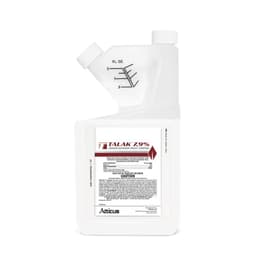
Residual spray applied around your foundation, windows, and doors. Creates a chemical barrier that kills clover mites on contact and provides 2-3 months of protection. The most commonly recommended treatment by university extension programs for clover mite control.
$15-$25 · Best for Perimeter treatment to stop clover mites from entering your home
Check price on Amazon →
Microscopic fossilized diatoms that damage clover mite exoskeletons on contact. Dust along foundation perimeter, windowsills, and entry points. Non-toxic to humans and pets. Only effective when dry — reapply after rain.
$8-$15 · Best for Non-chemical barrier treatment for windowsills and foundation edges
Check price on Amazon →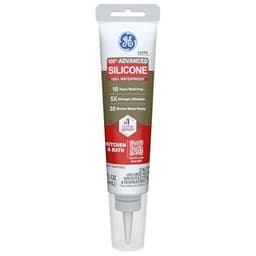
Seal gaps around windows, doors, and foundation cracks where clover mites enter. Clover mites can fit through openings as small as 0.5mm — if you can see daylight through a crack, mites can get through. Clear silicone blends with most surfaces and lasts years.
$5-$10 · Best for Permanently sealing the entry points clover mites use to get inside
Check price on Amazon →Treatment information on PlantFix is educational. When using any pesticide — including organic options like neem oil or insecticidal soap — read and follow the entire product label; the label is the law. For persistent or high-stakes problems, your local university extension service offers free, region-specific advice. Read about how we source and verify treatment guidance in our Editorial Standards.
FAQ
Do clover mites bite?▼
No. Clover mites have piercing-sucking mouthparts designed for plant cells (grass, clover). They physically cannot bite human or animal skin. Penn State Extension, Clemson Extension, and the National Pest Management Association all confirm clover mites are non-biting. If you're experiencing bites alongside tiny red bugs, you likely have a different pest — chiggers (outdoors in tall grass) or bird mites (near nesting sites).
Why are there so many clover mites on my windowsill?▼
Clover mites are attracted to sun-warmed surfaces — south and west-facing walls, window frames, and concrete get the most solar heat. Mites gather on these warm surfaces to feed (algae grows on warm, moist surfaces) and to lay eggs in cracks. Windows are also common entry points — gaps in weather stripping and caulking let mites inside. The fix: seal window gaps, add weather-stripping, and clear grass from the foundation zone below the window.
Do clover mites damage houseplants?▼
No. Clover mites feed on outdoor grass, clover, and lawn weeds — not on houseplants. Even outdoors, their feeding damage to ornamental plants is minimal. If tiny red bugs are damaging your houseplants (stippled leaves, webbing, leaf drop), you have spider mites, not clover mites. Spider mites live on leaves; clover mites live on walls and outdoor surfaces.
How long do clover mites live indoors?▼
Only 2-3 weeks. Clover mites can't feed on anything inside your home (no grass or clover), and indoor air is too dry for them. They dehydrate and die without intervention. The problem feels ongoing because new mites keep entering from outside through cracks. Stop the entry (seal cracks, install gravel barrier), and the indoor population dies off naturally within weeks.
Are clover mites the same as spider mites?▼
No. They're both arachnids in the same broad family, but they live in completely different habitats, eat different things, and cause different problems. Clover mites live outdoors on grass, don't bite, and stain when crushed. Spider mites live on plant leaves, don't bite humans, but can kill houseplants. If you find tiny red bugs on your PLANTS (not your walls), those are spider mites — see our spider mites treatment guide.
Related
- Earwig Pictures: What They Look Like & How to Get Rid of Them →
- Houseplant Pests: Visual ID Guide to Every Bug on Your Indoor Plants →
- Plant Bugs: Identify Any Bug on Your Plant in 30 Seconds →
- Spider Mites: Identification, Treatment & Prevention Guide →
- Springtails: The Tiny Jumping Bugs in Your Soil (They're Not the Problem — Your Watering Is) →
- Tiny Red Bugs: Clover Mites, Spider Mites & How to ID Them →
- Tiny Red Spiders: Clover Mites vs Spider Mites vs Red Velvet Mites (ID Guide) →
- Tiny White Bugs on Plants: Identify & Kill All 5 Types →
Not sure what's wrong?
Use the diagnosis tool →Get seasonal plant care reminders and pest alerts.