Copper Fungicide: Plant-by-Plant Dosage Chart + Safety Rules
Copper fungicide prevents mildew, blight, and leaf spot — but it burns stressed plants and builds up in soil. Crop-by-crop dosage chart and safety rules.
12 min read · Updated 2026-09-01
By PlantFix Editorial Team · Sources: University Extension Programs, USDA, EPA
What Copper Fungicide Treats (And What It Can't Fix) — Quick Answer
Copper fungicide is an organic-approved treatment that prevents fungal and bacterial plant diseases including powdery mildew, downy mildew, leaf spot, early and late blight, rust, anthracnose, and fire blight. It's OMRI-listed for organic gardening and available as liquid concentrate, ready-to-use spray, or wettable powder.
The critical word is "prevents." Copper fungicide must be on the leaf surface BEFORE infection occurs. Once you see disease symptoms, copper can slow the spread to uninfected tissue, but it cannot cure already-infected leaves. Think of it as a shield, not a medicine.
Mix at 0.5-2.0 fl oz per gallon of water (varies by crop — see our dosage chart below). Apply every 7-10 days during disease pressure. Never apply above 85°F or to drought-stressed plants — copper ions become phytotoxic (plant-damaging) under stress conditions.
What copper fungicide does NOT treat: root rot (that's a soil drainage problem), viral diseases (mosaic, ringspot), or insect damage. If your problem is bugs, check our pest identification guide or use the diagnosis tool. For root rot, fix your watering — overwatered soil causes both root rot and fungus gnats.
How Copper Fungicide Actually Works (And Why Timing Is Everything)
Understanding the mechanism explains why application timing matters so much.
When you spray copper fungicide, it deposits copper ions (Cu²⁺) on leaf surfaces. These ions disrupt the cell membranes of fungal spores and bacteria when they land on treated surfaces, preventing them from germinating and penetrating plant tissue. The copper essentially creates a toxic barrier that pathogens can't cross.
Once the pathogen has already penetrated a leaf cell and established infection inside the tissue, copper can't reach it. That's why every university extension program emphasizes preventive application — spray before you see disease, not after. Cornell University's vegetable disease management program specifically states: "Copper fungicides are most effective when applied prior to disease infection."
Copper stays on leaf surfaces until rain or irrigation washes it off. Light rain (under 1 inch) may not require reapplication. Moderate rain (1-2 inches) is borderline. Heavy rain (over 2 inches) generally requires full reapplication. Track rainfall and adjust your schedule.
The blue-green residue you see on sprayed leaves is normal — that's the copper compound. It washes off produce with water before eating. On ornamental plants, it fades as the copper weathers.
Which Diseases Copper Fungicide Treats (Complete List)
Copper is genuinely broad-spectrum — one of the few organic treatments effective against both fungal AND bacterial diseases.
Fungal diseases:
- Powdery mildew: White powdery coating on leaves. Affects cucurbits, roses, phlox, lilacs, and many houseplants. Copper prevents new infections but doesn't remove existing white patches.
- Downy mildew: Yellow-brown patches with fuzzy gray-purple underside growth. Common on lettuce, cucumbers, grapes, basil.
- Early blight (Alternaria): Concentric ring "target" spots on lower tomato and potato leaves. Starts from the bottom of the plant and moves up.
- Late blight (Phytophthora infestans): Dark water-soaked lesions on tomato and potato leaves, stems, and fruit. This is the disease that caused the Irish Potato Famine. Aggressive — can destroy a tomato patch in days during cool, wet weather.
- Leaf spot (Septoria, Cercospora): Small tan-to-dark circular spots on leaves. Common on tomatoes, peppers, and ornamentals.
- Rust: Orange-brown pustules on leaf undersides. Affects roses, hollyhocks, beans, and many ornamentals.
- Anthracnose: Dark, sunken lesions on leaves, stems, and fruit. Common on cucurbits, beans, and peppers.
- Black spot: Dark spots on rose leaves — the most common rose disease.
Bacterial diseases:
- Fire blight: Blackened, wilted shoot tips on apple and pear trees. Copper is one of few organic options for this devastating disease.
- Bacterial leaf spot: Small, angular water-soaked spots on pepper and tomato leaves.
- Bacterial speck: Tiny raised black spots on tomato fruit and leaves.
What copper does NOT treat:
- Root rot (caused by overwatering, not surface pathogens)
- Viral diseases (tobacco mosaic virus, tomato spotted wilt virus)
- Blossom end rot (calcium deficiency, not a disease at all)
- Insect damage (use insecticidal soap, neem oil, or beneficial nematodes)
The Crop-by-Crop Dosage Chart (What No Other Guide Provides)
Every other copper fungicide guide says "follow label instructions." This chart gives you specific concentrations, frequencies, and notes for the most common uses. All rates are for liquid copper concentrate (Bonide or Southern Ag type, ~8% metallic copper equivalent). Adjust proportionally for different concentrations.
Tomatoes:
- Rate: 0.5-1.0 fl oz per gallon
- Frequency: Every 7-10 days from first fruit set through harvest
- Start: 2 weeks before disease typically appears (usually when night temps stay above 60°F and humidity rises)
- Stop: At least 1 day before harvest (check product label for specific pre-harvest interval)
- Notes: Tomatoes are moderately copper-sensitive. Use the lower rate (0.5 oz/gal) and never spray in afternoon heat
Peppers:
- Rate: 0.5-1.0 fl oz per gallon
- Frequency: Every 7-10 days during wet weather
- Notes: Similar sensitivity to tomatoes. Spray in early morning when temps are below 80°F
Cucurbits (squash, cucumber, melons, pumpkins):
- Rate: 1.0-2.0 fl oz per gallon
- Frequency: Every 7 days during disease pressure
- Notes: More copper-tolerant than tomatoes. Powdery mildew is the primary target. Start spraying when plants begin to vine
Roses:
- Rate: 1.0-2.0 fl oz per gallon
- Frequency: Every 7-14 days during growing season
- Start: At leaf-out in spring, before black spot appears
- Notes: Roses tolerate copper well. Dormant-season copper spray (2.0 oz/gal) in late winter kills overwintering spores
Fruit trees (apple, pear, peach, cherry):
- Rate: 2.0 fl oz per gallon
- Frequency: Dormant spray (late winter, before bud break) + every 10-14 days during bloom and early fruit development
- Notes: Dormant application is the most important — it reduces overwintering inoculum. For fire blight on apples/pears, spray at 10% bloom and again at full bloom
Potatoes:
- Rate: 1.0-2.0 fl oz per gallon
- Frequency: Every 5-7 days during late blight season (cool, wet weather June-August)
- Notes: Late blight can destroy a potato crop in 7-10 days. Copper is a preventive — start before conditions favor the disease. Rutgers research shows potatoes bioaccumulate copper, so monitor soil levels if spraying annually
Houseplants:
- Rate: 0.5 fl oz per gallon (lowest concentration)
- Frequency: As needed when you spot early disease signs
- Notes: Isolate treated plants. Spray outdoors or in a well-ventilated area to avoid inhaling mist. Most houseplant fungal issues (powdery mildew on African violets, leaf spot on orchids) respond better to improved air circulation than fungicide
Safety Precautions (The Section Most Guides Skip — But Shouldn't)
Copper fungicide is organic and generally safe, but "organic" doesn't mean "harmless." Cornell and Rutgers university extension programs both emphasize these precautions:
1. Copper accumulates in soil permanently. Unlike synthetic fungicides that break down over months, copper is an element — it never degrades. Years of copper spraying build up copper levels in the top few inches of soil. According to Rutgers NJAES, soil copper above 20 ppm should be monitored, and levels above 100 ppm can become toxic to plants and soil microbes. Get a soil test if you've been spraying copper for more than 3-4 consecutive years.
2. Phytotoxicity risk in hot or stressed conditions. When air temperature exceeds 85°F, copper solubility increases and more free copper ions contact leaf cells. This causes copper burn — brown or bronze leaf edges, spots, and leaf drop. Drought-stressed plants are especially vulnerable because their leaf cuticle is thinner. Cornell's vegetable program specifically warns: "Low pH spray solutions increase copper solubility and thus availability of copper ions," amplifying the burn risk. Always spray in the morning when temperatures are below 80°F.
3. Toxic to aquatic life. Copper runoff into ponds, streams, and waterways is lethal to fish, amphibians, and aquatic invertebrates at very low concentrations. Never spray near water features, don't apply before heavy rain that could carry runoff, and don't dispose of spray solution down storm drains.
4. Harmful to soil biology. Copper at high soil concentrations kills beneficial fungi (mycorrhizae), bacteria, and earthworms. This is the long-term environmental trade-off of copper use — it works against plant pathogens, but it also suppresses the soil food web. The 2018 review in Agronomy for Sustainable Development documented this effect across 130 years of agricultural copper use.
5. Don't mix with certain products. Copper is incompatible with Captan fungicide, lime sulfur, and some highly acidic sprays. Mixing these creates phytotoxic compounds. If you're alternating treatments, wait at least 7 days between copper and incompatible products.
Personal safety: Wear gloves and eye protection when mixing and spraying. Avoid inhaling spray mist — use a respirator or N95 mask when spraying fruit trees and large areas. Wash hands and exposed skin after application.
Copper Fungicide Products: Which One to Buy
There are several forms of copper fungicide available. Here's what matters for each:
Bonide Liquid Copper Fungicide Concentrate:
Active ingredient: Copper octanoate (copper soap). Mix 0.5-2.0 fl oz per gallon. OMRI-listed organic. One of the most gentle copper formulations — lower phytotoxicity risk than copper sulfate. Good all-around choice for vegetables and houseplants. Widely available at garden centers and Amazon. A pint of concentrate makes 8-32 gallons of spray.
Southern Ag Liquid Copper Fungicide:
Active ingredient: Copper ammonium complex (8% metallic copper equivalent). Mix 2-6 tsp per gallon. More concentrated than Bonide, better for larger operations. A 16 oz bottle treats a substantial garden for a full season. Available on Amazon.
Monterey Liqui-Cop:
Active ingredient: Copper ammonium complex. Similar concentration and use to Southern Ag. Popular with organic orchardists for dormant sprays on fruit trees. Pint and quart sizes available.
Fixed copper (copper hydroxide, copper oxychloride):
Comes as wettable powder. Higher metallic copper content per application. More persistent on leaf surfaces (better rain resistance). More phytotoxicity risk. Used primarily by commercial growers and orchards, less common for home gardens.
Copper sulfate (Bordeaux mixture):
The oldest copper fungicide — used since the 1880s in French vineyards. Mixed with hydrated lime to reduce phytotoxicity. Effective but messy, difficult to mix properly, and easy to burn plants if the ratio is off. Not recommended for beginners — the ready-mixed liquid concentrates above are much easier to use correctly.
My recommendation: Start with Bonide Liquid Copper Concentrate. It's the most forgiving formulation (lowest burn risk), easiest to mix, and widely available. Upgrade to Southern Ag or Monterey if you need more coverage for larger gardens or orchards.
When to Use Something Other Than Copper
Copper isn't always the best choice. Here are the situations where alternatives work better:
For powdery mildew: Potassium bicarbonate (GreenCure, MilStop) is equally effective, doesn't accumulate in soil, and has zero phytotoxicity risk. Neem oil also suppresses powdery mildew with lower environmental impact. Consider these before reaching for copper, especially if you spray the same beds year after year — our powdery mildew guide ranks every option, including a university-tested milk spray.
For houseplant leaf diseases: Improving air circulation and reducing leaf wetness usually eliminates fungal problems without any fungicide. Move plants away from walls, add a small fan for airflow, and water at the soil level instead of overhead. Copper spray indoors creates a respiratory exposure concern — neem oil spray is safer indoors.
For root rot: Copper doesn't help. Root rot is caused by overwatering and poor drainage, not surface pathogens. Repot in well-draining mix, reduce watering frequency, and let soil partially dry between waterings.
For chronic disease problems: If you're spraying copper every week all season, the disease is winning. Consider resistant varieties instead — tomato varieties with VFN resistance codes, mildew-resistant cucumbers, black-spot-resistant roses. Resistant varieties + good cultural practices (spacing, mulching, crop rotation) eliminate the need for fungicide entirely in many cases.
For organic certification: While copper is OMRI-listed, some organic certification programs limit copper application rates due to soil accumulation concerns. The EU caps copper use at 4 kg/ha/year (about 3.5 lb/acre). Check your certifier's specific copper limits before building your disease program around it.
Application Tips for Maximum Effectiveness
These details separate effective copper use from wasted product:
Coverage is everything. Copper must be on the leaf surface where pathogens land. That means spraying tops AND undersides of leaves, stems, and fruit surfaces. A fine mist that coats evenly works better than large droplets that run off. Use a pump sprayer with an adjustable nozzle set to fine mist.
Spray in early morning. Temperatures are lowest (less phytotoxicity risk), wind is calmest (less drift), and dew is evaporating (leaves dry quickly after spraying). Avoid spraying in the evening — leaves staying wet overnight promotes the exact diseases you're trying to prevent.
Start preventive sprays before disease appears. For tomatoes, start when plants begin to set fruit and nighttime temperatures stay above 60°F. For roses, start at first leaf-out in spring. For fruit trees, the dormant spray (before bud break) is the single most impactful application of the entire year.
Spray on a dry day with no rain forecast for 24 hours. Copper needs time to dry and bond to leaf surfaces. Rain within 24 hours washes off freshly applied copper before it's effective.
Don't over-spray. More copper isn't better. Excess copper drips to the soil surface and builds up over time. Apply enough to coat leaf surfaces with a light, even film — you shouldn't see heavy dripping from leaves. Two light applications are better than one heavy one.
Rotate with other treatments. To minimize copper soil accumulation, alternate copper sprays with non-copper options: potassium bicarbonate for powdery mildew, Bacillus subtilis (Serenade) for bacterial diseases, neem oil for mild fungal issues. A rotation program reduces total copper applied per season while maintaining disease control.
Recommended Products
We earn a commission if you buy through these links, at no extra cost to you. We recommend based on what works, not what pays. How this works.
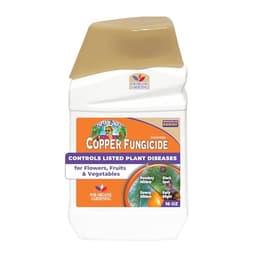
Copper octanoate formula with lower phytotoxicity risk than copper sulfate. Mix 0.5-2.0 fl oz per gallon. OMRI-listed for organic gardening. Best all-around choice for home gardeners — effective, widely available, and forgiving of application errors.
$10-$18 · Best for General purpose disease prevention on vegetables, flowers, and houseplants
Check price on Amazon →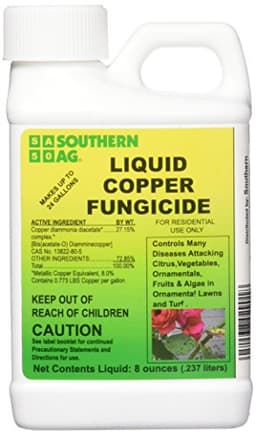
Copper ammonium complex at 8% metallic copper equivalent. More concentrated than Bonide — better value for larger gardens. Mix 2-6 tsp per gallon. Available in 16 oz and 32 oz sizes. A pint lasts most home gardens an entire season.
$12-$20 · Best for Gardeners treating larger areas or needing more concentrated coverage
Check price on Amazon →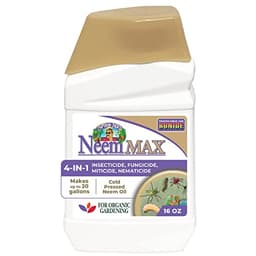
For gardeners concerned about copper soil accumulation, neem oil provides antifungal properties without heavy metal buildup. Less effective than copper against bacterial diseases, but a good alternative for powdery mildew and mild fungal issues.
$8-$15 · Best for Low-impact alternative when copper accumulation is a concern
Check price on Amazon →Treatment information on PlantFix is educational. When using any pesticide — including organic options like neem oil or insecticidal soap — read and follow the entire product label; the label is the law. For persistent or high-stakes problems, your local university extension service offers free, region-specific advice. Read about how we source and verify treatment guidance in our Editorial Standards.
FAQ
Is copper fungicide safe for organic gardening?▼
Yes. Most copper fungicide products are OMRI-listed and approved for organic gardening in the US. However, copper does accumulate in soil over time, so some organic certification programs limit annual copper application rates. The EU caps copper use at 4 kg per hectare per year. Use the minimum effective rate and consider rotating with non-copper alternatives to reduce long-term soil buildup.
Can you eat vegetables sprayed with copper fungicide?▼
Yes, after washing. Copper fungicide residue is on the surface of produce and washes off with water. Most products have a pre-harvest interval (PHI) of 0-1 days for vegetables, meaning you can spray and harvest the next day. Always check the specific product label for PHI. The blue-green residue is the copper compound — it's not harmful after washing but doesn't look appetizing.
Can copper fungicide burn plants?▼
Yes. Phytotoxicity (copper burn) occurs when free copper ions damage leaf cells. Risk factors: temperatures above 85°F, drought stress, high humidity, acidic spray solution pH, and sensitive plant species. Symptoms are brown/bronze leaf margins, spots, and premature leaf drop. To minimize risk: spray in early morning, use the lowest effective concentration, and never spray stressed plants.
How often should you apply copper fungicide?▼
Every 7-10 days during active disease pressure (warm, humid weather). Reapply after rainfall over 1-2 inches. For dormant sprays on fruit trees, one application in late winter before bud break is usually sufficient. Reduce frequency during dry weather — copper stays on leaf surfaces longer when it doesn't rain.
Is copper fungicide safe for pets?▼
The dried residue is generally safe — pets walking through a treated garden aren't at significant risk. However, don't let pets drink freshly mixed spray solution or eat large quantities of freshly sprayed foliage. Keep pets away from treated areas until the spray has dried completely (1-2 hours). Copper is moderately toxic to cats if ingested in large amounts.
Related
- Plant Diseases: How to Identify and Treat the Most Common Ones →
- Leaf Spot Disease: Fungal vs. Bacterial (ID Chart + Treatment) →
- Powdery Mildew Treatment: What Works, Skip the Baking Soda →
- Anthracnose: How to Identify and Treat It on Every Kind of Plant →
- Downy Mildew: Why It's Not Powdery Mildew — and Why That Changes the Treatment →
- Tomato Blight: How to Identify, Treat, and Stop Early & Late Blight →
- Insecticidal Soap: What It Actually Kills (Including Spider Mites), DIY Recipe & Why Dawn Is Wrong →
- Neem Oil for Plants: Complete Guide to Using It Effectively →
- Plant Bugs: Identify Any Bug on Your Plant in 30 Seconds →
Not sure what's wrong?
Use the diagnosis tool →Get seasonal plant care reminders and pest alerts.