Spotted Lanternfly: How to ID, Kill & Report Them (2026 State Guide)
13 min read · Updated 2026-06-05
grey spotted bug that flashes red when it jumps
Spotted lanternfly.
Invasive — kill it, then check for more.
- Harms people?
- No
- Spreads?
- Eggs hitchhike
- Kills plants?
- Vines & saplings
Do this in the next 5 minutes
Squish it, then scan the nearest trunks
They're rarely alone. Check tree trunks, fence posts and outdoor furniture nearby — especially any tree of heaven, their favorite host. In many states you're asked to report sightings outside known infestation zones; your state agriculture department's site has the form.
What kills them
- Likely at home
Stomping and swatting
Genuinely the front-line method — they're quick but land often. No license required, no downside, and every female killed before October is dozens of eggs that never happen.
- Likely at home
Scraping egg masses
September through June, look for grey putty-like smears on trunks, stones and outdoor gear. Scrape into a bag with rubbing alcohol or hand sanitizer using an old card or putty knife. Each mass destroyed is 30–50 lanternflies that never hatch.
- $15–30
Wraps around the trunk and funnels climbing nymphs into a collection bag — no sticky band, so birds and squirrels aren't collateral. Set in spring on trees they favor.
Confirm before you treat
- An inch long; grey forewings with black polka dots
- Bright red underwings that flash when it hops or flies
- Gathered on trunks and stems — especially tree of heaven
Failure point · October
Stopping when the adults die off
Frost kills every adult, and it looks like the problem solved itself. It didn't — the egg masses they left survive winter fine, and each one is next summer's swarm. The scraping season from fall through spring is where the war is actually won.
U.S. Department of Agriculture Stephen Ausmus/Visual Info… (Public domain)
By PlantFix Editorial Team · Sources: University Extension Programs, USDA, EPA
How to Get Rid of Spotted Lanternflies (Quick Answer)
The spotted lanternfly (Lycorma delicatula) is an invasive planthopper — not actually a fly — now confirmed in 17 states as of spring 2026. Adults are about 1 inch long with gray, black-spotted forewings. Open those wings and you'll see the giveaway: bright red hindwings with black spots and a white band. They feed on the sap of 70+ tree and plant species, causing oozing wounds, honeydew buildup, and sooty mold.
To get rid of them, match your method to the season:
- October through May: Scrape egg masses off trees, fences, and outdoor furniture. Drop them into a bag of rubbing alcohol or hand sanitizer. Each mass holds 30-50 eggs — destroying even a few makes a real difference.
- May through July (nymphs): Wrap tree trunks with sticky bands or circle traps to catch nymphs climbing up to feed. Apply neem oil or insecticidal soap directly on nymphs.
- July through November (adults): Use a contact spray (vinegar + dish soap works for small numbers), set circle traps on high-traffic trees, or apply systemic insecticide (dinotefuran) for severe infestations on large properties.
Report every sighting to your state agriculture department — many states have quarantine orders, and Ohio declared a statewide quarantine in February 2026. Identify it with the diagnosis tool if you're not sure what you're looking at.
Spotted Lanternfly Identification (30-Second Field Guide)
Spotted lanternflies go through four visually distinct life stages, and each one looks completely different from the last. Here's what to look for at any time of year.
Egg masses (October–May): Grayish-brown, smooth, putty-like smears about 1 inch long — often described as looking like a smear of dried mud. Fresh egg masses have a waxy, shiny coating. Older masses crack and become dull gray-brown. They're laid on almost any flat outdoor surface: tree bark, fence posts, patio furniture, car wheel wells, shipping containers, firewood. Each mass contains 30-50 eggs arranged in neat rows.
Early nymphs (May–June): About 1/4 inch, black body with bright white spots. No wings yet. They hop aggressively — if tiny black-and-white insects are bouncing off your plants like fleas, this is likely what you have.
Late nymphs (June–July): About 1/2 inch, red body with white spots and black stripes. More visible and alarming-looking than early nymphs. Still no wings, still hopping.
Adults (July–November): About 1 inch long. Wings folded at rest: grayish-tan forewings with black spots. Wings spread: vivid red hindwings with black spots and a white band, black-and-yellow striped abdomen. This is the stage most people photograph and panic about.
Spotted lanternfly vs. lantern bug vs. moth: People frequently mistake spotted lanternflies for moths because of their wing pattern. They're planthoppers (order Hemiptera, same as stink bugs and cicadas), not moths or flies. They don't bite, sting, or damage structures — their harm is entirely to plants.
Where to look: Tree of Heaven (Ailanthus altissima) is their preferred host. If you have this weedy tree on your property, check it first. Also check grapevines, maples, willows, birch, walnut, and fruit trees. Adults often congregate in large groups on trunks and branches at dusk.
2026 Spread Update: 17 States and Counting
Since the first US detection in Berks County, Pennsylvania in 2014, the spotted lanternfly has expanded dramatically. According to the Cornell Integrated Pest Management distribution map, confirmed populations exist in at least 17 states as of 2026: Pennsylvania, New Jersey, New York, Delaware, Maryland, Virginia, West Virginia, Connecticut, Massachusetts, Rhode Island, Ohio, Indiana, Michigan, North Carolina, Vermont, Maine, and Kentucky.
Several developments made 2026 worse than predicted:
Ohio went statewide. In February 2026, the Ohio Department of Agriculture declared a statewide quarantine after spotted lanternflies were confirmed in all 88 counties. That's the largest single-state expansion event yet — Ohio went from partial detections to full statewide quarantine in under two years.
Maryland expanded again. In March 2026, Maryland added Dorchester, Saint Mary's, Somerset, and Worcester counties to its quarantine, making it effectively statewide.
Cities are accelerating spread. A February 2026 NYU study found that urban environments actually help spotted lanternflies thrive. Cities offer abundant Tree of Heaven (which grows aggressively in disturbed urban soil), heat-island warmth that extends the active season, and constant transportation corridors that carry egg masses on vehicles, railcars, and shipping materials.
Mild winters aren't slowing them. Spotted lanternfly egg masses can survive temperatures down to about -4°F. With consecutive mild winters across the Northeast, egg survival rates have been higher than usual. Penn State's SLF hatch prediction tool shows earlier emergence in 2026 compared to recent years.
Where they're headed next: Based on USDA APHIS climate models, most of the eastern US from Maine to Florida has suitable habitat. The Pacific Northwest (Oregon, Washington) and California wine country are also flagged as high-risk — the grape and wine industry is lobbying for aggressive inspection at state borders.
What Damage Do Spotted Lanternflies Actually Cause?
Spotted lanternflies are sap-feeders. They insert their piercing mouthparts into plant tissue and drain phloem sap — the nutrient-rich fluid the plant uses to transport sugars. A single lanternfly won't kill a tree. Hundreds or thousands feeding simultaneously on the same tree will.
The damage chain works like this:
Step 1 — Sap loss: Heavy feeding weakens the tree by draining carbohydrate reserves. Stressed trees become vulnerable to secondary infections, winter injury, and other pests.
Step 2 — Honeydew production: Like aphids and whiteflies, spotted lanternflies excrete a sticky, sugary waste called honeydew. During heavy infestations, honeydew literally rains from infested trees — coating anything underneath: cars, decks, patio furniture, other plants.
Step 3 — Sooty mold: The honeydew feeds black sooty mold fungi that coat leaves, blocking photosynthesis and further weakening the plant. The same sooty mold coats your outdoor surfaces, creating a black, sticky mess that's difficult to clean.
Step 4 — Plant decline or death: Repeated heavy feeding across multiple seasons can kill trees — especially young or already-stressed ones. Grapevines are particularly vulnerable. Penn State Extension documented 100% vine loss in some affected Pennsylvania vineyards during the initial years of the invasion.
Economic impact by crop:
- Grapes and wine: Most economically significant. Feeding reduces sugar content in grapes and can kill vines outright.
- Tree fruit: Apples, peaches, plums, and cherries are fed on. Honeydew and sooty mold degrade fruit quality.
- Hardwood timber: Maple, walnut, and oak are hosts. Long-term feeding stress reduces timber quality.
- Hops: Craft breweries in the Northeast have reported significant hop losses.
- Homeowner damage: The sooty mold on decks, patios, cars, and outdoor furniture is the #1 complaint from residential property owners. It's not structural damage, but it's a real quality-of-life problem.
Tree of Heaven (Ailanthus altissima) is their preferred host and serves as a reproductive hub. But they feed broadly — over 70 documented plant species, including many common landscape and garden plants.
How to Kill Spotted Lanternflies: 7 Methods Ranked
I've organized these from most practical for homeowners to most aggressive. Start with the first methods and escalate only if needed.
1. Egg mass scraping (October–May) — Most effective per effort
This is the highest-impact thing any homeowner can do. Walk your property monthly from October through May, checking tree trunks, fence posts, outdoor furniture, stone walls, vehicle wheel wells, and any flat outdoor surface. Scrape egg masses with a credit card or putty knife into a container of rubbing alcohol or hand sanitizer. Penn State Extension recommends double-bagging in a ziplock as backup. Each mass destroyed prevents 30-50 lanternflies from hatching.
2. Circle traps on trees (May–November) — Best passive method
Circle traps are funnel-shaped mesh wraps attached to tree trunks that capture nymphs and adults as they climb up to feed. They're far better than flat sticky bands because they dramatically reduce bycatch of birds, lizards, and beneficial insects. Penn State developed the design, and commercial versions are widely available. Check and empty traps weekly.
3. Sticky tree bands (April–November) — Effective but risky for wildlife
Wrap tree trunks with a commercial sticky band product. Highly effective at catching nymphs, but flat sticky bands also trap birds, squirrels, and beneficial insects. If you use flat bands, wrap them with wire mesh or chicken wire to create a cage that lets small insects through but blocks larger animals. Check daily and replace saturated bands.
4. Neem oil spray (all active stages) — Best organic option
Apply neem oil concentrate mixed per label directions. Works as a contact killer and feeding deterrent. Most effective on nymphs. For adults, thorough coverage is needed since their larger bodies are harder to penetrate. Reapply every 7-14 days and after rain. OMRI listed for organic use.
5. Contact spray: vinegar + dish soap (adults) — Quick knockdown
Mix equal parts white vinegar and water with a tablespoon of dish soap per quart. Spray directly on lanternflies — it kills on contact within seconds by disrupting their waxy coating. Cheap, non-toxic, and satisfying to use. The limitation: it only works on the ones you can directly hit, which is impractical for heavy infestations on tall trees.
6. Insecticidal soap (nymphs and young adults)
Insecticidal soap spray applied directly to nymphs kills on contact by disrupting cell membranes. Less effective on mature adults due to their tougher exoskeleton. Best used during the nymph stage (May–July) for targeted control on smaller trees and shrubs you can reach with a sprayer.
7. Systemic insecticide — dinotefuran (severe infestations only)
For properties with hundreds of lanternflies or valuable trees at risk, a systemic insecticide applied as a trunk injection or soil drench is the nuclear option. Dinotefuran moves through the tree's vascular system and kills anything that feeds on the sap. This is what professional arborists use for high-value trees and vineyards. It's not organic, it kills broadly, and it should be a last resort — but it works when nothing else is controlling the population.
When to call a professional: If you have mature trees (30+ feet) heavily infested, a vineyard or orchard, or a property with hundreds of spotted lanternflies across many trees, a licensed arborist or pest management professional can apply systemic treatments efficiently and safely.
How and Where to Report Spotted Lanternfly Sightings
Reporting matters. State agriculture departments use sighting data to track the invasion front, trigger quarantine orders, and allocate resources. If you see a spotted lanternfly — especially in a county or state where they haven't been previously confirmed — report it immediately.
Before you report: Take a clear photo showing the insect's wings (spread if possible), note your exact location (address or GPS coordinates), and count roughly how many you see. If you find an egg mass, photograph it before destroying it.
State reporting portals:
- Pennsylvania: Online at services.agriculture.pa.gov/SLFReport/
- New York: Online at agriculture.ny.gov/spottedlanternfly or call 1-888-397-4257
- New Jersey: SLF-Sightings@ag.nj.gov or use the Spotted Lanternfly Reporting Tool
- Delaware: agriculture.delaware.gov/plant-industries/reporting-spotted-lanternfly/
- Maryland: DontBug.MD@maryland.gov
- Virginia: Report via the Virginia Cooperative Extension office or VDACS
- Ohio: plantpest@agri.ohio.gov
- Connecticut: CAES.SLF@ct.gov
- All other states: USDA APHIS portal at aphis.usda.gov/plant-pests-diseases/slf or call 1-866-702-9938
What quarantine means for you: In quarantined counties, businesses and residents are required to inspect vehicles and outdoor items before moving them to non-quarantined areas. Some states require permits to transport regulated articles (outdoor household items, construction materials, nursery stock) out of quarantine zones. The goal is to prevent egg masses from hitchhiking to new areas on vehicles, firewood, and shipping materials.
Spotted Lanternfly Lifecycle: Seasonal Action Calendar
Knowing the lifecycle is the key to timing your control efforts. Here's what's happening each season and exactly what you should be doing.
October–April: Egg mass season
Females lay egg masses in late September through November. Eggs overwinter and are viable until hatching the following spring. Your action: Walk your property monthly and scrape every egg mass you find. Check tree trunks, fence posts, patio furniture, stone walls, firewood, car wheel wells. This is the single highest-impact action any homeowner can take.
May–June: Early nymph emergence
Tiny black-and-white nymphs hatch and immediately begin climbing trees and feeding. They're small and vulnerable at this stage — the best window for insecticidal soap, neem oil, or Bt applications. Your action: Install circle traps on host trees before emergence (check Penn State's hatch predictor tool for your area). Spray nymphs on contact when you see them.
June–July: Late nymph stage
Nymphs grow larger, turn red with white spots and black stripes. They're more visible but also more resilient. Continue circle trap monitoring and spray treatments. Your action: Maintain traps. Target congregations on tree trunks with contact sprays in the early morning when they're sluggish.
July–September: Adult stage and peak activity
Adults emerge with wings, can fly (clumsily), and begin mass feeding on sap. This is when honeydew production peaks and sooty mold becomes a problem. Mating occurs. Your action: Continue circle traps. For severe infestations on valuable trees, consult a professional about systemic treatment. Use vinegar spray for spot kills on accessible adults.
September–October: Egg laying
Mated females seek flat surfaces and begin laying egg masses. Each female lays one mass of 30-50 eggs. The next generation is now locked into your property unless you remove the masses. Your action: Start daily egg mass patrols. Remove and destroy every mass you find. The eggs are the most vulnerable target — each mass destroyed prevents an entire brood.
Critical point about Tree of Heaven: Ailanthus altissima serves as both a preferred feeding host and a mating aggregation site. Removing Tree of Heaven from your property (herbicide the stumps — it resprouts aggressively from cut trunks) eliminates the primary hub that draws spotted lanternflies from surrounding areas. However, removal should happen in phases to avoid dispersing established populations to other hosts. Penn State recommends removing 90% and leaving 10% as trap trees that can be treated with systemic insecticide.
Frequently Asked Questions
These are the questions I see most often from homeowners dealing with spotted lanternflies for the first time.
Recommended Products
We earn a commission if you buy through these links, at no extra cost to you. We recommend based on what works, not what pays. How this works.
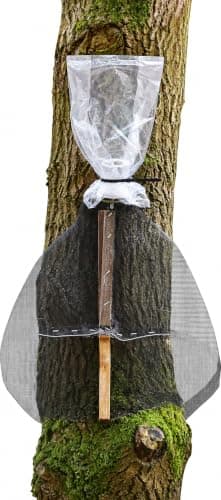
The most effective passive trapping method recommended by Penn State Extension. Funnel-shaped mesh wraps around the tree trunk and funnels climbing nymphs and adults into a collection container. Unlike flat sticky bands, circle traps dramatically reduce bycatch of birds and beneficial insects. Install on Tree of Heaven and other host trees before nymph emergence in May.
$15-$30 per tree · Best for Ongoing population reduction without harming wildlife or beneficial insects
Check price on Amazon →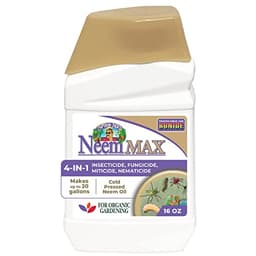
Organic contact killer and feeding deterrent effective against spotted lanternfly nymphs. Mix per label directions and spray directly on nymphs when spotted. Also disrupts feeding behavior on treated plant surfaces. Reapply every 7-14 days and after rain. OMRI listed for organic use.
$12-$20 · Best for Organic nymph control on accessible trees and garden plants
Check price on Amazon →A simple putty knife and sealable bags are all you need for the highest-impact spotted lanternfly control method: egg mass destruction. Scrape masses into a bag containing rubbing alcohol or hand sanitizer. Walk your property monthly from October through May. Each mass destroyed prevents 30-50 lanternflies next spring.
$5-$10 · Best for Winter and spring egg mass removal — the most cost-effective control method
Treatment information on PlantFix is educational. When using any pesticide — including organic options like neem oil or insecticidal soap — read and follow the entire product label; the label is the law. For persistent or high-stakes problems, your local university extension service offers free, region-specific advice. Read about how we source and verify treatment guidance in our Editorial Standards.
FAQ
Do spotted lanternflies bite or sting?▼
No. Spotted lanternflies have piercing-sucking mouthparts designed to penetrate plant tissue. They cannot bite or sting humans or pets. They're completely harmless to handle — they'll just try to hop away. The worst they'll do is excrete honeydew on you, which is sticky but nontoxic.
Will spotted lanternflies damage my house?▼
They won't damage the structure of your home. They don't bore into wood, eat fabric, or infest pantries. The real problem is the honeydew and sooty mold — if they're feeding on trees near your house, the sticky honeydew rains down and coats decks, siding, and outdoor furniture. The black sooty mold that grows on the honeydew is difficult to clean and looks terrible. Power washing with a detergent solution removes it.
What eats spotted lanternflies?▼
Several native predators are starting to adapt. Wheel bugs (a type of assassin bug) are documented predators. Praying mantises, birds like chickens and gray catbirds, and some spider species eat them too. Research is ongoing into parasitic wasps that attack spotted lanternfly eggs. However, no native predator currently controls populations at a meaningful scale — human intervention through trapping, spraying, and egg destruction remains essential.
Is it illegal to not kill a spotted lanternfly?▼
No state has made it a crime to fail to kill an individual spotted lanternfly. However, several states (Pennsylvania, New Jersey, New York, Virginia, Maryland, Ohio) have quarantine orders that legally require businesses to inspect goods before transporting them out of quarantined areas. Failing to comply with quarantine regulations can result in fines for commercial operations. For homeowners, the obligation is civic — report sightings and destroy them when you can.
Will cold weather kill spotted lanternflies?▼
It depends on how cold. Egg masses can survive temperatures down to about -4°F (-20°C). Sustained cold below that threshold kills a significant percentage of eggs, but recent winters in the Northeast have rarely reached those extremes. Active nymphs and adults die with the first hard frosts in fall, but by then they've already laid the next generation of eggs. Winter isn't solving this problem.
Can spotted lanternflies fly?▼
Adults can fly, but they're weak, clumsy fliers. They primarily hop and glide — using short flights to move between trees and to evade threats. They don't migrate long distances under their own power. The real long-distance spread happens through human-assisted transport: egg masses laid on vehicles, railcars, nursery stock, firewood, and shipping materials. That's why quarantine inspections matter.
Related
- Neem Oil for Plants: Complete Guide to Using It Effectively →
- Insecticidal Soap: What It Actually Kills (Including Spider Mites), DIY Recipe & Why Dawn Is Wrong →
- Whiteflies: The Shake Test, Damage Chain & 3-Week Treatment Protocol →
- Aphids on Plants: How to Kill Them Fast (and Stop the Ants) →
- Cicada Killer Wasp: Not a Murder Hornet (ID Guide + Yard Management) →
- Japanese Beetles: Why Traps Backfire & a Week-by-Week Control Calendar →
- Yellow Sticky Traps for Gnats: Placement & Best Picks →
- Leaf Footed Bug vs Assassin Bug: How to Tell Them Apart (And Not Kill the Wrong One) →
- Tomato Hornworm ID: Kill It — Unless It Has White Cocoons →
- Diatomaceous Earth for Plants: Which Pests It Kills (And Which It Doesn't) →
- Garden Pest Identification: 25+ Bugs by the Damage They Do →
Not sure what's wrong?
Use the diagnosis tool →Get seasonal plant care reminders and pest alerts.