Cicada Killer Wasp: Not a Murder Hornet (ID Guide + Yard Management)
That 2-inch wasp digging holes in your lawn is a cicada killer — not a murder hornet. Here's how to tell the difference in 5 seconds, whether you should worry, and how to manage burrows without pesticides.
11 min read · Updated 2026-06-03
By PlantFix Editorial Team · Sources: University Extension Programs, USDA, EPA
Is That Giant Wasp Dangerous? (Quick Answer)
Cicada killer wasps are large, solitary ground-nesting wasps (1.5-2 inches long) that show up in yards from late June through August. Despite their terrifying size, they're one of the least aggressive wasps you'll encounter. Females rarely sting unless you grab one with your bare hand. Males don't even have a stinger — they'll buzz your head to look tough, but that's all bluff. These are NOT murder hornets, NOT yellowjackets, and NOT a threat to your family or pets.
If the burrows are tearing up your lawn, the fix is growing thicker grass and adding mulch to bare spots. Cicada killers pick thin, sandy, sun-baked soil for nesting — make those areas less appealing and they'll move on. They're only active 4-6 weeks per year, and they're actually doing you a favor by controlling cicada populations.
Not sure what you're looking at? Identify it with the diagnosis tool — our tool can distinguish cicada killers from murder hornets, yellowjackets, and paper wasps.
Cicada Killer Identification (5-Second Field Guide)
The fastest ID: look at the abdomen. Cicada killers have a black abdomen with broken, jagged yellow bands that don't fully connect across the middle. That uneven yellow-on-black pattern is unique — no other large wasp in North America has it.
Here's the full profile:
- Size: 1.5 to 2 inches long. They're big enough to make you flinch, but smaller than they look in flight.
- Body color: Reddish-brown thorax (middle section), black abdomen with jagged yellow stripes
- Wings: Rust-brown, translucent
- Behavior: Solitary. You'll see individuals flying low over lawns, not swarms. Males patrol territory in figure-eight patterns.
- Nests: Individual burrows in the ground with a small pile of excavated soil at the entrance — looks like someone poked a finger-sized hole in your lawn and left a dirt mound
Cicada killer vs. murder hornet (northern giant hornet): This is the #1 panic question every summer. The murder hornet has a large, bright orange head and straight, solid brown bands on an orange abdomen. Cicada killers have a dark head and those distinctive jagged yellow markings on black. Murder hornets are also social colony wasps that nest in enclosed cavities — cicada killers are solitary diggers in open soil. According to Massachusetts Introduced Pests Outreach, the easiest single ID feature is the head color: orange = murder hornet, dark = cicada killer.
Cicada killer vs. yellowjacket: Yellowjackets are half the size (about 1/2 inch), bright yellow and black with a smooth pattern, and aggressively social — they swarm and sting repeatedly. Cicada killers are twice the size, reddish-brown and black, and couldn't care less about your picnic.
Cicada killer vs. paper wasp: Paper wasps are slender, about 3/4 inch, with long dangling legs in flight. They build papery nests under eaves, not burrows in the ground. Different body shape, different nesting, different temperament.
Are Cicada Killers Dangerous? (Honest Assessment)
I'll give you the straight answer: no. Cicada killers are among the safest large insects you'll encounter in your yard.
Females: They have a stinger, and they use it — on cicadas. The stinger delivers a paralytic venom that immobilizes cicadas weighing as much as the wasp itself. They can theoretically sting humans, but it almost never happens. Penn State Extension notes that females sting people only when directly handled (grabbed, stepped on barefoot, or trapped against skin). Even then, the sting is reportedly less painful than a yellowjacket sting.
Males: Zero stinging capability. They don't have a stinger at all. What males DO have is aggressive territorial behavior — they'll hover in your face, buzz around your head, and dive-bomb you if you walk through their patrol zone. It looks scary. It's 100% theater. Michigan State University Extension describes males as "all bark and no bite." They're defending their territory from rival males and investigating anything that enters their airspace, including you. Walk through them. Nothing will happen.
Pets: Dogs occasionally snap at cicada killers, and a dog that catches and mouths a female could get stung on the tongue or lip. It'll hurt and swell, but it's not dangerous unless the animal has a severe insect allergy. Cats rarely interact with them.
Children: The biggest risk is barefoot kids stepping on a female in the grass. This is the one scenario where stings actually occur. If your kids play barefoot in an area with active burrows, shoes are the simple fix.
The bottom line: Unless someone in your household has a documented severe insect venom allergy, cicada killers pose essentially zero threat. Every major university extension program — Clemson, NC State, Oklahoma State, Michigan State, Maryland — explicitly states that control is unnecessary for safety reasons. The only legitimate reason to manage them is cosmetic lawn damage from burrows.
Cicada Killer Life Cycle (Why They Pick Your Yard)
Understanding their annual cycle explains why they're in your yard and when they'll leave.
Late June – early July: Adults emerge from underground where they spent the winter as pupae. Males emerge first and immediately stake out territories, patrolling low over the lawn. Females emerge a few days later.
July – August (active season): After mating, each female digs her own burrow — a tunnel roughly half an inch wide and 6-10 inches deep, with side chambers branching off the main shaft. She then hunts cicadas. The hunting sequence is remarkable: she locates a cicada in a tree by sound, flies up, stings it to paralyze (not kill) it, then carries the paralyzed cicada back to her burrow in flight. A cicada can weigh as much as the wasp, so this is like you carrying another adult human while running. She provisions each chamber with 1-2 cicadas for a female egg or 1 cicada for a male egg, lays an egg on the paralyzed prey, and seals the chamber.
Late August – September: Adults die. Their entire above-ground life lasts about 4-6 weeks.
Fall – Spring (underground): Larvae hatch, consume the paralyzed cicadas (their only food), spin a cocoon, and overwinter as prepupae. They pupate in spring and the cycle restarts.
This single-generation-per-year lifecycle means population growth is slow. You won't go from 2 wasps to 200 in one season. But females do tend to nest near where they emerged, so a small colony can gradually grow over several years if habitat conditions remain favorable.
Why YOUR yard: According to NC State Extension, cicada killers choose nesting sites based on four factors:
- Sandy or well-drained soil — easy to excavate, doesn't collapse
- Full sun exposure — they need warm soil for larval development
- Sparse vegetation — thin lawn, bare patches, exposed soil edges
- Proximity to trees with cicadas — they need prey within flying distance
South-facing slopes, garden bed edges, patio borders, between pavers, and along driveways are classic nesting sites. If your lawn has bare or thin spots in full sun near trees, that's prime cicada killer real estate.
How to Manage Cicada Killer Wasps in Your Yard
Before you do anything, ask yourself: do these wasps actually need managing? They're here for 4-6 weeks, they're harmless, and they kill cicadas. If the answer is "they're just making me nervous," the honest recommendation from every extension program is to leave them alone.
If the burrows are genuinely damaging your lawn (undermining a patio, eroding a slope, creating trip hazards), here's how to discourage nesting without reaching for a spray can:
Option 1: Thicken your lawn (best long-term fix)
Cicada killers avoid dense turf because it's hard to dig through. Oklahoma State University Extension recommends maintaining a thick, healthy lawn as the most effective prevention. Overseed bare and thin spots in fall. Raise your mowing height — taller grass shades the soil surface and retains moisture, both conditions cicada killers dislike. This is a permanent solution that also improves your lawn for every other reason.
Option 2: Mulch bare soil areas
Spread 2-3 inches of mulch over garden bed edges, patio borders, and any bare soil where burrows appear. Mulch blocks access to the soil surface and changes the temperature and moisture conditions enough to deter nesting. Clemson Extension specifically recommends this approach for ornamental beds.
Option 3: Water the nesting area
Cicada killers prefer dry, sun-baked soil. Keeping the nesting area consistently moist during their active period (late June through July) discourages females from digging. NC State Extension notes that drenching the area with water can encourage wasps to abandon nesting sites. Run a sprinkler over the area every evening during peak emergence.
Option 4: Direct burrow treatment (last resort)
If you must eliminate active burrows — say, they're under a children's play area — apply insecticidal dust (carbaryl/Sevin dust) directly into the burrow entrance at dusk when the female is inside. University of Maryland Extension recommends this method but emphasizes: do NOT close the burrow opening after treatment, as the wasp needs to walk through the dust to contact it. This kills individual wasps but doesn't prevent new ones from nesting nearby.
What doesn't work:
- Pouring water into burrows. The tunnels are designed to drain.
- Spraying the lawn with broad insecticide. Waste of money and kills beneficial insects.
- Traps. No effective trap exists for cicada killers.
- Stomping on burrows. She'll dig a new one 6 inches away.
The Case for Leaving Them Alone
I'm going to advocate for the wasps here, because the ecological picture is worth knowing.
Cicada killers are specialist predators of cicadas — one of the few natural controls on cicada populations. A single female provisions her nest with 2-4 cicadas per egg chamber, and she may dig multiple chambers. Over her 4-6 week lifespan, one wasp removes roughly 15-20 cicadas from your yard. A small colony of 10-20 wasps eliminates 150-400 cicadas in a season.
Cicadas, while generally harmless, damage young trees when females cut slits in branches to lay eggs. Heavy cicada years can cause significant twig dieback in newly planted ornamental trees. Cicada killers provide free, targeted biocontrol that no pesticide can replicate.
They also serve as food for other wildlife. Skunks, armadillos, and certain birds dig up cicada killer burrows to eat the paralyzed cicadas and larvae inside — it's a high-protein food source in mid-summer when other prey is scarce.
And here's the practical argument: they're gone in 6 weeks. By mid-August, the adults have died and the burrow entrances fill in naturally with rain and foot traffic. The brief nuisance period is a small price for a healthy yard ecosystem. K-State Extension puts it well: "Only the cicadas need to worry."
Common Questions About Cicada Killers
Below are the questions I see most often from homeowners dealing with cicada killers for the first time. For anything not covered here, work through our diagnosis tool and it can help confirm what you're looking at.
Recommended Products
We earn a commission if you buy through these links, at no extra cost to you. We recommend based on what works, not what pays. How this works.
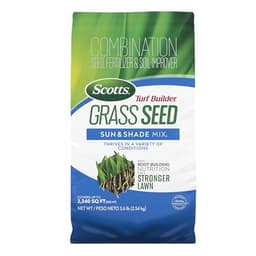
Overseeding thin and bare lawn areas is the most effective long-term deterrent. Cicada killers avoid dense turf because it's difficult to excavate. Choose a sun/shade mix appropriate for your region and overseed in early fall for best establishment.
$15-$30 · Best for Permanently discouraging cicada killer nesting by eliminating bare soil
Check price on Amazon →Spread 2-3 inches of mulch over garden bed edges and bare soil areas where burrows appear. Mulch physically blocks access to the soil surface and changes temperature and moisture conditions. Refresh annually.
$4-$8 per bag · Best for Blocking nesting access in garden beds, patio edges, and ornamental areas
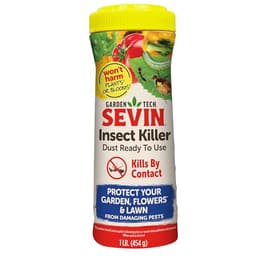
For direct burrow treatment as a last resort. Apply dust into the burrow entrance at dusk when the female is inside. Do not seal the opening. The wasp contacts the dust when entering or exiting. Use only when burrows pose a genuine safety concern — not for cosmetic reasons.
$8-$14 · Best for Eliminating individual burrows in high-traffic areas (play areas, walkways)
Check price on Amazon →Treatment information on PlantFix is educational. When using any pesticide — including organic options like neem oil or insecticidal soap — read and follow the entire product label; the label is the law. For persistent or high-stakes problems, your local university extension service offers free, region-specific advice. Read about how we source and verify treatment guidance in our Editorial Standards.
FAQ
Will cicada killers return to the same spot every year?▼
Yes, often they do. Females tend to nest near the site where they emerged, so a colony can persist in the same area for years if soil conditions remain favorable. However, you can break this pattern by changing the habitat: thicken the grass, add mulch, or increase watering in the nesting zone. If the soil is no longer easy to dig and sun-baked, they'll relocate.
Can I pour water down a cicada killer burrow to flood them out?▼
It won't work well. The burrows are engineered to drain — they're angled and dug in well-drained sandy soil specifically because the wasps need dry conditions underground. Flooding the burrow may temporarily annoy the wasp, but she'll bail out, wait, and return or dig nearby. Consistent area-wide watering is more effective than targeting individual holes.
Do cicada killers damage my lawn?▼
The burrows create small mounds of excavated soil at the entrance, which can be unsightly in a manicured lawn. In heavily infested areas, multiple burrows close together can thin turf and create uneven ground. The structural damage is cosmetic, not dangerous — they won't undermine a foundation or retaining wall. The soil mounds wash away with rain or can be raked flat.
Are cicada killers the same as murder hornets?▼
Absolutely not. Cicada killers (Sphecius speciosus) are solitary wasps native to eastern North America. Northern giant hornets (Vespa mandarinia), commonly called murder hornets, are invasive social wasps from Asia found only in a small area of the Pacific Northwest. The fastest way to tell them apart: murder hornets have a large, bright orange head; cicada killers have a dark head. Cicada killers nest individually in the ground; murder hornets build large colony nests in enclosed cavities.
Do cicada killers sting dogs?▼
It's possible but uncommon. A dog that catches or mouths a female cicada killer could get stung, typically on the muzzle or tongue. The sting causes temporary pain and swelling but isn't dangerous unless your dog has a severe insect venom allergy. Most dogs learn to leave them alone after one encounter. If your dog is actively hunting them, keep the dog out of the nesting area during peak activity (midday sun).
How long do cicada killers stay?▼
Adults are active for approximately 4-6 weeks, typically from late June or early July through mid-August, depending on your region. Southern states see earlier emergence, northern states later. By September, all adults have died and won't be seen again until the following summer. The larvae remain underground year-round.
Related
- Japanese Beetles: Why Traps Backfire & a Week-by-Week Control Calendar →
- Beneficial Nematodes: Which Species Kills Your Specific Pest (Buying Guide by Pest Type) →
- Earwig Pictures: What They Look Like & How to Get Rid of Them →
- How to Get Rid of Squash Bugs: Season-Long Battle Plan →
- Leaf Footed Bug vs Assassin Bug: How to Tell Them Apart (And Not Kill the Wrong One) →
- Tomato Hornworm ID: Kill It — Unless It Has White Cocoons →
- Plant Bugs: Identify Any Bug on Your Plant in 30 Seconds →
- Garden Pest Identification: 25+ Bugs by the Damage They Do →
Not sure what's wrong?
Use the diagnosis tool →Get seasonal plant care reminders and pest alerts.