Leaf Miners: Those Squiggly White Lines on Your Leaves (ID + Treatment)
Squiggly white trails or tan blotches on your plant leaves? That's leaf miner damage. Here's which plants need treatment (most don't), the one method that actually works for edible greens, and why contact insecticides are a waste of money.
10 min read · Updated 2026-06-12
By PlantFix Editorial Team · Sources: University Extension Programs, USDA, EPA
What's Making Trails Inside My Leaves? (Quick Answer)
Those white or tan squiggly lines on your leaves are tunnels made by leaf miner larvae — tiny insect grubs that feed between the upper and lower surfaces of leaves. The larvae literally mine through the interior leaf tissue, leaving a visible trail of damage behind them.
Here's the most important thing to know upfront: for most plants, leaf miner damage is purely cosmetic and doesn't need treatment. Your tomato plants, ornamental trees, and flower garden will tolerate leaf miners without any effect on plant health or yield. Established plants simply produce more leaf tissue to compensate.
The exception — and it's a big one — is edible leafy greens. Spinach, chard, beet greens, and lettuce are ruined by leaf miners because the leaf IS the crop. You can't cut around the tunnels; the damaged leaves are unmarketable and unappetizing. If leaf miners hit your greens, treat aggressively with row covers and spinosad (the only organic product that reaches larvae inside the leaf).
Contact insecticides don't work on leaf miners. The larvae are protected inside the leaf — spraying the leaf surface with pyrethrin, permethrin, or general-purpose insecticide can't reach them. This is the #1 wasted treatment mistake, and it kills beneficial parasitic wasps that naturally control leaf miner populations. Use the diagnosis tool if you're not sure what's making marks on your leaves.
Leaf Miner Identification: Trail Types, Species, and Look-Alikes
"Leaf miner" isn't one insect — it's a feeding behavior shared by larvae of several fly, moth, and beetle species. The damage pattern tells you which type you're dealing with.
Serpentine mines (squiggly trails)
The classic leaf miner signature. A narrow, winding trail that starts thin (where the tiny larva first hatched) and gradually widens as the larva grows. You can often see a thin dark line inside the trail — that's frass (excrement). Serpentine mines are caused primarily by fly larvae in the family Agromyzidae, including the vegetable leafminer (Liriomyza sativae) and the American serpentine leafminer (Liriomyza trifolii). These are the most common type in vegetable gardens.
Blotch mines (irregular patches)
Larger, blob-shaped areas of dead tissue rather than narrow trails. Blotch mines start as serpentine mines but expand into wide feeding areas as the larva matures. The spinach leafminer (Pegomya hyoscyami) is the classic blotch miner — it creates irregular round patches on spinach, chard, and beet leaves. According to the University of Maryland Extension, spinach leafminer mines start narrow and then expand into large, irregularly shaped patches that can cover most of the leaf.
Citrus leafminer (Phyllocnistis citrella)
A specific moth species that creates distinctive serpentine mines on citrus tree leaves, causing the leaves to curl and distort. UC IPM (University of California) notes that mature citrus trees (4+ years old) tolerate citrus leafminer damage without effects on yield — treatment is only needed for nursery stock and young trees.
What leaf miners are NOT:
- Slug or snail trails: these are on the leaf surface (shiny, silvery streaks), not inside the leaf tissue
- Spider mite damage: tiny stippling dots, not continuous trails
- Fungal leaf spots: circular or angular spots with defined borders, not winding trails
- Bacterial leaf streak: brown streaks that follow leaf veins, not meandering paths
If the damage is inside the leaf (you can feel it's a hollow tunnel between the leaf surfaces), it's a leaf miner. If it's on the surface only, look at other causes.
Which Plants Do Leaf Miners Attack?
Leaf miners are generalists — over 100 plant species are hosts. But a handful of crops and ornamentals are hit most frequently.
Vegetables (most economically important):
- Spinach and chard: the spinach leafminer (Pegomya hyoscyami) is the #1 pest of these crops in most regions. Creates large blotch mines that render leaves inedible. Cornell Extension identifies this as the primary insect pest of leafy greens in the Northeast.
- Beets: same spinach leafminer species attacks beet greens (all three are related — Chenopodiaceae family)
- Tomatoes and peppers: vegetable leafminer creates serpentine mines, but damage is rarely significant on these plants — the fruit is the crop, not the leaves
- Beans and peas: occasional serpentine mines from Liriomyza species
- Lettuce: vegetable leafminer, cosmetic damage but makes heads unmarketable
Fruit trees:
- Citrus: citrus leafminer causes leaf curling on new growth. Established trees tolerate it; young nursery trees need protection (UC IPM guidance)
- Apple: apple blotch leafminer creates brown blotch mines. Cosmetic only — no effect on fruit
Ornamentals and landscape plants:
- Columbine (Aquilegia): consistently one of the most heavily attacked ornamentals. Columbine leafminer creates widespread serpentine mines. Purely cosmetic — the plant is fine.
- Birch: birch leafminer causes brown blotch mines on birch leaves. Heavy infestations make trees look unsightly but rarely threaten tree health.
- Holly, boxwood, azalea: various leafminer species create blotch mines on these landscape shrubs
- Chrysanthemum: chrysanthemum leafminer is common in greenhouses
The Treat-vs-Ignore Decision (This Saves You Time and Money)
This is the section no other leaf miner article does well. Whether you treat depends entirely on what the plant is, not how bad the damage looks.
TREAT — these plants lose economic value from leaf miners:
- Spinach, chard, beet greens, lettuce, arugula, and other leafy greens where the leaf is the harvest. Mines render the crop inedible or unsaleable.
- Young citrus trees (under 4 years) where heavy mining stunts growth and establishment. Per UC IPM, once citrus trees are established, leafminer damage doesn't affect yield.
- Nursery stock and plants for sale — appearance matters for marketability.
IGNORE — these plants tolerate leaf miners without meaningful harm:
- Tomatoes, peppers, beans, squash, cucumbers — the fruit is the crop. Leaf damage has minimal impact on yield. UMN Extension specifically notes that leafminer damage on tomatoes is cosmetic.
- Established fruit trees (apple, cherry, citrus 4+ years). Trees compensate with additional leaf growth.
- All ornamental perennials (columbine, chrysanthemum) — the plant looks messy but survives fine.
- Landscape trees and shrubs (birch, holly, boxwood) — cosmetic damage only on established plants.
The exceptions to "ignore":
- Young seedlings of any species: heavy mining on seedlings with only a few leaves can stunt growth. Protect seedlings, but once plants are established, relax.
- Extreme infestations (90%+ of leaves mined): even on tolerant plants, near-total leaf loss reduces photosynthesis enough to weaken the plant. This is rare without a severe population explosion.
The economic calculation: A bottle of spinosad costs $15-$20. Row cover fabric costs $15-$30. If leaf miners are on your columbine or tomato plants, you're spending $30+ to fix a cosmetic problem on a $5 plant that doesn't affect your harvest. Save the treatment for where it matters — your leafy greens.
Treatment Options That Actually Work (And the One That Doesn't)
First, the critical warning.
Contact insecticides DO NOT WORK on leaf miners. Pyrethrin, permethrin, carbaryl, malathion, and other contact insecticides kill insects on the leaf surface. Leaf miner larvae are inside the leaf, between the upper and lower surfaces. A contact spray can't reach them. Worse, broad-spectrum insecticides kill the parasitic wasps (Diglyphus isaea and others) that are the most effective natural leaf miner control. UMN Extension explicitly warns: "Do not use broad-spectrum insecticides to treat leafminers. These products kill the natural enemies that keep leafminers in check."
What actually works:
1. Remove and destroy affected leaves (simplest, most effective for small infestations)
Pick off mined leaves and dispose of them in the trash — not the compost. The larvae are still inside the leaf and will eventually pupate in the soil if leaves are left to decompose in the garden. For leafy greens, harvest everything, including mined leaves, to remove larvae from the planting area. This is free, immediate, and effective. UMD Extension lists this as the primary management technique.
2. Row covers (best prevention for edible greens)
Floating row covers are the single most effective leaf miner prevention for vegetable gardens. Install lightweight spunbond fabric over spinach, chard, and beet crops immediately after planting — before adult flies arrive to lay eggs. The covers allow light, water, and air through while physically blocking egg-laying adults. Row covers are highly effective at preventing leaf miner damage when installed before adults become active in spring — they physically exclude egg-laying flies from reaching the plant.
The key: install row covers BEFORE you see damage. Once mines appear, the eggs were laid weeks ago and the larvae are already inside the leaves.
3. Spinosad (the only spray that reaches larvae inside the leaf)
Spinosad is derived from a naturally occurring soil bacterium. Unlike contact insecticides, spinosad is absorbed into leaf tissue (translaminar activity), so it reaches leaf miner larvae feeding between leaf surfaces. Apply when you first see white oviposition dots (egg-laying marks) on leaf surfaces — this catches larvae shortly after they hatch and begin mining. Per Cornell Extension's guidance, spinosad provides good control of spinach leafminer when applied at or before egg-laying with minimal impact on natural enemies.
Timing: spray in the evening (spinosad is toxic to bees for 3 hours after application). Reapply every 7-10 days during active egg-laying season.
4. Neem oil (deterrent, not a cure)
Neem oil doesn't kill larvae inside leaves, but it deters adult flies from landing and laying eggs on treated plants. Apply preventively every 7-14 days during the growing season. It's a useful addition to a row cover + spinosad program but not effective as a standalone treatment for heavy infestations.
5. Yellow sticky traps (monitoring + adult reduction)
Leaf miner flies are attracted to yellow. Place yellow sticky traps among your vegetable plants to monitor when adults are active — this tells you when to install row covers or begin spinosad applications. Traps also catch some adults, reducing egg-laying pressure. They won't eliminate an infestation alone but they're a useful tool in combination with other methods.
Leaf Miner Lifecycle and When to Act
Understanding the lifecycle explains why timing matters more than product choice.
Stage 1: Adult flies emerge (spring, typically March-May depending on region)
Adult leaf miner flies are small (1/10 inch), black or gray with yellow markings. They're hard to spot because they look like generic small flies. Females puncture leaf surfaces to feed on sap (you may see tiny white dots on leaves — oviposition marks) and lay eggs just under the leaf surface.
Stage 2: Larvae mine the leaf (1-3 weeks after eggs are laid)
Larvae hatch inside the leaf and begin feeding, creating progressively wider tunnels. This is the damage stage — and it's also the stage where most treatment is futile because the larvae are protected inside the leaf. The mining period lasts 1-3 weeks depending on temperature and species.
Stage 3: Larvae drop to the soil to pupate
Mature larvae exit the leaf (often through a small hole at the end of the mine) and drop to the soil, where they pupate 1-2 inches below the surface. The pupal stage lasts 2-4 weeks.
Stage 4: Next generation of adults emerges
New adults emerge from the soil and the cycle repeats. Most leaf miner species produce 2-4 generations per year, with the last generation overwintering as pupae in the soil.
When to act for each stage:
- Adults active (white dots on leaves): install row covers, apply neem deterrent, put out sticky traps
- Fresh mines appearing (first 2-3 days): spinosad spray can still reach young larvae
- Established mines visible: too late for spray — remove and destroy mined leaves
- Fall cleanup: remove crop debris to eliminate overwintering pupae in the soil
Garden cleanup is the underrated prevention. Leaf miner pupae overwinter in the top 2 inches of soil directly below infested plants. In fall, remove all crop debris from infested beds. Turning the top 4 inches of soil in early spring exposes pupae to predators and freezing temperatures. Crop rotation — not planting spinach and chard in the same spot year after year — also reduces leaf miner pressure because adults emerge from the soil looking for nearby host plants.
Parasitic Wasps: Your Best (Free) Leaf Miner Control
Nature already has an excellent leaf miner control system — parasitic wasps. And unlike the wasps that sting you at picnics, these are tiny (1-2mm), non-stinging, and genuinely beneficial.
Diglyphus isaea — the specialist
This parasitic wasp specifically targets leaf miner larvae. The female wasp punctures the leaf, paralyzes the leaf miner larva inside, and lays her egg next to it. The wasp larva feeds on the paralyzed leaf miner larva and develops inside the mine. A single female Diglyphus can lay approximately 50 eggs over her 2-week lifespan (at temperatures above 68°F / 20°C), and she also kills additional larvae through "host feeding" — puncturing and consuming extra larvae to sustain herself. In field conditions where broad-spectrum insecticides aren't used, parasitic wasp populations can significantly suppress leaf miner outbreaks — which is why spraying contact insecticides often makes the problem worse.
How to encourage parasitic wasps:
- Stop spraying broad-spectrum insecticides. This is the single most important step. Pyrethrin, permethrin, and organophosphates kill parasitic wasps far more effectively than they kill leaf miners (remember — the miners are protected inside the leaf, but the wasps are on the surface).
- Plant dill, fennel, yarrow, and sweet alyssum near your vegetable garden. These provide nectar for adult wasps.
- Tolerate some leaf miner damage. A small leaf miner population sustains the wasp population that prevents large outbreaks. If you eliminate every leaf miner, the wasps leave or die.
Commercial release:
You can purchase Diglyphus isaea from biological control suppliers for greenhouse use. This is standard practice in commercial greenhouse vegetable production. For outdoor gardens, encouraging the naturally occurring population through habitat and avoiding broad-spectrum sprays is more effective than release.
The irony of contact insecticides:
The most common response to leaf miners — spraying the plant with insecticide — kills the parasitic wasps while leaving the leaf miners alive inside their mines. This is why leaf miner problems often get worse after spraying. You've removed the natural control and the leaf miners continue unaffected. UMN Extension explicitly notes that broad-spectrum insecticide use is the primary cause of leaf miner outbreaks in gardens.
Frequently Asked Questions
Quick answers for the most common leaf miner questions — especially the "is this even a problem" questions that most articles skip.
Recommended Products
We earn a commission if you buy through these links, at no extra cost to you. We recommend based on what works, not what pays. How this works.

The most effective leaf miner prevention for edible greens. Drape over plants immediately after planting and secure edges with soil, rocks, or landscape staples. Allows 90%+ light and rain through while physically blocking adult flies from laying eggs on leaves. Use 0.5-0.6 oz/sq yd weight for warm-season crops. Remove for pollination if growing fruiting crops underneath.
$15-$30 for 10x25 ft · Best for Spinach, chard, beet greens, lettuce — any leafy crop where the leaf is the harvest
Check price on Amazon →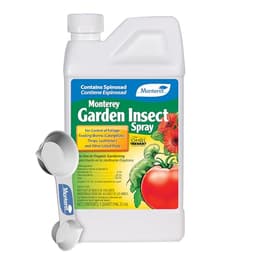
The only organic spray with translaminar activity — absorbed into the leaf to reach larvae mining inside. Apply when you first see white oviposition dots on leaves (not after mines are established). Spray in the evening since spinosad is toxic to bees for 3 hours after application. Repeat every 7-10 days during active egg-laying. Minimal impact on parasitic wasps compared to broad-spectrum insecticides.
$12-$18 · Best for Active leaf miner infestations on edible greens when row covers weren't used
Check price on Amazon →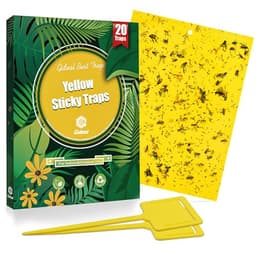
Leaf miner adults are attracted to yellow. Place traps at plant height among vegetable crops to monitor when adult flies are active — this is your signal to install row covers or begin spinosad applications. Traps also catch some adults, reducing egg-laying pressure. Replace every 2-3 weeks or when covered with insects. Use in combination with other methods, not as standalone treatment.
$8-$12 for 20-pack · Best for Monitoring adult leaf miner activity to time preventive treatments correctly
Check price on Amazon →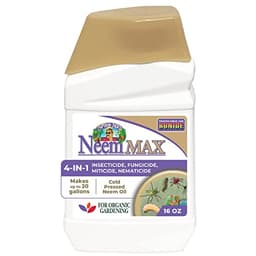
Deters adult leaf miner flies from landing and laying eggs on treated plants. Apply preventively every 7-14 days during the growing season. Does NOT kill larvae already inside leaves — use as a complement to row covers and spinosad, not a replacement. Mix per label directions. See the full neem oil guide for detailed application instructions.
$10-$15 · Best for Preventive deterrent for vegetable gardens already using row covers
Check price on Amazon →Treatment information on PlantFix is educational. When using any pesticide — including organic options like neem oil or insecticidal soap — read and follow the entire product label; the label is the law. For persistent or high-stakes problems, your local university extension service offers free, region-specific advice. Read about how we source and verify treatment guidance in our Editorial Standards.
FAQ
Can you eat leaves with leaf miner damage?▼
Technically, yes — leaf miner damage isn't toxic to humans. The tunnels are made by small fly or moth larvae that don't carry diseases transmissible to humans. However, the damaged tissue is unappetizing (brown, papery, sometimes containing frass), and heavily mined leaves have reduced nutritional value because the larvae consumed the internal tissue. For spinach and lettuce, most people find mined leaves unacceptable. For herbs like basil, minor mines can be cut around.
Do leaf miners spread to other plants?▼
Adult leaf miner flies are mobile and will lay eggs on any suitable host plant in the area. However, most leaf miner species have preferences — the spinach leafminer attacks spinach, chard, and beets but not tomatoes. Leaf miners don't "spread" from plant to plant the way aphids do — the adults fly and choose where to lay eggs. Interplanting different crop families can reduce the chance of a single species affecting your entire garden.
When are leaf miners most active?▼
Adults are most active in spring (March-May) when they emerge from overwintering pupae in the soil. Most species produce 2-4 generations per year, so damage continues through summer and into fall. Leaf miner activity peaks when temperatures are consistently above 60°F (15°C). The first generation in spring typically causes the most damage to leafy greens because early plantings have few natural enemies established yet. Later in the season, parasitic wasp populations build up and provide better natural control.
What's the white trail on my leaves?▼
A white or tan squiggly line inside the leaf is a leaf miner tunnel. The larva feeds between the upper and lower leaf surfaces, consuming the green tissue and leaving a hollow trail. If you hold the leaf up to light, you can often see the tiny larva (a pale yellow or green grub, about 1-3mm) at the widest end of the trail. If the trail is on the leaf surface (not inside it) and looks silvery-shiny, it's more likely a slug or snail trail instead.
Why don't insecticides work on leaf miners?▼
Contact insecticides kill insects by coating their bodies with toxic chemicals. Leaf miner larvae are physically inside the leaf — between the upper and lower leaf surfaces — so sprayed insecticides never touch them. Only systemic or translaminar products (like spinosad, which is absorbed into the leaf tissue) can reach larvae inside mines. This is why broad-spectrum spraying is counterproductive: it misses the leaf miners but kills the parasitic wasps that naturally control them.
Related
- Neem Oil for Plants: Complete Guide to Using It Effectively →
- Yellow Sticky Traps for Gnats: Placement & Best Picks →
- Insecticidal Soap: What It Actually Kills (Including Spider Mites), DIY Recipe & Why Dawn Is Wrong →
- Garden Pest Identification: 25+ Bugs by the Damage They Do →
- Spider Mites: Identification, Treatment & Prevention Guide →
- Aphids on Plants: How to Kill Them Fast (and Stop the Ants) →
- Cabbage Worm vs Cabbage Looper vs Diamondback Moth: 3-Way ID + Organic Treatment →
- Tomato Leaves Curling? 5 Causes Ranked by How Worried You Should Be →
Not sure what's wrong?
Use the diagnosis tool →Get seasonal plant care reminders and pest alerts.