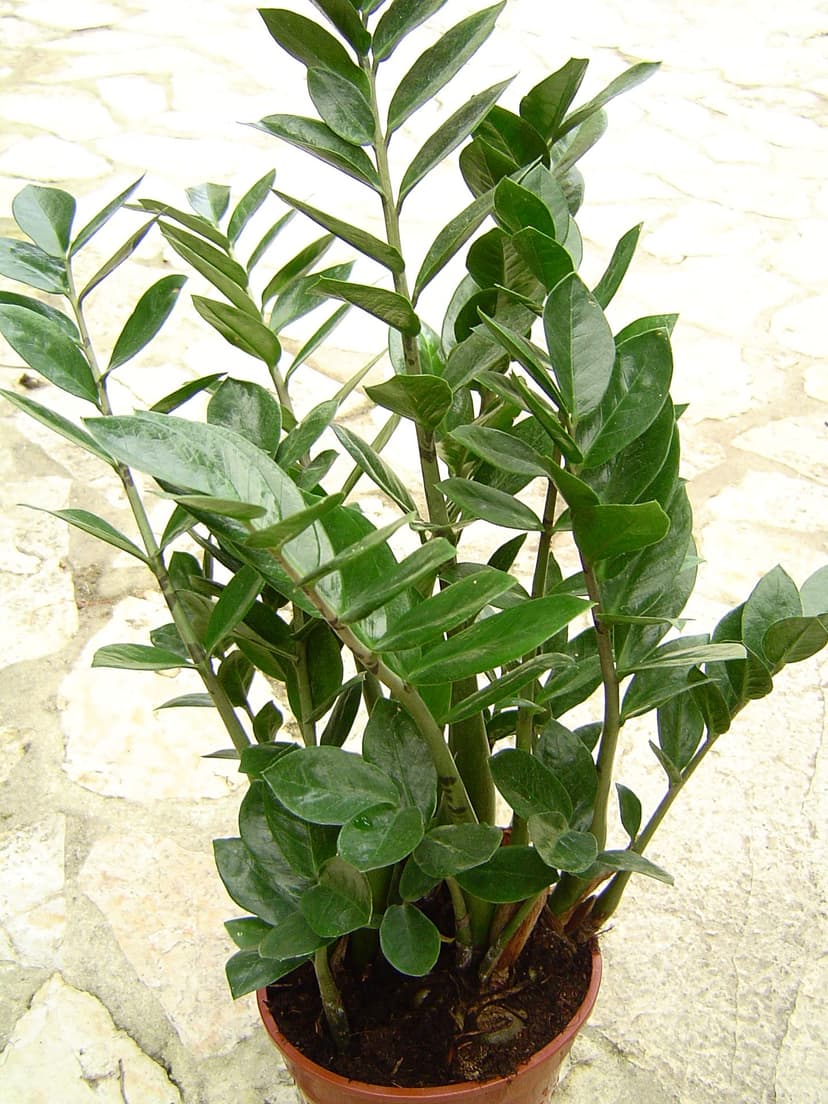
ZZ Plant
Zamioculcas zamiifolia
Also: Zanzibar Gem, ZZ, Eternity Plant, Zuzu Plant
The ZZ plant is a bulletproof houseplant with glossy, dark green compound leaves arranged on gracefully arching stems. Its underground potato-like rhizomes store water and nutrients, allowing it to survive months of neglect. ZZ plants grow slowly but steadily, and their waxy, reflective foliage adds a polished look to any space without demanding much attention.
By PlantFix Editorial Team · Sources: University Extension Programs, USDA
Care Summary
Tips
- – When in doubt, skip the watering. ZZ plants thrive on neglect and their rhizomes store weeks of water.
- – New shoots emerge as bright chartreuse and darken to deep green as they mature — this is normal, not a deficiency.
- – ZZ plants are excellent office plants because they tolerate fluorescent lighting and irregular watering.
- – Wash your hands after handling, especially if you break a stem — the sap contains irritating calcium oxalate crystals.
Common Problems
Yellowing stems and leaves
Causes
- – Overwatering — the most common ZZ plant problem; the rhizomes rot quickly in wet soil
- – Too much direct sunlight scorching the leaves
- – Natural aging of the oldest stems, which yellow and die back as the plant produces new ones
Solutions
- – Cut back watering immediately and let the soil dry out completely — wait until it is dry several inches down
- – Check rhizomes by unpotting: healthy rhizomes are firm and white; rotting ones are brown and mushy
- – If rot is present, cut away all soft rhizome tissue with a sterile knife, let it callous for 24 hours, and repot in dry, fast-draining mix
Stalks leaning or falling over
Causes
- – Overwatering weakening the base of the stems where they attach to the rhizome
- – Very low light causing tall, weak, etiolated stems that cannot support their own weight
- – Top-heavy stems in a too-small or lightweight pot
Solutions
- – If stems are soft at the base, this indicates rot — remove affected stems and reduce watering
- – Move to a brighter location to encourage sturdier, more compact growth
- – Use a heavier pot (terracotta) or a slightly larger container for stability
Leaves dropping or leaflets falling off the stem
Causes
- – Severe overwatering causing the petioles to rot and release their leaflets
- – Cold shock from exposure to temperatures below 45°F or cold drafts
- – Physical damage from being bumped, moved roughly, or placed in a high-traffic area
Solutions
- – Check the stems and rhizomes for rot and address any overwatering immediately
- – Move away from cold windows and drafty doorways during winter
- – Fallen leaflets can actually be propagated — place them upright in moist soil and wait patiently (they root in 2-3 months)
No new growth for months
Causes
- – Normal behavior — ZZ plants are naturally slow growers, especially in low light or during winter dormancy
- – Root-bound plant that has filled its pot with rhizomes and has no room for new shoots
- – Insufficient light or nutrients slowing growth below the already slow baseline
Solutions
- – Be patient during winter — ZZ plants often go dormant and resume growth in spring
- – Check if rhizomes are crowding the pot; if so, repot into a container 1-2 inches wider in spring
- – Feed with a diluted balanced fertilizer once in spring and once in summer to support new shoots
Scale insects on stems
Causes
- – Scale insects are attracted to the smooth, waxy stems of ZZ plants and blend in easily
- – Infested plants brought into the home without quarantine
Solutions
- – Scrape scale off stems with a fingernail or soft toothbrush, then wipe with rubbing alcohol
- – Apply neem oil to all stems and leaf surfaces every 7-10 days for a month
- – Inspect regularly — scale on ZZ plants is easy to miss because the brown shells resemble natural bumps on the stems
Treatment Guides
Spot something wrong with your ZZ Plant? These guides cover the most common houseplant issues with step-by-step treatment plans.
Or use the diagnosis tool →More Plants
Get seasonal plant care reminders and pest alerts.