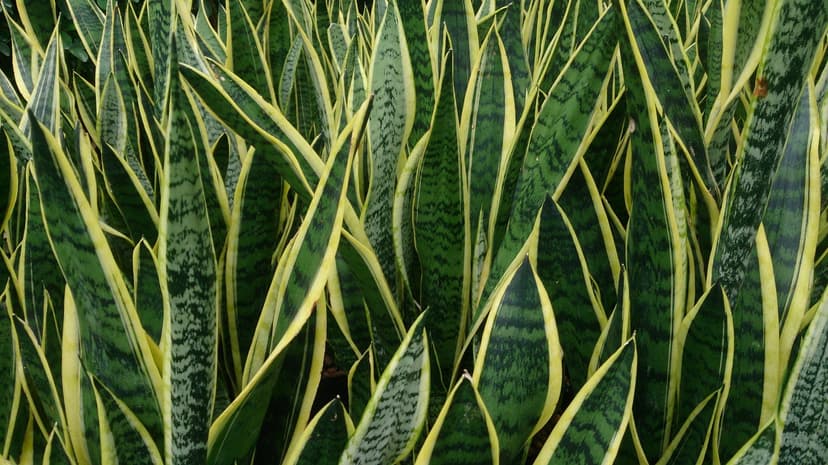
Snake Plant
Dracaena trifasciata
Also: Sansevieria, Mother-in-Law's Tongue, Viper's Bowstring Hemp
The snake plant is a nearly indestructible succulent with stiff, upright leaves that add architectural interest to any room. It thrives on neglect, making it perfect for forgetful waterers and low-light spaces. Snake plants are also outstanding air purifiers, converting CO2 to oxygen at night — a rarity among houseplants.
By PlantFix Editorial Team · Sources: University Extension Programs, USDA
Care Summary
Tips
- – When in doubt, do not water. Snake plants handle drought far better than excess moisture.
- – Terracotta pots are ideal because they wick moisture away from the roots and prevent overwatering.
- – Snake plants are one of the best bedroom plants because they release oxygen at night through CAM photosynthesis.
Common Problems
Mushy, collapsing leaves at the base
Causes
- – Overwatering — the number one killer of snake plants, causing rot where the leaf meets the soil
- – Water pooling in the center rosette of the plant
- – Poor drainage or heavy soil that stays wet for too long
Solutions
- – Remove the plant from its pot, cut away all soft, mushy tissue with a sterile blade, and let the cuts callous for 24-48 hours before repotting
- – Repot in fast-draining cactus mix and a terracotta pot, which wicks moisture away from roots
- – Water around the edges of the pot, never directly into the leaf rosette
Wrinkled or curling leaves
Causes
- – Severe underwatering — while snake plants are drought-tolerant, months without water causes dehydration
- – Root damage from previous rot episode preventing water uptake
Solutions
- – Water thoroughly and let it drain — wrinkled leaves often plump back within a few days
- – If the soil is bone dry and hydrophobic, bottom-water by sitting the pot in a tray of water for 30 minutes
- – Check roots for rot damage if the plant does not recover after watering
Brown tips on leaf ends
Causes
- – Inconsistent watering — alternating long dry spells with heavy watering stresses the leaf tips
- – Fluoride or chlorine sensitivity from tap water
- – Physical damage from being bumped or brushed against
Solutions
- – Establish a regular watering schedule based on soil dryness rather than a fixed calendar
- – Use filtered or rainwater if your tap water is heavily treated
- – Trim brown tips at an angle with clean scissors for a natural appearance — they will not regrow green
Leaves falling over or splaying outward
Causes
- – Too little light causing etiolated, weak growth that cannot support itself
- – Overwatering weakening the base of the leaves
- – Root-bound plant that has become top-heavy in its pot
Solutions
- – Move to a brighter location — even a few hours of indirect light helps strengthen leaves
- – Reduce watering and check the base for softness indicating rot
- – Repot into a slightly larger, heavy pot (terracotta is ideal for stability)
Treatment Guides
Spot something wrong with your Snake Plant? These guides cover the most common houseplant issues with step-by-step treatment plans.
Or use the diagnosis tool →More Plants
Get seasonal plant care reminders and pest alerts.