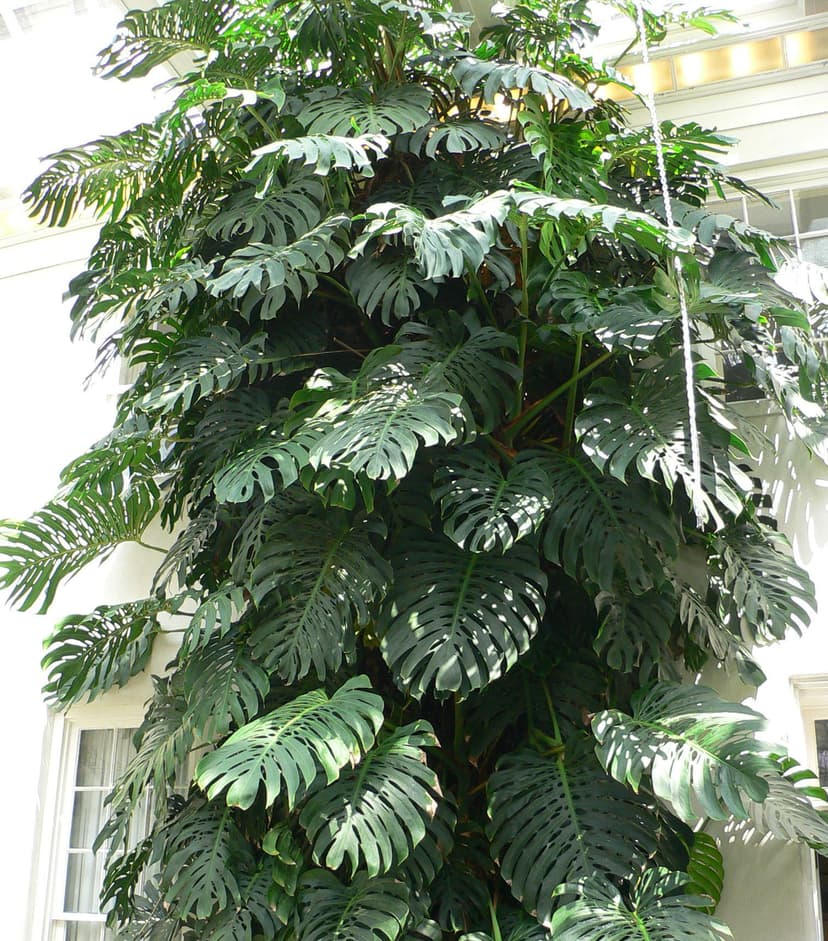
Monstera
Monstera deliciosa
Also: Swiss Cheese Plant, Split-Leaf Philodendron, Mexican Breadfruit
Monstera deliciosa is prized for its dramatic, perforated leaves that can grow over two feet wide in ideal conditions. As a climbing tropical plant, it thrives with a moss pole or trellis for support. Mature plants can produce new leaves monthly during the growing season, each one larger and more fenestrated than the last.
By PlantFix Editorial Team · Sources: University Extension Programs, USDA
Care Summary
Tips
- – Give your Monstera a moss pole to climb — it triggers larger leaves with more fenestrations.
- – Clean the large leaves monthly with a damp cloth to maximize light absorption.
- – Aerial roots can be directed into the soil or moss pole — never cut them off as they help the plant absorb moisture.
Common Problems
Yellowing lower leaves
Causes
- – Overwatering — Monstera's thick roots are highly prone to rot in soggy soil
- – Poor drainage from compacted soil or a pot without drainage holes
- – Natural reabsorption of older leaves as the plant directs energy to new growth
Solutions
- – Allow the soil to dry out 2-3 inches deep before watering again
- – Repot into a chunky aroid mix with orchid bark and perlite for better drainage
- – If only the oldest 1-2 leaves yellow while new growth looks healthy, this is normal — simply remove them
Curling or taco-shaped leaves
Causes
- – Underwatering or low humidity — the most common cause; leaves roll inward to conserve moisture
- – Root rot from soggy soil — curling paired with yellowing and drooping when the soil stays wet
- – A new leaf emerging as a tightly rolled cigar, which is normal and unfurls over several days
Solutions
- – Check the soil first: dry means give a thorough soak and the curl usually relaxes within a day
- – If the soil stays wet and leaves droop, check the roots for rot instead of watering more
- – Raise humidity with a room humidifier if edges are crisping or a new leaf stalls half-unfurled
Brown or black spots on leaves
Causes
- – Root rot from chronic overwatering — the spots often have a yellow halo
- – Bacterial or fungal leaf spot from water sitting on leaves overnight
- – Sunburn from direct afternoon sun hitting the leaves
Solutions
- – Remove affected leaves, unpot the plant, trim any dark mushy roots, and repot in fresh dry mix
- – Water at the soil level rather than overhead, and ensure good air circulation
- – Move away from direct sun — a sheer curtain can diffuse harsh light effectively
Wilting or drooping on wet soil (root rot)
Causes
- – Overwatering — Monstera's thick roots rot fast in dense, soggy soil, the single most common way they die
- – A pot without drainage or heavy, water-holding potting soil that stays wet for days
- – Rotted roots can't move water up, so the plant wilts even though the soil is still damp
Solutions
- – Stop watering — a monstera drooping on wet soil needs less water, not more
- – Unpot it and check the roots; cut away brown-black mushy roots back to firm pale tissue and repot in dry chunky aroid mix
- – If the roots are gone, restart the plant from a firm stem node — see the monstera root rot guide for the node rescue
New leaves not developing fenestrations (holes)
Causes
- – Insufficient light — fenestration is the plant's adaptation to dappled canopy light and requires bright conditions to develop
- – Young plant — Monstera leaves typically begin fenestrating once the plant is mature (usually 2-3 years old)
- – Lack of support structure preventing the plant from climbing, which triggers larger leaves
Solutions
- – Provide bright indirect light for at least 6-8 hours daily
- – Add a moss pole or trellis — climbing signals the plant to produce larger, more fenestrated leaves
- – Be patient with young plants and ensure consistent fertilizing during the growing season
Weeping or dripping water from leaf tips (guttation)
Causes
- – Overwatering — excess water pressure in the roots forces moisture out through leaf pores
- – Watering late in the evening when the plant cannot transpire
Solutions
- – Reduce watering frequency and ensure soil dries adequately between sessions
- – Water in the morning so the plant can transpire naturally during the day
- – Check that the pot has drainage and the saucer is not holding standing water
Thrips on new leaves
Causes
- – Thrips are attracted to Monstera's large, tender unfurling leaves
- – Brought in from other infested plants or open windows in summer
Solutions
- – Inspect new unfurling leaves regularly — thrips appear as tiny black or tan specks with silvery damage trails
- – Spray with neem oil or insecticidal soap weekly, paying special attention to unfurling leaves and leaf sheaths
- – For severe infestations, apply systemic granules to the soil per package directions
Treatment Guides
Spot something wrong with your Monstera? These guides cover the most common houseplant issues with step-by-step treatment plans.
Or use the diagnosis tool →More Plants
Get seasonal plant care reminders and pest alerts.