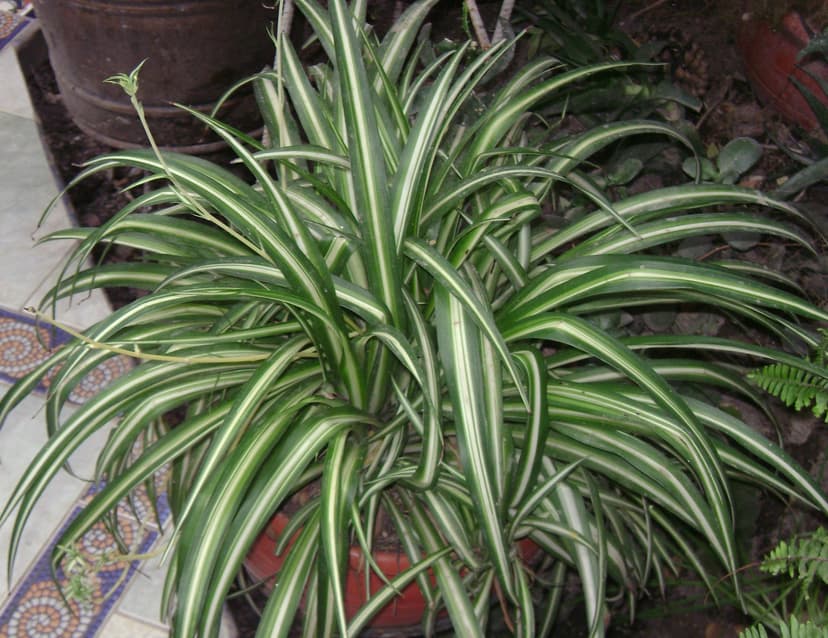
Spider Plant
Chlorophytum comosum
Also: Airplane Plant, Ribbon Plant, Spider Ivy
The spider plant is a classic, pet-safe houseplant loved for its arching green-and-white striped foliage and the cascading baby plantlets (pups) it produces on long runners. It is exceptionally forgiving, bouncing back from neglect that would kill fussier plants. Spider plants are also prolific — a single mature plant can produce dozens of pups each year.
By PlantFix Editorial Team · Sources: University Extension Programs, USDA
Care Summary
Tips
- – Use filtered or distilled water to avoid the brown tips that spider plants are famous for.
- – Let the plant become slightly root-bound to encourage pup production — do not rush to repot.
- – Snip pups once they develop small roots and pot them up for easy propagation gifts.
- – Spider plants are non-toxic, making them an excellent choice for homes with cats and dogs.
Common Problems
Brown tips on leaves
Causes
- – Fluoride and chlorine in tap water — spider plants are notably sensitive to these chemicals
- – Overfertilizing, which causes salt burn at the leaf tips
- – Low humidity or inconsistent watering
Solutions
- – Switch to filtered, distilled, or rainwater — this alone often resolves persistent brown tips
- – Reduce fertilizing to once monthly during spring/summer at half the recommended strength
- – Trim brown tips at an angle with clean scissors; flush soil with distilled water every 2-3 months to remove salt buildup
Yellowing leaves
Causes
- – Overwatering — the most common cause; the thick, water-storing roots rot in constantly wet soil and can't feed the leaves
- – Natural aging of the oldest outer leaves as the plant pushes new central growth
- – Too little light leaving the whole plant pale and washed-out, or fertilizer salt buildup
Solutions
- – Let the soil dry to the top inch before watering, and check the roots for brown mushiness if leaves are soft
- – Trim spent outer leaves at the base; move a pale plant to brighter indirect light
- – Flush the soil with distilled water to leach fertilizer salts, and feed only monthly at half strength in spring/summer
Leaves curling or rolling
Causes
- – Underwatering or very dry indoor air — the blades roll inward to conserve water (the most common cause)
- – Root rot from overwatering, which leaves the foliage limp and curling even though the soil is wet
- – Spider mites in warm, dry winter air, showing a tight curl with fine pale stippling and webbing
Solutions
- – Do the touch test: crispy-and-dry means thirst (water thoroughly and raise humidity), limp-on-wet-soil means root rot (check the roots)
- – Run a humidifier or set the pot on a tray of wet pebbles to counter dry heated air in winter
- – Check for spider mites by tapping a leaf over white paper; rinse the plant and treat if specks crawl
Pale, faded leaves losing variegation
Causes
- – Too much direct sunlight bleaching the leaf pigments
- – Conversely, solid green varieties in too little light may appear washed out from nutrient depletion
Solutions
- – Move to bright indirect light — avoid windowsills with harsh afternoon sun
- – Feed with a balanced liquid fertilizer to restore vibrant color if the plant has not been fertilized in months
Leaves bending or breaking
Causes
- – Overwatering causing the thick, fleshy roots to rot and weaken the base
- – Physical weight of too many pups pulling runners and leaves downward
- – Very low light causing thin, weak leaf growth
Solutions
- – Allow soil to dry more between waterings and check roots for mushiness
- – Harvest pups by snipping runners once the babies have small roots — this also energizes the mother plant
- – Move to a brighter location to encourage stronger leaf growth
No pups or runners produced
Causes
- – The plant is too young — spider plants typically begin producing pups when they are slightly root-bound and mature
- – Too much space in the pot — spider plants produce pups as a stress response to being root-bound
- – Insufficient light to trigger reproductive growth
Solutions
- – Avoid repotting into an oversized container — spider plants produce pups more readily when snug
- – Increase light exposure to bright indirect conditions
- – Be patient with young plants; pup production usually begins after 1-2 years of growth
Root rot and mushy base
Causes
- – Overwatering — the tuberous roots hold water and rot easily if the soil stays wet
- – Poor drainage from a pot without holes or soil that retains too much moisture
Solutions
- – Unpot and trim away soft, brown roots; let the plant air-dry for a few hours before repotting
- – Repot into a pot with drainage holes using a lighter mix with added perlite
- – Reduce watering frequency — the thick roots mean the plant needs water less often than you think
Treatment Guides
Spot something wrong with your Spider Plant? These guides cover the most common houseplant issues with step-by-step treatment plans.
Or use the diagnosis tool →More Plants
Get seasonal plant care reminders and pest alerts.