Money Tree Leaves Curling: Causes and How to Uncurl Them
Money tree leaves curling inward or at the edges? Dry soil and low humidity are the usual causes — but spider mites and cold do it too. Here's the tell for each.
8 min read · Updated 2026-10-15
By PlantFix Editorial Team · Sources: University Extension Programs, USDA, EPA
Why Your Money Tree Leaves Are Curling (Quick Answer)
Curling money tree leaves are almost always a moisture message. Most often the plant is too dry — either the soil has gone bone-dry, or the air around it has. A money tree curls and cups its leaflets to shrink the surface area it loses water from, the same way you'd hunch against the cold. Check the soil first: if the top 2 inches are dry and the pot feels light, that's your answer, and a deep soak reverses it. If the soil is fine, the culprit is usually dry indoor air, a nearby heat vent, or the money tree's most common pest — spider mites, which thrive in exactly that dry warmth.
One quotable rule of thumb: on a money tree, curling leaves point away from overwatering. A drowning money tree droops and yellows; a thirsty or dry-air one curls. So if the leaves are curling and the soil is wet, look past water to pests or cold. The full differential is below. Not sure which you've got? Our plant diagnosis tool reads it from a photo, and the general leaves-curling guide covers curling across all houseplants.
Money Tree Curling Diagnostic Chart
The direction of the curl and the state of the soil narrow it down fast.
| What you see | Most likely cause | First move |
|---|---|---|
| Leaflets curling inward/cupping + dry, light soil | Underwatering | Deep soak or bottom-water |
| Edges rolling + crispy brown tips, near a vent | Low humidity / dry heat | Raise humidity, move off the vent |
| Curling + yellow speckling + fine webbing | Spider mites | Inspect undersides; treat |
| Curling/cupping + tan bleached patches | Too much direct sun | Move to indirect light |
| Sudden curl + leaf drop after a cold night | Cold draft / shock | Relocate away from cold glass |
| Curling + wet soil + limp stems | Not curling — it's drooping | See the drooping guide |
Cause #1: Underwatering (The Most Common by Far)
Thanks to its water-storing trunk, a money tree tolerates drought better than most houseplants — but push past its limit and the leaflets curl inward and cup as the plant rations moisture. Left longer, the edges crisp brown and, as NC State Extension notes, "leaf drop can occur if the soil is too dry." Curling is the early warning; dropping is what comes next if you ignore it.
The confirmation is simple: the top 2 inches of soil are dry, the soil may have shrunk away from the pot wall, and the whole pot feels noticeably light when you lift it. The fix is a deep drink, not a splash — water slowly until it runs from the drainage hole, or sit the nursery pot in a few inches of water for 20–30 minutes and let it soak up from the bottom. Curled leaves that aren't yet crispy often relax within a day; ones that already browned won't uncurl, so judge recovery by new growth. Then reset the schedule: water when the top 2 inches are dry, which usually means every 1–2 weeks in summer and every 3–4 in winter.
Cause #2: Dry Air and Heat Vents
A money tree can be watered perfectly and still curl if the air is too dry. NC State Extension notes that yellowing shows up "if the humidity is too low," and the same dry air rolls and curls leaf edges before they yellow — especially the tips. The classic setup is a money tree sitting near a heat register, a radiator, or in the path of forced-air heating, where the humidity at the leaf can drop into the teens.
The tell that separates this from thirst: the soil is appropriately moist, but the curling concentrates on the leaves closest to the heat source, often with dry, papery tips. Move the plant off the vent, group it with other plants, set it on a pebble tray, or run a small humidifier — money trees are happiest around 40–60% humidity. Dry air is also the on-ramp to a spider mite problem, so fixing humidity does double duty.
Cause #3: Spider Mites (Check If the Soil Is Fine)
If your money tree's leaves are curling and distorting while the soil is properly watered, suspect spider mites — the plant's most common pest, and one that peaks in exactly the dry, warm conditions that also cause dry-air curling. University of Minnesota Extension notes mites "often become a problem in November when the heat comes on and the air is drier." Their feeding punctures leaf cells, producing fine yellow-white stippling and, as damage builds, curled and distorted leaves with faint webbing on the undersides where the leaflets meet the stalk.
Confirm it by holding a bright light to the leaf undersides or tapping a leaflet over white paper and watching for moving specks. If mites are the answer, start with a hard shower to knock the population down, then two or three rounds of insecticidal soap or horticultural oil a few days apart — the full protocol is in our spider mite guide. Curling from mite damage won't reverse on the damaged leaves, but new growth comes in flat once the colony is gone.
The Other Causes: Too Much Sun and Cold Shock
Two less-common curlers round out the list:
- Too much direct sun. Money trees want bright indirect light; NC State warns that direct exposure damages the leaves. In a hot south or west window, leaves cup and curl to reduce the surface hit by the beam, often with tan, bleached scorch patches. Pull the plant back a few feet or filter the light with a sheer.
- Cold drafts and shock. A sudden cold night by a drafty window, or the general upheaval of a move or repot, can make leaves curl and then drop. If curling arrived right after a relocation or a cold snap and the trunk is firm, treat it as stress: stabilize the spot, hold off on extra water, and let it recover. Ongoing curling paired with a soft trunk or wet soil isn't a curling problem at all — it's root rot, and you should read that instead.
Recommended Products
We earn a commission if you buy through these links, at no extra cost to you. We recommend based on what works, not what pays. How this works.

Tells you the actual humidity at the plant, which settles the dry-air-versus-thirst question in seconds. Money trees curl below roughly 40% humidity; if the meter reads low near a vent, that's your curl.
$8-$15 · Best for Deciding whether curling is a water or an air problem
Check price on Amazon →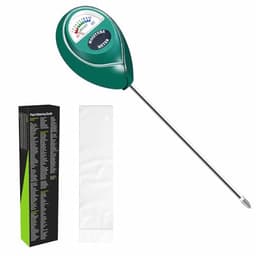
Reads moisture at the root zone so you can confirm underwatering before you soak. Water only when it reads dry in the top half of the pot.
$10-$18 · Best for Confirming dry soil behind inward-curling leaves
Check price on Amazon →
The direct fix for dry-air curling and the best way to keep spider mites from taking hold in heated winter rooms. Aim for 40–60% humidity near the plant.
$25-$45 · Best for Money trees curling near a heat vent
Check price on Amazon →Treatment information on PlantFix is educational. When using any pesticide — including organic options like neem oil or insecticidal soap — read and follow the entire product label; the label is the law. For persistent or high-stakes problems, your local university extension service offers free, region-specific advice. Read about how we source and verify treatment guidance in our Editorial Standards.
FAQ
Why are my money tree leaves curling inward?▼
Inward curling and cupping is the classic sign of underwatering — the plant shrinks its leaf surface to conserve moisture. Check the top 2 inches of soil; if they're dry and the pot feels light, give it a deep soak or bottom-water it. Leaves that aren't yet crispy usually relax within a day.
Do money tree leaves uncurl after watering?▼
Often, yes — if the curling came from dryness and the leaves haven't gone crispy, they typically flatten out within a day or two of a deep watering. Leaves that already browned at the edges or were damaged by spider mites won't uncurl; judge recovery by whether new growth comes in flat instead.
Can spider mites make money tree leaves curl?▼
Yes. Spider mites feed on leaf cells, causing fine yellow stippling and, as damage builds, curled and distorted leaves with faint webbing on the undersides. They thrive in the dry, warm air of heated rooms. If leaves curl while the soil is properly watered, check the undersides with a bright light before assuming it's a watering issue.
Should I cut off curled money tree leaves?▼
Only if they're crispy, browned, or badly damaged — those won't recover and can be trimmed for looks. Leaves that are merely cupped from a recent dry spell will often flatten once you fix the watering, so give them a few days first. Removing more than a third of the foliage at once stresses the plant.
Related
- Money Tree Plant Problems: The Complete Troubleshooting Guide →
- Money Tree Drooping? Check the Soil Before You Water →
- Money Tree Yellow Leaves: 7 Causes and How to Fix Each →
- Money Tree Root Rot: The Rescue Repot & Braid Surgery That Save It →
- Plant Leaves Curling? 7 Causes and the Fix for Each →
- Spider Mites: Identification, Treatment & Prevention Guide →
- Houseplant Pests: Visual ID Guide to Every Bug on Your Indoor Plants →
Plants Commonly Affected
Not sure what's wrong?
Use the diagnosis tool →Get seasonal plant care reminders and pest alerts.