Money Tree Yellow Leaves: 7 Causes and How to Fix Each
Money tree leaves turning yellow? Overwatering is the usual culprit — a soft trunk confirms it. Low light, drafts, and dry winter air do it too. Here's how to tell.
9 min read · Updated 2026-10-15
By PlantFix Editorial Team · Sources: University Extension Programs, USDA, EPA
Why Your Money Tree Leaves Are Turning Yellow (Quick Answer)
A money tree turns yellow most often from overwatering. Check two things before anything else: the soil and the trunk. If the soil is still wet days after you watered, and especially if any part of the braided trunk feels soft when you squeeze it gently, you're overwatering — stop, let it dry out, and read the root rot section below. If the soil is fine and just one or two older, lower leaves are yellowing while new growth looks healthy, that's normal aging.
The irony is built into the name: Pachira aquatica is a wetland tree — NC State Extension lists it as native to swamps and riverbanks from southern Mexico to Bolivia. But in habitat its roots sit in moving, oxygen-rich water, and periodic floods drain away. In a pot, water just sits — stagnant and airless — and the roots suffocate. That's why a literal swamp tree is killed by the watering can more than by anything else. Below, all seven causes ranked by how often each one is the real answer, with the tell that separates it from the rest. Not sure from a description? Our plant diagnosis tool works from a photo, and the yellow leaves guide covers the full differential across all houseplants.
Money Tree Yellow Leaf Diagnostic Chart
Match what you're seeing to a row, then jump to that section. On a money tree, the trunk squeeze is the single most useful test — it tells you in two seconds whether this is a watering problem.
| What you see | Most likely cause | First move |
|---|---|---|
| Yellow leaves + wet soil or a soft trunk spot | Overwatering / root rot | Stop watering; squeeze-test the trunk |
| 1–2 lower leaves, slow, rest of plant thriving | Natural aging | Nothing — snip them off |
| Yellow with brown, crispy edges; light pot; dry soil | Underwatering | Deep soak, then adjust schedule |
| Pale, washed-out yellow all over; leggy stems | Not enough light | Move to bright indirect light |
| Sudden yellowing + leaf drop after a cold snap or move | Drafts / temperature shock | Relocate away from vents and doors |
| Yellow stippling, fine webbing on leaf undersides | Spider mites | Inspect with a bright light; treat |
| Uniform pale yellow, no new growth, unfed 6+ months | Nutrient deficiency | Dilute balanced fertilizer |
Cause #1: Overwatering (Check the Trunk First)
Start here, because this is the answer more often than everything else combined. A money tree's braided trunk is semi-succulent — it stores water, which is why the plant shrugs off a missed watering but hates a surplus. When the soil stays wet, the fine roots suffocate and rot, the plant can't move water even though it's surrounded by it, and the leaves yellow and drop. University of Maryland Extension notes that rotting roots produce wilting and yellowing that looks exactly like thirst — which is why so many people water an overwatered money tree even harder.
The money-tree-specific tell is the trunk squeeze. Work your way down each braided strand with a gentle pinch. Healthy trunk is firm, like a broom handle. A strand that gives under your fingers, feels spongy, or shows dark, wrinkled bark near the soil line is rotting from the inside. Soft trunk plus wet soil plus yellow leaves is overwatering, full stop — even if you're sure you don't water much. A pot without a drainage hole, a cachepot that traps runoff, or a heavy peat mix that never dries will do the overwatering for you.
If the trunk is still firm everywhere: stop watering, empty the saucer, and don't water again until the top 2 inches of soil are completely dry. If you found a soft spot, this has moved past a watering tweak — go straight to our money tree root rot rescue, which covers the emergency repot and the braid surgery that can save a plant with one rotting strand.
Cause #2: Natural Aging (One Leaf at a Time)
Money trees regularly retire their oldest leaves, and each one goes out yellow. If it's a lower, older leaf yellowing evenly — one every few weeks, not a wave — while the top of the plant keeps pushing out glossy new growth, nothing is wrong. The plant is pulling nutrients back out of a leaf it's done with.
Snip the yellow leaf off at the base of its stalk with clean scissors and move on. Start investigating only when several leaves yellow at once, when the newest growth is affected, or when yellowing arrives with a soft trunk, spotting, or sticky residue — those patterns point at water, light, or pests instead.
Cause #3: Underwatering (Crispy Edges, Light Pot)
Thanks to that water-storing trunk, a money tree tolerates drought better than most houseplants — but it has a limit. Push past it and leaves yellow with dry, brown, crispy edges, the soil pulls away from the pot wall, and the whole pot feels noticeably light when you lift it. Some leaflets may curl inward along their length trying to conserve moisture.
The fix is a deep soak, not a sip: water slowly until it runs from the drainage hole, or sit the nursery pot in a few inches of water for 20–30 minutes and let it drink from the bottom. Then reset your schedule — water when the top 2 inches of soil are dry, which for most homes means every 1–2 weeks in the growing season and every 3–4 weeks in winter. The trunk buys you slack in both directions; the finger test beats any calendar.
Cause #4: Not Enough Light (Pale and Leggy)
Money trees are sold as low-light plants, and they do survive low light — but below a certain point the plant can't sustain all its foliage, so it lets older leaves fade to a pale, washed-out yellow-green and drops them while the remaining stems stretch long and leggy toward the nearest window. If your money tree sits more than a few feet from a window, is putting out small pale leaves with long bare gaps between them, and yellows steadily from the bottom up, light is the bottleneck.
The fix: bright, indirect light — near an east window, or a few feet back from a south or west one. Direct midday sun is the opposite problem; it scorches bleached, tan patches into the leaves. Rotate the pot a quarter turn each week so the whole crown gets its share, and expect new growth (not the already-yellow leaves) to show the improvement.
Cause #5: Drafts, Cold Snaps, and Relocation Shock
A money tree parked near an exterior door, a drafty window, or an A/C or heat vent will yellow and shed leaves seemingly out of nowhere — often within days of the first cold night or the day the heating kicks on. It wants a stable 65–80°F; sustained time below about 50°F damages the foliage outright. The pattern to look for is sudden yellowing concentrated on the side facing the draft.
The same stress response follows a move. Money trees are notorious for dropping a flush of leaves — green or yellow — in the weeks after being relocated, repotted, or brought home from the store. If the timeline matches a move and the trunk is firm, don't compensate with water or fertilizer; put it in a good spot, leave it alone, and it typically regrows within a month or two. Our money tree revival guide covers how to tell shock from real decline.
The Other Causes: Spider Mites and Hunger
Two more show up regularly:
- Spider mites. The money tree's biggest pest problem, especially in dry winter air. The tell is yellow stippling — hundreds of pinprick dots — plus fine webbing where the leaflets meet the stalk, and leaves that look dusty on the underside. Hold a bright light to the undersides or tap a leaf over white paper and watch for moving specks. Caught early, a hard shower and a couple of rounds of insecticidal soap end it; the full protocol is in our spider mite guide. Sticky residue with brown bumps instead means scale; cottony tufts mean mealybugs.
- Nutrient deficiency. A money tree that hasn't been fed in six months or more can yellow uniformly, oldest leaves first, with small pale new growth — classic nitrogen hunger. A balanced liquid fertilizer at half strength, monthly through spring and summer, fixes it. Skip feeding in winter and for a month after any repot; excess fertilizer burns the leaf edges brown and adds white salt crust to the soil surface.
How to Keep a Money Tree Green
Money trees fail in predictable ways, which makes prevention short:
- Water deeply, then wait. Soak until water drains, then nothing until the top 2 inches are dry. In practice: every 1–2 weeks in summer, every 3–4 in winter.
- Fast-draining soil and a real drainage hole. A sandy, well-draining mix — standard potting soil cut with perlite or a cactus blend — mimics the drained-flood cycle the species evolved for. No-hole pots are how firm trunks go soft.
- Bright indirect light, stable temperature. Near a window, out of the direct beam, away from vents and doors.
- Humidity helps, dryness invites mites. Normal household humidity is fine; in crispy winter air a pebble tray or small humidifier keeps spider mites from getting a foothold.
It's also one of the few popular houseplants that's officially non-toxic to cats and dogs per the ASPCA — worth knowing if you're choosing where it lives. For the full light-water-soil rundown, see our money tree care profile; a soil moisture meter and proper nursery pots are on the gear page.
Recommended Products
We earn a commission if you buy through these links, at no extra cost to you. We recommend based on what works, not what pays. How this works.
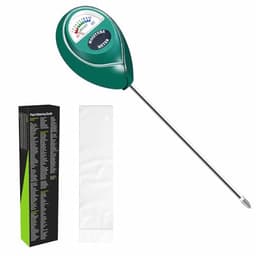
Reads moisture at the root zone so you stop watering on guesswork. For a money tree, water only when it reads dry in the top half of the pot — the single best defense against the overwatering that yellows most of them.
$10-$18 · Best for Anyone whose money tree yellows on a 'regular' watering schedule
Check price on Amazon →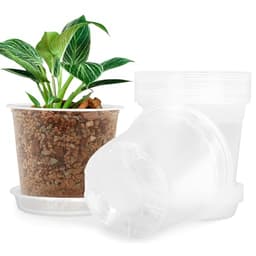
A plastic nursery pot with real drainage, slipped inside the decorative pot. Money trees in sealed cachepots sit in trapped runoff — this keeps the look and loses the rot.
$8-$16 · Best for Replacing a no-drainage pot before it costs you the trunk
Check price on Amazon →A balanced formula (10-10-10 or similar) at half strength, monthly in spring and summer, covers the nutrient side of yellowing. More is not better — salt buildup burns leaf edges.
$8-$15 · Best for A money tree that hasn't been fed in six months or more
Treatment information on PlantFix is educational. When using any pesticide — including organic options like neem oil or insecticidal soap — read and follow the entire product label; the label is the law. For persistent or high-stakes problems, your local university extension service offers free, region-specific advice. Read about how we source and verify treatment guidance in our Editorial Standards.
FAQ
Why are my money tree's leaves turning yellow?▼
Overwatering is the most common cause — check whether the soil is still wet days after watering and gently squeeze the braided trunk for soft spots. One or two lower leaves yellowing slowly on an otherwise healthy plant is just normal aging. Sudden yellowing usually traces to a draft, a cold snap, or a recent move.
Should I cut yellow leaves off my money tree?▼
Yes, once a leaf is fully yellow — it won't turn green again, and the plant spends energy maintaining it. Snip it at the base of the leaf stalk with clean scissors. The leaf itself doesn't matter; fixing the cause (usually watering less) is what stops the next one.
How often should I water a money tree?▼
Water thoroughly until it drains from the bottom, then wait until the top 2 inches of soil are completely dry — roughly every 1–2 weeks in the growing season and every 3–4 weeks in winter. The braided trunk stores water, so when in doubt, wait. Money trees recover from too dry far more easily than from too wet.
Why is my money tree turning yellow in winter?▼
Three winter-specific reasons: the plant uses less water in low light so your summer watering schedule becomes overwatering; heating vents and cold windows create the drafts and temperature swings money trees hate; and dry indoor air invites spider mites, whose stippling reads as yellowing from a distance. Cut watering frequency roughly in half and move the plant away from vents and cold glass.
Can yellow money tree leaves turn green again?▼
No — once a leaf has yellowed, its chlorophyll is gone and doesn't come back. If you correct the cause, new growth will come in green. Remove fully yellow leaves and judge your progress by the leaves that appear next, not the ones already lost.
Related
- Money Tree Plant Problems: The Complete Troubleshooting Guide →
- Money Tree Root Rot: The Rescue Repot & Braid Surgery That Save It →
- Money Tree Dying? The 2-Minute Triage That Tells You Which Problem You Have →
- Money Tree Leaves Curling: Causes and How to Uncurl Them →
- Yellow Leaves on Plants: Every Cause & How to Fix It →
- How to Fix an Overwatered Plant (Root Rot Rescue) →
- Spider Mites: Identification, Treatment & Prevention Guide →
- Scale Insects on Houseplants: How to Identify and Get Rid of Them →
- Houseplant Pests: Visual ID Guide to Every Bug on Your Indoor Plants →
Plants Commonly Affected
Not sure what's wrong?
Use the diagnosis tool →Get seasonal plant care reminders and pest alerts.