Scale Insects on Houseplants: How to Identify and Get Rid of Them
Those brown bumps that don't move are scale insects. The one thing that decides your whole treatment: whether they're soft scale or armored scale. Here's how to tell — and win.
9 min read · Updated 2026-08-07
By PlantFix Editorial Team · Sources: University Extension Programs, USDA, EPA
How to Get Rid of Scale Insects (Quick Answer)
Scale insects are small brown, tan, or waxy bumps stuck to plant stems and leaves — they're sap-sucking insects hiding under a protective shell, not part of the plant. To remove them: scrape off what you can see, wipe the area with a cotton swab dipped in rubbing alcohol, then spray the whole plant with horticultural oil to smother the rest. Repeat weekly for four to six weeks to catch the mobile "crawler" stage.
Before you reach for a systemic, figure out which kind you have. Soft scale leaves sticky honeydew and responds to systemic insecticides; armored scale makes no honeydew and hides under a separate hard cover that systemics like imidacloprid can't penetrate. Get this wrong and you'll waste weeks on a treatment that was never going to work. The honeydew test below sorts it in seconds.
What Are Scale Insects?
Scale insects are among the strangest-looking houseplant pests because for most of their life they don't look like insects at all. The adults are immobile, covered by a waxy or shell-like coating, and clamped onto stems, leaf undersides, and the joints where leaves meet stems. People routinely mistake them for scabs, bark, or a growth on the plant.
Underneath that cover, each scale is a living insect with a straw-like mouthpart jammed into the plant, drinking sap around the clock. A heavy infestation drains the plant faster than it can recover, causing yellowing, leaf drop, stunted growth, and eventually branch dieback. University of Maryland Extension has a good overview in its scale insects on indoor plants fact sheet.
The one mobile stage is the "crawler" — newly hatched nymphs that wander the plant before settling down and growing their protective cover. Crawlers are the window of opportunity: once a scale has built its shell, sprays struggle to get through, but crawlers are soft and exposed. That's why scale treatment is timed in weekly rounds — you're catching each new batch of crawlers as they hatch.
Soft Scale vs. Armored Scale (This Changes Everything)
This is the distinction almost every scale guide skips, and it decides whether your treatment works. There are two broad groups, and they respond to completely different products.
Soft scale secretes honeydew — a sticky, sugary waste — as it feeds. If leaves below the bumps are shiny and sticky, or you see black sooty mold growing on that residue, you have soft scale. The good news: soft scale feeds from the plant's vascular system, so systemic insecticides containing imidacloprid move through the plant and poison them. Per Mississippi State University Extension, soil-applied imidacloprid "will usually do a good job controlling brown soft scales and other soft scales" (Insect Pests of Houseplants).
Armored scale makes no honeydew — no stickiness, no sooty mold. It feeds under a separate hard cover that it can lift off, and it doesn't tap the plant's vascular system the same way. The consequence is critical: imidacloprid is far less effective on armored scale because the insect feeds beneath a cover the systemic can't reach. Clemson's armored scale fact sheet and MSU both point to horticultural oil sprays — which physically smother the insect — as the better tool for armored scale, sometimes stepped up to a systemic containing dinotefuran for severe cases.
The 10-second test: touch the leaves below the bumps. Sticky = soft scale (systemic works). Dry = armored scale (reach for oil, not a systemic granule).
How to Identify Scale
Scale is easy to miss until it's advanced, because it hides in plain sight. Run through these checks:
Bumps that don't move. Look along stems, leaf undersides, and especially the midrib and the leaf-stem junctions. Scale appears as raised brown, tan, black, or waxy-white bumps, 1 to 5 mm across. A fingernail test settles it: if you can scrape the bump off and it leaves a soft body or a mark, it's scale, not part of the plant.
Sticky leaves or a sticky floor. Honeydew from soft scale makes leaves (and the shelf or floor below the plant) tacky. It's often the first thing people notice.
Black sooty mold. A dark, dusty coating growing on the honeydew. Harmless in itself but a reliable sign of soft scale (or another honeydew producer) somewhere above.
Yellowing and decline without an obvious cause — leaves going pale, dropping, and growth stalling as the plant is drained.
Scale is frequently confused with mealybugs, which are close cousins. The difference: mealybugs are covered in loose white cottony fluff and can move slowly, while scale forms hard or waxy fixed bumps. If it's a white cottony blob, read the mealybug guide instead. Still unsure? The plant diagnosis tool can help you tell them apart.
How to Treat Scale (Step by Step)
Scale treatment is a slow grind — expect four to six weeks — because you're picking off adults and catching each new wave of crawlers. Here's the order that works.
1. Isolate the plant. Crawlers spread to neighbors. Separate the infested plant before you do anything else.
2. Manually remove what you can see. Scrape adult scale off with a fingernail, an old toothbrush, or a plastic card. For spot treatment, a cotton swab dipped in rubbing alcohol dissolves the protective coating and kills the insect underneath — the same approach we cover in the rubbing alcohol for mealybugs guide. This alone can clear a light infestation on a small plant.
3. Spray with horticultural oil. Coat the entire plant — stems, both leaf surfaces, and every crevice — with horticultural or neem oil to smother scale you missed and the freshly hatched crawlers. Oil works on both soft and armored scale because it's physical, not systemic. Repeat weekly for four to six weeks.
4. Add a systemic only if it fits the type. For a stubborn soft scale infestation, a soil-applied imidacloprid granule (ornamentals only) reaches the insects through the plant's sap. For armored scale, skip imidacloprid — it largely won't work — and rely on thorough, repeated oil sprays, or a dinotefuran-based systemic for severe cases.
5. Keep checking. Inspect every few days and re-treat any new bumps. Persistence beats scale; walking away at week two is how it comes back.
Timeline, Susceptible Plants, and Prevention
Set your expectations: scale is one of the slowest houseplant pests to clear. A realistic timeline is four to six weeks of weekly treatment, and heavy infestations on a large plant can take a full season. The protective cover is what makes it slow — you can only reliably hit the crawler stage, so you're waiting out successive hatches.
Plants that get scale most: ZZ plants, ferns, citrus, ivy, ficus, orchids, and fiddle-leaf figs. Thick-stemmed and woody houseplants give scale plenty of anchoring points.
Prevention:
• Inspect every new plant for bumps along stems and leaf undersides before you buy, and quarantine new arrivals for two to three weeks — scale almost always arrives on an infested plant.
• Wipe leaves and check stems monthly. Scale caught as a few bumps is a five-minute fix; scale caught late is a six-week campaign.
• Keep plants healthy and unstressed — scale tends to explode on plants that are already struggling. For the whole cast of houseplant pests and how to tell them apart, see our houseplant pest guide.
Recommended Products
We earn a commission if you buy through these links, at no extra cost to you. We recommend based on what works, not what pays. How this works.
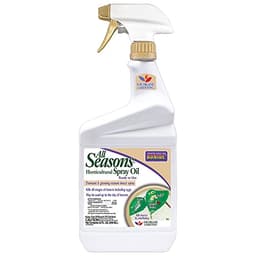
Refined oil spray that smothers scale and their crawlers by blocking their breathing pores. Works on both soft and armored scale because it's physical, not systemic — the single most versatile scale treatment. Coat the whole plant and repeat weekly for four to six weeks.
$8-$14 · Best for Smothering both soft and armored scale, and their crawlers
Check price on Amazon →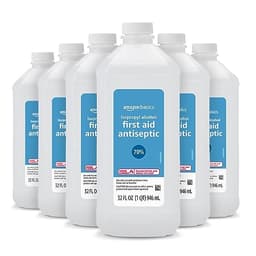
Dabbed on with a cotton swab, it dissolves the scale's protective coating and kills the insect underneath on contact. The go-to for spot-treating light infestations and touch-ups. Cheap and available anywhere.
$3-$6 · Best for Spot-treating visible scale on stems and leaves
Check price on Amazon →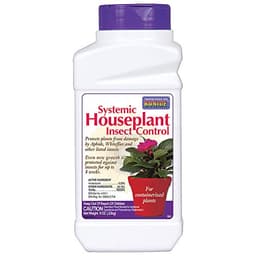
Soil-applied imidacloprid granules that move through the plant and poison soft (honeydew-producing) scale from the inside. Effective for stubborn soft-scale cases — but largely ineffective on armored scale, and never for edible plants. Confirm the type with the honeydew test first.
$8-$15 · Best for Persistent soft scale on non-edible houseplants
Check price on Amazon →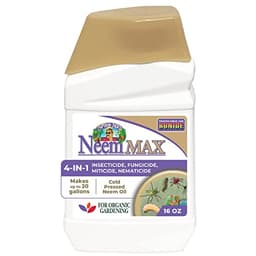
Disrupts scale feeding and growth over repeated applications and doubles as ongoing prevention. Less of an instant knockdown than horticultural oil but useful in rotation and for keeping crawlers in check between oil sprays.
$8-$15 · Best for Ongoing suppression and prevention of scale
Check price on Amazon →Treatment information on PlantFix is educational. When using any pesticide — including organic options like neem oil or insecticidal soap — read and follow the entire product label; the label is the law. For persistent or high-stakes problems, your local university extension service offers free, region-specific advice. Read about how we source and verify treatment guidance in our Editorial Standards.
FAQ
What causes scale insects on houseplants?▼
Scale almost always arrives on an already-infested plant — a new purchase, a gift, or a plant that summered outdoors and came back in with hitchhikers. The mobile crawler stage then spreads to nearby plants. Scale isn't caused by overwatering or poor care the way fungus gnats are, though stressed, weak plants are colonized faster and more heavily. This is why quarantining new plants for two to three weeks is the most effective prevention there is.
Will rubbing alcohol kill scale insects?▼
Yes, for spot treatment. A cotton swab dipped in 70% isopropyl alcohol dissolves the scale's protective coating and kills the insect underneath on contact. It's excellent for light infestations and precise touch-ups on a few bumps. For a widespread infestation, alcohol alone is tedious — pair it with whole-plant horticultural oil sprays repeated weekly to catch the crawlers you can't see.
What's the difference between scale and mealybugs?▼
They're close relatives with a key visual difference. Mealybugs are covered in loose, white, cottony wax and can crawl slowly, usually clustering in leaf joints and undersides. Scale forms hard or waxy fixed bumps — brown, tan, or black — that don't move and clamp onto stems and leaf midribs. Treatment overlaps (alcohol, horticultural oil, systemics for the soft types), so if you're not sure which you have, the same first steps work for both.
Do systemic insecticides work on scale?▼
Only on soft scale, not armored scale. Soft scale feeds from the plant's vascular system, so a soil-applied imidacloprid systemic moves through the plant and poisons it. Armored scale feeds beneath a separate hard cover and isn't reached effectively by imidacloprid — university extensions recommend horticultural oil or a dinotefuran-based systemic instead. Use the honeydew test to tell them apart: sticky leaves mean soft scale and a systemic will help; dry means armored and you should rely on oil.
Can scale insects kill a plant?▼
A heavy, untreated infestation can. Scale drains sap continuously, and a large population will outpace the plant's ability to recover, causing progressive yellowing, leaf drop, dieback, and eventually death on a small or already-stressed plant. Caught early, scale is very survivable — the danger comes from how easy it is to overlook until the plant is heavily colonized. Regular leaf checks are what keep it from getting that far.
Related
- Mealy Bugs on Plants: How to Identify & Kill Them Fast →
- Kill Mealybugs With Rubbing Alcohol (on Contact, No Burn) →
- Neem Oil for Plants: Complete Guide to Using It Effectively →
- Insecticidal Soap: What It Actually Kills (Including Spider Mites), DIY Recipe & Why Dawn Is Wrong →
- Houseplant Pests: Visual ID Guide to Every Bug on Your Indoor Plants →
Not sure what's wrong?
Use the diagnosis tool →Get seasonal plant care reminders and pest alerts.