Peace Lily Brown Tips: The Water-Quality Cause Everyone Misses
Brown tips on a peace lily are usually fluoride and chlorine in tap water — not underwatering. Here's the mechanism, the water fix, and how to tell tips from yellowing leaves.
8 min read · Updated 2026-09-09
By PlantFix Editorial Team · Sources: University Extension Programs, USDA, EPA
Why Your Peace Lily Has Brown Tips (Quick Answer)
Brown, crispy tips on a peace lily — a dry point ringed by a sharp yellow border, on leaves that are otherwise green and healthy — are usually caused by fluoride and chlorine in tap water, sometimes with a hand from fertilizer salts and dry air. Peace lilies are among the houseplants most sensitive to these water-borne minerals, which travel to the leaf tips, build up, and kill the tissue there first. This is a different problem from a peace lily going yellow across whole leaves — that's usually overwatering — and treating the two the same is why brown tips so often don't improve.
The fix is the water: switch to distilled, filtered, or collected rainwater, flush the pot every couple of months to leach out salts, and don't overfeed. Brown tips already there won't heal — trim them and watch the new growth. If you're seeing whole leaves yellow or the plant drooping instead of just tip burn, you want our peace lily yellow leaves or peace lily drooping guides, not this one. For a photo read on your specific plant, try the plant diagnosis tool.
Is It Brown Tips, Yellow Leaves, or Brown Edges?
Peace lily leaf problems get lumped together in most guides, but they point at different causes and different fixes. Find your row first — it may send you to a different guide.
| What you see | Most likely cause | Where to go |
|---|---|---|
| Dry brown tips with a yellow border, leaves otherwise green | Fluoride / chlorine in tap water | This guide — read on |
| Brown tips plus white crust on soil or pot rim | Fertilizer salt buildup | This guide — the salts section |
| Whole leaves turning yellow, soil soggy | Overwatering / root rot | See peace lily yellow leaves |
| Leaves drooping or collapsing | Under- or over-watering | See peace lily drooping |
| Bleached or scorched patches mid-leaf | Too much direct light | Move out of the direct beam |
The simple rule: browning confined to the tips and edges is a water-chemistry problem; whole-leaf color change or wilting is a watering-and-roots problem. This guide covers the first. The two links above cover the second.
The Real Cause: Fluoride, Chlorine, and How It Burns the Tips
Peace lilies are one of the classic fluoride-sensitive houseplants, and the mechanism is specific. The University of Missouri's IPM program explains that fluoride in tap water is a common cause of leaf-tip and margin necrosis in houseplants: the plant takes it up through the roots and moves it to the leaf tips and edges, where it reaches a lethal concentration and kills the tissue there. Chlorine and chloramine, in nearly all municipal water, add to the same tip-burn effect.
The tell is the mismatch: crisp brown points with a sharp yellow rim, on a plant whose light, humidity, and watering all look right. When everything else checks out and the tips keep browning, the water is the variable left. Missouri's program notes lily-family plants are especially prone to it — and while the true peace lily (Spathiphyllum) is an aroid rather than a true lily, it behaves like the sensitive group, which is why it's on every list of fluoride-touchy houseplants.
The fixes, strongest first:
- Distilled, reverse-osmosis, or collected rainwater removes both fluoride and chlorine. This is the fix that works.
- A carbon pitcher filter removes chlorine but little fluoride.
- Letting tap water stand overnight off-gasses chlorine only — fluoride stays, and chloramine doesn't off-gas at all, so it's a partial measure at best.
One refinement from the same Missouri source: don't let the growing mix turn too acidic, since fluoride becomes less available to the roots as pH rises. And because fertilizer salts pile onto the very same tip burn, keep feeding light — more on that next.
The Runner-Up: Fertilizer Salt Buildup
Peace lilies are light feeders, and excess fertilizer is the second-most-common tip-burn cause. The mineral salts in plant food accumulate in the soil and concentrate at the leaf tips exactly the way fluoride does. The signature is a white or crusty residue on the soil surface, the pot rim, or around the drainage holes, showing up alongside the brown tips.
Fix it two ways at once: feed no more than once a month in spring and summer at half strength, and not at all in fall and winter; and leach the pot — run plain distilled or rainwater through the soil until it drains freely, several times, to flush the salts out the bottom. Do this every couple of months on hard water or a heavy feeding routine. If you've been fertilizing a struggling plant more in an attempt to green it up, back off entirely — that often is the problem.
The Supporting Actor: Dry Air and Watering Swings
Water chemistry and salts do most of the damage, but dry air makes tip burn worse. Peace lilies are tropical and prefer humidity above about 50%; when winter heating drops indoor air well below that, the leaf edges lose water faster than the roots resupply and the tips crisp. A small humidifier or grouping plants together helps far more than misting, which evaporates within minutes and can invite leaf spotting.
Inconsistent watering piles on too. Peace lilies like soil kept lightly moist — not soggy, not bone-dry. Letting the pot dry out hard between drinks stresses the leaf margins. Water when the top inch feels dry and keep it steady. Just don't mistake this for the main event: if whole leaves are yellowing or the plant is wilting, the cause is watering or roots, and those live in the yellow leaves and drooping guides.
How to Trim Brown Tips Cleanly
Brown tissue is dead and won't turn green, so trimming is purely cosmetic — but a straight cut across the leaf leaves an obvious line that browns at the edge and looks no better. Follow the peace lily leaf's natural taper: cut on an angle to a slim point with clean, sharp scissors, staying just inside the brown into healthy green. The thin edge of the cut will brown slightly no matter what, which is exactly why mimicking the leaf's point hides it.
Leave the rest of the leaf — a trimmed leaf still photosynthesizes and feeds the plant. And remember the trim doesn't fix anything; it just tidies. The real measure of success is whether the leaves that unfurl next come in without brown tips, which tells you the water change took.
Recommended Products
We earn a commission if you buy through these links, at no extra cost to you. We recommend based on what works, not what pays. How this works.
The direct fix for the fluoride and chlorine that cause peace lily tip burn. Distilled and reverse-osmosis water contain neither; collected rainwater is the free equivalent. New growth comes in clean once you switch.
$1-$2 per gallon · Best for Peace lilies with persistent brown tips on city water
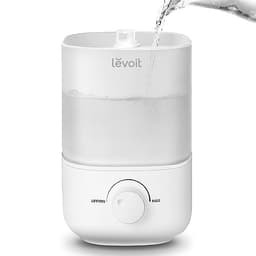
Peace lilies want 50%+ humidity; dry winter heat crisps the tips. A small humidifier holds humidity far more reliably than misting and helps the whole plant, not just the tips.
$25-$50 · Best for Brown tips that worsen when the heat comes on
Check price on Amazon →Removes the chlorine that contributes to tip burn. Weak on fluoride, so pair it with occasional distilled or rainwater — but a convenient everyday source if chlorine is your main water issue.
$25-$40 · Best for An easy daily water source when chlorine is the bigger problem
Treatment information on PlantFix is educational. When using any pesticide — including organic options like neem oil or insecticidal soap — read and follow the entire product label; the label is the law. For persistent or high-stakes problems, your local university extension service offers free, region-specific advice. Read about how we source and verify treatment guidance in our Editorial Standards.
FAQ
Why does my peace lily have brown tips?▼
Usually fluoride and chlorine in tap water. Peace lilies are especially sensitive to these minerals, which accumulate at the leaf tips and kill the tissue, leaving a crisp brown point with a yellow border. Fertilizer salt buildup and dry winter air make it worse. Switching to distilled or rainwater and flushing the soil to remove salts fixes it for most plants.
What's the difference between brown tips and yellow leaves on a peace lily?▼
They're different problems. Brown, crispy tips on otherwise green leaves are a water-quality issue — fluoride, chlorine, or fertilizer salts concentrating at the tips. Whole leaves turning yellow usually means overwatering or root rot. Treat them differently: brown tips call for a change of water, while yellowing calls for a change in how much you water. Our peace lily yellow leaves guide covers the second case.
Will the brown tips heal or turn green again?▼
No. Once a tip has browned, the tissue is dead and won't recover. Correcting the water stops new leaves from browning but doesn't reverse existing damage. Trim the brown tips for looks and judge whether you've fixed the cause by the condition of the new leaves.
Is tap water the problem, and should I switch?▼
If your tap water is fluoridated or chlorinated — most municipal water in the US is — it's very likely the cause of persistent brown tips on a peace lily. Switch to distilled, reverse-osmosis, or collected rainwater. A carbon filter pitcher removes chlorine but little fluoride, so distilled or rainwater is the more complete fix.
Related
- Peace Lily Yellow Leaves: 6 Causes and How to Fix Each →
- Why Is My Peace Lily Drooping? 7 Causes and Quick Fixes →
- Why Is My Peace Lily Dying? (Save-vs-Toss Triage) →
- Yellow Leaves on Plants: Every Cause & How to Fix It →
- Spider Plant Brown Tips: The Tap-Water Cause and the Fix →
- How to Fix an Overwatered Plant (Root Rot Rescue) →
- White Spots on Plant Leaves: 6 Causes and How to Fix Each →
- Houseplant Pests: Visual ID Guide to Every Bug on Your Indoor Plants →
Plants Commonly Affected
Not sure what's wrong?
Use the diagnosis tool →Get seasonal plant care reminders and pest alerts.