ZZ Plant Yellow Leaves: The Rhizome-Rot Cause and How to Save It
Yellow leaves on a ZZ plant almost always mean overwatering — and the rot is often already in the rhizome. Here's the firm-vs-mushy check that decides save vs. restart.
8 min read · Updated 2026-09-09
By PlantFix Editorial Team · Sources: University Extension Programs, USDA, EPA
Why Your ZZ Plant Leaves Are Turning Yellow (Quick Answer)
When a ZZ plant (Zamioculcas zamiifolia) yellows across several leaves at once, the cause is overwatering almost every time — and here's the part most guides skip: by the time the leaves yellow en masse, the rot is usually already in the underground rhizome, not just the fine roots. The ZZ stores water in fat, potato-like rhizomes, so it's built for drought and resents wet soil fast. Clemson Extension is blunt about it: "Do not overwater. Do not allow the plant to sit in water," because overwatering leads to root rot.
So the first move isn't to water the "sad-looking" plant more — it's the opposite. Check the soil: if it's still damp and multiple leaves are yellow, stop watering and read the rhizome-check section below to decide whether the plant is savable as-is or needs a restart from the firm parts. One or two of the lowest leaflets yellowing slowly on an otherwise healthy plant is just normal aging — no action needed. Not sure which you've got? Our plant diagnosis tool reads it from a photo, and the yellow leaves guide covers the full differential.
ZZ Yellow Leaf Diagnostic Chart
The ZZ's water-storing rhizome flips the usual logic: a droopy, yellowing ZZ is far more often drowning than thirsty. Match your row, then jump to that section.
| What you see | Most likely cause | First move |
|---|---|---|
| Several stems/leaves yellow at once, soil still wet, base soft | Overwatering / rhizome rot | Stop watering; do the rhizome check |
| 1–2 lowest leaflets yellow, slow, rest of plant thriving | Natural aging | Nothing — snip them off |
| Yellowing + soil bone-dry for weeks, pot very light | Underwatering (rare) | Deep soak once; don't overcorrect |
| Yellow, bleached patches on a plant in a bright window | Too much direct sun | Move to indirect light |
| Sudden yellowing/leaflet drop after a cold snap | Cold shock (below 45°F) | Move off cold glass and drafts |
| Uniform pale, no growth, unfed a year+ | Nutrient hunger (uncommon) | Half-strength feed in spring |
The deciding test on a ZZ is the soil-and-base check: wet soil plus yellow leaves plus any softness at the stem base means overwatering, full stop — even if you're sure you rarely water. Everything else is a distant second.
Cause #1: Overwatering and Rhizome Rot (Check the Base)
Start here, because it's the answer more than everything else combined. The ZZ's rhizome is a water reservoir; when the soil stays wet, that reservoir and the roots feeding it suffocate and rot. The cruel twist is that root rot produces symptoms that look exactly like thirst. University of Maryland Extension notes that with root rot, plants wilt even when adequate moisture is present in the potting media, along with yellowing, browning, and dieback of the leaves — which is why so many people respond to an overwatered ZZ by watering it more and finish it off.
The tells that separate rot from a thirsty plant: the soil is still damp days after watering; several stems yellow together rather than one old leaflet at a time; the stem bases feel soft or squishy where they meet the soil; and sometimes a sour, swampy smell rises from the pot. A ZZ in a pot with no drainage hole, or one sitting in a cachepot that traps runoff, is overwatering itself no matter how careful you are with the watering can.
If you catch it early — a little yellowing, soil merely damp, stems still firm — you may only need to stop watering, empty any saucer, and let the mix dry all the way out before watering again. If the base is soft, the problem is below the soil line and no watering tweak fixes it from above: go to the rhizome check next.
The Rhizome Check: Save vs. Restart
This is the step that decides everything, and it takes ten minutes. Slide the plant out of its pot and brush the soil off the rhizomes — the fat, pale, potato-like structures the stems grow from. Then judge them by feel and look:
- Firm, cream-colored, faintly sweet or neutral smell = healthy. These are savable.
- Soft, mushy, brown or translucent, sour smell = rotting. These are dead weight and spread rot if left in.
Now triage:
If most rhizomes are firm and only the fine roots or a small section are mushy: cut away every soft, dark root and rhizome section with a clean, sharp knife back to firm cream-colored tissue, let the cuts air-dry and callus for several hours to a day, and repot in fresh, fast-draining mix (a cactus/succulent blend, or standard mix cut heavily with perlite) in a pot with a drainage hole. Then water sparingly and wait.
If the base of most rhizomes is soft: the plant as a whole is likely lost, but the ZZ gives you a restart. Salvage any firm rhizome section with a stem or two attached, trim it clean, callus it, and pot it up on its own — a firm rhizome fragment will often regrow into a new plant. Even a single healthy leaflet, pressed upright into moist mix, can form a new rhizome over a few months, though that's the slow road. For a stubborn or advanced case where you want a step-by-step recovery schedule, our plant treatment plan lays out the dry-out, repot, and watch weeks; the general mechanics of rot rescue are in the root rot guide.
How to Actually Water a ZZ Plant
Since overwatering causes nearly every yellow ZZ, the fix is a watering habit built around the rhizome. Clemson's guidance is to water only once or twice a month, and only after the potting medium has dried out completely — noting the plant's bulbous rhizomes store water and make it genuinely drought resistant. In practice that means every 2–4 weeks in the growing season and less in winter's low light; when in doubt, wait.
The rest of the setup does the heavy lifting: a fast-draining mix (standard soil cut with 50% perlite, or a cactus/succulent blend), a pot with a real drainage hole, and no leaving the pot in a saucer of runoff. A ZZ recovers from too dry far more easily than from too wet, so if you must err, err toward neglect. A moisture meter that reads the bottom of the pot removes the guesswork entirely.
The Rarer Causes: Light, Cold, Aging, and Hunger
Once overwatering is ruled out, a few less-common causes remain:
- Natural aging. ZZ plants retire their oldest, lowest leaflets one at a time, each going out yellow. If it's one or two low leaflets while new growth is glossy and green, nothing's wrong — snip them off.
- Too much direct sun. ZZs are low-to-bright-indirect-light plants; a spot in a hot, direct window can bleach and yellow the leaves. Move it back from the glass.
- Cold shock. Sustained temperatures below about 45°F damage the rhizomes; a sudden yellowing or leaflet drop after a cold snap or near a drafty winter window points here. Relocate away from cold glass and vents.
- Nutrient hunger. Uncommon, because ZZs are slow, light feeders — but a plant unfed for a year or more can yellow uniformly with no new growth. A balanced fertilizer at half strength, once in spring and once in summer, covers it. More is not better; ZZs burn easily.
Watch, too, for scale insects — their brown shells blend into the ZZ's waxy stems and their feeding can yellow the foliage. One more thing worth knowing while you handle a sick plant: the ZZ is not pet safe per Clemson Extension — all parts contain calcium oxalate crystals, so wash your hands after cutting rotten rhizomes and keep trimmings away from pets and kids.
Recommended Products
We earn a commission if you buy through these links, at no extra cost to you. We recommend based on what works, not what pays. How this works.

The single best defense against the overwatering that yellows most ZZ plants. Water only when it reads dry at the bottom of the pot. Removes the guesswork that leads to a rotted rhizome.
$10-$18 · Best for Anyone whose ZZ yellows on a regular watering schedule
Check price on Amazon →A fast-draining mix — or standard soil cut with 50% perlite — mimics the dry-out cycle the ZZ's rhizome needs and is what you repot into after cutting away rot. Heavy, moisture-retentive soil is how firm rhizomes go soft.
$8-$16 · Best for Repotting a ZZ after a rhizome-rot rescue
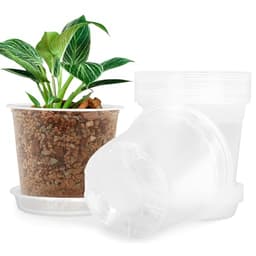
A plastic nursery pot with real drainage, slipped inside the decorative pot. ZZs left in sealed cachepots sit in trapped runoff — this keeps the look and loses the rot.
$8-$16 · Best for Replacing a no-drainage pot before it costs you the rhizome
Check price on Amazon →Treatment information on PlantFix is educational. When using any pesticide — including organic options like neem oil or insecticidal soap — read and follow the entire product label; the label is the law. For persistent or high-stakes problems, your local university extension service offers free, region-specific advice. Read about how we source and verify treatment guidance in our Editorial Standards.
FAQ
Why are my ZZ plant leaves turning yellow?▼
Overwatering, in the large majority of cases. The ZZ stores water in underground rhizomes and rots fast in wet soil, and by the time several leaves yellow at once the rot is often already in the rhizome. Check whether the soil is still damp and whether the stem bases feel soft — if so, stop watering and inspect the rhizomes. One or two lower leaflets yellowing slowly is just normal aging.
Can an overwatered ZZ plant come back?▼
Often, yes — the ZZ is unusually forgiving because of its rhizomes. If most rhizomes are still firm and cream-colored, cut away the soft rotten sections, let the cuts callus, and repot in dry, fast-draining mix; the plant usually recovers. Even if the main plant is too far gone, any firm rhizome fragment with a stem can be potted up to grow a new plant, so a badly rotted ZZ is rarely a total loss.
How often should I actually water a ZZ plant?▼
Sparingly. Clemson Extension recommends watering only once or twice a month, and only after the potting medium has dried out completely — roughly every 2–4 weeks in the growing season and less in winter. The rhizomes store water, so the ZZ tolerates drought far better than wet soil. When in doubt, wait; it recovers from too dry much more easily than from too wet.
Should I cut the yellow leaves off my ZZ plant?▼
Yes, once a leaf or leaflet is fully yellow — it won't turn green again, and removing it lets the plant focus on healthy growth. Snip it at the stem with clean scissors. But cutting the leaf is cosmetic; if the yellowing came from overwatering, you also have to fix the cause by drying the plant out and checking the rhizomes, or more leaves will follow.
Related
- Yellow Leaves on Plants: Every Cause & How to Fix It →
- How to Fix an Overwatered Plant (Root Rot Rescue) →
- Snake Plant Yellow Leaves: Causes, Fixes and When to Worry →
- Money Tree Yellow Leaves: 7 Causes and How to Fix Each →
- Scale Insects on Houseplants: How to Identify and Get Rid of Them →
- Spider Plant Brown Tips: The Tap-Water Cause and the Fix →
- Houseplant Pests: Visual ID Guide to Every Bug on Your Indoor Plants →
Plants Commonly Affected
Not sure what's wrong?
Use the diagnosis tool →Get seasonal plant care reminders and pest alerts.