Monstera Root Rot: How to Save It (the Node Is Your Insurance)
Even a monstera with no roots left is usually savable from a single firm node. Unpot it, read the roots, and if they're gone, restart from a cutting. Here's the full rescue.
8 min read · Updated 2026-10-09
By PlantFix Editorial Team · Sources: University Extension Programs, USDA, EPA
Unpot It and Look for Two Things: Firm Roots and a Firm Node
A monstera with root rot is savable far more often than most houseplants, because even if the roots are a total loss you can usually restart the plant from a single healthy node. So before you panic, unpot it and knock the soil off — you're looking for two things, not one: how much firm root is left, and whether there's at least one firm stem node with an aerial root.
Healthy monstera roots are firm and pale. The University of Maryland Extension describes rotted ones as "brown to black and soft or mushy," often with an outer layer that "can be easily pulled away from the core." Judge by what you find:
| What you find | Verdict | Go to |
|---|---|---|
| Most roots firm and pale | Easy save | Trim and repot |
| Many roots mushy, but some firm roots left | Salvageable, slow | Trim hard, repot smaller |
| Roots all brown-black mush, but a firm stem node with an aerial root | Restart from the node | Node rescue |
| Stem mushy all the way up, no firm node | Gone | Take the firmest top cutting if any |
That third row is the one that separates monsteras from most houseplants, and it's why a "dead" monstera usually isn't. Not sure whether it's rot or something else? The plant diagnosis tool confirms it from a photo, and the general root rot rescue guide covers the plant-agnostic version of this triage.
Why an Overwatered Monstera Looks Thirsty
The reason monsteras get watered to death is that root rot mimics thirst exactly. A monstera with rotting roots droops, its leaves go limp and dull, and the owner — reading a classic thirst signal — waters it again, which feeds the rot. UMD states the mechanism plainly: a plant with root rot "will wilt even when adequate moisture is present in the potting media," because the damaged roots can no longer move water up to the leaves.
The rule that breaks the cycle: a drooping monstera on wet soil needs less water, not more. Monstera's thick roots are especially prone to this — they rot fast in dense, soggy soil. So when the leaves are limp and the soil is still damp from the last watering, don't top it up; that's the moment to unpot and check. A genuinely thirsty monstera, by contrast, droops on soil that's actually dry and perks up within a day of a drink. Soil state is the arbiter, every time. If the leaves are also yellowing on wet soil, our monstera yellow leaves guide runs that specific differential, and monstera leaves curling covers the curl-on-wet-soil version.
The Node Rescue: Restarting a Monstera From a Cutting
This is the move the generic rot guides skip, and it's why monsteras are so hard to actually kill. Monsteras root readily from a stem node — NC State lists propagation by "layering or stem cutting" — so even a plant whose entire root ball has rotted can be rebuilt from one firm section of stem.
Here's the rescue:
1. Find a firm node. A node is the bump on the stem where a leaf and, usually, an aerial root emerge. You want a section of stem that's still firm and green (not soft or brown), with at least one node and ideally an aerial root already present.
2. Cut above the rot with a clean blade. Cut the healthy top section away from the rotted base, slicing through firm green tissue — the cut face should be solid and pale, with no brown streaking inside. Discard the mushy root ball and lower stem.
3. Let the cut callus. Set the cutting aside for a few hours so the cut surface dries over before it goes into water or mix — a sealed cut resists re-rotting.
4. Root it in water or chunky mix. Put the node (and aerial root, if there is one) in a jar of water, or straight into a chunky aroid mix kept lightly moist. Change the water every few days if you're water-rooting. New white roots push from the node over the following weeks; pot up once they're an inch or two long.
An aerial root speeds this up but isn't required — a bare firm node will root on its own. That's the insurance policy: as long as one firm node survived, you still have a monstera.
If It Still Has Healthy Roots: Trim and Repot
If you found firm pale roots when you unpotted it, you don't need the full node restart — you need to cut out the rot and give the survivors dry, airy soil. Rinse the root ball clean so you can see what's firm and what's mush. With a clean blade, cut away every brown, black, soft section back to firm pale tissue; UMD's rule for salvage is to "only take stem cuttings from healthy tissue," and the same goes for which roots you keep.
Then repot into fresh, dry, chunky aroid mix in a pot sized to the surviving roots — not bigger. A too-large pot holds a reservoir of wet soil the reduced root system can't use, which just restarts the rot. NC State's soil spec for monstera is high organic matter with good drainage, so a mix of potting soil cut heavily with orchid bark and perlite is the target. After repotting, water once lightly to settle the mix, then leave it — the plant can't use much water with a trimmed root system, and keeping it on the dry side for the first week or two is what lets the cut roots heal instead of rotting again.
The Aroid Mix That Stops It Coming Back
Monsteras rot for one reason more than any other: dense, water-holding potting soil in a pot that stays wet. Fix the soil and the watering and the rot rarely returns. Two things do the heavy lifting.
Chunky aroid mix, always. Monstera roots want air as much as water. Straight bagged potting soil packs down and stays soggy; a chunky mix — potting soil cut with orchid bark and perlite — drains fast and lets air to the roots between waterings. NC State pairs its monstera watering advice with the same drainage requirement: water thoroughly, "then allow the top quarter to one-third part to dry between watering," in well-draining soil.
Water by the soil, especially in winter. Let the top quarter-to-third of the pot dry before watering again, and check with a finger or a meter rather than a calendar. This matters most in fall and winter: growth slows in the cool, dim months, the plant uses far less water, and the amount people keep giving on summer habit is exactly what tips a monstera into rot — which is why these cases climb once the heating comes on. A pot with a real drainage hole is non-negotiable; a decorative pot with no hole will eventually drown it no matter how careful you are.
What Recovery Looks Like, and the One Thing Not to Do
Monsteras recover, but not on a fast clock, and the biggest risk to a rescued one is a nervous owner. A repotted plant with trimmed roots may sit and do nothing visible for a few weeks — that's the roots rebuilding underground, not failure. A node cutting takes longer still: weeks for the first white roots, then more before a new leaf. The signs it's working, in order, are that the remaining leaves stop declining and stay firm, then a new leaf (a tightly rolled cigar at the growing point) eventually pushes out.
The one thing not to do is meddle. Don't water "to help" — a rescued monstera on dry-leaning soil is recovering correctly, and extra water is how you re-rot it. Don't fertilize a stressed, barely-rooted plant; feeding damaged roots burns them. And don't dig it up to check for roots every few days. Bright indirect light, chunky mix kept on the dry side, and patience are the whole prescription. Judge success by the next new leaf, not the damaged ones — and remember that as long as one firm node survived, the odds were always in your favor.
Recommended Products
We earn a commission if you buy through these links, at no extra cost to you. We recommend based on what works, not what pays. How this works.
The airy, fast-draining mix (bark, perlite, coco coir) you repot a rescued monstera into. It drains quickly and gives the thick roots air, which is exactly what dense bagged potting soil doesn't — and what causes the rot in the first place.
$12-$20 · Best for Repotting after cutting away rotted monstera roots
Terracotta wicks excess moisture out of the mix and the drainage hole lets water escape — both work against the soggy soil that rots monsteras. Size it to the trimmed roots, not up.
$8-$20 · Best for Replacing a no-drainage pot that caused the rot
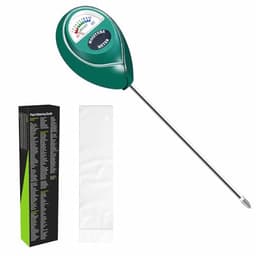
Reads moisture deep in the pot so you water a monstera only when the top quarter-to-third is genuinely dry — the single best habit for keeping rot from returning.
$10-$18 · Best for Knowing when the mix is actually dry before watering
Check price on Amazon →Treatment information on PlantFix is educational. When using any pesticide — including organic options like neem oil or insecticidal soap — read and follow the entire product label; the label is the law. For persistent or high-stakes problems, your local university extension service offers free, region-specific advice. Read about how we source and verify treatment guidance in our Editorial Standards.
FAQ
Can a monstera recover from root rot?▼
Usually, yes. If some firm pale roots remain, cut away all the mushy brown-black roots, repot into dry chunky aroid mix in a pot sized to the survivors, and keep it on the dry side for a week or two. Even if every root is gone, a monstera can be restarted from a single firm stem node with or without an aerial root — NC State lists stem cuttings as a propagation method — so a rotted monstera is rarely a total loss.
Why is my monstera drooping even though I watered it?▼
Because it's probably overwatered, not thirsty. Root rot destroys the roots so they can't move water up, and the University of Maryland Extension notes a plant with root rot will wilt even when adequate moisture is present in the soil. A monstera drooping on wet soil needs less water, not more — stop watering, unpot it, and check the roots for soft brown mush before you do anything else.
What does monstera root rot look like?▼
Healthy monstera roots are firm and pale. Rotted ones are brown to black and soft or mushy, often with an outer layer that slips off the core, and they may smell sour. Above ground the plant droops and the leaves go limp or yellow even though the soil is wet. The rot starts in the roots and can climb the stem, so a stem that's soft and brown at the base is advanced rot.
How do I save a monstera with no roots left?▼
Use the node rescue. Find a firm green section of stem with at least one node (ideally with an aerial root), cut it away from the rotted base through clean firm tissue, let the cut callus for a few hours, then root it in a jar of water or chunky aroid mix. New roots push from the node over a few weeks; pot it up once they're an inch or two long. As long as one firm node survives, you can rebuild the plant.
Related
- How to Fix an Overwatered Plant (Root Rot Rescue) →
- Monstera Yellow Leaves: 7 Causes and the Fix for Each →
- Why Are My Monstera Leaves Curling? (And How to Fix It) →
- Why Is My Plant Dying? Start With the Alive-or-Dead Check →
- Yellow Leaves on Plants: Every Cause & How to Fix It →
- Pothos Yellow Leaves: 8 Causes and the Fix for Each →
Plants Commonly Affected
Not sure what's wrong?
Use the diagnosis tool →Get seasonal plant care reminders and pest alerts.