Humidifier for Plants: Do Yours Actually Need One?
Heated homes drop below 30% humidity in winter — well under the 30–60% houseplants do best in. Here's how to tell dry-air damage from the look-alikes, and which plants need it.
8 min read · Updated 2026-11-04
By PlantFix Editorial Team · Sources: University Extension Programs, USDA, EPA
Is It Dry Air — or Something Else? The Brown-Tip Test
Before you buy a humidifier, make sure dry air is actually the problem, because three other things cause the same brown, sad-looking leaves and need completely different fixes. Dry-air damage has a signature: uniform, crispy brown tips and edges, often with a thin yellow band between the brown and the healthy green, spread fairly evenly across the plant. Iowa State University Extension is blunt about the usual cause: "The most likely cause is low humidity. The humidity level in homes is often low, especially during the winter months."
The look-alikes:
- Fluoride or salt burn — also brown tips, but concentrated on sensitive plants (Iowa State names "spider plant, ti plant, dracaena, prayer plant, and calathea"). The fix is switching to distilled or rainwater, not a humidifier. See spider plant brown tips and peace lily brown tips.
- Underwatering — whole leaves go limp and crispy, and the soil is bone dry. That's thirst, not humidity (see wilting plant).
- Spider mites — fine pale speckling and faint webbing, not clean brown edges. More on that below.
Not sure which you're looking at? A photo through our diagnosis tool separates dry-air tips from a pest or a watering problem in a few questions. For the full brown-leaf breakdown, plant leaves turning brown covers every cause.
Which Plants Actually Need Added Humidity (and Which Don't)
A humidifier is money wasted on a plant that doesn't care, and genuinely helpful for one that does. The split follows where the plant evolved:
- Want higher humidity: tropicals and rainforest natives — calathea, ferns, fittonia, many aroids (monstera, anthurium), orchids, and fiddle-leaf fig. These are the ones that brown at the edges first when the air dries out.
- Don't need it: succulents, cactus, snake plant, ZZ plant, and most desert or arid-climate plants. These are built for dry air and are far more likely to die from overwatering than from low humidity — don't add humidity for their sake.
If your whole collection is snake plants and succulents, you probably don't need a humidifier at all. If you're collecting calatheas and ferns in a heated apartment, it's one of the higher-value things you can buy.
Why Heating Season Is the Trigger
Houseplants do best in a middle band of humidity — Penn State Extension cites the ASHRAE standard that "indoor relative humidity (RH) be maintained between 30% and 60%." The problem is what winter does to that number: "During the winter heating season, indoor relative humidity levels can easily fall below 30%," as furnaces and forced-air heat pull moisture out of already-dry cold air.
That's why the brown tips, the crispy edges, and the sudden pest flare-ups all tend to arrive the same month the heat comes on. It's not that your plants got sick — the air changed. Illinois Extension's low-tech tip helps here too: "if you can turn off or redirect the hot dry air from the heater vents the happier the houseplants will be." Move plants off the shelf right above a radiator or vent before you buy anything.
The Spider-Mite Connection
Dry heated air doesn't just dry out leaves — it's the exact condition spider mites breed in. University of Minnesota Extension notes infestations are "particularly common during hot, dry" conditions, which is precisely what a heated winter home becomes. Every year, plant owners who've never seen a mite suddenly find fine speckling and webbing in January.
Raising humidity makes your plants a less welcoming host and is a real part of prevention — but be clear on what it does and doesn't do. A humidifier helps discourage mites; it does not cure an infestation you already have. If you can already see stippling or webbing, you need to treat the plant (our spider mites guide has the full protocol) — the humidifier is there to stop the next outbreak, not fix this one.
How Much Humidity, and the Cheap Ways to Add It
Aim to keep the air in the 40-50% range for humidity-loving plants, comfortably inside Penn State's 30-60% band. A $10 hygrometer takes the guesswork out — park it near the plants and you'll know whether you have a problem before the leaves tell you.
Skip the one that doesn't work: misting. It feels productive and does almost nothing. Penn State is direct: after misting, "a rise in humidity only lasts until the water evaporates. This can happen in a matter of minutes, so even daily misting does nothing to raise the humidity levels around a plant."
What does help, cheapest first:
- Group plants together — their collective transpiration raises the humidity in that pocket of the room. Iowa State lists grouping among its go-to fixes.
- Pebble trays — a tray of water and gravel under the pots adds a little local moisture as it evaporates (modest, but free).
- A humidifier — the only method that reliably moves the number on a whole room through a dry winter. Iowa State recommends raising humidity "by using a humidifier, pebble tray, terrarium, or by grouping plants together."
One more honest note: a humidifier prevents new dry-air damage but won't heal a tip that's already crisped. As Iowa State puts it, "trimming the brown portions off the leaves with a scissors can improve appearance, but new browning will occur if the root cause is not addressed." Fix the air, then trim the damage.
What We'd Actually Use
For plants, a cool-mist humidifier with a decent tank and a built-in humidistat (so it holds a target and shuts off) is the sweet spot — you don't need a fogger built for a greenhouse. Pair it with a cheap hygrometer so you're adjusting to a real number, not a guess. The picks below are grouped with the rest of the winter-stress gear on our gear hub, alongside a grow light for the light drop-off that hits the same season. If what you're actually seeing turns out to be a pest or a watering problem rather than dry air, start with the diagnosis tool before you buy.
Recommended Products
We earn a commission if you buy through these links, at no extra cost to you. We recommend based on what works, not what pays. How this works.
A cool-mist unit with a built-in humidistat holds a target humidity and shuts off when it's reached, so you set it and leave it. A medium tank gets a small room through a dry winter night without constant refilling. The only method that reliably moves humidity for a whole room.
$30-$60 · Best for Tropicals and ferns in a heated home
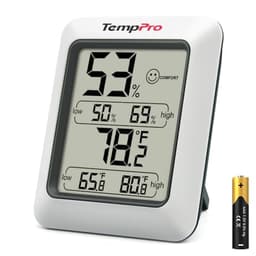
A small humidity and temperature monitor you place near the plants. Knowing your actual number turns humidity from a guess into a checklist — and it doubles as early warning for the dry conditions spider mites exploit.
$8-$15 · Best for Measuring whether you have a dry-air problem at all
Check price on Amazon →A shallow tray filled with gravel and water under your pots adds a little local humidity as it evaporates. Modest on its own, but free to rig up and a sensible pairing for a cluster of thirsty-for-air plants.
$5-$15 · Best for A low-cost humidity boost for a small group of plants
Treatment information on PlantFix is educational. When using any pesticide — including organic options like neem oil or insecticidal soap — read and follow the entire product label; the label is the law. For persistent or high-stakes problems, your local university extension service offers free, region-specific advice. Read about how we source and verify treatment guidance in our Editorial Standards.
FAQ
Does misting plants actually raise humidity?▼
Not in any lasting way. Penn State Extension says the humidity rise after misting "only lasts until the water evaporates," which can be minutes, "so even daily misting does nothing to raise the humidity levels around a plant." Grouping plants, pebble trays, and a humidifier all work better. Misting can rinse dust off leaves, but it isn't a humidity strategy.
Will a humidifier get rid of spider mites?▼
It helps prevent them but won't cure an active infestation. Spider mites thrive in hot, dry air, so raising humidity makes your plants a less welcoming host and discourages new outbreaks. But if you can already see speckling or webbing, you have to treat the plant directly with water sprays, insecticidal soap, or neem — the humidifier stops the next outbreak, not this one.
What humidity do houseplants need?▼
Most do well in the 30-60% range Penn State Extension cites, and humidity-loving tropicals like calathea and ferns prefer the upper end, around 40-50%. In winter, heated homes often fall below 30%, which is when dry-air brown tips and spider-mite flare-ups appear. A cheap hygrometer tells you where you actually stand. Succulents and snake plants don't need added humidity.
Related
- Spider Plant Brown Tips: The Tap-Water Cause and the Fix →
- Peace Lily Brown Tips: The Water-Quality Cause Everyone Misses →
- Plant Leaves Turning Brown? Read the Location and the Texture →
- Spider Mites: Identification, Treatment & Prevention Guide →
- Winter Brown Leaves: Spider Mites, Dry Air, or Thirst? →
- Wilting Plant? The Soil Check That Tells Dry From Wet →
- Plant Grow Lights: Do You Need One, and Which Kind? →
Not sure what's wrong?
Use the diagnosis tool →Get seasonal plant care reminders and pest alerts.