Plant Grow Lights: Do You Need One, and Which Kind?
A grow light is worth it when a plant can't get enough natural light to grow compact — common in winter and north-facing rooms. Here's how to tell, and what to buy.
8 min read · Updated 2026-11-04
By PlantFix Editorial Team · Sources: University Extension Programs, USDA, EPA
Does Your Plant Actually Need a Grow Light? Four Tells
A grow light earns its place when a plant isn't getting enough natural light to grow compact and healthy — which, for a lot of homes, is exactly what happens from November through February. Before you shop wattage and spectrum, confirm the plant is really light-starved. Four tells, and you usually see more than one at once:
- Leggy, stretched new growth — long bare stems with wide gaps between the leaves. University of Minnesota Extension describes light-starved stems becoming "long and thin" and appearing to "reach toward the source of light."
- Small, pale new leaves — the newest growth comes in smaller and lighter green than the mature leaves below it.
- A hard lean toward the window that comes right back a week after you rotate the pot.
- Lower leaves yellowing and dropping through winter while the tip keeps growing.
If that's your plant, a grow light is the fix — with one honest caveat in a minute. If you're not sure the problem is light and not a pest or overwatering, send a photo through our plant diagnosis tool first; dry-air damage and spider mites both get mistaken for "needs more light." And if the plant is already stretched bare, read the leggy plant guide before you buy: a light stops new legginess but can't un-stretch what already happened.
How Much Light It's Really Missing in Winter
The trigger for most of these problems is seasonal. From late fall through winter in the northern US the sun sits lower, the days are short, and a windowsill that was bright in July is dim by December. North- and east-facing windows are the first to fall short.
Light indoors is measured in foot-candles, and the gap between what a plant wants and what a winter room delivers is bigger than it looks. University of Minnesota Extension puts low-light houseplants at "50 to 250 foot-candles," medium-light plants at "250 to 1,000," and high-light plants at "more than 1,000." The useful takeaway: "low light" is not "no light" — even an undemanding pothos has a floor, and a dark corner in January is often below it.
You don't need a meter to gut-check it. On a bright day, hold your hand a foot above the plant: a sharp, crisp shadow means strong light, a soft fuzzy shadow means medium, and no real shadow at all means low. If your foliage plant is casting no shadow where it sits, that's your answer.
The Three Things That Matter (and the One Marketing Inflates)
Grow-light boxes shout about wattage. Wattage tells you what the light costs to run, not what reaches your plant. Three things actually matter:
1. Spectrum — and full-spectrum wins for living spaces. You'll see cheap "blurple" panels that throw harsh red-and-blue light. They work, but they make a room look like a crime scene and make it hard to spot a yellowing leaf or a pest. For general foliage in a space you live in, a white full-spectrum light is the better call — UMN notes "white lights or mixed/balanced light bulbs" are suitable "for most plants at any stage," while blue-leaning light favors leafy growth and red-leaning light favors flowering.
2. The light that reaches the leaf, not the box rating. Light falls off fast with distance — a powerful panel three feet up can deliver less to the plant than a modest one kept close. Coverage matters too: one bulb lights one plant, a bar or panel lights a shelf. Match the fixture to the footprint you're actually trying to cover.
3. Run time. A light that's only on for three hours does almost nothing. Plants read duration as well as intensity, which is why the hours below matter as much as the fixture you pick.
Match the Light to the Plant
You don't need the same setup for a snake plant as for a tray of seedlings. Rough guide:
- Low-light foliage (pothos, ZZ, snake plant, many philodendrons): a single full-spectrum bulb in a nearby lamp, or a small clip light, is plenty to carry them through winter.
- Medium-light foliage (monstera, calathea, peace lily, most aroids): a dedicated bulb or a small bar kept reasonably close.
- High-light plants and seedlings (succulents, fiddle-leaf fig, citrus, anything you're starting from seed): a real panel or shop-light bar — these have the highest floor and stretch the fastest without it.
Seedlings are the one case where this is urgent rather than optional. A sunny windowsill is almost never enough for seedlings in late winter, and a stretched seedling is weak and topples easily — the leggy plant guide covers the seedling fix in detail.
Where to Put It and How Long to Run It
Distance and duration are where most people go wrong. UMN's distances from the light to the plant are a good starting point: "4 to 6 inches" for seedlings, "6 to 12 inches" for flowering houseplants, and "12 to 24 inches" for foliage houseplants. Too far and you've bought an expensive nightlight; too close on a hot fixture and you can scorch leaves (LEDs run cool, which is part of why they've largely replaced fluorescents — UMN lists them as energy efficient, long-lasting, and low-heat).
For hours, UMN recommends "12 to 14 hours" for foliage houseplants, "14 to 16" for flowering plants, and "16 to 18" for seedlings. Put it on a cheap outlet timer and forget it — consistency beats fiddling.
One thing people get backwards: more hours is not better. Running a light 24/7 doesn't speed anything up; most plants need a daily dark period to function, and round-the-clock light stresses them. Match the hours above to the plant and stop there.
What We'd Actually Set Up
You don't need the "best grow light of 2026" from a ranked listicle — you need the right type for your plant and your space. For most readers that's a full-spectrum white bulb or a small LED bar on a timer; for seedlings or succulents it's a proper panel kept close. The picks below are the generic, problem-first versions; our gear hub groups them with the other winter-stress tools (a humidifier for dry air, a hygrometer to measure it). If the plant you're trying to rescue is already leggy, pair the light with the prune-to-regrow steps in the leggy plant guide — the light alone won't refill the bare stem.
Recommended Products
We earn a commission if you buy through these links, at no extra cost to you. We recommend based on what works, not what pays. How this works.
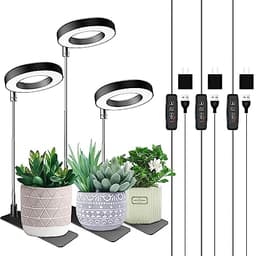
A white full-spectrum light gives the steady, balanced intensity most foliage plants miss in winter, without the harsh purple glow of cheap blurple panels — so you can still spot a yellow leaf or a pest. The all-purpose pick for a single plant or a small group.
$20-$45 · Best for Carrying foliage plants through a dim winter
Check price on Amazon →A small, aimable light for one stretched plant on a desk or shelf with no good window nearby. Cheaper than a full setup when you only need to brighten a single spot, and most come with a built-in timer.
$15-$30 · Best for Brightening one leggy plant in a dim corner
A bar or panel covers a whole shelf — the right tool for seedlings, succulents, and high-light plants that stretch fastest without strong light. Hang it 4-6 inches above seedlings and raise it as they grow.
$30-$60 · Best for Seedling trays, succulents, and shelves of plants
The cheapest upgrade to any grow light. Set it for 12-14 hours and the plant gets a consistent day length without you remembering to flip a switch. A simple mechanical or digital plug timer is all you need.
$8-$15 · Best for Giving the light a consistent, hands-off schedule
Treatment information on PlantFix is educational. When using any pesticide — including organic options like neem oil or insecticidal soap — read and follow the entire product label; the label is the law. For persistent or high-stakes problems, your local university extension service offers free, region-specific advice. Read about how we source and verify treatment guidance in our Editorial Standards.
FAQ
Can a regular LED or household bulb work as a grow light?▼
A bright regular LED is better than nothing and can keep a tough low-light plant ticking over, but ordinary bulbs aren't built to deliver the intensity or balanced spectrum plants use to grow. For a plant that's actively stretching or starting from seed, a real full-spectrum grow light is worth the small cost. For a hardy pothos in a dim corner, a bright nearby lamp may be enough.
Will a grow light fix a plant that's already leggy?▼
It fixes the future, not the past. A grow light makes new growth come in compact, but it can't un-stretch the bare, elongated stem that already formed — that part stays bare. To make a leggy plant full again you also prune it back above a leaf node to force bushier regrowth. See our leggy plant guide for the two-part fix.
How many hours a day should a grow light be on?▼
University of Minnesota Extension recommends about 12 to 14 hours a day for foliage houseplants, 14 to 16 for flowering plants, and 16 to 18 for seedlings. Put it on a timer for consistency. Don't run it 24/7 — plants need a daily dark period, and round-the-clock light stresses them without growing them faster.
Related
- Leggy Plant: What the Stretch Means and How to Fix It →
- Plant Leaves Turning Brown? Read the Location and the Texture →
- Pothos Leaves Curling? Check the Soil Before You Do Anything →
- Humidifier for Plants: Do Yours Actually Need One? →
- Why Is My Plant Dying? Start With the Alive-or-Dead Check →
- Wilting Plant? The Soil Check That Tells Dry From Wet →
Not sure what's wrong?
Use the diagnosis tool →Get seasonal plant care reminders and pest alerts.