Leggy Plant: What the Stretch Means and How to Fix It
A leggy plant is reaching for light, not sick — and you can't un-stretch the stem. Here's how to confirm it, fix future growth, and prune it back bushy.
7 min read · Updated 2026-10-23
By PlantFix Editorial Team · Sources: University Extension Programs, USDA, EPA
A Leggy Plant Is Reaching for Light (and You Can't Un-Stretch It)
A leggy plant — long bare stems, wide gaps between the leaves, the whole thing leaning toward the window — isn't diseased. It's reaching for light. When a plant doesn't get enough of it, it pours its energy into stem length to close the distance to a brighter spot, growing tall and thin instead of full and compact. University of Minnesota Extension describes exactly this: "Plant stems become 'leggy,' meaning stems become long and thin and appear to be reaching toward the source of light," as the plant grows "long spaces on stems between the leaf nodes."
Here's the part most advice skips, so start with it: you can't un-stretch a stem that's already stretched. The bare, elongated growth stays bare — it will not fill back in on its own. So fixing a leggy plant is never about reversing what happened. It's two separate jobs: fix the light so new growth comes in compact, and prune the plant back to force bushier regrowth lower down. Everything below is about those two moves.
Is It Actually Leggy, or Just a Trailing Plant?
Before you move or cut anything, make sure you're looking at legginess and not a plant's natural shape. Trailing and vining plants — pothos, ivy, string-of-hearts, philodendron — naturally grow long stems with gaps between leaves, and that's habit, not a problem.
True legginess comes as a cluster of signs, not just long stems:
- Widening gaps between leaves (long internodes) on growth that used to be compact.
- New leaves that are smaller and paler than the older ones. UMN notes that light-starved plants "don't produce chlorophyll" normally and "can turn pale green to yellow to white."
- A clear lean toward the nearest window or light.
- Lower leaves yellowing and dropping while the tip keeps stretching — UMN lists leaf drop, "especially older leaves," as a low-light symptom.
If a trailing plant is also pushing out small, pale new leaves on long reaching stems, then it's leggy on top of its natural habit and the same fixes apply. If the gaps are even, the leaves are full-sized and well-colored, and it isn't straining toward a window, it's just doing what it's built to do — leave it be. Still unsure? The plant diagnosis tool reads it from a photo.
Why It Stretched, Ranked
Legginess almost always comes down to light, with a couple of smaller contributors:
1. Not enough light — the cause nearly every time. A plant too far from a window, in a north-facing room, or coasting through a dim winter simply isn't getting the intensity it needs and stretches to compensate. Even "low-light" houseplants have a floor: UMN puts low-light plants at roughly 50 to 250 foot-candles of light — "low" is not "none."
2. One-sided light. A plant lit from a single window grows toward it and leans, getting lopsided even if the overall level is okay. The fix here is rotation, not more light.
3. Not rotating the pot. Related to the above — a plant left facing the same way for months bends permanently in that direction.
4. Too much nitrogen (minor). Heavy feeding, especially in low light, pushes fast, weak, soft growth that stretches more readily. In dim months, ease off the fertilizer rather than feeding to "help."
Crowding plays a role too — Illinois Extension notes that "crowded conditions can also lead to leggy plants" as they compete and shade each other out. But for an established houseplant, if it's leggy, assume light first.
The Two-Part Fix: More Light, Then Prune
Part one: fix the light. Move the plant to your brightest window, or close the gap with a grow light if no window is bright enough — in winter especially, a windowsill often isn't. Put the light close and give it a long day; plants read duration as well as intensity. Then rotate the pot a quarter-turn every week or two so it grows evenly instead of leaning. New growth will come in compact and sturdy, which is the whole point — the old stretch won't change, but it stops getting worse the day you fix the light.
Part two: prune to force it bushy. Because the stretched stem won't refill, you cut it back to trigger new growth lower down. Make the cut just above a leaf node (the point a leaf grows from); the plant responds by pushing one or two new shoots from the buds below the cut, which is how a single leggy stalk becomes a full, branching plant. Do this during active growth (spring and summer for most houseplants), not in the dim depths of winter when the plant can't power the regrowth. Cut in stages if the plant is severely bare — take a third now, more once it's responded — so you never strip it of all its leaves at once. Our treatment plan can sequence the light change and the staged pruning for you.
Leggy Seedlings Are a Different (Urgent) Problem
Leggy seedlings — tall, pale, flopping over before they've grown their first true leaves — are the most common version of this, and they need faster action than a leggy houseplant because a stretched seedling is weak and prone to toppling. Illinois Extension is direct about the cause: "insufficient light is the most common cause" of leggy seedlings.
The fix is light, immediately and close. A sunny windowsill is rarely enough for seedlings in late winter; a shop or LED grow light kept close is what keeps them stocky. Illinois notes fluorescent lights are typically kept "2-4 inches above the tops of seedlings" (UMN similarly recommends about 4 to 6 inches), raising the light as the seedlings grow. A gentle fan or daily brushing of the tops also thickens stems. One rescue trick works for a few crops — tomatoes can be potted up deeper, burying part of the stretched stem, which roots along its buried length and stabilizes the plant — but that's crop-specific (tomatoes root readily this way; most plants don't), not a universal houseplant move.
Keeping It Compact Going Forward
Once the new growth is coming in tight, a few habits keep it that way. Give the plant enough light for its species — match the spot to what it wants rather than parking a bright-light plant in a dark corner and hoping. Rotate the pot regularly so it grows upright instead of leaning. Pinch the growing tips now and then on plants that branch; it trades a little height for a lot of bushiness. And go easy on high-nitrogen feed in the low-light months, when extra fertilizer just fuels more weak stretching.
Use the plant's new growth as your light gauge: if the leaves coming in a month after you moved it are still small, pale, and widely spaced, the spot is still too dark — bump it to a brighter window or add a light and watch the next flush. If you've moved it, pruned it, and the new growth is still stretching, send a photo through the diagnosis tool so you can rule out anything else before you keep adjusting — and for the bigger picture of a plant going downhill, our why is my plant dying guide routes every symptom to its fix.
Recommended Products
We earn a commission if you buy through these links, at no extra cost to you. We recommend based on what works, not what pays. How this works.
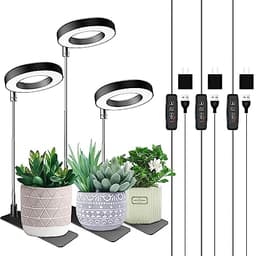
The direct fix when no window is bright enough — a grow light kept close gives the steady intensity that makes new growth come in compact instead of stretched. Essential for seedlings in winter.
$20-$45 · Best for Low-light rooms and leggy seedlings
Check price on Amazon →Clean, sharp snips make the cut-above-a-node pruning that forces a leggy plant to branch. A clean cut heals faster and invites less rot than tearing or crushing the stem.
$8-$18 · Best for Cutting leggy stems back to force bushy regrowth
A small, aimable light for a single stretched plant on a desk or shelf with no good window nearby — cheaper than a full grow setup when you only need to brighten one spot.
$15-$30 · Best for Brightening one leggy plant in a dim corner
Treatment information on PlantFix is educational. When using any pesticide — including organic options like neem oil or insecticidal soap — read and follow the entire product label; the label is the law. For persistent or high-stakes problems, your local university extension service offers free, region-specific advice. Read about how we source and verify treatment guidance in our Editorial Standards.
FAQ
Can a leggy plant go back to normal?▼
Not the part that already stretched — you can't un-stretch a bare stem, and it won't refill with leaves on its own. What you can fix is everything from here: move the plant into brighter light so new growth comes in compact, and prune the leggy stems back above a leaf node to force bushier regrowth lower down. Done together, those turn a stretched plant full again over a season.
Why is my plant tall, thin, and leggy?▼
It's not getting enough light and is stretching to reach it. University of Minnesota Extension describes light-starved stems becoming "long and thin" and "reaching toward the source of light," with long gaps between leaf nodes. Move it closer to your brightest window or add a grow light, and rotate it so it grows evenly instead of leaning toward one side.
Should I cut back a leggy plant?▼
Yes — pruning is half the fix. Cut the stretched stems back to just above a leaf node and the plant pushes new shoots from the buds below the cut, which is how a bare, leggy plant becomes bushy. Do it during active growth (spring and summer), and cut in stages on a badly stretched plant so you don't remove all its leaves at once.
How do I stop seedlings from getting leggy?▼
Give them much more light, kept close. Illinois Extension says insufficient light is the most common cause of leggy seedlings and that grow lights are typically kept 2–4 inches above the seedling tops, raised as they grow (UMN suggests about 4–6 inches). A sunny windowsill is rarely enough in late winter. A gentle fan also thickens the stems.
Related
Not sure what's wrong?
Use the diagnosis tool →Get seasonal plant care reminders and pest alerts.