Poinsettia Dropping Leaves: It's Shock, Not a Disease
A poinsettia shedding leaves days after you bring it home is almost always in shock — a cold trip home, a hot dry room, or water trapped in the foil sleeve. Here's how to tell which, and whether it's worth saving.
9 min read · Updated 2026-11-18
By PlantFix Editorial Team · Sources: University Extension Programs, USDA, EPA
First Question: Are the Falling Leaves Green or Yellow?
A poinsettia that starts shedding leaves within days of coming home is almost always reacting to its new spot — not dying of a disease — and the first move is to find the stressor, not to reach for the watering can. The fastest clue is the color of the leaves as they drop. Green leaves falling suddenly means shock: a cold walk to the car, a draft, a move, or a sudden light change, and the plant is bailing out faster than it's fading. Yellow leaves dropping from the bottom up means a watering or root problem that's been building for a week or two — usually water pooling in that decorative foil sleeve.
That split matters because the two fixes are opposites. A cold-shocked plant needs a warm, stable spot and to be left alone; an overwatered one needs you to stop watering and let it drain. Poinsettias (Euphorbia pulcherrima) are tropical, mass-produced, and shipped cold in midwinter, so by the time one reaches a gift recipient it has usually taken at least one of these hits. The good news: catch the stressor early and a poinsettia holds its color through the holidays. The rest of this guide takes each trigger down its own path. If you can't tell shock from rot from a description, our plant diagnosis tool reads it from a photo.
The Foil-Sleeve Trap: the Overwatering Nobody Sees
This is the cause almost no gift recipient suspects, so it's the one to rule out first. Poinsettias are sold wrapped in a decorative foil or plastic sleeve, and that sleeve has no drainage. Every time the plant is watered, the excess runs out of the pot's drainage holes and collects in the bottom of the wrapper, where the roots then sit in a puddle and slowly suffocate. Clemson Extension is explicit about the fix in its care instructions: "When watering, always take the plant out of its decorative pot cover," and "never let the plant sit in standing water."
The tell is the pattern: yellow leaves dropping from the bottom up, soil that stays wet and heavy for days, maybe a sour smell. That's overwatering, and more water is exactly the wrong response. Pull the plant out of the sleeve (or cut several large holes in the bottom of it), tip out any water in the saucer or wrapper, and let the pot drain fully before you water again. Once rot sets in, a plant will keep wilting even though the soil is soaking — the University of Maryland Extension notes a root-rotted plant "will wilt even when adequate moisture is present in the potting media." If you slide the plant out and the roots are "brown to black and soft or mushy," you're past overwatering and into root rot — Clemson confirms "root rotting fungi can occur in overwatered or poorly drained soils" — and our root rot rescue guide walks the unpot-and-trim steps so we won't repeat them here.
Cold Shock: Even the Walk to the Car Counts
If the leaves falling are still green and the drop came on fast — often within a day or two of bringing the plant home — suspect cold. Poinsettias are tropical and genuinely cold-sensitive, and the damage can happen in the few minutes between a shop door and a car on a freezing day. Clemson puts the threshold plainly: "Chilling injury is also a problem and can cause premature leaf drop if the temperature drops below 50 °F," and lists cold among the main leaf-drop triggers — "Several factors can cause premature leaf drop, such as temperatures dropping below 50 °F, poor light or poor nutrition."
It doesn't stop at the trip home. A poinsettia pressed against a cold windowpane, parked near a frequently-opened exterior door, or left in an unheated entryway keeps taking little chilling hits night after night. Clemson's guidance is blunt about placement: "Do not put your poinsettia near drafts, excessive heat or dry air from appliances, fireplaces or ventilating ducts." The fix is simply a warm, stable spot — comfortable room temperature, away from cold glass and door drafts. Cold-dropped leaves won't come back, but once the plant is warm the drop usually stops, and that's the whole goal while it's on display.
Dry Heat and Curling Leaves: the Other Extreme
The opposite mistake does damage too. Set a poinsettia on a mantel above a fireplace or right over a heating vent and the hot, bone-dry air cooks it. Clemson caps the warm end at "The daytime temperature should not exceed 70 °F," and warns that "Excess heat will cause the leaves to yellow and fall off and the flower bracts to fade early" — which is how a poinsettia next to a heat source loses both its leaves and its color weeks early.
This is also where curling comes from. In winter-dry indoor air, poinsettia leaf margins dry and curl inward before they drop, usually without the bottom-up yellowing you'd see from overwatering. The fix isn't more water — it's moving the plant off the heat source and lifting the humidity around it. Misting does almost nothing; for what actually moves the needle in a heated winter room, see our guide to humidifiers for plants. And if you spot cottony white tufts or tiny flying insects rather than an environmental cause, poinsettias are a classic whitefly host — our holiday plant pests guide covers that side separately so you don't treat a pest as a watering problem.
Normal Adjustment vs. a Plant That's Already Gone
Not every dropped leaf is a crisis, and part of rescuing a poinsettia is knowing when there's nothing left to rescue. A few lower leaves dropping in the first week after a move is ordinary adjustment — the plant settling into new light and warmth — and if the top two-thirds still look full and the stems are firm, do nothing but give it a stable spot. Whole-plant collapse, bare stems, and a soft or mushy base is the other end: that's advanced root rot, and it rarely comes back. The University of Maryland's rule for root rot is to "throw away severely infected plants," and a poinsettia is an inexpensive, deliberately short-lived holiday plant — there's no shame in composting one that's mush at the base rather than nursing it for weeks.
The honest middle case is a plant that's dropped a third of its leaves but still has firm stems and some healthy foliage up top. That one is worth saving: find and remove the stressor (sleeve, cold, or heat), stop fussing, and let it stabilize. Because green-drop shock, bottom-up overwatering, and dry-heat curling look alike to a worried eye but need opposite fixes, it's worth confirming before you act — run a photo through the diagnosis tool to settle which one you're looking at, and if it's rot, start the recovery with a proper treatment plan.
Keeping a Poinsettia Through the Holidays
Once the stressor is gone, poinsettias are easy to hold in good shape for the season — the whole job is a stable spot and restrained watering. Clemson's care specifics, pulled together into a checklist:
- Light: "Set your poinsettia in a bright location so that it receives at least 6 hours of bright, indirect sunlight each day."
- Temperature: a normal warm room — not above about 70 °F in the daytime, and never below 50 °F, with no cold drafts or hot vents nearby.
- Watering: take it out of the foil cover first, then "water until water seeps out of the drainage hole and the soil is completely saturated" — and empty the saucer so it never sits in standing water. Water again only when the surface feels dry, not on a schedule.
- Placement: away from fireplaces, appliances, heating ducts, and cold windowpanes, which covers both the cold-shock and the dry-heat traps in one move.
Get those four right and the leaf drop stops. The plant that greets you in January with firm green leaves is one you placed well and watered lightly — not one you fed, misted, or fussed over.
Recommended Products
We earn a commission if you buy through these links, at no extra cost to you. We recommend based on what works, not what pays. How this works.
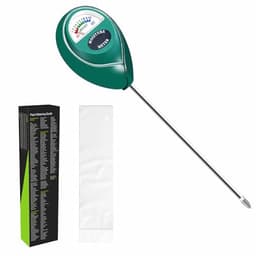
If the leaves are yellowing and dropping from the bottom and you're not sure whether the soil is actually wet, a probe reads moisture down at the root zone so you don't water a plant that's already drowning in its foil sleeve.
$10-$15 · Best for Confirming an overwatered poinsettia before you water again
Check price on Amazon →Only needed if you've confirmed rot and are repotting a poinsettia worth saving — an airy mix with added perlite drains fast so the roots stop sitting wet. Most gift poinsettias don't need this; the sleeve-and-saucer fix is usually enough.
$10-$16 · Best for Repotting a poinsettia out of waterlogged soil
Treatment information on PlantFix is educational. When using any pesticide — including organic options like neem oil or insecticidal soap — read and follow the entire product label; the label is the law. For persistent or high-stakes problems, your local university extension service offers free, region-specific advice. Read about how we source and verify treatment guidance in our Editorial Standards.
FAQ
Why is my poinsettia dropping leaves?▼
Usually shock from its new environment, not disease. Green leaves dropping suddenly point to cold — Clemson notes chilling injury below 50 °F causes premature leaf drop — or a sudden move or light change. Yellow leaves dropping from the bottom up point to overwatering, most often water trapped in the decorative foil sleeve drowning the roots. Check leaf color and soil moisture to tell which.
Can I save a poinsettia that's losing leaves?▼
Often, yes — if the stems are still firm and the top of the plant looks full, remove the stressor (take it out of the foil sleeve, move it off cold glass or a hot vent) and leave it alone to stabilize. A poinsettia that has dropped most of its leaves and gone soft and mushy at the base has root rot and is usually not worth saving; the University of Maryland Extension recommends discarding severely root-rotted plants.
Why are the foil wrapper and overwatering a problem?▼
The decorative foil or plastic sleeve has no drainage, so water that runs out of the pot collects in the bottom and leaves the roots sitting in a puddle. Clemson's instruction is to always take the plant out of its decorative pot cover when watering and never let it sit in standing water. Pull the sleeve or cut drainage holes in it, and empty the saucer after every watering.
Are poinsettias poisonous to cats and dogs?▼
The ASPCA lists poinsettia as toxic to cats, dogs, and horses because of its irritant sap, but describes the effect as "irritating to the mouth and stomach, sometimes causing vomiting, but generally over-rated in toxicity." In other words, a nibble tends to cause drooling or mild stomach upset rather than a true poisoning emergency — but keep it out of reach of determined chewers anyway.
Related
- How to Fix an Overwatered Plant (Root Rot Rescue) →
- Humidifier for Plants: Do Yours Actually Need One? →
- Poinsettia & Christmas Cactus Bugs: Spot and Clear Them →
- Why Is My Plant Dying? Start With the Alive-or-Dead Check →
- Plant Leaves Turning Brown? Read the Location and the Texture →
- Whiteflies: The Shake Test, Damage Chain & 3-Week Treatment Protocol →
Not sure what's wrong?
Use the diagnosis tool →Get seasonal plant care reminders and pest alerts.