Orchid Leaves Falling Off: When It's Normal & When to Act
Whether dropped orchid leaves are harmless aging or an emergency depends entirely on how the leaf left. Sort by the pattern — slow yellow, sudden green, or all at once.
9 min read · Updated 2026-08-05
By PlantFix Editorial Team · Sources: University Extension Programs, USDA, EPA
Are Dropped Orchid Leaves a Problem? (Quick Answer)
Whether a dropped orchid leaf is normal or an emergency depends entirely on how it left, not that it left. Sort your plant into one of three patterns.
A bottom leaf yellowed slowly, then dropped — normal aging. Moth orchids retire their oldest leaf once or twice a year as they grow new ones from the top. Do nothing.
A green, firm leaf dropped suddenly — this is the emergency. Healthy tissue doesn't fall off a healthy plant. Sudden green-leaf drop means crown or stem rot, or severe root failure, and it needs same-day attention.
All the leaves are gone — the plant isn't necessarily dead. Check the crown: firm and green means it can regrow; soft and brown is grave.
There's also one whole category of orchid — deciduous types like Dendrobium nobile — that naturally drop all their leaves for a winter rest. Grocery-store moth orchids do not. Knowing which you own changes everything, and we cover it below.
The Slow Bottom-Leaf Drop: Normal Aging
A healthy adult moth orchid carries roughly three to six thick leaves and cycles through them slowly. As a new leaf unfurls from the crown at the top, the oldest leaf at the very bottom is retired — it yellows evenly over a few weeks, goes papery and brown, and eventually detaches on its own.
You can recognize normal senescence by three things: it's the lowest leaf (occasionally the lowest two, never the top ones), the yellowing is even across the whole leaf rather than blotchy, and the rest of the plant looks fine — firm upper leaves, plump roots, no wobble. Losing one leaf a year this way, or a leaf just after a long bloom, is the plant budgeting, not failing. We cover the full range of yellowing patterns in the orchid yellow leaves guide.
Resist pulling a yellowing leaf off early. While it's still partly green the plant is reclaiming nutrients from it, and tearing it creates a wound that invites bacteria and fungi into the stem. Let it drop on its own, or wait until it's fully yellow-brown and loose and remove it with a gentle sideways tug. If you must cut, sterilize the blade with rubbing alcohol first — orchid viruses ride on cutting tools.
The Sudden Green-Leaf Drop: An Emergency
When a firm, green, healthy-looking leaf falls off — or several do in quick succession — something is wrong at the base of the plant, and this is the pattern to act on immediately.
Crown or stem rot is the usual culprit. Water left sitting in the crown (the central point where leaves join) or a bacterial/fungal soft rot at the stem destroys the tissue holding the leaves on, and green leaves drop or pull away with almost no resistance, often with a blackened, mushy, foul-smelling base. This kills fast — faster than root rot — so blot the crown bone-dry, stop all overhead watering, move the plant somewhere with better airflow, and treat the rotted area with 3% hydrogen peroxide the same day.
Severe root failure is the other cause. If the roots have rotted away, the plant can't move water, and it may shed even green leaves to cut its losses. Check the roots: brown and mushy means advanced root rot that needs a rescue repot now.
Sudden shock — a hard cold snap, a scorching draft, or a big move — can also trigger green-leaf drop. It's less sinister but still a signal: relocate the plant off cold windowsills and away from heat and AC vents.
Either way, sudden green-leaf loss is your cue to run the full triage in our dying orchid rescue guide and act today, not next weekend.
All the Leaves Are Gone: Is the Crown Alive?
A leafless moth orchid looks like a goner, but the verdict rests entirely on the crown — the central growing point at the top of the stem. Press it gently.
Firm and green: the plant can rebuild. As long as the crown lives and a few roots survive (or can be regrown), a moth orchid will eventually push new leaves. If roots are also gone, use the high-humidity "sphag and bag" recovery chamber detailed in our root rot guide to keep the plant alive while it regrows a root system — a process of weeks for the first nubs and about a year back to blooming.
Soft, brown, hollow, or mushy: the growing point is failing, which is the serious case. A dead crown can't make new leaves. But don't bin it on the spot — a moth orchid with a firm base and a dead crown can occasionally throw a basal keiki, a baby plantlet from the base of the old stem that grows its own crown and eventually replaces the parent. It's slow and not guaranteed, but a firm-based plant in bright indirect light costs nothing but patience. Give it a season.
The reassuring headline from the American Orchid Society: moth orchids are hard to kill outright. Leaflessness alone is rarely the end.
Deciduous Orchids: When Total Leaf Drop Is Supposed to Happen
Before you panic over a leaf-shedding orchid, identify what you actually own — because one common group drops its leaves on purpose.
Dendrobium nobile and similar deciduous dendrobiums (like Dendrobium anosmum) evolved a seasonal rhythm: they grow through spring and summer, then take a cool, dry winter rest during which they shed the leaves along their tall canes. Come spring, those bare canes flower from the nodes up and down their length. For these plants, a leafless winter cane isn't dying — it's doing exactly what it's supposed to, and the dormancy is what triggers the bloom. Withholding water and giving them cool nights over winter is correct care, not neglect.
Grocery-store moth orchids (Phalaenopsis) do not do this. They're evergreen — they should hold their leaves year-round. A Phalaenopsis dropping all its leaves is always a problem, never a rest cycle. This single distinction resolves a huge share of "my orchid lost all its leaves" panic: the answer depends on the genus.
How to tell them apart quickly: a Phalaenopsis has a few broad, flat, strappy leaves fanning out low from a single central crown. A cane dendrobium has tall, thin, upright pseudobulb "canes" with leaves ranked along them like a bamboo stalk. If yours is the bamboo-looking one going bare in autumn, relax — it's resting. If it's the flat-leaved grocery-store type going bare any time of year, run the triage in the dying orchid guide, or start with the diagnosis tool.
Recommended Products
We earn a commission if you buy through these links, at no extra cost to you. We recommend based on what works, not what pays. How this works.
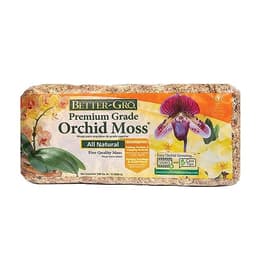
The core of the 'sphag and bag' recovery chamber that saves leafless or rootless orchids with a live crown. A shallow layer of damp — not wet — moss in a clear container creates the high humidity that coaxes out new roots. Also useful for high-humidity propagation of basal keikis.
$8-$15 · Best for Recovering a leafless orchid with a firm, live crown
Check price on Amazon →
Clean removal of dead, mushy leaf bases and spent spikes without tearing the stem. Sterilize with rubbing alcohol between every cut — orchid viruses are incurable and travel on blades. Never cut a firm green crown or the bare winter canes of a deciduous dendrobium.
$8-$15 · Best for Removing dead tissue after leaf drop with sterile cuts
Check price on Amazon →
When sudden leaf drop traces to root rot, fresh chunky bark is the fix during the rescue repot — it restores the drench-and-dry cycle orchid roots need. Strip all the old, broken-down media first. Medium grade suits most moth orchids.
$8-$15 · Best for Repotting when leaf drop traces to failing roots
Check price on Amazon →
A one-time flush for crown or stem rot — the cause behind most sudden green-leaf drop. It fizzes on damaged tissue and helps disinfect the site. Standard drugstore 3%, used undiluted at the moment you spot the rot. Not a routine watering additive.
$1-$3 · Best for Emergency treatment of crown or stem rot
Check price on Amazon →Treatment information on PlantFix is educational. When using any pesticide — including organic options like neem oil or insecticidal soap — read and follow the entire product label; the label is the law. For persistent or high-stakes problems, your local university extension service offers free, region-specific advice. Read about how we source and verify treatment guidance in our Editorial Standards.
FAQ
Can an orchid regrow leaves after they fall off?▼
Yes, if the crown (the central growing point) is alive. A moth orchid pushes new leaves from that crown once its roots are healthy, so a leafless-but-firm-crowned plant can fully recover over months. If the crown itself is dead, the plant can't grow leaves from it — but it may produce a basal keiki (a baby plant from the stem base) that grows its own crown and leaves. Deciduous dendrobiums regrow leaves each spring as part of their normal cycle.
Is it normal for an orchid to lose all its leaves in winter?▼
Only for deciduous types like Dendrobium nobile, which shed their leaves during a cool winter rest and then flower from the bare canes in spring — that's normal and necessary for blooming. Grocery-store moth orchids (Phalaenopsis) are evergreen and should keep their leaves year-round; total leaf drop on a Phalaenopsis is always a problem. Identify your genus first: bamboo-like upright canes signal a dendrobium, flat strappy leaves from a low crown signal a moth orchid.
My orchid dropped a green leaf suddenly — what's wrong?▼
Sudden loss of a firm, green leaf is the pattern to worry about, because healthy tissue doesn't fall off a healthy plant. The usual causes are crown or stem rot (a blackened, mushy, foul-smelling base) or severe root failure, both of which stop the plant from holding or supplying its leaves. Occasionally a hard cold snap or heat shock triggers it. Check the crown and roots immediately and treat rot the same day — this kind of drop escalates fast.
All my orchid's leaves fell off. Is it dead?▼
Not necessarily. Check the crown: if it's firm and green, the plant can regrow leaves and roots over months even from a bare, near-rootless state using a high-humidity recovery chamber. If the crown is soft and brown, the growing point is likely gone — but a firm-based plant may still produce a basal keiki that becomes a replacement. Only a plant with a mushy crown, no live roots, and a soft base is truly finished.
Should I cut off the stem after an orchid loses its leaves?▼
Don't cut the main stem or crown — that's where new growth comes from, and a firm crown is your best hope of recovery even when leafless. You can trim away clearly dead, mushy, or blackened tissue with a sterilized blade, and cut a fully browned flower spike back to the base. Leave anything firm and green alone. For deciduous dendrobiums, never cut the bare canes in winter; they flower from those canes in spring.
Related
- Orchid Yellow Leaves: What Each Pattern Means & How to Fix It →
- Orchid Root Rot: How to Identify, Treat & Repot a Rotting Orchid →
- How to Revive a Dying Orchid: The 60-Second Triage →
- Orchid Leaves Curling or Wrinkled: Causes & Fixes →
- Yellow Leaves on Plants: Every Cause & How to Fix It →
- How to Fix an Overwatered Plant (Root Rot Rescue) →
Not sure what's wrong?
Use the diagnosis tool →Get seasonal plant care reminders and pest alerts.