Fiddle Leaf Fig Brown Spots: 5 Causes and How to Fix Each
Brown spots on your fiddle leaf fig? Press one — mushy and dark means root rot, dry and crispy means thirst or sun, tan with a yellow halo means bacterial. Here's the fix.
10 min read · Updated 2026-08-26
By PlantFix Editorial Team · Sources: University Extension Programs, USDA, EPA
Why Your Fiddle Leaf Fig Has Brown Spots (Quick Answer)
Brown spots on a fiddle leaf fig (Ficus lyrata) have five main causes, and the fastest way to tell them apart is to press the spot. If it's dark brown to black and mushy, that's root rot from overwatering — the most common and most dangerous cause. If it's a medium-brown spot ringed with a yellow halo and it's spreading fast, especially on newer leaves, that's a bacterial infection. If it's a dry, crispy, bleached patch only on the side facing the window, that's sunburn. If it's dry, crispy brown at the leaf edges and tips with the whole leaf looking parched, that's underwatering. And if it's tiny pen-point reddish-brown dots on new growth only, that's edema — harmless and cosmetic.
So: mushy and dark = too much water; crispy and dry = too little water or too much sun; tan with a yellow ring = bacterial. Nail that first distinction and you're 90% of the way to the right fix. If you'd rather confirm from a photo, our plant diagnosis tool does it in a few taps, and our fiddle leaf fig care profile covers the light, water, and humidity this fussy plant needs.
Fiddle Leaf Fig Brown Spot Diagnostic Chart
Match the spot to the row below, then jump to that section. The press test — mushy versus crispy — does most of the work.
| What the spot looks & feels like | Cause | First move |
|---|---|---|
| Dark brown/black, mushy, starts on lower/inner leaves | Root rot (overwatering) | Check the roots; repot if mushy |
| Medium brown + yellow halo, spreads fast, new leaves worst | Bacterial infection | Remove leaves; isolate; dry it out |
| Bleached, dry, crispy — only on the window side | Sunburn | Pull back from direct sun |
| Dry, crispy brown at edges and tips, whole leaf parched | Underwatering | Soak thoroughly; set a schedule |
| Tiny reddish-brown pen-point dots, new leaves only | Edema (harmless) | Even out watering; ignore it |
Cause #1: Root Rot from Overwatering (The Dangerous One)
This is the cause that actually kills fiddle leaf figs, and it's the most common. Fiddle leaf figs are drama queens about water — too much, and the roots suffocate in soggy soil and begin to rot, which shows up on the leaves as dark brown to black spots, often starting near the base of the leaf or on the lower, inner leaves and spreading outward. Affected leaves may yellow and drop, and in a bad case the base of the trunk goes soft.
The press test is decisive: root-rot spots are mushy and dark, not dry. The confirming check is the roots themselves. Slide the plant out of its pot — healthy fiddle leaf fig roots are firm and white or tan; rotted roots are brown, mushy, and often smell sour. University of Maryland Extension notes that root rot can paradoxically cause wilting even when the soil is wet, which is why the panicked instinct to water a struggling fig only digs the hole deeper.
To fix it: stop watering immediately. If the roots are only slightly affected, let the soil dry out fully and ease off your watering. If they're widely brown and mushy, unpot the plant, rinse the roots, cut away all the rotted roots with sterilized scissors, remove the worst-spotted leaves, and repot into fresh, well-draining mix (standard potting soil with plenty of perlite). Then withhold water for about a week. Our root rot rescue guide walks the full save-vs-restart process. Expect two to four weeks to stabilize and two to three months before you see healthy new growth.
Cause #2: Bacterial Infection (Spreads Fast)
Bacterial leaf spot is the cause people most often confuse with root rot, and getting it wrong wastes precious time. The distinguishing signs: the spots are a lighter, medium brown, often ringed by a yellow halo, they can appear anywhere on a leaf (not just the base), and they spread noticeably faster than root-rot damage. Crucially, bacterial infection prefers new growth — if your newest leaves are worse off than your older ones, bacteria is the likely culprit, whereas root rot tends to hit the older lower leaves first. General overall yellowing alongside the brown spots is another bacterial tell.
Bacterial infections are stubborn and there's no reliable home cure once they're established, so the strategy is containment. Remove all affected leaves immediately, sterilizing your scissors between every cut so you don't spread it. Isolate the plant away from your others. Cut watering back hard and improve air circulation — bacteria thrive in warm, wet, stagnant conditions, and it's frequently a secondary problem that follows overwatering. Repotting into fresh, dry, sterile soil (discarding the old mix) gives a badly infected plant its best shot. Caught early, a fiddle leaf fig can push out clean new growth in a few weeks; caught late, it may not recover, which is why fast, aggressive leaf removal matters.
Cause #3: Sunburn (Only on the Window Side)
Fiddle leaf figs want lots of bright indirect light, but direct, unfiltered sun scorches their big leaves. Sunburn shows up as bleached white-to-light-brown patches that are dry and crispy (never mushy) and appear only on the surfaces facing the light source — typically the side nearest a hot south or west window, or on a plant that was recently moved into a much brighter spot.
The tell that separates sunburn from everything else is the location and the timing: the damage is one-sided, matches where the sun hits, and shows up within days of a move or a season change. There's nothing to treat on the leaf itself — scorched tissue won't recover — but you can stop it spreading by moving the plant a few feet back from the glass or diffusing the light with a sheer curtain. Fiddle leaf figs hate abrupt changes, so acclimate a plant to a brighter position gradually, giving it a little more exposure each week rather than dropping it into full sun overnight.
Causes #4 and #5: Underwatering and Edema
Underwatering produces dry, crispy brown at the leaf edges and tips, with the whole leaf looking parched and sometimes curling inward. Supporting signs: the soil has pulled away from the sides of the pot, the pot feels light when you lift it, and lower leaves may drop. Because fiddle leaf figs are so sensitive to inconsistent watering, this often coexists with the opposite problem — people alternate between forgetting and overcorrecting. The fix is a thorough soak until water runs out the drainage holes, followed by a consistent schedule (many growers water the same day each week and adjust by the finger test). New growth should resume within a couple of weeks if you caught it before major leaf drop.
Edema is the harmless one, and it fools a lot of new owners. It appears as tiny reddish-brown, pen-point-sized dots or bumps, almost always on new growth, caused by inconsistent watering that makes leaf cells take up water faster than they can use it and burst. It's purely cosmetic — the spots won't spread to other leaves and won't hurt the plant. The only "treatment" is to even out your watering rhythm so the plant isn't swinging between bone-dry and saturated. Existing spots won't disappear, but new leaves will come in clean.
Should You Cut Off Brown Leaves on a Fiddle Leaf Fig?
It depends how much of the leaf is affected. If a leaf is mostly brown, mushy, or clearly infected — especially with bacterial spots — remove it: cut the petiole cleanly at the stem with sterilized scissors, and sterilize again before the next cut so you don't spread disease. Removing badly damaged leaves also lets the plant redirect energy into recovery.
If a leaf has only a small brown spot and is otherwise green and firm, you can leave it — a healthy leaf still photosynthesizes and feeds the plant, and fiddle leaf figs are slow to replace lost foliage. You can trim just the damaged portion with clean scissors if the look bothers you, following the leaf's natural edge. Either way, the leaf matters far less than the cause: diagnose why the spots appeared (usually watering) and fix that, or new leaves will spot too.
Preventing Brown Spots: The Fiddle Leaf Fig Routine
Fiddle leaf figs earn their fussy reputation, but nearly all brown spots come down to inconsistent water and the wrong light. Get these right and the plant is far more forgiving:
- Water only when the top 2 inches of soil are dry, then water thoroughly until it drains from the bottom. Consistency matters more than frequency — erratic watering is the number-one cause of both spotting and leaf drop.
- Never let it sit in water. The pot must have drainage holes; empty the saucer within 30 minutes. A moisture meter takes the guesswork out until you learn the plant's rhythm.
- Give it bright indirect light from an east or filtered south/west window, out of the direct beam.
- Pick a spot and leave it there. Fiddle leaf figs resent being moved and react to drafts, vents, and temperature swings — keep it away from exterior doors and HVAC vents.
The moisture meters, well-draining mixes, and nursery pots we recommend for exactly this are on our plant care gear page. If the leaves are yellowing rather than spotting, our yellow leaves guide and monstera yellow leaves guide cover that pattern across large-leaved tropicals, and the fiddle leaf fig profile has the complete care sheet.
Recommended Products
We earn a commission if you buy through these links, at no extra cost to you. We recommend based on what works, not what pays. How this works.
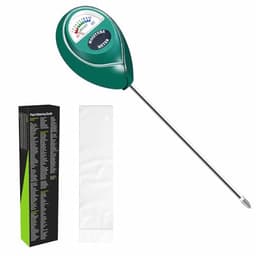
Fiddle leaf figs are killed by inconsistent watering more than anything else. A probe that reads moisture at the root zone tells you exactly when to water — the best defense against both the overwatering that rots roots and the drought that crisps the edges.
$10-$18 · Best for Ending the erratic watering that causes most brown spots
Check price on Amazon →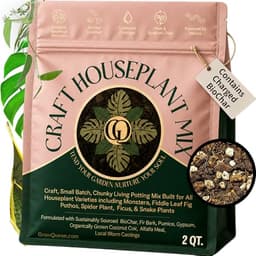
A standard indoor mix cut with extra perlite (about 3:1) holds enough moisture without staying soggy — the balance that keeps a fiddle leaf fig's roots healthy. Ideal for repotting a rot-recovering plant into fresh, airy soil.
$12-$20 · Best for Repotting after root rot into fast-draining soil
Check price on Amazon →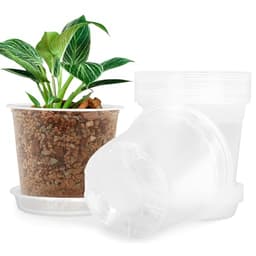
A fiddle leaf fig must never sit in standing water. A plastic nursery pot with real drainage holes lets excess water escape; slip it inside a decorative cachepot for the look without drowning the roots.
$8-$16 · Best for Replacing a no-drainage cachepot that traps water
Check price on Amazon →Treatment information on PlantFix is educational. When using any pesticide — including organic options like neem oil or insecticidal soap — read and follow the entire product label; the label is the law. For persistent or high-stakes problems, your local university extension service offers free, region-specific advice. Read about how we source and verify treatment guidance in our Editorial Standards.
FAQ
Why does my fiddle leaf fig have brown spots?▼
There are five common causes, and the press test tells them apart: mushy dark spots on lower leaves are root rot from overwatering; medium-brown spots with a yellow halo that spread fast on new growth are bacterial infection; dry crispy bleached patches on the window side are sunburn; dry brown edges and tips are underwatering; and tiny reddish pen-point dots on new leaves are harmless edema. Overwatering and the root rot it causes are the most common and most serious.
How do I tell if my fiddle leaf fig has root rot?▼
Press a brown spot — root-rot spots are mushy and dark, not dry. Then check the roots: slide the plant out of its pot, and if the roots are brown, soft, and sour-smelling instead of firm and white, it's root rot. The damage usually starts on the lower, inner leaves and the soil stays wet for days. Wilting even when the soil is wet is a classic sign, because rotted roots can't take up water.
Should I cut off brown leaves on my fiddle leaf fig?▼
Remove leaves that are mostly brown, mushy, or bacterially infected — cut the petiole at the stem with sterilized scissors and sterilize between cuts to avoid spreading disease. Leave leaves that have only a small spot and are otherwise firm and green, since they still feed the slow-growing plant. You can trim just the damaged part if you like. Fixing the underlying cause matters more than removing the leaf.
How do I save a fiddle leaf fig with brown spots?▼
First diagnose the cause with the press test. For root rot, stop watering, unpot and trim mushy roots, remove badly spotted leaves, and repot in fresh well-draining soil, then withhold water about a week. For bacterial infection, remove affected leaves fast, isolate the plant, and cut back watering. For sunburn or underwatering, adjust light or set a consistent watering schedule. Recovery takes weeks, and new clean growth is the sign it worked.
Why are the new leaves on my fiddle leaf fig brown or spotted?▼
Brown damage concentrated on new leaves points to one of two things: bacterial leaf spot, which prefers new growth and shows medium-brown spots with yellow halos that spread, or edema, which shows tiny harmless reddish-brown pen-point dots caused by inconsistent watering. Bacterial spots spread and need aggressive leaf removal; edema is cosmetic and only needs a steadier watering rhythm. Check whether the spots are spreading to decide which you have.
Related
- How to Fix an Overwatered Plant (Root Rot Rescue) →
- Yellow Leaves on Plants: Every Cause & How to Fix It →
- Monstera Yellow Leaves: 7 Causes and the Fix for Each →
- Powdery Mildew Treatment: What Works, Skip the Baking Soda →
- Houseplant Pests: Visual ID Guide to Every Bug on Your Indoor Plants →
- Spider Mites: Identification, Treatment & Prevention Guide →
- Mealy Bugs on Plants: How to Identify & Kill Them Fast →
Plants Commonly Affected
Not sure what's wrong?
Use the diagnosis tool →Get seasonal plant care reminders and pest alerts.