Downy Mildew: Why It's Not Powdery Mildew — and Why That Changes the Treatment
Fuzzy gray growth on leaf undersides with yellow blotches on top. It's a water mold, not a true fungus, which is why powdery-mildew treatments fail on it. Here's how to tell them apart and treat each crop.
10 min read · Updated 2026-08-14
By PlantFix Editorial Team · Sources: University Extension Programs, USDA, EPA
How to Identify and Treat Downy Mildew (Quick Answer)
Downy mildew is a plant disease that produces fuzzy gray, purple, or white growth on the undersides of leaves, with matching yellow or brown blotches on the tops. The single most important thing to know: despite the name, it is not a true fungus — it's a water mold (an oomycete), more closely related to algae than to the fungi that cause powdery mildew. That biology is the whole game, because the sulfur, potassium bicarbonate, and baking-soda sprays that stop powdery mildew don't work on downy mildew.
Treat it instead with copper fungicide or a phosphorous-acid (phosphonate) product, applied at the first sign and repeated every 7-10 days. Unlike powdery mildew, downy mildew needs wet, cool conditions — cool nights, humid days, wet leaves — so watering at the soil line in the morning and improving airflow does much of the prevention. Remove and bag infected leaves immediately; never compost them.
Downy Mildew vs. Powdery Mildew (The Comparison That Matters)
This is the #1 confusion, and getting it wrong means spraying the right product on the wrong disease. They share a name and nothing else — they're not even in the same kingdom.
Where it grows: Downy mildew grows on the underside of leaves (you first notice yellow blotches on top). Powdery mildew coats the top surface with white powder.
What it looks like: Downy mildew is fuzzy — gray, purple, or bluish mats of growth. Powdery mildew is a dry, flat, white-to-gray powder.
What conditions it needs: Downy mildew needs wet and cool — humid air, wet leaves, cool nights around 50-70°F. Powdery mildew is the oddball that thrives in dry, warm, crowded air and doesn't need leaf wetness at all.
What it actually is: Downy mildew is an oomycete (water mold, related to algae). Powdery mildew is a true fungus. As Penn State Extension notes, this difference is exactly why the two require different management (Penn State Extension).
What treats it: Downy mildew responds to copper and phosphorous-acid products. Powdery mildew responds to sulfur, potassium bicarbonate, and milk sprays — none of which touch downy mildew. A fungicide designed to hit a specific site inside a fungal cell usually has no equivalent target in a water mold, which is the biological reason the products don't cross over.
The fast field test: flip the leaf. Fuzzy growth underneath plus yellow patches on top in cool, damp weather = downy mildew. White powder on top in warm, dry, crowded conditions = powdery mildew.
Plants Most Commonly Affected
Downy mildew isn't one organism — each crop has its own specialized water mold, which is why it shows up as several separate epidemics rather than one disease.
Cucurbits (cucumbers, melons, squash). The most devastating. Cucurbit downy mildew can strip a cucumber patch in days once it arrives, spreading on wind-borne spores that blow up the country each summer. The University of Maryland tracks it as a top cucurbit disease and recommends resistant varieties plus a protectant program (UMD Extension).
Basil. Basil downy mildew was first reported in the U.S. in 2007 in Florida and swept the East Coast in epidemic proportions by 2008-2009, causing major losses. It's now an expected summer threat for anyone growing sweet basil — the first sign is yellowing that looks like a nutrient problem, with gray fuzz underneath. Grow resistant varieties (Rutgers released several bred specifically for it).
Impatiens. A cautionary tale: impatiens downy mildew first appeared in Florida in late 2011 and caused severe, widespread outbreaks across the U.S. in 2011-2012 — with disease incidence approaching 100% and losses over 90% in affected greenhouse crops — effectively collapsing garden impatiens sales for years. It still lurks; plant downy-mildew-resistant impatiens or SunPatiens if you've had it.
Lettuce and spinach. Cool-season leafy crops are especially prone in spring and fall, with yellow angular patches bounded by leaf veins.
Grapes. Grapevine downy mildew (Plasmopara viticola) is one of the most serious diseases in viticulture, hitting leaves, shoots, and clusters.
Roses and other ornamentals. Less common but possible in cool, humid climates, where it can cause sudden leaf drop that's often mistaken for black spot.
Downy Mildew Treatment
Because it's a water mold, the product list is different from every other fungal disease — get this right or you'll waste a season.
1. Remove infected leaves immediately. Downy mildew sporulates fast in humid weather. Strip and bag affected leaves at the first sign; do not compost. On a heavily infected annual like basil, harvesting or removing the plant early may beat trying to save it.
2. Copper fungicide. The primary organic option and the most accessible; our copper fungicide guide covers dilution and timing. Start at the first symptom, coat the leaf undersides where the disease lives, and reapply every 7-10 days and after rain.
3. Phosphorous-acid (phosphonate) products. Products like Phostrol, ProPhyt, and Fosphite are specifically effective against oomycetes and are often less phytotoxic than copper — a strong choice for downy mildew where they're available. They're a genuinely different chemistry from anything you'd use on powdery mildew.
4. What does NOT work. Sulfur, potassium bicarbonate, baking soda, and milk sprays are powdery-mildew treatments and have little to no effect on downy mildew. Spraying them here is the most common wasted effort in the garden. Neem oil is, at best, a mild preventive.
5. Timing beats dose. These are protectant sprays — they guard tissue that isn't infected yet. In a wet, cool spell on a susceptible crop, a preventive spray before symptoms appear does more than any rescue spray after. When you need the copper and a sprayer, our recommended gear page has them.
Preventing Downy Mildew
Downy mildew needs free water on the leaf and humid, still air — take those away and it can't establish.
Water at the soil line, in the morning. Overhead watering wets the leaves and keeps them wet; morning soil-level watering lets any incidental moisture dry fast. This is the highest-leverage prevention there is for a water-mold disease.
Improve airflow. Space plants at their tag spacing, prune for openness, use raised beds, and run a fan for crowded indoor or greenhouse plantings. Stagnant humidity is exactly what the spores need to germinate.
Choose resistant varieties. This is the difference-maker for the worst hosts — resistant cucumbers, downy-mildew-resistant basil (the Rutgers-bred lines), and resistant impatiens or SunPatiens exist specifically because these epidemics were so destructive. On susceptible crops, resistance saves you the entire battle.
Monitor during cool, wet weather. Downy mildew's window is humid days with cool nights. During those spells, scout leaf undersides on your cucurbits, basil, and lettuce, and start a preventive copper or phosphonate program before you see symptoms.
Clean up and rotate. Remove infected debris (some downy mildews overwinter in it or in soil), and rotate leafy and cucurbit crops. For how downy mildew fits alongside the other diseases you're likely to meet, our plant diseases hub maps the whole set, and the diagnosis tool can confirm you're dealing with downy mildew and not a lookalike.
Recommended Products
We earn a commission if you buy through these links, at no extra cost to you. We recommend based on what works, not what pays. How this works.
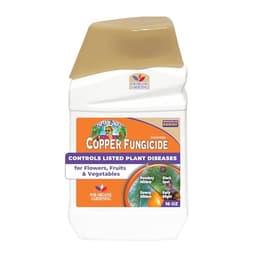
The primary accessible treatment for downy mildew. Protectant, so start at first sign and coat the leaf undersides where the disease lives, reapplying every 7-10 days and after rain. Our copper fungicide guide has the dilution by crop.
$10-$20 · Best for Organic downy mildew control
Check price on Amazon →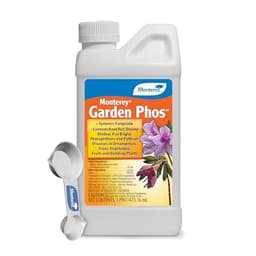
A phosphonate product (Phostrol, ProPhyt, Fosphite) formulated specifically against water molds — often more effective and less phytotoxic than copper for downy mildew. A genuinely different chemistry from powdery-mildew sprays.
$18-$35 · Best for Targeted downy mildew (oomycete) control
Check price on Amazon →The difference-maker for cucumbers, basil, and impatiens. Resistant varieties were bred specifically because these downy mildew epidemics were so destructive — on susceptible crops, resistance saves the whole battle.
$3-$8 · Best for Preventing downy mildew on the worst-hit crops
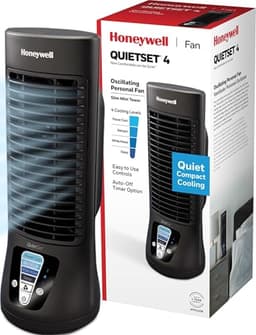
For indoor and greenhouse basil and ornamentals, moving air breaks up the stagnant humidity downy mildew needs to germinate — a cheap preventive that pairs with watering at the soil line.
$15-$30 · Best for Reducing humidity for indoor/greenhouse plants
Check price on Amazon →Treatment information on PlantFix is educational. When using any pesticide — including organic options like neem oil or insecticidal soap — read and follow the entire product label; the label is the law. For persistent or high-stakes problems, your local university extension service offers free, region-specific advice. Read about how we source and verify treatment guidance in our Editorial Standards.
FAQ
What's the difference between downy mildew and powdery mildew?▼
They share a name and almost nothing else. Downy mildew grows fuzzy and gray-purple on leaf undersides with yellow blotches on top, needs cool wet conditions, and is a water mold (oomycete) related to algae. Powdery mildew coats leaf tops with dry white powder, thrives in warm dry crowded air, and is a true fungus. Crucially, they need different treatments: copper and phosphorous-acid products for downy mildew; sulfur, potassium bicarbonate, and milk sprays for powdery mildew — and neither set works on the other.
Why don't normal fungicides work on downy mildew?▼
Because downy mildew isn't a true fungus — it's an oomycete, or water mold, which is biologically closer to algae than to fungi. Most fungicides target a specific site inside a fungal cell, and water molds usually don't have that same target, so the product has nothing to act on. That's why sulfur and bicarbonate sprays that stop powdery mildew do nothing here. Downy mildew needs copper or phosphorous-acid (phosphonate) products formulated for oomycetes.
What does downy mildew look like?▼
You usually notice it first as yellow, angular blotches on the tops of leaves — often bounded by the leaf veins, so the patches look blocky. Flip the leaf over and you'll find the diagnostic sign: fuzzy gray, purple, or bluish growth on the underside, directly beneath the yellow spots. In humid weather that fuzz is dense and obvious. As it progresses the yellow patches turn brown and the leaves die.
Can I save a plant with downy mildew?▼
It depends on the plant and how early you catch it. On perennials and woody plants, remove infected leaves and start a copper or phosphonate program and they often pull through. On fast-collapsing annuals like basil or garden impatiens, downy mildew moves so quickly that removing the plant to protect the rest of your planting is frequently the better call. Either way, act at the first sign — once it sporulates in humid weather, it spreads fast.
Does downy mildew spread to other plants?▼
Yes, and quickly in the right weather — it spreads on wind-borne and water-splashed spores that thrive in cool, humid conditions. But each downy mildew is fairly host-specific: the one on your cucumbers won't jump to your basil, and the basil strain won't infect impatiens. It will, however, race through all the susceptible plants of the same type nearby. Remove infected material promptly, avoid overhead watering, and treat susceptible neighbors preventively.
Related
- Plant Diseases: How to Identify and Treat the Most Common Ones →
- Powdery Mildew Treatment: What Works, Skip the Baking Soda →
- Anthracnose: How to Identify and Treat It on Every Kind of Plant →
- Copper Fungicide: Plant-by-Plant Dosage Chart + Safety Rules →
- Neem Oil for Plants: Complete Guide to Using It Effectively →
- Tomato Blight: How to Identify, Treat, and Stop Early & Late Blight →
Not sure what's wrong?
Use the diagnosis tool →Get seasonal plant care reminders and pest alerts.