Cyclamen Mites: The Pest You Diagnose by Damage, Not Sight
Warped, stunted new growth on a cyclamen or African violet usually means cyclamen mites — too tiny to see. How to confirm it, and whether to treat or toss.
8 min read · Updated 2026-10-30
By PlantFix Editorial Team · Sources: University Extension Programs, USDA, EPA
You Can't See a Cyclamen Mite — You Read the Damage
If the newest leaves at the center of your cyclamen or African violet are curled, thickened, stunted, or oddly hairy while the older outer leaves look fine, you almost certainly have cyclamen mites — and you will never spot one with the naked eye. Clemson Extension puts their size at "approximately 1/100 inch long," which is even smaller than a spider mite and invisible to the naked eye. There is no bug to find and squash here. You diagnose cyclamen mites entirely from the pattern of damage they leave behind.
That is the single most important thing to understand, because it changes how you confirm the problem. Don't waste time hunting for specks or webbing — there won't be any. Instead, look at where the damage is. Cyclamen mites feed deep in the folded, unopened growth at the crown of the plant, so the leaves and flower buds come out of that center already deformed. The outer, older foliage that formed before the infestation stays normal, which is exactly why people assume it's a watering or light problem and treat the wrong thing for weeks.
If you want a second opinion before you commit to a plan, photograph the center of the plant — the tight new leaves and any buds — and run it through our plant diagnosis tool. A clear shot of distorted crown growth on an African violet or cyclamen is usually all it takes to separate mite damage from a cultural problem.
The Tell: New Growth Wrecked, Old Growth Fine
Cyclamen mite damage has a signature that almost nothing else copies. Clemson Extension describes the classic African-violet picture as "severe stunting of leaves in the center of the plant" and "new leaves that are very hairy and appear grayish." On a cyclamen you'll see the same thing — a tight, crumpled cluster of small, brittle, over-fuzzy leaves at the crown where healthy new foliage should be unfurling.
The flowers give it away too. Clemson notes "flower buds that fail to open" and blooms that are so "misshapen" they stay stuck shut. A cyclamen that pushes up buds all winter and never actually opens them — while the leaf center looks puckered — is showing you mites, not a lack of chill or light.
The reason the damage shows up this way is timing. The mites feed on tissue deep in the crown that hasn't expanded yet. By the time the leaf or bud finally unfolds, the damage is already done — you're seeing distortion that happened days or weeks earlier, down in the center of the plant. That lag is also why a plant can keep pushing out ruined new growth even after you think conditions are perfect.
Why This Isn't Spider Mites (and Why the Mix-Up Costs You)
People hear "mite" and reach for the spider-mite playbook, which is the wrong one. The two pests like opposite worlds. Spider mites explode in hot, dry air — a heated winter room or a summer windowsill — and leave fine webbing plus pale stippling across older leaves. Cyclamen mites do the reverse. Clemson reports they "develop most rapidly with high humidity (80 to 90 percent) and cool temperatures at or near 60°F" — the exact cool, humid conditions a cyclamen or an African violet collection is usually kept in.
There are two more giveaways. Cyclamen mites spin no webbing, so if you see webbing you're dealing with spider mites. And their damage sits in the new crown growth, not as scattered speckling across the whole plant. Spider-mite stippling shows up on mature leaves that were fine before; cyclamen-mite distortion shows up only on tissue that emerged after the mites moved in.
The mix-up matters because it wastes the only window you have. Treating a cool-growing, humidity-loving cyclamen mite as if it were a hot-dry spider mite — cranking up airflow, backing off humidity — does nothing to the mites and stresses the plant. Worse, people often spray once, see the old leaves stay fine, assume it worked, and stop. The ruined new growth keeps coming because the crown was never actually treated.
The Hard Call: Treat It or Bin It
Cyclamen mites are one of the few houseplant pests where the honest first recommendation is often to throw the plant out. Clemson's blunt guidance is to "discard badly infested plants." A $6 grocery-store cyclamen with a wrecked crown is not worth the weeks of repeat spraying it takes to maybe save it — and while you fight it, it's a reservoir that can seed every other soft-leaved plant you own. Bag it and move on.
If the plant is valuable or only lightly hit, it can be treated, but go in knowing it's hard. Clemson lists "insecticidal soap," "sulfur products," and "tau-fluvalinate products," and notes that "two or three sprays at three-day intervals may be required for mite control." The reason for the repeat schedule is that the mites hide in the tightly folded crown growth where spray barely reaches, so a single application misses most of them — you're spraying to catch each new batch as it moves. Soak the center of the plant, not just the open leaves, and keep to the three-day rhythm. An insecticidal soap is the gentlest starting point, and our recommended gear page lists the soap and the fine-mist sprayer that lets you drive it into the crown.
Two rules make or break the attempt. First, isolate the plant the moment you suspect mites — they travel plant-to-plant on your hands, tools, and touching leaves, which is how one infested African violet becomes a shelf-wide problem. Second, because you can't see the mites, you can't judge success by looking for them. Judge it by the next flush: if new leaves and buds come in clean and flat, you've won; if they're still crumpled and fuzzy, the crown is still infested and the plant is probably a toss.
Where Infestations Actually Start: the Garden-Center Shelf
Almost every cyclamen-mite problem walks in on a new plant. Cyclamen and African violets are produced and sold packed wing-to-wing on cool, humid benches — the exact conditions the mites love — so a fresh gift cyclamen or a windowsill-violet haul is the most likely source. The habit that prevents it costs nothing: before you buy, look hard at the crown. If the newest central leaves are puckered, grayish, or abnormally hairy, or the buds look stuck and deformed, leave it on the shelf. A clean-looking plant with a tidy, flat center is the one to take home.
Then quarantine it. Keep any new cyclamen or African violet away from your other plants for two to three weeks and watch how the next round of growth comes in. Don't move your hands or your scissors straight from the new plant to the rest of the collection. That one pause catches not just cyclamen mites but most of the pests that hitchhike indoors over the winter gift-plant season.
If you're staring at a plant right now and can't tell whether that crumpled center is mites or just cold-draft stress, send a close-up of the crown through our diagnosis tool — and tell us if a plant you brought home clean turned up infested a few weeks later, because that's the pattern that tells us which suppliers are shipping mites.
Recommended Products
We earn a commission if you buy through these links, at no extra cost to you. We recommend based on what works, not what pays. How this works.
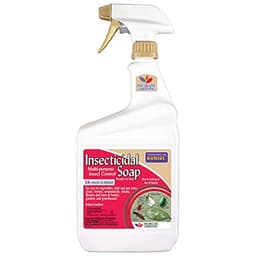
A ready-to-use potassium-salt soap is the gentlest option for a valuable plant worth trying to save. It works on contact, so coverage is everything — drive it into the folded crown growth, not just the open leaves, and repeat every three days.
$10-$18 · Best for Treating a lightly infested, high-value cyclamen or African violet
Check price on Amazon →A fine mister lets you push soap or sulfur down into the tight center of the plant where cyclamen mites feed. A coarse sprayer just wets the outer leaves and misses the crown entirely.
$6-$12 · Best for Getting treatment into the crown where the mites hide
You won't see the mites themselves, but a 10x loupe helps you read the crown damage closely and rule out spider mites (which leave visible webbing) before you decide to treat or toss.
$8-$15 · Best for Inspecting new growth and distinguishing mite damage
Treatment information on PlantFix is educational. When using any pesticide — including organic options like neem oil or insecticidal soap — read and follow the entire product label; the label is the law. For persistent or high-stakes problems, your local university extension service offers free, region-specific advice. Read about how we source and verify treatment guidance in our Editorial Standards.
FAQ
Can you see cyclamen mites?▼
No. Clemson Extension puts them at about 1/100 inch long — far too small to see without a microscope, and even a 10x hand lens barely reveals them. You diagnose cyclamen mites entirely from the damage: distorted, stunted, grayish-hairy new growth at the center of the plant and flower buds that fail to open. If you can see the bug or any webbing, it's a different pest.
How are cyclamen mites different from spider mites?▼
They like opposite conditions and leave different damage. Spider mites thrive in hot, dry air and leave fine webbing and pale stippling on older leaves. Cyclamen mites, per Clemson, develop fastest at high humidity (80–90%) and cool temperatures near 60°F, spin no webbing, and distort only the new growth at the crown. Treating one as the other wastes the limited window you have to act.
Do I have to throw the plant away?▼
Often, yes. Clemson advises discarding badly infested plants, and for a cheap cyclamen or violet that's the sensible call — it's also a reservoir that can spread to your other plants. A valuable or lightly affected plant can be treated with insecticidal soap, sulfur, or tau-fluvalinate, but it takes two or three sprays at three-day intervals aimed into the crown, and success is far from guaranteed.
What kills cyclamen mites on an African violet or cyclamen?▼
Clemson lists insecticidal soap, sulfur products, and tau-fluvalinate, applied as two or three sprays three days apart because the mites hide in the folded crown growth a single spray can't reach. Isolate the plant first, soak the center rather than just the open leaves, and judge success by whether the next flush of growth comes in clean — not by looking for the (invisible) mites.
Related
- Spider Mites: Identification, Treatment & Prevention Guide →
- Houseplant Pests: Visual ID Guide to Every Bug on Your Indoor Plants →
- Plant Bugs: Identify Any Bug on Your Plant in 30 Seconds →
- Poinsettia & Christmas Cactus Bugs: Spot and Clear Them →
- Mealy Bugs on Plants: How to Identify & Kill Them Fast →
- How to Get Rid of Thrips on Houseplants (4-Week Plan) →
- Whiteflies: The Shake Test, Damage Chain & 3-Week Treatment Protocol →
- Insecticidal Soap: What It Actually Kills (Including Spider Mites), DIY Recipe & Why Dawn Is Wrong →
- Neem Oil for Plants: Complete Guide to Using It Effectively →
- Tiny White Bugs on Plants: Identify & Kill All 5 Types →
Not sure what's wrong?
Use the diagnosis tool →Get seasonal plant care reminders and pest alerts.