White Mold on Plant Soil: Harmless, but a Wet-Soil Warning
That white fuzz on your plant's soil is almost always a harmless mold — but it's a sign the soil stays too wet. Here's how to ID it and stop it coming back.
8 min read · Updated 2026-10-21
By PlantFix Editorial Team · Sources: University Extension Programs, USDA, EPA
Is Mold on Your Plant's Soil Dangerous? Short Answer First
That fuzzy white stuff on your plant's soil is almost certainly harmless — to the plant and, in nearly all cases, to you. The common white or grey mold that appears on potting mix is a saprophytic fungus: it feeds on dead organic matter in the soil, like peat and bark, not on the living plant. Scraping it off won't hurt anything, but it also won't fix the reason it's there.
Here's the part the "how to kill it" articles miss: the mold isn't the problem, it's the tattletale. White mold grows when the soil surface stays damp, shaded, and still — which is to say, when the plant is being watered a little too often, drains a little too slowly, or sits somewhere with too little airflow. Iowa State Extension makes the same point about the fungi that live in potting soil: they break down "dead organic matter in the potting soil" and don't harm the plant itself. So the useful question isn't "how do I kill the mold" — it's "why is my soil staying wet enough to grow it." First, though, make sure the white stuff is actually mold.
What Am I Actually Looking At?
Four different things show up on houseplant soil and all get called "mold," and they need completely different responses. Match what you see before you treat it.
| What it looks like | What it is | What to do |
|---|---|---|
| Fuzzy, cottony white or grey film on the surface | Saprophytic mold (harmless) | Dry the soil out, improve airflow — fix the wetness |
| Tiny bright-yellow balls or parasol mushrooms | Leucocoprinus birnbaumii (harmless to the plant) | Leave it or pluck it; remove if pets/kids (see below) |
| Hard white or tan crust that won't wipe off | Mineral salts, not mold | Leach the soil — it's a fertilizer/water issue |
| White specks that move or jump when disturbed | Soil mites or springtails | Harmless decomposers — reduce moisture |
The one that fools people most is the hard crust. If the white layer is crusty and won't rub away between your fingers, it isn't a fungus at all — Colorado State University Extension explains that "the white or tan crust on the surface of house plants' potting mix is a buildup of soluble salts" from fertilizer and hard water, and the fix is to flush (leach) the soil, not treat for mold. If it wipes away soft and fuzzy, read on — that's the real mold.
Why It Showed Up: Four Causes, One Theme
Soil mold has one root theme — the surface stays wet too long — showing up through four doors, roughly in order of how often they're the real cause:
1. Overwatering. The big one. Watering again before the top inch has dried keeps the surface permanently damp, which is exactly the environment surface fungi need. It's the same overwatering that leads to the far more serious problem below the soil line — University of Maryland Extension's root rot guidance is what to read if the mold comes with wilting or a sour smell.
2. Poor drainage. A pot with no drainage hole, a dense peat-heavy mix, or a saucer left full of water all keep the root zone and surface wetter than any watering schedule intends.
3. No airflow. Still, stagnant air lets the surface stay damp for days. A plant crammed into a corner with no air movement molds far more readily than one with a breeze.
4. Decaying debris. Dropped leaves and spent flowers sitting on the soil are extra food for saprophytic fungi. Clearing them off removes part of the buffet.
Notice that a fungicide addresses none of these. You can spray or scrape the mold away, but if the soil keeps staying wet it comes right back — which is the complaint running through every forum thread on this.
Clearing It Today (the Quick Fix)
To clear the mold you can see right now:
1. Scrape off the top layer. Spoon off the top half-inch of visibly moldy soil and throw it away. That removes most of the fungal mass in one go.
2. Let the soil dry out. Don't water again until the top inch or two is genuinely dry. Drying the surface is what actually kills off the mold — it can't survive without constant damp.
3. Move it into light and airflow. Brighter light and moving air dry the surface faster and make it inhospitable. A spot near a cracked window or a gently running fan helps a lot.
4. Optional: cinnamon or a quick surface sun. A light dusting of ground cinnamon acts as a mild natural antifungal, and setting the pot in direct sun for a few hours dries and sterilizes the top layer. Both are helpers, not fixes — the drying-out is what matters.
What you don't need is a chemical fungicide. For a harmless surface saprophyte, that's a cannon aimed at a symptom.
Stopping It for Good (the Only Permanent Fix)
If the mold keeps returning, the soil is still staying too wet, and only changing that makes it stop for good.
Repot into a fast-draining mix. If the current mix is dense and holds water like a sponge, swap it for an airier one — add perlite, bark, or coarse sand so water drains through instead of lingering at the surface. Use a pot with a drainage hole; a decorative pot with no hole is the single most common reason soil stays waterlogged.
Water by evidence, not by schedule. Push a finger two inches down and water only when it's dry at that depth. Most houseplants prefer to dry out slightly between drinks, and that dry spell is fatal to surface mold. Empty any water that collects in the saucer within half an hour.
Keep air moving. A little circulation keeps the surface from staying damp and discourages regrowth.
The serious version of "soil that never dries out" is root rot, and the same wet soil also breeds fungus gnats — so drying out between waterings solves all three at once. Not sure whether your plant has crossed from harmless surface mold into real trouble below? The plant diagnosis tool reads a photo and tells you which problem you're actually looking at.
Those Yellow Mushrooms: Leucocoprinus and Pet Safety
If what sprouted isn't fuzz but little lemon-yellow mushrooms, you've got Leucocoprinus birnbaumii — the yellow houseplant mushroom, and one of the most common surprises in bagged potting mix. Like the white mold, it's a saprophyte living on the organic matter in the soil, and Iowa State Extension is reassuring about the plant: "It does not harm living plants and mushrooms do not need to be removed for the plant's sake."
There is one real caution, and it's about people and pets, not the plant. Iowa State notes the mushrooms "are regarded as poisonous to people and animals," and advises that "if pets or small children reside in the home, it would be wise to remove the mushrooms as they appear." So: harmless to your plant, don't eat them, and pluck them promptly if a curious pet or toddler shares the room. They turn up in the same warm, damp, low-airflow conditions as the white mold, so the same drying-out discourages them.
When Soil Mold Is Actually a Red Flag
Surface mold is cosmetic on its own, but it occasionally rides along with a real problem, and it's worth knowing the difference. The mold itself is a yellow flag — a nudge to water less and improve airflow. It becomes a red flag when it shows up alongside the other symptoms of chronically wet soil: a plant that's wilting even though the soil is wet, a sour or swampy smell from the pot, soft yellowing lower leaves, or a mushy stem base. That combination points past the harmless surface fungus to root rot below, and that's the one to act on quickly — slide the plant out and check whether the roots are firm and pale or brown and mushy. If it's just fuzz on otherwise healthy soil, you have time: dry it out and move on.
Recommended Products
We earn a commission if you buy through these links, at no extra cost to you. We recommend based on what works, not what pays. How this works.
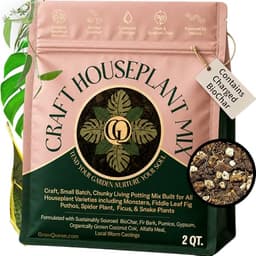
An airy, fast-draining mix is the permanent fix for recurring soil mold — it dries out between waterings instead of staying damp at the surface. Repot into it, in a pot with a drainage hole, if your current mix stays soggy for days.
$8-$16 · Best for Repotting out of a dense, always-wet mix
Check price on Amazon →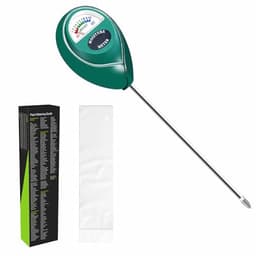
Mold grows when you water before the soil has dried. A meter pushed to the bottom of the pot tells you when it's genuinely dry down there, so you water on the plant's schedule instead of a calendar — and starve the mold of the constant damp it needs.
$10-$18 · Best for Knowing when the soil is actually dry before watering
Check price on Amazon →Treatment information on PlantFix is educational. When using any pesticide — including organic options like neem oil or insecticidal soap — read and follow the entire product label; the label is the law. For persistent or high-stakes problems, your local university extension service offers free, region-specific advice. Read about how we source and verify treatment guidance in our Editorial Standards.
FAQ
Is mold on plant soil harmful to my plant?▼
Usually not. The common white, fuzzy mold on potting soil is a saprophytic fungus that feeds on decaying organic matter in the mix, not on the living plant — Iowa State Extension notes these soil fungi don't harm the plant. It's a sign the soil is staying too wet, so treat it as a watering and airflow warning rather than a disease.
How do I get rid of mold on plant soil?▼
Scrape off the top half-inch of moldy soil, then let the top inch or two dry out before watering again — drying is what actually kills it. Move the plant into brighter light and better airflow. For a permanent fix, repot into a fast-draining mix in a pot with a drainage hole and water only when the soil is dry two inches down. A fungicide isn't needed.
Are the yellow mushrooms in my houseplant dangerous?▼
They're Leucocoprinus birnbaumii, and Iowa State Extension says they don't harm the plant and don't need to be removed for its sake. But the mushrooms are regarded as poisonous to people and animals, so if you have pets or small children, it's wise to pluck them as they appear. Don't eat them.
Is the white crust on my soil mold?▼
If it's hard and won't wipe away, no — that's a buildup of soluble salts from fertilizer and hard water, not fungus. Colorado State University Extension explains it rises to the surface as water evaporates, and the fix is to leach (flush) the soil, not treat for mold. Soft, fuzzy white growth that rubs away is the actual mold.
Related
- How to Fix an Overwatered Plant (Root Rot Rescue) →
- Fungus Gnats: How to Identify & Eliminate Them for Good →
- Soil Mites in Houseplants: The 4-Type ID Guide (Most Are Helping Your Plant, Not Hurting It) →
- Springtails: The Tiny Jumping Bugs in Your Soil (They're Not the Problem — Your Watering Is) →
- Plant Diseases: How to Identify and Treat the Most Common Ones →
- Wilting Plant? The Soil Check That Tells Dry From Wet →
Not sure what's wrong?
Use the diagnosis tool →Get seasonal plant care reminders and pest alerts.