Milky Spore for Grubs: Does It Actually Work? (Honest Guide)
Milky spore promises 10+ years of Japanese beetle grub control from one application — but university research says it often fails in northern lawns. Here's the honest breakdown.
9 min read · Updated 2026-08-28
By PlantFix Editorial Team · Sources: University Extension Programs, USDA, EPA
Does Milky Spore Work? (Quick Answer)
Milky spore (Paenibacillus popilliae) is a naturally occurring soil bacterium that infects and kills Japanese beetle grubs specifically. In warm climates where soil stays 60–70°F for a long stretch, it can build up over several years and provide long-term control — the University of Kentucky puts persistence at 10–15 years once established. Here's the honest part most product pages leave out: in cooler, northern lawns it frequently underperforms, and University of New Hampshire Extension flatly recommends against it, noting there are more reasons not to use it than to use it.
So the real answer is "it depends on where you live and which grubs you have." If you're in a warm region (roughly the transition zone and south), have confirmed Japanese beetle grubs, and can wait 2–3+ years for it to establish, milky spore can be a legitimate one-time, organic, pet-safe option. If you're in the north, aren't sure your grubs are Japanese beetles, or want results this season, beneficial nematodes or a chemical grub preventer will serve you far better. Not sure what you're dealing with? Our diagnosis tool can help ID the beetle, and our Japanese beetle guide covers the whole adult-and-grub lifecycle.
What Milky Spore Is and How It Works
Milky spore is a bacterial disease of grubs, discovered and developed as a biological control back in the 1930s and '40s. The active organism, Paenibacillus popilliae (formerly Bacillus popilliae), lives in the soil as dormant spores. When a Japanese beetle grub feeds on grass roots, it ingests the spores. Inside the grub, the bacteria germinate and multiply in the blood, which turns the grub a cloudy, milky white — hence the name — and kills it within a few weeks.
Here's the appeal: when that infected grub dies and decomposes, it releases billions of fresh spores back into the soil. In theory it's self-perpetuating — more grubs feeding means more infected grubs dying means more spores, until the soil is so loaded that new grubs die before they can do damage. Once established, it needs no reapplication. It's OMRI-listed organic, and it's harmless to earthworms, bees, pets, people, and every insect that isn't a Japanese beetle grub. That specificity is both its biggest selling point and, as you'll see, its biggest limitation.
The Honest Truth: Where Milky Spore Falls Short
Most milky spore content either sells it uncritically or dismisses it in one line. The reality is more specific, and it comes straight from university research.
It needs sustained warm soil to establish. The spores multiply well only when soil temperature holds around 60–70°F for an extended period. As summarized from University of New Hampshire Extension guidance, that sustained warm-soil window rarely occurs in northern regions, so the bacteria never build to effective levels. UNH concludes there are more reasons not to use milky spore on a home lawn than to use it.
It's slow — years, not weeks. Even under good conditions, fully inoculating the soil takes anywhere from 1 to 5 years, and 2–3 years is typical in warm climates. You will not see meaningful control the first summer.
It only kills Japanese beetle grubs. This is critical. Lawns are commonly damaged by masked chafers, June beetles, European chafers, Oriental beetles, and other white grubs — and milky spore does nothing to any of them. If your grubs aren't Japanese beetles, you'll spend money and years for zero result. Confirm the species before you buy.
It needs grubs to spread — a catch-22. The self-perpetuating cycle depends on a healthy grub population to infect. A lawn with a light, patchy infestation may never build enough spore load to matter.
None of this makes milky spore a scam — it's a real, documented biological control with legitimate long-term success in the right conditions. It just isn't the universal 15-year miracle the packaging implies.
Milky Spore vs. Beneficial Nematodes vs. GrubEx
There are three main ways to attack lawn grubs, and no dedicated milky spore article seems to compare all three honestly. Here's the head-to-head so you can pick the right one for your situation.
| Factor | Milky Spore | Beneficial Nematodes | GrubEx (chlorantraniliprole) |
|---|---|---|---|
| Duration | Up to 10–15 yrs (warm climates) | One season | One season |
| Time to results | 2–5 years to establish | 2–3 weeks | Kills young grubs after hatch |
| Grubs targeted | Japanese beetle ONLY | Many grub species | Many grub species |
| Best application | Late summer / early fall | Late summer / early fall | May–June (preventive) |
| Organic | Yes (OMRI) | Yes | No |
| Works in cold climates | Poorly | Yes | Yes |
| Reapply? | No (if it establishes) | Yearly | Yearly |
Quick decision guide: Want results this year, or in a northern lawn, or unsure of the grub species? Choose beneficial nematodes (organic) or GrubEx (chemical). Warm climate, confirmed Japanese beetles, patient, and want a one-time organic fix? Milky spore is worth a shot — ideally paired with nematodes for year-one knockdown while the spore establishes. Note that a chemical grub killer like GrubEx applied to the same lawn can suppress the grub population milky spore needs to reproduce, so don't run both together.
How to Apply Milky Spore Correctly
If you've decided milky spore fits your situation, timing and technique determine whether it establishes at all.
- Timing: late summer through early fall (roughly late August into October), when this year's grubs are young and feeding near the surface. That's when they're most likely to ingest spores. Soil needs to be around 60–70°F.
- Powder vs. granular: traditional milky spore powder is applied in a grid — a teaspoon-sized dose every 4 feet across the lawn, in rows 4 feet apart. It looks tedious but you're seeding spore points that spread outward. Granular formulations are spread with a broadcast spreader and are easier, though many growers feel the powder establishes more reliably.
- Water it in: after applying, water the lawn lightly (about a half-inch) to move the spores down into the root zone where grubs feed.
- Then leave it alone: it's a one-time application. Don't expect visible results the first year, and don't reapply chemical grub controls that would kill off the grubs the bacteria need.
- Keep realistic expectations: pair it with beneficial nematodes the first year or two if you want actual grub reduction while the milky spore slowly builds.
Is Milky Spore Safe for Pets, Kids, and Beneficial Insects?
Yes — this is milky spore's genuine strength. Paenibacillus popilliae is host-specific: it only affects the grubs of Japanese beetles and cannot infect mammals, birds, fish, amphibians, or beneficial insects. It's harmless to earthworms (which actually help spread the spores through the soil), to bees and other pollinators, and to predatory insects.
That means there's no re-entry interval and no need to keep pets or children off the lawn after application, unlike some chemical grub controls. It won't contaminate groundwater or harm the soil food web. For gardeners choosing a treatment specifically because they're worried about kids, dogs, or pollinators, this safety profile is the main reason to consider it — the trade-off you're accepting in return is the slow, climate-dependent, Japanese-beetle-only effectiveness covered above.
Grubs and Adult Beetles Are the Same Problem
It's easy to treat the grubs in your lawn and the beetles chewing your roses as two separate battles, but they're one insect at two life stages. Adult Japanese beetles emerge from the lawn in June, feed and skeletonize plants through summer, then lay eggs back in the turf. Those eggs hatch into the grubs that feed on grass roots in late summer and fall — the exact grubs milky spore targets — before overwintering deep and re-emerging as next year's beetles.
That's why grub control is a long game and why milky spore, if it works in your area, only reduces the beetle pressure originating on your property — adults will still fly in from neighbors. Killing this year's grubs won't stop this year's adults; it lowers next year's local population. For the full coordinated approach — hand-picking and neem for the adults, biological controls for the grubs, and why you should never buy those pheromone beetle traps — read our complete Japanese beetle guide and the lawn grubs guide for the square-foot test that tells you whether you even have a grub problem worth treating.
Recommended Products
We earn a commission if you buy through these links, at no extra cost to you. We recommend based on what works, not what pays. How this works.
The traditional powdered formulation, applied in a teaspoon-per-spot grid every 4 feet. A one-time organic, pet-safe treatment for confirmed Japanese beetle grubs in warm-climate lawns. Slow to establish — pair with nematodes for year-one results.
$30-$60 · Best for Warm-climate lawns with confirmed Japanese beetle grubs and patience
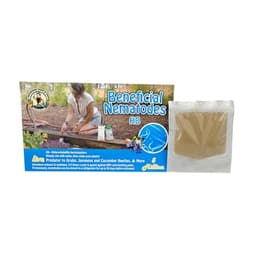
The faster, broader-spectrum alternative: microscopic worms that hunt and kill many grub species within weeks. Works in cool climates where milky spore fails. Must be reapplied yearly, applied in the evening, and watered in immediately.
$20-$35 · Best for Northern lawns or anyone who wants grub control this season
Check price on Amazon →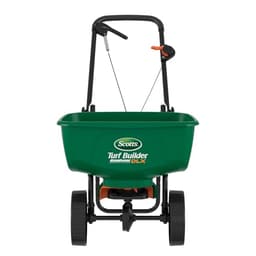
For applying granular milky spore or grub controls evenly across a lawn. A push spreader gives consistent coverage that hand-scattering can't match, which matters for a treatment that depends on even distribution.
$35-$70 · Best for Even coverage on medium-to-large lawns
Check price on Amazon →Treatment information on PlantFix is educational. When using any pesticide — including organic options like neem oil or insecticidal soap — read and follow the entire product label; the label is the law. For persistent or high-stakes problems, your local university extension service offers free, region-specific advice. Read about how we source and verify treatment guidance in our Editorial Standards.
FAQ
Does milky spore really work?▼
It works in the right conditions and fails in the wrong ones. In warm climates with sustained 60–70°F soil and a confirmed Japanese beetle population, it can build up over 2–5 years and provide a decade or more of grub control. In cooler northern lawns, the soil rarely stays warm long enough for it to establish, and University of New Hampshire Extension recommends against it. It also only kills Japanese beetle grubs — not other white grub species.
How long does milky spore take to work?▼
Not one season — that's the biggest misconception. Even under ideal warm-soil conditions it takes about 2–3 years to build up effective spore levels, and 1 to 5 years is the realistic range depending on climate and grub population. You won't see meaningful control the first summer. If you need results this year, use beneficial nematodes or a chemical grub preventer instead, and treat milky spore as a long-term supplement.
Does milky spore kill all lawn grubs?▼
No. Milky spore is specific to Japanese beetle grubs only. Lawns are often damaged by masked chafers, European chafers, June beetles, and Oriental beetles, and milky spore does nothing to any of them. Before buying, confirm your grubs are actually Japanese beetles — otherwise you'll wait years for a result that never comes. Beneficial nematodes control a much broader range of grub species.
Is milky spore safe for pets and children?▼
Yes. Paenibacillus popilliae only affects Japanese beetle grubs and is harmless to mammals, birds, fish, bees, earthworms, and beneficial insects. There's no need to keep pets or kids off the lawn after applying it, and it won't harm the soil food web or groundwater. This pet- and pollinator-safe profile is the main reason to choose it over chemical grub controls.
When is the best time to apply milky spore?▼
Late summer through early fall — roughly late August into October — when this year's grubs are young and feeding near the soil surface, and soil temperatures are still around 60–70°F. Apply in the grid pattern (powder) or broadcast (granular), then water it in lightly. This is a one-time application; don't reapply chemical grub killers afterward, since those suppress the grubs the bacteria need to reproduce.
Related
- Japanese Beetles: Why Traps Backfire & a Week-by-Week Control Calendar →
- Lawn Grubs: The Underground Reason Your Grass Is Dying (ID + Treatment) →
- Beneficial Nematodes: Which Species Kills Your Specific Pest (Buying Guide by Pest Type) →
- Armyworms Destroyed My Lawn Overnight — Here's the Rescue Plan →
- Insecticidal Soap: What It Actually Kills (Including Spider Mites), DIY Recipe & Why Dawn Is Wrong →
- Garden Pest Identification: 25+ Bugs by the Damage They Do →
- Diatomaceous Earth for Plants: Which Pests It Kills (And Which It Doesn't) →
Not sure what's wrong?
Use the diagnosis tool →Get seasonal plant care reminders and pest alerts.