Sawfly Larvae: The Caterpillar Look-Alike Bt Won't Kill
Sawfly larvae look like caterpillars but Bt won't kill them. Count the prolegs to ID yours, then use the treatments that actually work on roses, pines, and more.
8 min read · Updated 2026-09-25
By PlantFix Editorial Team · Sources: University Extension Programs, USDA, EPA
How to Get Rid of Sawfly Larvae (Quick Answer)
If you sprayed a caterpillar killer and the "caterpillars" are still eating your roses, you almost certainly have sawfly larvae — and Bt does not kill them. Sawfly larvae look just like caterpillars but they're the young of wasp-like insects, not moths or butterflies. The University of Minnesota is blunt about it: Bacillus thuringiensis var. kurstaki (Btk) "is specific to caterpillars and does not kill sawfly larvae."
To confirm what you have, count the fleshy "prolegs" on the abdomen: caterpillars have two to five pairs, sawfly larvae have six pairs or more. Once you know it's a sawfly, skip the Bt and reach for something that actually works: hand-pick or blast them off with water for light infestations, or spray insecticidal soap, horticultural oil, or spinosad while the larvae are still small. Damage is usually cosmetic on an established rose or shrub, so you often don't need to spray at all. For a photo check, use our plant diagnosis tool, and see the wider garden pests field guide for everything else chewing your plants.
Sawfly vs Caterpillar: The Prolegs Test
To the naked eye a sawfly larva and a caterpillar are near-identical: soft, worm-like, green or striped, munching holes in leaves. The difference is in the little fleshy legs (prolegs) along the abdomen — and it decides which treatment will work.
| Feature | Caterpillar (moth/butterfly) | Sawfly larva (wasp relative) |
|---|---|---|
| Abdominal prolegs | 2 to 5 pairs | 6 pairs or more |
| Body surface | Often hairy or bristled | Smooth, little or no hair |
| When disturbed | Curls up or drops | Rears its tail end into an S-shape |
| Does Bt (Btk) kill it? | Yes | No |
Iowa State University Extension puts the leg count precisely: sawfly larvae "always have six or more pairs" of abdominal prolegs, while "caterpillars may have up to five pairs of abdominal prolegs but never more." UMN adds that sawfly larvae are "smooth with little or no hair and are no more than one inch long when fully grown." Get a hand lens on the belly and count — that's the whole test. And note the S-shaped tail-lift when you poke a group of them; true caterpillars don't do it.
Why Bt (and Caterpillar Sprays) Don't Work
This is the part that costs gardeners a season. Bt kurstaki is the go-to organic caterpillar killer — it's what works on cabbage worms and tomato hornworms — because it's a bacterial protein that only activates in the gut of a true caterpillar (a moth or butterfly larva). Sawflies are in a completely different insect order, Hymenoptera, the same group as wasps and bees. Their gut chemistry doesn't trigger the toxin, so Btk passes right through them.
UMN states it plainly: Btk "is specific to caterpillars and does not kill sawfly larvae." Purdue Extension gives the same warning more generally — "products that are labeled for caterpillars do not always work on sawflies, so proper identification is important." So if you dusted your roses with Bt and nothing changed, that's your confirmation, not a dosing problem. Stop reapplying it and switch to one of the treatments below.
Common Sawflies by Host Plant
Most home-garden sawfly damage comes from a handful of species, and knowing which host they hit helps you spot them early. Iowa State lists the European pine sawfly, the pear sawfly (which also hits apple), and the rose sawfly among the important pest species.
Rose sawfly (roseslug): pale green, sluglike larvae that skeletonize rose leaves — they scrape away the green tissue and leave a translucent, window-pane look before chewing right through. The most common "caterpillars on my roses" that Bt fails to touch.
European pine sawfly: gray-green with darker stripes, feeds in tight groups on the previous year's needles in spring, and like other sawflies the larvae lift their tail ends in an S-shape when disturbed. Repeated defoliation over several years can be serious for pines, so these are worth acting on.
Pear slug (pear/cherry sawfly): dark, shiny, slimy-looking larvae that skeletonize the upper surface of pear, cherry, and plum leaves. They look like tiny slugs, not caterpillars, which throws people off.
Hibiscus and other shrub sawflies: various species target hibiscus, columbine, currant, and elm. Same rule applies to all of them — count the prolegs and skip the Bt. Not sure which you've got? Snap a photo into our diagnosis tool for a quick read.
How Bad Is the Damage — Do You Even Need to Treat?
Before you reach for any spray, gauge the damage, because most sawfly feeding on an established plant is cosmetic. Iowa State notes that "sawflies often feed in groups and can quickly defoliate portions of their host plant" — the key word being portions. A mature rose bush that loses some leaf tissue in early summer will push out new growth and be fine.
Where it matters more: young or newly planted shrubs that can't afford to lose leaf area, and pines hit year after year, where repeated needle loss weakens the tree over time. So the honest triage is — a few skeletonized rose leaves on a healthy bush? Hand-pick and move on. A group defoliating a small or stressed plant, or a pine getting stripped again? Treat while the larvae are small, because young larvae are far easier to kill than full-grown ones.
What Actually Works on Sawflies
Work from gentlest to strongest — you rarely need the heavy end.
1. Hand-pick or knock them off. For small numbers, UMN says you can physically remove them "and kill them by putting them into a pail of soapy water," or "crush them on the plants or use a high-pressure water spray to knock them off." A firm jet from the hose is genuinely effective for roseslugs — many can't climb back up.
2. Insecticidal soap or horticultural oil. UMN: "insecticidal soap and horticultural oil are effective when managing small numbers of young sawfly larvae." These are contact sprays — you have to hit the larvae directly, and they work best on the small early-stage ones. See our insecticidal soap guide for mixing and coverage.
3. Spinosad or neem (azadirachtin). For heavier infestations, UMN notes "azadirachtin and spinosad are effective for one or two weeks." Spinosad is the stronger option for stubborn groups; neem oil works as a feeding disruptant on lighter cases.
What to skip: Bt (does nothing, as covered above) and broad-spectrum insecticides, which kill the pollinators and predators visiting your roses and pines for no added benefit over a targeted soap or spinosad spray. Whatever you use, spray in the evening to protect bees, and treat while larvae are young.
Keeping Sawflies From Coming Back
Sawflies overwinter as pupae in the soil or leaf litter under the host plant, so a few off-season habits cut next year's numbers. Rake up and dispose of fallen leaves under roses and pears rather than leaving them to shelter pupae. In spring, inspect leaf undersides on your usual targets — roses, pines, pears — every week or two; catching the first small group means a five-minute hand-pick instead of a spray. Encourage the natural enemies that keep sawflies in check by avoiding broad-spectrum insecticides, and keep plants healthy and well-watered so they shrug off the cosmetic feeding that a stressed plant can't. When something's chewing and you can't tell what, the garden pests guide and the diagnosis tool will point you to the right culprit — and the right treatment — before you waste a bottle of the wrong one.
Recommended Products
We earn a commission if you buy through these links, at no extra cost to you. We recommend based on what works, not what pays. How this works.
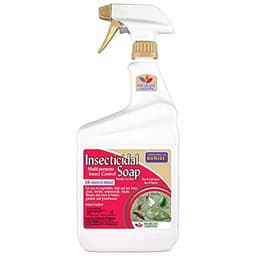
A contact spray that works on young sawfly larvae where Bt fails. Hit the larvae directly and reapply as needed — it kills on contact, not by ingestion. See our insecticidal soap guide for coverage and timing.
$10-$18 · Best for Small, early-stage sawfly larvae on roses and shrubs
Check price on Amazon →The stronger organic option for heavier sawfly infestations — effective for one to two weeks per University of Minnesota Extension. Spray in the evening to protect bees, and target larvae while they're still small.
$12-$22 · Best for Larger or stubborn sawfly groups on pines and roses
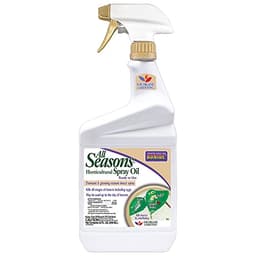
Smothers young sawfly larvae on contact and doubles for many other soft-bodied garden pests. A gentle, targeted alternative to broad-spectrum insecticides that spares pollinators.
$10-$18 · Best for Contact control of young larvae without harming beneficials
Check price on Amazon →Treatment information on PlantFix is educational. When using any pesticide — including organic options like neem oil or insecticidal soap — read and follow the entire product label; the label is the law. For persistent or high-stakes problems, your local university extension service offers free, region-specific advice. Read about how we source and verify treatment guidance in our Editorial Standards.
FAQ
What's the difference between a sawfly larva and a caterpillar?▼
Count the fleshy prolegs on the abdomen. Sawfly larvae have six or more pairs; caterpillars have two to five pairs and never more, according to Iowa State and University of Minnesota Extension. Sawfly larvae are also smooth with little or no hair and often rear their tail end into an S-shape when disturbed. The distinction matters because Bt kills caterpillars but not sawflies.
Why doesn't Bt work on sawflies?▼
Bt kurstaki is a bacterial toxin that only activates in the gut of true caterpillars — moth and butterfly larvae. Sawflies are Hymenoptera (wasp relatives), so the toxin passes through them harmlessly. University of Minnesota Extension states Btk "is specific to caterpillars and does not kill sawfly larvae." Use insecticidal soap, horticultural oil, or spinosad instead.
How do I get rid of sawflies on my roses?▼
For a few roseslugs, hand-pick them into soapy water or blast them off with a strong hose spray. For larger numbers, spray insecticidal soap or horticultural oil directly on the young larvae, or use spinosad for stubborn infestations. Skip Bt entirely — it won't work. Spray in the evening to protect bees.
Do sawflies sting or harm humans?▼
No. Despite being relatives of wasps, sawfly larvae don't sting or bite, and the adults are harmless too — they lack the stinger that gives wasps their name. They're purely a plant pest. Handle the larvae with gloves if you prefer, but only because they're squishy, not because they're dangerous.
Will my roses recover from sawfly damage?▼
Almost always, yes. Sawfly feeding on an established rose is usually cosmetic — the bush pushes out fresh leaves and looks fine within weeks. Damage matters most on young or newly planted shrubs and on pines defoliated year after year. On a healthy mature rose, hand-picking and patience are often all you need.
Related
- Garden Pest Identification: 25+ Bugs by the Damage They Do →
- Cabbage Worm vs Cabbage Looper vs Diamondback Moth: 3-Way ID + Organic Treatment →
- Tomato Hornworm ID: Kill It — Unless It Has White Cocoons →
- Insecticidal Soap: What It Actually Kills (Including Spider Mites), DIY Recipe & Why Dawn Is Wrong →
- Neem Oil for Plants: Complete Guide to Using It Effectively →
- Plant Bugs: Identify Any Bug on Your Plant in 30 Seconds →
Not sure what's wrong?
Use the diagnosis tool →Get seasonal plant care reminders and pest alerts.