Harlequin Bug: The Fastest Way to Save Your Brassicas
Harlequin bugs drain cabbage and kale until it wilts. The mustard trap crop is the organic method extensions bury — here it leads, plus a full kill plan.
9 min read · Updated 2026-09-04
By PlantFix Editorial Team · Sources: University Extension Programs, USDA, EPA
How to Get Rid of Harlequin Bugs (Quick Answer)
Harlequin bugs are orange-red-and-black shield-shaped stink bugs that pierce cabbage, kale, broccoli, collards, and other brassicas and suck the sap until leaves show cloudy white-yellow blotches, wilt, and die. Young plants can be killed outright. To stop them fast, work top-down: hand-pick the adults into soapy water every morning, and crush the black-and-white barrel-shaped egg rows you'll find on the leaf undersides — a female lays over a hundred, so every cleared row matters.
The method that actually breaks the cycle, though, is a mustard trap crop. Harlequin bugs prefer mustard over almost every other brassica, so a strip of mustard greens pulls them off your cabbage and concentrates them where you can destroy them all at once. For plants already under attack, an insecticidal soap or kaolin clay spray knocks down nymphs, and floating row covers keep the next wave off entirely. Not sure the bug you found is a harlequin? Confirm it with a photo first.
Identifying Harlequin Bugs and Their Damage
The adult is unmistakable and that's the good news — no other common garden pest looks like it. Murgantia histrionica is a true stink bug (family Pentatomidae) about 3/8 inch long, flat and shield-shaped, boldly patterned in glossy orange-red and black. The nymphs are rounder, wingless versions with the same warning colors, so you can spot every life stage on sight.
The eggs are the second dead giveaway, and finding them is how you get ahead of an outbreak. Harlequin bugs lay them in tidy double rows of about a dozen on the undersides of leaves, and each egg looks like a tiny white barrel banded with two black hoops — like miniature kegs standing on end. Once you learn that shape you can clear a plant of the next generation in a few minutes.
The damage is sap-sucking, not chewing. Both adults and nymphs stab the leaf and drain it, leaving pale, cloudy blotches — white and yellow stippling that spreads until whole leaves wilt, brown, and collapse. There are no holes; if you see ragged holes instead of blotches, you're looking at a chewing pest like a cabbage worm, not a harlequin bug. Per NC State Extension, heavy feeding can kill young or stressed brassica plants and stunt older ones badly enough to ruin the harvest.
The Mustard Trap Crop (Best Organic Method)
This is the technique university extensions know works but never put front and center. Harlequin bugs have a strong, well-documented preference for mustard: in USDA-ARS field trials (Wallingford et al., 2011) and follow-up work published in the Journal of Economic Entomology, mustard was the plant harlequin bugs chose most consistently over collards, and a border of it measurably cut feeding injury on the main crop at multiple test sites. You can use that preference against them.
Here's the practical version for a home garden:
1. Plant the trap early. Sow a strip or border of mustard greens (or turnip, kale, or rapeseed) two to three weeks before you set out your cabbage, broccoli, or collards. The goal is to have lush, attractive mustard standing when the overwintered adults wake up hungry in spring, or when the fall generation arrives.
2. Let them concentrate. The bugs move to the mustard and pile up there instead of your cash crop. Check it every couple of days.
3. Destroy the trap, bugs and all. Once the mustard is loaded, don't just pull it — that scatters them. Bag the whole plants and solarize or trash them, spray the strip with insecticidal soap first, or (the old extension method) cover it with straw and burn it where legal. Timing matters: destroy the trap crop before the bugs finish a generation on it.
4. Succession-plant. Sow a fresh mustard strip every few weeks through the season so there's always a more tempting target than your brassicas.
Done right, the trap crop does most of the work and you spray your actual vegetables far less — or not at all.
The Complete Harlequin Bug Treatment Plan
Layer these from most to least important. The first three are where the results come from.
1. Mustard trap crop — the strategy above; it prevents and concentrates the infestation.
2. Hand-pick daily. Adults are slow and flightless enough to grab. Knock them into a jar of soapy water each morning while they're sluggish. On a small planting this alone can hold the line.
3. Crush the egg rows. Scout leaf undersides for the banded barrel eggs and smear them before they hatch. This is the single highest-value five minutes you'll spend — you're erasing the next generation.
4. Kaolin clay (Surround WP). A fine white clay you spray on as a film. It irritates and deters the bugs and coats the plant so they won't settle to feed. Reapply after rain. It's OMRI-listed and one of the few things that genuinely bothers the tough-shelled adults.
5. Insecticidal soap or neem. Insecticidal soap works well on the soft nymphs and poorly on armored adults, so time it for when you see lots of little ones. Neem oil is a repellent and growth disruptor — steady help, not a knockdown. Spray leaf undersides in the evening.
6. Floating row covers. Brassicas don't need pollination, so you can keep lightweight row cover on all season. Install it over clean transplants and seal the edges — it simply denies the bugs access. This is prevention rather than rescue, but it's the most reliable long-term tool.
Skip broad-spectrum pyrethroids on a home scale: they hammer the pollinators and predators you want, and the harlequin bug's hard shell shrugs off a lot of contact spray anyway. For product picks and dilution rates, our recommended gear kits cover kaolin clay, soap, neem, and covers.
Harlequin Bug vs Other Brassica Pests
Several pests hit cole crops at once, and the fix depends entirely on which you have. Use the damage to tell them apart before you reach for a spray.
Harlequin bug — sap-sucker; cloudy white/yellow blotches and wilting, no holes; bold orange-and-black shield, 3/8 inch. Fix with trap crops, hand-picking, kaolin clay.
Cabbage worm — chewer; ragged holes eaten from the leaf edge and green caterpillar droppings; velvety green caterpillar. Fix with Bt (which does nothing to harlequin bugs).
Flea beetle — chewer; dozens of tiny round shot-holes, worst on seedlings; minute black beetle that springs away when you approach.
Cabbage aphid — sap-sucker; gray-green waxy clusters on undersides with curling and honeydew; treat like other aphids.
The practical point: Bt and insecticidal soap are the go-to organic sprays for brassicas, but Bt only kills caterpillars and soap barely dents adult harlequin bugs. Match the tool to the mouthparts — chewing damage means one kind of pest, blotchy sap damage means another. When the picture is muddled, run it through the diagnosis tool or start at the garden pest identification guide, which sorts pests by the damage they leave.
Life Cycle and Prevention
Harlequin bugs overwinter as adults tucked into garden debris, old brassica stalks, and weeds near last year's crop, then emerge in spring to feed and lay eggs. In the warm South they run several overlapping generations a year and stay a serious pest into fall on cole crops; further north they're a mid-to-late-season problem. That fall-generation pressure on autumn cabbage, kale, and collards is exactly why they're worth managing now.
Prevention is mostly about denying them a winter refuge and a spring welcome:
Clean up religiously. After harvest, pull and destroy brassica residue and control wild mustards and other weedy crucifers nearby — those are where adults overwinter and where the first spring eggs land.
Rotate crops. Don't plant brassicas in the same bed year after year; move them away from last season's spot to break the overwintering-adult-to-new-crop hand-off.
Start clean and cover. Set out pest-free transplants under row cover, and scout twice a week for the first adults and egg rows — early hand-picking prevents the population explosion.
Keep a trap crop standing. A perpetual mustard strip is both a monitor and a magnet; it tells you the bugs have arrived and keeps them off the plants you're growing to eat.
Good cleanup plus a trap crop turns harlequin bug from a crop-wrecker into a nuisance you barely spray for.
Frequently Asked Questions
Common harlequin bug questions, answered.
Recommended Products
We earn a commission if you buy through these links, at no extra cost to you. We recommend based on what works, not what pays. How this works.
A sprayable white clay film that deters harlequin bugs and coats leaves so they won't settle to feed. One of the few organic options that bothers the hard-shelled adults. OMRI-listed; reapply after rain.
$25-$35 · Best for Deterring adult harlequin bugs on brassicas
Lightweight spun fabric that physically blocks harlequin bugs from reaching your plants. Brassicas don't need pollination, so it can stay on all season over clean transplants. The most reliable long-term prevention.
$15-$30 · Best for Keeping bugs off cabbage, kale, and collards
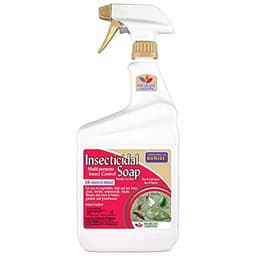
Contact spray that kills the soft harlequin bug nymphs on contact. Time it for when you see lots of little ones — it works poorly on the armored adults. Spray leaf undersides thoroughly in the evening.
$10-$18 · Best for Knocking down harlequin bug nymphs
Check price on Amazon →Treatment information on PlantFix is educational. When using any pesticide — including organic options like neem oil or insecticidal soap — read and follow the entire product label; the label is the law. For persistent or high-stakes problems, your local university extension service offers free, region-specific advice. Read about how we source and verify treatment guidance in our Editorial Standards.
FAQ
Do harlequin bugs bite people?▼
No. Harlequin bugs feed only on plants — they pierce leaves and suck sap and have no interest in and no ability to bite humans or pets. Like other stink bugs they can release a mild defensive odor if handled, but they're harmless to people. The damage they do is entirely to your brassicas, not to you.
What plants do harlequin bugs attack?▼
Their strong preference is brassicas: cabbage, kale, collards, broccoli, cauliflower, Brussels sprouts, mustard, radish, turnip, and horseradish. Mustard is the single most attractive host, which is what makes it such an effective trap crop. When brassicas run short they'll also feed on beans, tomatoes, squash, and some flowers, but cole crops are where the real damage happens.
Are harlequin bugs good for anything in the garden?▼
No — unlike some shield bugs that prey on pest insects, the harlequin bug is a plant feeder with no beneficial role. It only drains crops. That's the opposite of a predatory stink bug, so if you've identified the bold orange-and-black shield pattern, it's a pest to remove, not a helper to protect.
How do I get rid of harlequin bugs organically?▼
Lead with a mustard trap crop to pull them off your main planting, then hand-pick adults into soapy water and crush the banded barrel-shaped egg rows on leaf undersides daily. Back that up with kaolin clay (Surround WP) as a deterrent film, insecticidal soap on the young nymphs, and floating row covers to keep the next wave out. No single spray beats the trap crop plus consistent scouting.
Related
- Cabbage Worm vs Cabbage Looper vs Diamondback Moth: 3-Way ID + Organic Treatment →
- Flea Beetle: The Jumping Test, Crop-by-Crop Species Guide, and Why Seedlings Die in 48 Hours →
- How to Get Rid of Squash Bugs: Season-Long Battle Plan →
- Leaf Footed Bug vs Assassin Bug: How to Tell Them Apart (And Not Kill the Wrong One) →
- Aphids on Plants: How to Kill Them Fast (and Stop the Ants) →
- Insecticidal Soap: What It Actually Kills (Including Spider Mites), DIY Recipe & Why Dawn Is Wrong →
- Neem Oil for Plants: Complete Guide to Using It Effectively →
- Garden Pest Identification: 25+ Bugs by the Damage They Do →
- Plant Bugs: Identify Any Bug on Your Plant in 30 Seconds →
Not sure what's wrong?
Use the diagnosis tool →Get seasonal plant care reminders and pest alerts.